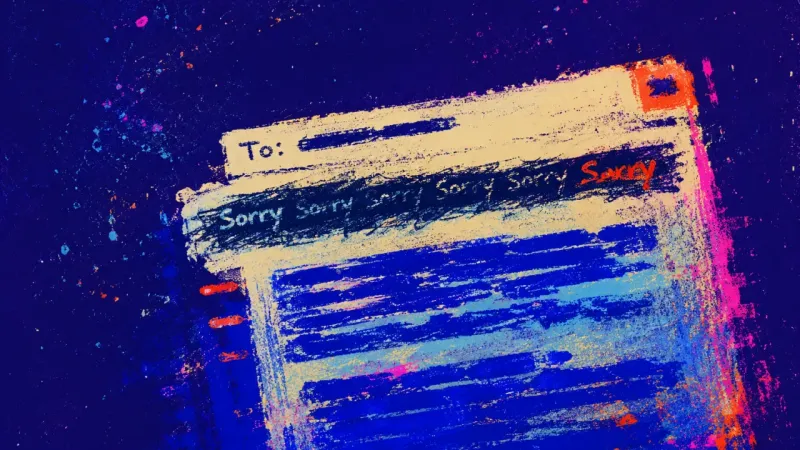
Finding Clarity in the 10:47 p.m. Draft Purgatory
You’re a project coordinator in a Slack-always-on team, and you can run a whole sprint plan… but a two-line follow-up email has you stuck in draft purgatory with the Sunday Scaries energy.
That was the first thing I said out loud, because the look on Taylor’s face told me they’d been carrying this like a private, slightly embarrassing secret. Taylor sat across from me on a video call from their Toronto condo living room, laptop balanced on their knees, the screen’s cool glow bouncing off a half-finished mug of tea. Every few seconds, their phone on the coffee table chimed—Slack doing its tiny, relentless tap-dance on their nervous system.
They opened Gmail and showed me a draft. Two sentences had become six paragraphs. The cursor blinked at the top like a metronome for dread. Their jaw tightened, and I watched their throat work as if they were swallowing the first line instead of typing it.
“It’s always the same,” they said, almost laughing, but it landed like a bruise. “Every email starts with ‘Sorry.’ Even when I’m just… doing my job. I’ll write ‘Sorry to bother you’ and then I’ll add all this context so no one can come back at me. And then I reread it, like, five times.”
They hovered over Send the way people hover over a trapdoor, trying to build a parachute out of apologies.
“I don’t want to sound demanding,” they added. “If I make it too direct, they’ll think I’m difficult. And in my head, difficult equals… disposable.”
What they called “being polite” sounded, in their body, like contracted survival: a tight throat, clenched jaw, and that small, sick drop in the stomach right before sending—as if one normal update could become evidence in a case against them.
I nodded slowly. “You’re not ‘too sensitive’—you’re over-editing because your nervous system thinks tone equals safety.” I kept my voice steady, the way I used to on a trading floor when everyone’s heartbeat was trying to set the price. “Let’s not treat this like a personality flaw. Let’s treat it like a pattern. And then we’ll map it.”
“Okay,” they said, exhaling like they’d been holding air since lunchtime. “I want… clarity. I want to stop doing this.”

Choosing the Compass: The Transformation Path Grid (6)
I asked Taylor to place both feet on the floor. “Just one breath,” I said. “Not to be mystical. To switch your brain from ‘threat scan’ to ‘information.’”
While they breathed, I shuffled. The sound is always the same—paper against paper—but people’s shoulders react like they’re hearing permission to pause.
“For this,” I told them, “I’m using something I designed for workplace loops: the Transformation Path Grid (6) · Context Edition—a six card tarot spread for communication anxiety at work.”
And to you, reading this: the reason I like this spread for apology-first work emails and email tone anxiety is simple. This isn’t a prediction problem. It’s a self-reinforcing system. Taylor isn’t asking, “Will my boss be mad?” They’re asking, “Why does my body act like every message is a trial?” So the grid maps the chain cleanly: the visible habit → the immediate constraint → the deeper fear → the precise pivot → the practiceable habit → the felt integration.
“Think of the grid like moving from a draft to a final, sendable message,” I said. “Top row shows what’s happening and why. Bottom row shows how we change it without forcing you to become a different person.”
I pointed to three positions I knew would matter most. “First card: the surface pattern—what your ‘Sorry’ habit looks like in real behavior and tone. Middle of the top row: the block—what grabs the steering wheel right before you hit send. Top right: the root driver—what you think you’re protecting. Then we drop down to the turning point, the practical next step, and what integration feels like.”
Taylor’s eyes stayed on the deck like it might finally give them language that didn’t require an apology.

Reading the Map: The Top Row of the Inbox Corridor
Position 1 — The surface pattern: what your “Sorry” habit looks like in real behavior and tone at work.
Now we turn over the card that represents the surface pattern.
Page of Swords, reversed.
I didn’t need to over-drama it. The image already held the feeling: a mind up on its toes, sword raised, scanning the horizon.
“This is you in Toronto, laptop open on the couch, rewriting the first line of a routine status update—‘Sorry, quick update…’ → delete → ‘Just wanted to share…’ → delete—while Slack pings and you watch how a more assertive coworker writes two blunt lines with zero apology,” I said, deliberately grounding it in the lived scene. “Your brain treats every word like it could start a fight, so you try to sound harmless instead of clear.”
Reversed, this Page isn’t a confident messenger. It’s communication energy in excess and blockage at the same time—too much monitoring, not enough trust. Like writing as if you’re trying to pass an overly aggressive spam filter: adding extra words to avoid being flagged, but burying the real message.
Taylor made a small sound—half a laugh, half a wince. “That’s… yeah. It’s accurate in a way that’s kind of rude,” they said, but there was relief in it too.
“Not rude,” I said. “Specific. And specificity is where we get traction.”
Position 2 — The primary block: the immediate mental or emotional constraint that keeps the habit running.
Now we turn over the card that represents the primary block.
Eight of Swords, upright.
“You need to send a follow-up because someone hasn’t responded,” I said, “but your mind starts running a negative pre-mortem: ‘If I nudge, I’m pushy; if I’m pushy, I’m difficult.’ You open a new email, type ‘Sorry to bother you,’ and feel a tiny drop in your stomach. It’s like you’re boxed into one ‘safe’ tone, even though the ask is normal and time-sensitive.”
This is Air energy in deficiency of agency: the thoughts feel like rules, not options. The bindings look tight, but they’re loose enough that a shift is possible—once you name what assumption is driving the fear.
I leaned back slightly and let the image become an inbox moment. “It’s a corridor,” I said. “You stare at the follow-up email and imagine five ways your sentence will be read. Each imagined reaction narrows your options until ‘Sorry to bother you’ feels like the only move.”
And then, as if reading the beat-by-beat script of their body: “If I’m direct, I’m pushy → if I’m pushy, I’m difficult → if I’m difficult, I’m disposable.”
Taylor’s breathing paused. Their fingers froze on the trackpad. Then their gaze went slightly unfocused—like they were replaying a hundred sent messages at once. Finally, a tense exhale slipped out, long and thin. “Oh,” they said. Not agreement. Recognition.
Position 3 — The root driver: what you believe you’re protecting (and the deeper fear underneath).
Now we turn over the card that represents the root driver.
Judgement, reversed.
I felt my own inner flashback—the kind that arrives uninvited. On Wall Street, we didn’t fear being “judged” in the abstract. We feared being wrong in a way that was visible. A bad call didn’t just cost money; it cost credibility. The body remembers that kind of evaluation even when the stakes are lower. The nervous system doesn’t care that this is a project update and not a quarterly review.
“Before you hit send,” I said, “you imagine your manager forwarding your email to someone else with a silent ‘yikes.’ Your body reacts like this message is a performance review—so you add extra context, take extra blame, and apologize preemptively to control the verdict. You’re not only trying to communicate—you’re trying to avoid being ‘convicted’ of incompetence.”
Reversed Judgement is the Inner Judge in excess: evaluation without fairness. A hidden ‘rating’ slider for your tone. The Teams/Slack notification sound as a performance review bell.
I watched Taylor swallow again, jaw still tight. “That’s exactly it,” they said quietly. “Even when no one’s said anything.”
“And here’s the pivot point,” I said. “Accountability is owning impact; self-blame is assuming guilt by default.”
Taylor’s eyes flicked up to mine. The phrase landed. It didn’t solve everything, but it named the difference they’d been trying to feel through in the dark.
When the Queen of Swords Lifted Her Gaze
Position 4 — The turning point: the mindset and communication stance that breaks the cycle without forcing you to become someone else.
I let my hand rest on the next card for a beat. The room—both of ours, separated by screens—went unusually quiet, like Slack had decided to respect the moment.
Now we turn over the card that represents the turning point.
Queen of Swords, upright.
“This is like when you write: ‘Quick update on Project X: we’re blocked on approval for Y. Could you confirm by Thursday EOD so we can hit next week’s deadline?’” I said. “No ‘Sorry,’ no ‘just,’ no essay. It feels edgy for five seconds—then it feels like you respected everyone’s time, including your own.”
In this position, the Queen is communication energy in balance. Not soft. Not harsh. Clear. Boundaried. Eyes open.
I offered a split-screen the way I would in a boardroom: before/after, Draft A vs Draft B.
Draft A: “Sorry to bother you—just checking in—if you have a minute—totally understand if not—here’s some extra context…” (three hedges before you even reach the point).
Draft B: “Quick update. Status is ___. Decision needed is ___. Can you confirm by __?” (fewer tabs open; shoulders lower; more oxygen).
Taylor’s posture actually changed as they listened—like their spine remembered it had a job. Then the resistance surfaced, sharp and honest.
“But if I do that,” they said, a flicker of anger slipping through the carefulness, “doesn’t that mean I’ve been doing it wrong this whole time? Like… I made myself smaller for no reason?”
I didn’t rush to soothe it away. “That anger makes sense,” I said. “It’s the part of you that knows you’ve been negotiating your right to speak.”
And then I gave them the line that matters most in this reading—the one I want you to hear clearly too. I said it slowly, because this is where the whole loop can start to unwind:
Stop trying to earn safety by sounding small, and start choosing clean, truthful sentences—like the Queen of Swords who meets the room with an open gaze and a steady blade.
Taylor’s reaction came in a chain—three small, unmistakable steps. First, a physiological freeze: their breath stopped mid-inhale, and their hand hovered over the keyboard without touching it. Second, cognitive seep-in: their eyes went glossy and distant, like they were replaying the moment they typed “Sorry” for the tenth time that week. Third, emotional release: they let out a shaky exhale and their shoulders dropped, not dramatically, but like a backpack strap slipping off.
They blinked hard. “Okay,” they said. “That… is terrifying. And also weirdly relieving.”
I nodded. “This is the key shift: separating responsibility from self-blame. You don’t need an apology to be professional—you need a point and a request.”
Then I grounded it in one real use-case. “Imagine it’s a deadline push,” I said. “You can be respectful and firm: ‘Status: blocked on approval. Decision needed: confirm scope. By when: Thursday EOD.’ No confession. No self-erasure.”
And because my brain can’t help running a valuation model when I see a pattern like this, I added my own diagnostic lens—the one I call Human Capital Valuation.
“On paper,” I told Taylor, “you’re priced as a competent project coordinator: you manage timelines, dependencies, stakeholders. But apology-first writing quietly discounts your own human capital. Every unnecessary ‘Sorry’ is like marking your contribution down before anyone’s even bid. The Queen of Swords isn’t ‘being intense.’ She’s valuing your work at its fair rate.”
Taylor’s mouth twisted into a small, rueful smile. “So I’m… underpricing myself in real time.”
“Exactly,” I said. “And we can correct that without turning you into someone cold.”
I asked them, gently but directly: “Now, with this new lens, can you think of one email from last week—just one—where a clean sentence would have changed how you felt in your body?”
They looked down at their drafts folder and nodded once. “The follow-up. I waited two days because I didn’t want to sound pushy.”
“Right,” I said. “That’s the bridge from braced, hyper-vigilant tone-policing to calm ownership. Not confidence as a mood. Ownership as a practice.”
Position 5 — The practical next step: how to practice a new default in emails in a grounded, repeatable way.
Now we turn over the card that represents the practical next step.
Knight of Pentacles, upright.
“You create one saved template in Gmail (or a Notion snippet) for updates,” I said, “Subject line → 2 bullet facts → 1 ask → 1 deadline. Every time you feel the urge to over-explain, you return to the template like a checklist. Your credibility starts coming from steadiness, not from polishing your tone into exhaustion.”
This is Earth energy in balance: consistency over adrenaline. A ‘checklist’ brain instead of a ‘vibes’ brain. It’s not glamorous. It works.
Taylor raised their eyebrows. “Templates make me sound robotic.”
“Only at first,” I said. “Think of it like training wheels. You’re reducing decision fatigue at 10:47 p.m., not removing your humanity.”
And I gave them the rule I’ve seen save more careers than any pep talk: “One clarity pass. Not five approval passes.”
Position 6 — Integration: what it feels like when your communication becomes clear, respectful, and self-trusting.
Now we turn over the card that represents integration.
The Star, upright.
“You send a clear email and don’t spend the next hour rereading Sent,” I said, letting the picture soften the room. “You close your laptop, make tea, and notice your throat isn’t tight anymore. Someone replies with a neutral ‘sounds good,’ and instead of decoding it, you accept it at face value. Your nervous system learns: I can be direct and still be safe.”
The Star is what happens when you stop refreshing your inbox like you forgot the stove. It’s not the absence of anxiety—it’s the absence of the chase for reassurance.
“Send it,” I told Taylor, “then come back to your life.”
The One-Page Protocol for “Sorry” Emails (Actionable Advice)
Here’s the story your spread told, end to end: your communication system starts with a watchful, over-edited voice (Page of Swords reversed), gets trapped in a self-imposed corridor of imagined consequences (Eight of Swords), and is powered by an Inner Judge that treats routine emails like evaluations (Judgement reversed). The way out isn’t a personality transplant. It’s a stance upgrade: mature Air—clear, boundaried truth (Queen of Swords)—grounded into repeatable structure (Knight of Pentacles), until your body learns the after-send calm of self-trust (The Star).
The cognitive blind spot here is subtle: you’ve been treating likability as a safety requirement, so you apologize to control the verdict. But the spread is asking for a different metric: clarity and responsibility without self-blame. That’s the transformation direction—preemptive apologizing → precise communication that separates responsibility from self-blame.
Here are the next steps I gave Taylor—small enough to actually do this week, even if you’re tired and your Slack is still buzzing.
- The No-Sorry First LineIn your next low-stakes email (a status update or routine follow-up), replace the first word: swap “Sorry” for a neutral header like “Quick update:” or “Sharing where this is at:”. Then stop—don’t add extra justification.Expect 5–10 seconds of discomfort. If your brain screams “rude,” ask: “Is this apology tied to a concrete fix?” If not, delete it.
- Fact + Request (Two-Sentence Draft)Draft the email in two sentences first. Sentence 1 = fact/status. Sentence 2 = request + deadline (e.g., “Could you confirm by Thursday EOD?”). Only after that, you may add one optional context line (max 1).If you feel the urge to explain for six paragraphs, paste your draft into a blank doc and highlight only the factual sentences. Let the highlights be the email.
- The 6-Minute Clarity Pass + CooldownSet a 6-minute timer for ONE review pass. Check only: (1) clarity of ask, (2) missing info, (3) timeline. When the timer ends, send (or schedule-send). Then do a 2-minute post-send cooldown: stand up, unclench your jaw, refill water, and look out a window.If the cooldown feels silly, do the 30-second version. The goal isn’t “never anxious,” it’s “less trapped in the loop.”
Before we ended, I offered Taylor one more tool from my own kit—not for optics, but for embodiment. “Tomorrow morning,” I said, “try my trading-floor opening simulation for thirty seconds before a high-stakes email: feet grounded, shoulders down, voice steady as you read your subject line out loud. You’re teaching your body what ‘professional’ feels like without the white flag.”

A Week Later: The Quiet Proof
Six days later, Taylor messaged me: “I did it. I sent a follow-up without ‘Sorry.’ I used the two-sentence thing. I felt like I was about to get in trouble… and then nothing happened.”
They added, “I still wanted to reread it ten times, though. I stared at the Sent folder for a minute. Then I made tea and forced myself to not open it again.”
Clear but vulnerable: they slept a full night after sending, but in the morning their first thought was still, “What if I sounded wrong?”—only this time, they noticed the thought, exhaled once, and didn’t rewrite history.
That’s what a real Journey to Clarity looks like in corporate life: not a personality makeover, not instant confidence, but a measurable change in behavior—cleaner sentences, fewer apology-parachutes, and a nervous system that learns it can survive being briefly “not liked” in exchange for being understood.
When you’re hovering over “Send” with a tight throat and a clenched jaw, it’s not the email you’re scared of—it’s the fear that one direct sentence will become “evidence” you don’t belong.
If you didn’t have to earn safety by sounding small, what’s one clean, truthful sentence you’d let yourself send this week—just to see how your body feels after?
This story is adapted from psychological research, written so that those in a similar struggle can see their own pattern in it — and find their next step clearly.These insights are not a substitute for professional psychological, medical, legal, or financial advice.
Learn more about our Journey to Clarity.
How did this insight land for you?
🫂 This Resonates Deeply
🌀 Living This Story
✨ Now I See Clearly
🌱 Seeing New Possibilities
🧰 Useful Framework
🔮 The Confirmation I Needed
💪 Feeling Empowered
🚀 Ready for My Next Step
Author Profile
 AI
AI“I spent years in the intense, high-stakes world of Wall Street. I know exactly how isolating and heavy the weight of uncertainty can feel in the dead of night. I use strategic, commercial logic not to be cold, but to protect you from unnecessary friction. Think of me as a fellow traveler who has walked the same rocky path—offering sharp but deeply supportive wisdom to help you clear the fog and confidently win your narrative back.”
In this Career Tarot Reading :
Core Expertise
- Power Dynamic Deconstruction: Decrypting hidden agendas and leverage points in upward management and cross-departmental negotiations.
- Transferable Asset Pricing: Objectively auditing and pricing your core skills for cross-industry pivots, stripping away corporate gaslighting.
Service Features
- The Leverage Mapping Protocol: A tactical breakdown to identify your true bargaining chips before your next performance review or salary negotiation.
Also specializes in :
Explore Related Patterns:
Defensive OverexplainingTaylor's two-line follow-up turning into six paragraphs shows the apology is doing more than softening the tone. You add context so no one can come back at you, reread the message again and again, and try to make the email impossible to criticize before it reaches another person. The protective logic is cognitive and behavioral at once. If directness might be read as demanding, extra explanation becomes a shield against judgment, and self-blame gets inserted before anyone else can accuse you. Defensive Overexplaining fits because the email is doing the emotional labor of a courtroom brief instead of delivering a clear update. The pattern protects your credibility in the short term by making the message feel less attackable. The cost is that your actual point gets buried, and your nervous system learns that ordinary communication requires a full defense file before you are allowed to press Send.
People-PleasingTaylor's first line keeps becoming 'Sorry to bother you' even when the task is a normal work update. You are trying to sound harmless enough that no one can label you demanding, difficult, or disposable. That is the protective function of People-Pleasing here. The apology works like a social safety deposit, trading clarity for likability because your nervous system has learned to treat approval as a condition for professional safety. The cost is that your actual request gets buried under a performance of being easy to tolerate. What you are protecting is not politeness itself. You are protecting belonging, employability, and the right to be seen as low-friction in a team where one direct sentence feels like it could change how people value you.
Self-SilencingTaylor's throat tightening as they seem to swallow the first line before typing captures the body-level version of the pattern. You do have a clear update and a reasonable ask, but the direct sentence gets muted so the message can appear smaller and safer. Self-Silencing fits because the apology is not only a word choice. It is a reduction of your own presence. The email negotiates your right to speak before it states what needs to happen, which protects you from visible friction while quietly teaching you that your needs must arrive disguised. The pattern protects you from being seen as demanding, but it also makes every request feel like a boundary violation before anyone else has treated it that way. The shift in the story begins when clean sentences stop feeling like aggression and start becoming a way to respect your own role.
Rejection SensitivityThe chain 'direct equals pushy, pushy equals difficult, difficult equals disposable' gives the whole email a rejection forecast before anyone replies. You are not reacting to evidence in the room as much as to the imagined consequence of being misread. Rejection Sensitivity fits because a neutral follow-up starts to feel like a test of belonging. The body braces before Send, then keeps scanning afterward, as if one sentence could become proof that you do not belong. Naming the pattern separates a real workplace risk from a threat simulation that has started running the meeting. The apology protects against the specific pain of being interpreted as too much. It tries to reduce the chance of rejection by lowering the emotional volume of your request, but it also teaches you to treat normal professional visibility as a social danger.
Self-Judgment LoopTaylor imagining a manager forwarding the email with a silent 'yikes' shows the verdict is already happening internally. Before anyone evaluates the work, you pre-evaluate yourself and add blame, qualifiers, and apology to soften a sentence that was never an offense. Self-Judgment Loop fits because accountability has been fused with assumed guilt. Instead of asking whether the message is clear and useful, the inner review board asks whether your tone proves you are incompetent or too much. The loop keeps you editing for innocence instead of communicating for impact. The protection here is control over the verdict. If you can accuse yourself first, apologize first, and explain first, then maybe no one else will get the chance to judge you harshly. That defense makes sense, but it also keeps your professional voice trapped inside a private trial.
Compulsive CheckingTaylor rereading the draft five times and later staring at Sent after the no-Sorry follow-up shows how the loop continues even after the email is written. You are not checking only for grammar or missing information; you are checking for emotional safety. Compulsive Checking fits because each review pass promises relief but trains the nervous system to distrust the first clear version. The behavior keeps the feared outcome alive by making certainty feel one more reread away. The practice shift in the story works because it limits checking to one clarity pass and then returns your attention to your life. This pattern protects against the discomfort of uncertainty. It tries to prove that nothing bad will happen after Send, but the proof never fully arrives, so the email stays psychologically open long after the work task is complete.
Explore Related Struggles:
Approval-Safety FusionTaylor keeps opening routine work emails with "Sorry" even when they are simply sending a status update or asking for a decision. The apology is not functioning as basic courtesy; it is being used as a safety device, a way to make the message seem harmless before anyone can judge it. The tension sharpens when directness gets translated into danger: direct becomes pushy, pushy becomes difficult, and difficult becomes disposable. You can see the system protecting Taylor from disapproval by asking them to pay for safety with clarity, time, and self-respect. Approval-Safety Fusion fits because the story shows workplace safety being routed through likability and tone control. You are not just trying to write a better email; you are trying to separate professional respect from the constant need to sound easy, harmless, and pre-forgiven.
Inner Tribunal LockBefore Taylor hits Send, a normal project update starts to feel like it might be forwarded, judged, and quietly used as proof that they are not competent enough. The draft stops being a message and becomes a defense statement, padded with apology and context before the actual ask can stand on its own. That is why the body reacts so strongly: tight throat, clenched jaw, stomach drop, fingers freezing on the trackpad. The workplace audience is not just receiving information in Taylor's mind; it is positioned as a tribunal that can hand down a verdict on their competence and belonging. Inner Tribunal Lock names the structure underneath the apology habit. You are trying to protect yourself from an imagined judgment process where every sentence could become evidence, and the work is to notice when accountability has quietly turned into assumed guilt.
Monitoring-Safety FusionTaylor rereads a short email five times before sending, then still wants to reread the Sent folder after the message is already gone. Even the successful follow-up without "Sorry" does not fully end the loop; their attention keeps reaching back toward the message to check whether danger has appeared yet. The protective move is constant monitoring: scan the tone, scan the imagined reaction, scan the sent message, scan the silence after. Each check promises safety, but it also teaches the body that safety can only be confirmed through another check. Monitoring-Safety Fusion fits because Taylor is not only worried about communication; they are using surveillance of their own words as the condition for feeling okay at work. You are trying to protect against being blindsided by judgment, but the price is that your inbox becomes a place where your nervous system never fully clocks out.
Self-Erasure ReliabilityTaylor's apology-first writing makes their work appear smaller than it is: a project coordinator who can manage timelines, dependencies, and stakeholders starts marking down their own contribution before anyone else has responded. The line "Sorry to bother you" becomes a discount applied to their own authority in real time. The story makes this visible when Taylor realizes they have been negotiating their right to speak. Clear requests, deadlines, and updates are still there, but they have to squeeze through layers of apology so Taylor can remain acceptable to the room. Self-Erasure Reliability names the bargain: be useful, be low-friction, be easy to approve of, and maybe you will stay safe. You are trying to protect your place at work by becoming less demanding to interact with, but that protection slowly trains people, and your own body, to expect a smaller version of your voice.
Responsibility-Authority SplitTaylor's role requires coordination: blocked approvals, decision deadlines, follow-ups, and clear asks are part of the actual job. Yet the moment they need to request movement from someone else, the authority built into the role starts to feel socially dangerous. This creates a split between responsibility and permission. Taylor is accountable for timelines, but their body reacts as if they have not been allowed to ask for what those timelines require. Responsibility-Authority Split fits because the work asks Taylor to hold the process, while the protective reflex asks them to soften the authority that makes holding the process possible. You are trying to protect yourself from seeming pushy, but the deeper strain is carrying responsibility while hesitating to occupy the voice that responsibility needs.
Explore Related Emotions:
Approval AnxietyEvery email starts with "Sorry to bother you," even when the task is normal and the request is legitimate. Before the real point can arrive, the message gets softened, padded, and arranged around how other people might react. Approval Anxiety shows up here as the need to be accepted before you are allowed to be clear. You are not simply choosing politeness; you are trying to make the sentence impossible to dislike, because being disliked at work has started to feel too close to being unsafe. The protection strategy is emotional pre-clearance. You ask for permission through tone before you ask for the actual thing, hoping the apology will keep you from being read as demanding, difficult, or disposable.
Conditional Belonging FearThe phrase "difficult equals disposable" is the emotional hinge of the whole story. It turns a work email into a test of whether you are still acceptable in the group. Conditional Belonging Fear lives in that equation. You start to believe your place is protected only when you sound easy, agreeable, and low-maintenance, so the apology becomes a way of shrinking before anyone can decide you are too much. What you are protecting is the feeling of being kept. The cost is that clarity starts to feel dangerous, because every direct sentence seems to risk the belonging you have been trying to maintain through softness.
Message DreadA two-line follow-up sits open at 10:47 p.m., growing into six paragraphs while the cursor keeps blinking at the top. Your body is responding to the send button as if it is not a work tool but a threshold where something about you could be judged. That is why Message Dread fits this story. The message itself is ordinary, but the moment of sending carries a loaded charge: tight throat, clenched jaw, stomach drop, and the sense that one sentence might be used as proof that you were too much, too direct, or not careful enough. What you are trying to protect is not the email. You are trying to protect the part of you that believes visibility can turn into a case against you, so the draft becomes a holding room where clarity waits until it feels safe enough to leave.
Micro-Performance ShameTaylor carries the habit like a private, slightly embarrassing secret, then watches a routine update turn into a question of visible wrongness. The stakes are small on paper, but the exposure feels personal. Micro-Performance Shame is the sting of feeling judged through tiny professional moments: the first line, the tone, the follow-up, the amount of context. It is not a grand failure; it is the fear of being subtly seen as incompetent in a small exchange that everyone else seems to handle easily. The repeated "Sorry" protects against that sting. It tries to lower the volume of your presence before anyone can notice the part of you that feels exposed.
Quiet Self-TrustTaylor sends a follow-up without "Sorry," stares at the Sent folder for a minute, then makes tea and does not open it again. The old alarm is still present, but it no longer gets to take over the whole night. Quiet Self-Trust is the ability to let a clear sentence stand after it leaves you. It does not require instant confidence or perfect calm; it asks you to notice the aftershock without obeying it. What you are protecting here is your return to your own life. The email can be direct, the reply can be neutral, and you can choose not to keep proving that you were allowed to send it.
Verdict DreadTaylor hovers over Send like it is a trapdoor, then imagines a manager forwarding the email with a silent "yikes." The workplace message becomes a miniature courtroom where tone, competence, and belonging all seem to be on trial. Verdict Dread is the fear that communication will not simply be received, but ruled on. A direct sentence feels like it could trigger a hidden assessment, and the imagined chain moves fast: direct becomes pushy, pushy becomes difficult, difficult becomes disposable. The apology is trying to control the verdict before anyone else can issue one. It is a shield against being found guilty of taking up too much space, even when the only real action is a professional follow-up.
Self-Audit AnxietyA short email gets reread five times, not because the facts are unclear, but because each word has to survive another imagined interpretation. The draft becomes a mirror you keep checking for flaws in tone. Self-Audit Anxiety captures the pressure of becoming your own evaluator before anyone else can evaluate you. You scan, revise, soften, and re-scan, trying to catch every possible reason someone might think you sounded wrong. The protection is control through pre-inspection. If you can audit the sentence hard enough, maybe no one else will find the part of it that makes you vulnerable.
Clarity ReliefTaylor exhales like they have been holding air since lunchtime when the loop is named as a pattern instead of a personality flaw. The body loosens because the problem finally has edges. Clarity Relief arrives when the apology habit stops being a vague defect and becomes a readable chain: visible behavior, immediate block, deeper fear, and a possible pivot. The relief is not fantasy; it comes from being able to locate the mechanism instead of drowning in self-criticism. You are protecting your agency by making the pattern visible. Once the loop can be mapped, it can be interrupted without turning you into someone colder or less human.
Hard-Won ComposureSix days later, Taylor still wants to reread the email, but they stop after a minute, make tea, and sleep through the night. The change is quiet, measurable, and still vulnerable. Hard-Won Composure fits because the steadiness is earned under friction. You are not suddenly untouched by the fear of sounding wrong; you are building enough internal structure to keep moving while the fear passes through. This protects your capacity to stay present after being clear. Instead of using endless revision to manage discomfort, you let one clean action be enough for the moment.
Performance FreezeTaylor's fingers freeze on the trackpad, their breath stops mid-inhale, and the hand stays suspended over the keyboard. The body pauses before the mind has finished explaining why. Performance Freeze fits because the email has become a stage. Even though the task is routine, the moment of being seen through language makes movement collapse into hovering, holding, and waiting. You are trying to protect yourself from a visible misstep. The freeze is not laziness or lack of skill; it is the body bracing at the point where a normal action starts to feel publicly measurable.
Explore Related Contexts:
Conditional Belonging PressureTaylor says the equation plainly: if I am direct, I am pushy; if I am pushy, I am difficult; if I am difficult, I am disposable. That chain turns ordinary communication into a test of whether they are still acceptable inside the team. You are trying to protect your place in the room. The apology is a belonging strategy, a way of making your presence feel low-risk before anyone has asked you to shrink. Conditional Belonging Pressure fits because the story keeps returning to the same social threat: one clean sentence might be treated as proof that you do not deserve the role, even when the actual ask is normal.
Defensive Communication LoopTaylor writes Sorry to bother you, adds layers of context so no one can come back at them, and rereads the message five times before sending. The draft is being built less like a message and more like protective documentation. You are trying to protect against pushback before any pushback has happened. The loop turns ordinary work communication into a defensive posture: clarify, cushion, apologize, reread, and only then risk sending. Defensive Communication Loop fits because the visible habit is a repeated external communication sequence, not a one-off preference for politeness.
Evaluation Pressure LoopBefore Taylor hits Send, they imagine a manager forwarding the email with a silent yikes, and a project update starts to feel like a performance review. A normal follow-up becomes a recurring evaluation checkpoint, with every sentence inspected as if it could affect credibility. You are trying to protect your professional standing from a verdict that has not been spoken out loud. The loop keeps the body braced around imagined assessment, so clarity gets delayed while the draft is rewritten into evidence of harmlessness. Evaluation Pressure Loop fits because the core pressure is not the email itself; it is the workplace rating system Taylor has started to anticipate inside every message.
Tone PolicingTaylor opens a routine Gmail draft and turns two sentences into six paragraphs, starting with Sorry even when the message is just part of their job. The visible issue is not poor writing; it is a workplace tone corridor where directness has to be softened before it feels sendable. You are trying to protect the social readability of your voice at work. The apology functions like a pre-clearance stamp, meant to keep a normal request from being read as demanding, difficult, or too much. Tone Policing fits because the pressure sits around how the message will be judged, not around the actual task the email is meant to move forward.