Mentor Feedback and Two Decks at 10:43 P.M.; One Bounded Pivot Test

The 10:43 P.M. Startup Pivot That Stayed Unsent
I knew I was hearing a sentence that had been waiting beneath the research tabs. “You asked for strategic input, not a new author,” Jordan (name changed for privacy) said when I welcomed them into my Toronto reading room.
I asked Jordan to take me back to the moment the delay usually began. At 10:43 p.m. in their small apartment kitchen, they had opened the original pitch deck beside a mentor-revised copy and dragged the same opening sentence between them. Rain ticked against the window, the kettle clicked off, and the phone felt warm in their restless hand while their shoulders stayed raised.
Jordan wanted to make an incubator pivot before the next checkpoint, yet every mentor revision made the big idea sound less recognizably theirs. They described a startup decision paralysis that looked like diligence from the outside: another market tab, another deck version, another voice memo full of expert opinions. The real contradiction was sharper. They desired the pivot, but feared that mentors would reshape it until acting meant surrendering authorship.
I could see the conflicted apprehension in the tight hinge of their jaw and the way their fingers kept tapping the edge of the chair. The feeling had the texture of a browser spinner trapped over a blank pitch slide, hot, repetitive, and never delivering the page where a decision could live.
“That is a real bind,” I said. “Mentor feedback is input, not authorship. We do not need to pretend the advice is useless, and we do not need to hand over the steering wheel. Let us make a map of the loop, then find the smallest place where you can choose again. That is our Journey to Clarity today.”

A Grid for the Noise Between Advice and Action
I invited Jordan to put the phone face down, take one slow breath, and name the question without trying to solve it. I shuffled slowly, treating the movement as a transition into focused attention rather than a test of fate.
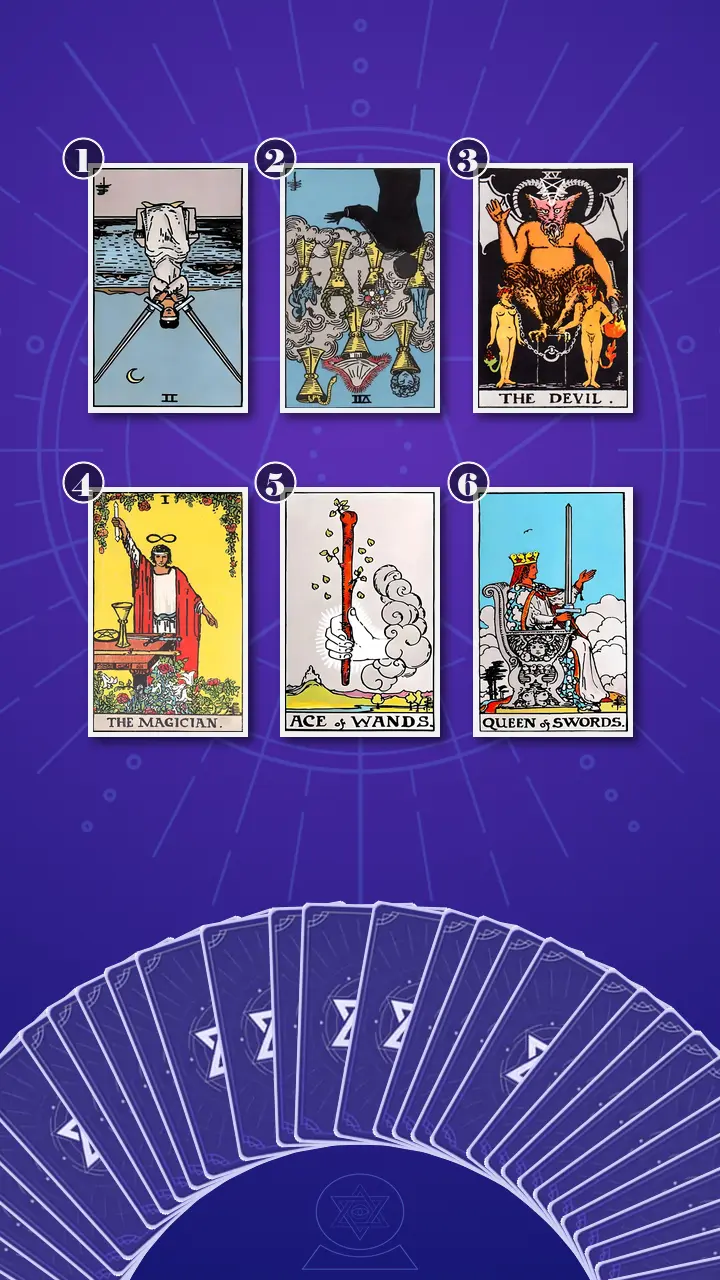
For this reading, I used the Transformation Path Grid (6), Context Edition. For anyone wondering how tarot works in a practical consultation, I use the cards as a reflective structure: their images help organize patterns that are already present in behavior, language, and choice. They do not predict whether a company will succeed or decide what a founder must do.
This six-card tarot spread suited Jordan because the problem was systemic, not a simple comparison between two equally owned options. Mentor feedback created more scenarios, the growing number of scenarios weakened ownership, and the weaker sense of ownership produced more delay. A classic Decision Cross could compare paths, but this Transformation Path Grid could trace the whole feedback loop from symptom to blockage, root attachment, agency, experiment, and integration.
The upper row would show the diagnosis: the presenting loop, the system blockage, and the underlying driver. The lower row would show the way through: the key trigger, the action plan, and the boundary that could carry the learning forward. I asked Jordan to watch the vertical relationships, especially the move from the stalled present into a resourceful choice.
The Crowded Upper Ridge of Other People’s Annotations
The Blindfolded Deck: Two of Swords Reversed
Now I turned over the card for the presenting loop: the observable delay between mentor feedback and committing to the incubator pivot.
It was the Two of Swords, in reversed position.
The gray blindfold and crossed swords brought two deck versions into the room at once. After a mentor session, Jordan kept the original deck and the mentor-revised deck open side by side on the commute home, reread the same notes, compared two opening slides, and postponed the pivot because either choice would make their judgment visible. Sending nothing created a brief, quiet relief, but it also kept the incubator narrative stuck.
I read the reversed Air here as a blockage, with Strategic Foresight pushed past its useful limit. Jordan was not short on intelligence or information. They were using analysis to keep judgment suspended, and the still water behind the card reflected that false calm. More information could protect a decision from judgment; it could not make the decision theirs.
Jordan gave a small laugh with no humor in it. “It is almost rude how accurate that is.”
“What happened in the two hours after the last mentor conversation?” I asked. “Did you choose a test, open another deck copy, or start researching a new market question?”
“I opened a new deck copy,” they said. Their thumb stopped above the phone, then lowered. I watched the recognition land without turning it into blame. A delay can be a pattern before it becomes a decision, and patterns can be examined.
Seven Cups, Seven Plausible Directions
Now I turned over the card for the system blockage: how mentor input multiplies possible directions and makes the original big harder to hear.
It was the Seven of Cups, in reversed position.
The seven separate cups became seven plausible positioning stories. Jordan had turned each mentor comment into a separate product direction: a new buyer, a sharper use case, a different headline, and several customer segments. Four deck versions stayed open while no version named the assumption being tested. Each possibility looked attractive enough to preserve, and the quantity of possible futures began to feel like evidence that no direction was ready.
Reversed Water was overflowing rather than moving. Imagination, projections, and other people’s preferred futures had lost their containers. I asked Jordan to sort the last five mentor comments into three working categories: evidence, preference, or question. That did not dismiss anyone’s expertise. It gave each piece of input a job instead of allowing every suggestion to become a new identity.
“You are not short on options; you are short on a decision you can own,” I said.
Jordan looked from the cups to the Notes app, where four file names crowded the screen. Their hands moved more slowly. “The buyer suggestion might be a question,” they said. “I have been treating it like a command.” That distinction was small, but it gave the original thesis a little room to breathe.
The Approval Chain: The Devil Upright
Now I turned over the card for the underlying driver: the belief that preserving the idea’s original authorship requires postponing a pivot until every scenario feels secure.
It was The Devil, in upright position.
I pointed to the loose chains around the two figures. The image was not a warning about a villainous mentor. It was a picture of a relationship that felt binding even though the chain could be examined and loosened. Jordan edited the pitch until it sounded like something a mentor would approve, then called the loss of personal language a strategic improvement. Praise briefly loosened the tension; contradictory advice brought it back. The pivot had become entangled with permission.
“I call this strategy because I am being thorough,” Jordan said slowly, “but what I may be protecting is the chance to avoid being judged until I finally choose.”
I let the sentence stay in the space between us. The Devil’s energy was attachment, not destiny. Mentor approval had become a login requirement, and Jordan was waiting for permission to access a decision they already had the right to make.
Their jaw tightened first, and their hand pressed into the edge of the desk. Then their eyes went unfocused as the voice memos replayed, one polished phrase after another. Finally, a low “Yeah” came from their chest, and the hand released. I told them that accepting influence was not the same as surrendering authorship, and that useful collaboration required terms Jordan could name.
When The Magician Put the Author Back at the Table
The Table of Four Tools: The Magician Upright
Now I turned over the card for the key trigger: the agency available when the founder turns Strategic Foresight into a bounded experiment and selects which tools and feedback to use. The room went quiet around the card, as though even the rain had moved farther from the window.
It was The Magician, in upright position.
The raised wand, grounded hand, infinity sign, and table holding a cup, pentacle, sword, and wand gave me the exact image I wanted Jordan to see. The table was a founder’s working surface. The original thesis could set the purpose, a mentor suggestion could shape the question, customer evidence could supply information, and initiative could begin the test. None of those tools had to become the author.
My signature lens is called Seasonal Energy Diagnostics. I use it to ask whether someone is trying to force a spring harvest during a winter dormancy phase, or whether the field is ready but being dug up every night to inspect the roots. Jordan’s delay did not look like necessary winter rest. It looked like a living idea repeatedly pulled apart for approval until no season could begin. The Magician did not demand frantic speed. The card asked Jordan to arrange the available tools deliberately and give each one a limited job.
I asked Jordan to place the original thesis, one mentor suggestion, and one narrowly framed customer-facing test in a single document. “I do not need to reject the tool to remain the person choosing how it is used,” I said. “The question is not who owns the direction in theory. The question is what job you are assigning each piece of information.”
The Sentence Beneath the Urgency
At 10:43 PM in the apartment kitchen, the original deck and mentor-revised copy had sat side by side, the kettle clicking off while Jordan’s shoulders climbed. The pivot felt urgent, yet every extra version postponed the one decision that would show what they actually claimed.
You do not regain ownership by keeping the idea untouched; you regain it by using The Magician’s table of tools to select feedback, define the experiment, and act from your own thesis.
I let the sentence settle, then added, “Mentors can supply data without becoming co-authors. Ownership is not keeping the idea untouched; it is choosing the thesis, the test, and what the evidence is allowed to change.”
For a second, Jordan’s breath stopped; their fingers hovered above the card, and their pupils widened. Then their gaze slipped past the table, as though the TTC voice memo were playing again: every suggestion, every polished phrase, every moment of relief that came from not sending anything. Heat rose along their cheeks. “But doesn’t that mean I was wrong before?” The question came with a sharp edge, not panic, and I let it stand. “No,” I said. “It means your thesis met information. Authorship never required isolation.” Their shoulders dropped a fraction. Their right hand, clenched against their knee, opened finger by finger. A breath left them in a shaky, almost embarrassed laugh, and their eyes shone without spilling. They reread the sentence, then whispered, “I can decide what this input is for.” The kitchen rain seemed farther away. “Now, use this new perspective to recall whether there was a moment last week when this insight could have made you feel differently,” I said.
Jordan reread the distinction between using feedback and surrendering authorship. I watched their attention move from the crowded notes to the table of tools. “I can let this suggestion change the experiment without letting it rename the thesis,” they said. That was the bridge: agency became available before the pivot’s outcome was known.
I named the emotional movement plainly. This was a first step from approval-bound analysis paralysis and threatened authorship toward evidence-informed agency and clear ownership. It was not certainty, and it was not a promise that the pivot would work. It was ownership practiced through deliberate selection.
The First Green Shoot: Ace of Wands Upright
Now I turned over the card for the action plan: one small pivot test that puts the founder’s thesis into contact with evidence without handing authorship to mentors.
It was the Ace of Wands, in upright position.
The hand emerging from the cloud offered a living wand with fresh green shoots, while the distant castle stayed beyond the hillside. I read the Fire as a balanced first spark, not a demand to map the entire company’s future. Jordan could write one pivot hypothesis, choose five potential customers or users, and send one short research invitation instead of revising the whole deck again.
“What is the smallest version that would teach you something without becoming a final statement about the startup?” I asked.
Jordan uncapped a pen. “I believe this pivot will matter to independent clinic managers who need a faster way to…” They paused, crossed out one adjective, and kept the sentence. Their shoulders were still not completely relaxed, but their hands had stopped searching for another tab. The spark was not dramatic. It was a line they had chosen to finish.
The Clear-Eyed Editor: Queen of Swords Upright
Now I turned over the card for integration: the feedback boundary and decision rule that lets the founder retain authorship while learning from the incubator.
It was the Queen of Swords, in upright position.
The Queen’s upright sword, raised open hand, high-backed throne, and clear windy sky brought clean Air back into the reading. Her energy was discernment in balance. Jordan did not need to reject difficult input or absorb every opinion. They needed a precise distinction between their thesis, evidence they would test, and directions they were not adopting yet.
I suggested a one-page thesis for the next mentor review: one sentence Jordan owned, one specific question, one definition of useful evidence, and one line stating which decision remained theirs. “A mentor review can end with a decision rule and a named experiment,” I said, “rather than five new versions of your identity.”
Jordan wrote, “I will test this buyer hypothesis with five conversations. I will reconsider the positioning if the conversations contradict this specific claim. I will not rewrite the core thesis because someone prefers a sharper headline.” They looked at the page for a long moment, then nodded once. The sword had not cut anyone out. It had cut through polite ambiguity.
The One-Page Thesis That Let Evidence In
I read the six cards back as one story. The reversed Two of Swords showed judgment held in suspension after mentor feedback. The reversed Seven of Cups explained how every suggestion became another plausible direction. The Devil exposed the root attachment: approval had started to feel like permission, and control had been mistaken for preserving authorship. The Magician returned choice to the founder’s hands, the Ace of Wands made that choice a reversible customer-facing experiment, and the Queen of Swords gave the learning a boundary.
The cognitive blind spot was not a lack of diligence. It was the belief that keeping the idea untouched was the safest way to keep it yours. In practice, more research protected the decision from judgment, while each delay made the language less familiar. The transformation direction was from approval-bound analysis paralysis and threatened authorship to evidence-informed agency and clear ownership.
I also used my Social Clock Decoupling lens. LinkedIn announcements and the incubator checkpoint could provide dates, but they could not define Jordan’s worth or dictate the speed at which a personal thesis became testable. Other founders’ clean pivot posts were edited snapshots, not evidence that Jordan’s process was failing. A deadline could organize action without becoming a verdict.
Because Jordan’s default pause had been hidden inside research, I offered my Winter Dormancy Ritual as a deliberate reset for the next pressure spike. For one calendar week, Jordan could do nothing regarding the blocked pivot: no deck edits, no new mentor requests, and no research tabs. They would notice the guilt without obeying it, then return on a named date. This was different from unconscious postponement because the pause was conscious, bounded, and chosen. With the next checkpoint close, Jordan chose the smaller experiment first and kept the ritual available for a future loop rather than using it to hide inside delay.
I wrote down the following actionable advice as the Ownership-First Experiment. Each step was small enough to begin and specific enough to produce information.
- The 25-Minute Decision WindowBefore the next mentor review, open a blank note titled Decision Window. Set a 25-minute timer and write three headings: known facts, open uncertainties, and one reversible next test. At the end, circle one uncertainty that can be learned through action instead of another research session.Put the phone on Do Not Disturb and stop when the timer ends, even if the notes feel unfinished. The exercise does not commit you to sending anything.
- The Feedback-as-Data FilterCreate a three-column note called Evidence, Preference, and Question. Add the last five mentor comments without polishing them into strategy language, then choose one evidence-based question and write the smallest customer-facing test that could inform it this week.Let a comment fit more than one category if necessary. Do not adopt a suggestion simply because it came from a senior person.
- The Ownership-First ExperimentWrite one sentence beginning, “I believe this pivot will matter to…” Choose five potential customers or users who fit that sentence. Send one short research invitation or show one rough prototype, then record what they actually say rather than what you fear it means.Keep the test reversible: one interview, one message, or one prototype walkthrough. Define what you will learn before you begin.
“This is not a vote on your ability to lead,” I told Jordan. “It is a way to let evidence edit the plan, not erase the person who made it.” The cards had offered a structure, but Jordan remained the person who chose the thesis, the test, and the evidence boundary.

A Small Proof in the Clearer Air
Four days later, I received a message from Jordan: “I sent the interview invite to five clinic managers. Two replied. One said the old use case was clearer, and one asked a question I had not considered. I did not rewrite the whole deck.”
They slept a full night after defining the test, but woke with the old question, “What if I am wrong?” This time, they smiled, opened the thesis note, and placed the question beside the evidence.
I kept the cards on my table after our session. The Transformation Path Grid had not predicted a winning pivot; it had helped Jordan see the feedback loop clearly enough to interrupt it. Finding clarity did not mean removing uncertainty. It meant choosing what uncertainty was worth meeting in the real world.
When a mentor’s helpful edit leaves your jaw tight and your deck sounding smarter but less like you, it can feel safer to delay the pivot than risk proving you cannot lead your own idea.
If one non-negotiable thesis could stay yours while one bounded test stayed open to evidence, what small question would you be curious to put in front of a real customer?