Postponing Life Until a Promotion, Then Protecting Saturday Afternoon
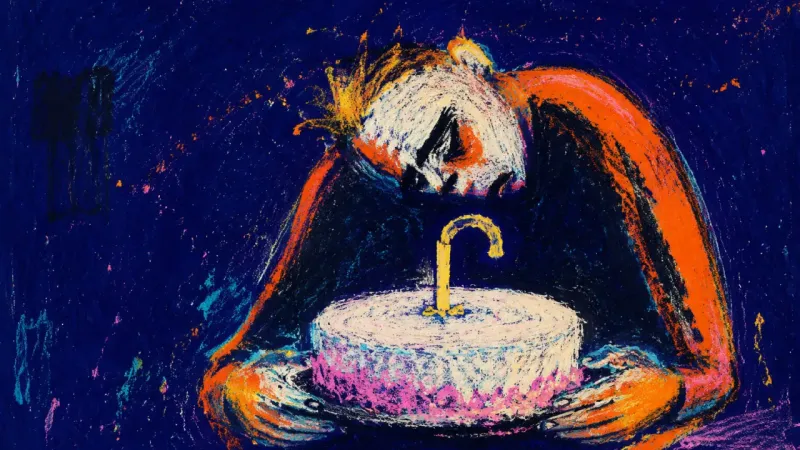
When Waiting for a Promotion Swallowed Thursday Night
I knew within minutes that Maya (name changed for privacy) was not procrastinating on her career; she was postponing everything that could not prove its ROI.
It was 9:40 p.m. on a Thursday, and Maya had joined our video call from the kitchen table of her shared London flat. The laptop fan hummed beneath her voice. A mug of tea had gone cold beside the trackpad, and the light from an application portal left a grey-blue square across her face. Her phone, warm from being checked too often, rested in one hand while a friend's unanswered message about Saturday waited on the lock screen.
Maya was twenty-nine, working as a digital designer at a small agency while building a portfolio for a better-paid role. The portfolio was already strong. She had still revised the same case-study headline three times that evening because the analytics had not moved and the application status still said "In review." Her shoulders had the downward pull of a heavy backpack she had forgotten she was wearing.
"I keep thinking one more push will finally let me relax," she told me. "But when Friday comes and there is no email, I decide I should use the weekend to work harder. I have unused leave. I keep saying no to people. Nothing is technically wrong, but everything feels on hold."
I heard restless longing in the rhythm of her words: the bodily sensation of standing on a Tube platform while every arrival board flashes DELAYED, unable to leave because the next train might be the one that finally moves. She wanted her hard work to pay off, but she had also made rest, friendship, enjoyment, and ordinary plans conditional on seeing that payoff first. The harder she worked to secure a future life, the more of her current life she placed in storage.
"You are not waiting for time," I said gently. "You are waiting for proof that you are allowed to use it. I am not going to tell you whether a particular job is destined to arrive. Let us use the cards as a clear surface for examining the bargain you have made with the future. We will map the pattern, find what it is protecting, and identify one change that remains entirely yours to choose."

Choosing the Compass: The Five-Card Shadow Spread
I asked Maya to place her phone face down and take one unforced breath. I shuffled slowly while she held the consultation question in mind: "What am I postponing while I wait for my hard work to pay off?" The pause was not a mystical performance. It was a practical transition from reacting to the latest notification toward observing the pattern around it.
I chose The Shadow Spread, a focused five-card tarot spread. For anyone wondering how tarot works in a consultation like this, I do not use the cards as verdicts or guaranteed predictions. I use their symbols and positions as an external cognitive map. They help separate behaviors, fears, resources, and choices that have become compressed into one undifferentiated feeling of being stuck.
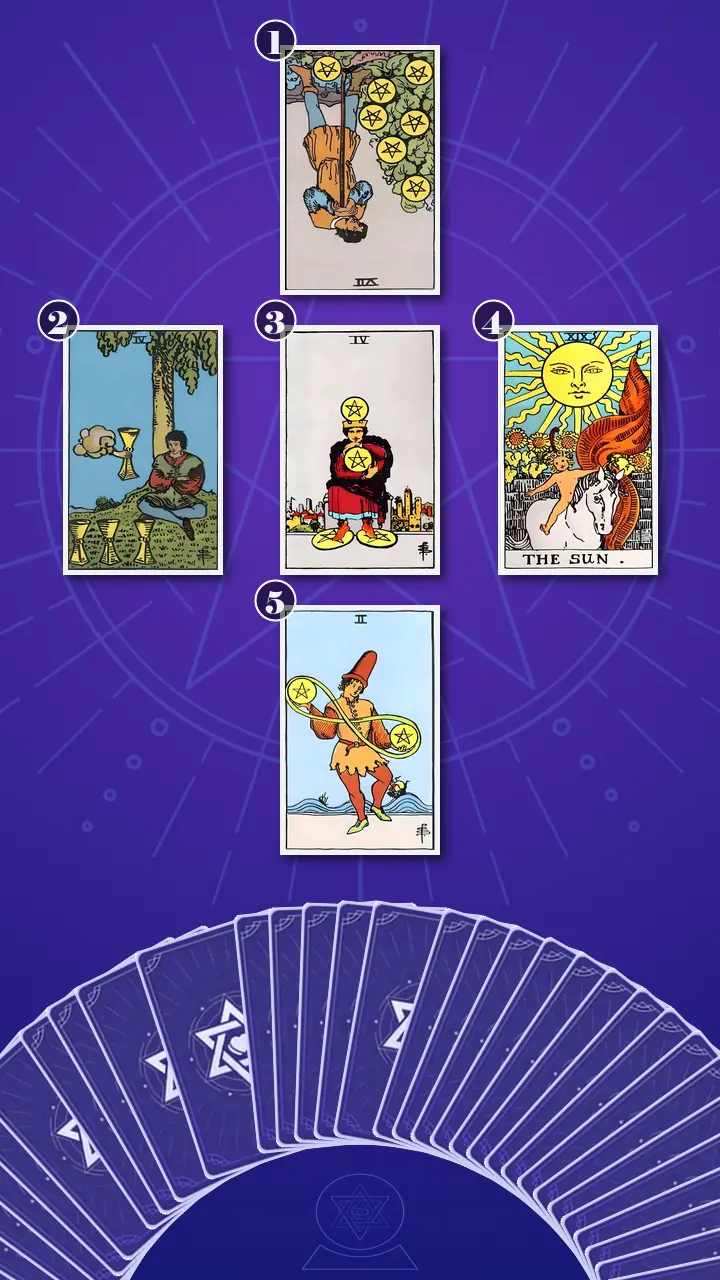
A broad, outcome-oriented spread such as the Celtic Cross would have introduced more influences than Maya's question required. The Shadow Spread was precise enough to reveal five distinct layers: the visible waiting behavior; the life being excluded by it; the fear that keeps it running; the resource Maya can reclaim; and the grounded practice through which the insight can enter her week.
I placed the third card at the center because it would hold the protective belief beneath the pattern. The first sat above it as the visible symptom. The second and fourth formed opposing poles, withdrawal on the left and reclaimed vitality on the right. The fifth rested below as the practical next step. The arrangement looked like a waiting-room door opening at a crossroads.
The Cards That Built the Waiting Room
Position 1: The Refresh-and-Revise Loop
"Now I am turning over the card that represents the visible symptom of your waiting-room limbo," I said. "This is how the pattern appears in ordinary behavior before we investigate what lies beneath it."
The card was the Seven of Pentacles, in reversed position.
In the traditional image, a worker leans heavily on a tool and stares at seven pentacles growing on a vine. Upright, that pause can be a balanced assessment of sustained labor. Reversed, the earth energy becomes blocked. Patience is deficient, monitoring becomes excessive, and evaluation loses its proper proportion. The worker is no longer checking the harvest in order to make a decision; the checking itself has begun to replace both useful labor and recovery.
I brought Maya back to the kitchen table. After a full agency day, she had stayed beside the cold tea, refreshing portfolio analytics and application portals. Nothing actionable had changed, but the absence of a visible return made her revise a finished headline again. The extra labor briefly felt disciplined. Meanwhile, her heavy shoulders and unanswered Saturday invitation showed that frustrated monitoring had replaced both purposeful work and rest.
"The thought underneath it sounds like this," I said. "If there is no result yet, there must still be something I can fix. But the project did not change. The deadline did not change. Only the discomfort of waiting changed."
I pointed to the fixed pentacles. "The refresh button can report a result; it cannot create permission. Rechecking a delivery tracker cannot make the parcel travel faster, and reopening a finished portfolio cannot force a hiring process to move. More activity is not always more agency."
Maya let out one short, bitter laugh and looked away from the card. "That is so accurate it is almost rude," she said. Her fingers moved toward the phone, stopped halfway, and folded back into her palm. "I do this even when there is no useful work left to do."
I asked her what had actually changed the last time she reopened her portfolio after work: the project, the deadline, or only the absence of new evidence. She answered without needing to think. "Only the evidence."
Position 2: The Invitation Outside the Frame
"Now I am turning over the card that represents what the waiting pattern keeps outside your awareness," I said. "This is the part of present life that becomes difficult to notice or receive while all attention is fixed on the missing payoff."
The card was the Four of Cups, upright.
The seated figure has crossed arms and a narrowed gaze. Three cups remain under inspection while a fourth is offered from beyond that field of attention. The card does not automatically mean that Maya should accept every invitation or override her budget, energy, or preferences. It asks whether emotional receptivity has become deficient because one absent result has been promoted into the only signal that matters. Here, water has pooled into withdrawal instead of circulating through connection, curiosity, and play.
I asked Maya to picture a Friday-evening lock screen. A friend suggests a low-cost dinner, a free exhibition, or a short train trip. Before Maya checks whether she wants to go, whether the cost is manageable, or whether any urgent work exists, she types, "Maybe next time." The offer is not wrong. It simply cannot advance the career goal, so her internal algorithm filters it out as irrelevant.
"The private sentence is not really, 'I do not want this,'" I said. "It is, 'I do want it, but I should wait until I have something to celebrate.' That turns present desire into an application that the future must approve."
Maya's gaze settled on the offered cup. Her thumb rubbed once across the edge of her phone case. "My friend invited me to a free gallery this Saturday," she said. "I told her I was slammed. I am not slammed. I just thought I would feel stupid going if I still had no progress."
I asked which opportunity she had declined because it felt premature rather than because it was unaffordable, exhausting, or unwanted. The distinction mattered. A genuine no still belonged to her; the card was exposing only the automatic no issued by deferred-life syndrome.
Position 3: The Resources Frozen for Later
"Now I am turning over the central card, the one representing the core fear and protective belief that sustain delayed gratification," I said. "This position asks what the waiting pattern is trying to protect you from."
The card was the Four of Pentacles, upright.
The figure presses one pentacle against the chest, carries another above the head, and pins both feet beneath two more. Healthy earth conserves resources and creates stability. In this position, conservation has tipped into excess. The grip preserves time, money, and attention, but it also blocks movement. Safety is being sought through immobility.
I named the real-world scene without dismissing Maya's circumstances. She lives in an expensive city and is preparing for an uncertain career transition. Practical caution makes sense. Yet she had begun treating unused annual leave, a saved weekend-trip page, discretionary money, and every free evening as reserves that must remain untouched. Using any of them before securing a better role felt like surrendering control.
"The thought is, 'If I keep enough time, money, and energy in reserve, I cannot be caught unprepared,'" I said. "But holding every resource in reserve can make safety look a lot like absence. These resources are technically preserved, yet they are unavailable to support the person who earned them."
I noticed the repeating number before I said anything further. The Four of Cups and Four of Pentacles formed a double Four: emotional containment followed by material containment. One card crossed its arms against present experience; the other clutched its resources and pinned down its own feet. Together, they built the walls of Maya's waiting room.
In that moment, my mind returned to a waveform from my years of studying sound and rhythm. A held note can stabilize a phrase, but when it is sustained past the body's natural capacity, steadiness turns into strain. Maya was doing the same with caution. She had held the note of "not yet" for so long that the protection itself had become the source of pressure.
Maya's jaw tightened. Her eyes dropped as if she were mentally opening her annual-leave balance, banking app, and calendar in quick succession. Then her hand flattened on the table. "I thought keeping everything available made me responsible," she said. "I did not notice that nothing was actually available to me."
I asked for the exact fear beneath spending one free evening or a small affordable amount on herself before the result arrived. Maya paused long enough for the boiler to click in the background. "If the better job does not happen," she said, "I am scared I will look back and think I should have tried harder. At least if I sacrifice now, I can tell myself I controlled my side of it."
"That protection is understandable," I said. "It is also expensive. It asks the future job to compensate not only for your work, but for every dinner, day off, sketch, and ordinary Saturday placed on hold. No career result can carry that much emotional debt."
When The Sun Changed the Tempo
Position 4: The Light That Was Never a Prize
The laptop fan dropped into silence just as I moved to the card on the right. Under my reading lamp, a band of warm light caught the yellow edge before I turned it over. The room seemed to acquire a different register, quieter and more spacious.
"Now I am turning over the card that represents the resource you can reclaim," I said. "This is not a promised outcome. It is a form of strength that becomes available when the protective pattern is seen clearly."
The card was The Sun, upright.
It was still Thursday at 9:40 p.m. Maya's tea was cold, her portfolio was already finished, and her friend's Saturday message waited beside analytics she had refreshed again. She kept editing because stopping still felt riskier than missing the plan.
The Sun showed an unarmored child beneath open light, moving freely where the previous figures had leaned, crossed their arms, or gripped. Its energy was balanced but underused in Maya's life: vitality, visibility, warmth, self-recognition, and direct participation. I made the boundary of the interpretation explicit. The Sun did not guarantee a promotion. It did not claim that joy would attract an offer. It showed that feeling awake and connected could be a present resource rather than a prize withheld until an employer approved her future.
I translated the card into a concrete scene. Maya could book a bounded afternoon off, put her phone on Do Not Disturb, visit the free gallery with her friend, and sketch afterward without converting the page into portfolio material. Career uncertainty would remain real. For two hours, however, it would not decide whether she could feel visible, interested, or connected. The activity could matter because she was there for it, not because it proved anything.
This was where I used my Tempo Misalignment Audit. I explained that Maya's ambition was moving at one psychological and executive BPM, while hiring decisions, application feedback, and external recognition moved at another. Whenever the external rhythm slowed, she accelerated her internal one through checking, revising, and comparison. She was treating a delayed beat as evidence that she had to play faster.
"That is why it feels like pushing against a wall," I said. "The problem is not that you lack drive. Your effort is out of sync with the pace of the process and with your daily capacity. The Sun does not ask you to abandon the song. It restores a missing beat: an experience that replenishes the person performing it. Present-tense aliveness is not time stolen from ambition; it is part of a tempo your nervous system can actually sustain."
Your life is not the bonus unlocked by a promotion. Rest, connection, enjoyment, and self-recognition belong to the person doing the work now.
You do not have to remain in the waiting room to prove you are serious; protect one source of present-tense aliveness and step into The Sun's open light.
For two seconds, Maya did not move. Her breath stopped; her fingers hovered above the phone as if the next refresh had been interrupted mid-command. Then her gaze slipped past my screen and unfocused. I watched recognition move across her face before relief did: pupils widening, mouth tightening, eyes turning bright at the rims. Her shoulders fell a fraction, but the hand in her lap closed first, then slowly opened. "But does that not mean I have spent all this time getting it wrong?" she said, sharper than before. The anger lasted only a beat. Under it, I heard grief for the dinners, sketches, and leave days she had turned into future rewards. A long exhale followed from deep in her chest. She looked relieved, then briefly unsteady, as if putting down a heavy bag had revealed how tired her arms were. "Okay," she whispered. "Then I have to decide what matters now."
"It does not mean your work was wrong," I replied. "It means one protective strategy expanded beyond its useful range. You can respect why it began without giving it the whole calendar. Now, using this new perspective, think back to last week. Was there a moment when this insight could have changed how the situation felt?"
Maya returned to the previous Saturday. She had declined the gallery, watched the group chat fill with cafe photos, and then spent most of the afternoon scrolling LinkedIn instead of completing the focused application session she had supposedly protected. "I told myself the sacrifice proved I was serious," she said. "But I did not get better work done. I just made myself unavailable."
I asked what The Sun might have changed in that moment. Maya looked toward the unanswered invitation and said, "I could have gone for two hours. The application would still have been there. I might have come back as a person instead of a browser with thirty tabs open."
I named the shift plainly. This was not a leap from uncertainty to perfect confidence. It was the first move from result-contingent living and compulsive progress monitoring toward present-tense participation with flexible ambition. Relief arrived with a new vulnerability: once Maya stopped treating the future as the sole source of permission, she had to choose what deserved a place now. That responsibility belonged to her, not to the card.
Position 5: Two Priorities in the Same Calendar
"Now I am turning over the card that represents practical integration," I said. "This position asks how the insight can become an observable weekly practice rather than an inspiring idea that disappears by Monday."
The card was the Two of Pentacles, upright.
The figure moves lightly while two pentacles circulate through an infinity-shaped loop. Ships rise and dip on uneven waves behind him. Earth has become flexible here. Instead of the exhausted earth of the Seven or the immobilized earth of the Four, practical resources are in balanced motion. The card does not prescribe a perfect fifty-fifty lifestyle. Its balance is responsive, adjustable, and grounded in real conditions.
I described Maya giving applications a defined Tuesday-evening slot and protecting Saturday afternoon for a personal plan, with both commitments placed in the same calendar view. Each would have a start, an end, and permission to be adjusted after actual experience. She would not be choosing pleasure over ambition. She would be preventing either priority from silently consuming the entire week.
"Balance is not 50/50," I said. "It is two priorities that both have a place on the calendar. You can continue caring about the role without making every free hour answer to it."
Maya looked at the card's moving hands, then turned her phone over without unlocking it. Her mouth softened into a small, uncertain smile. "That feels almost suspiciously normal," she said. "One work block and one thing that is not secretly work."
"Normal is useful," I replied. "A sustainable rhythm should be repeatable on an ordinary week. It does not need to look dramatic enough for a before-and-after post."
The Syncopation Reset: A Two-Track Week
When I gathered the spread into one story, the progression was unusually clear. The Seven of Pentacles reversed showed Maya trying to force a return through frustrated monitoring. The Four of Cups showed present invitations disappearing from an attention system trained only on career relevance. The Four of Pentacles revealed the fear beneath both behaviors: if she held time, money, and energy still, she could preserve the feeling of control. The Sun reopened participation, and the Two of Pentacles put ambition and current life back into workable motion.
The elemental pattern supported the same conclusion. Earth dominated the spread because Maya's question concerned labor, time, money, security, and measurable return. At first, that earth was blocked and tightly held. Emotional water appeared in the Four of Cups but had stopped circulating. The Sun introduced warmth and activation, while the final card returned to earth in motion, with waves still visible behind it. Air was absent. I did not read that absence as danger. I read it as a practical warning that another layer of analysis was unlikely to resolve a pattern already maintained by too much evaluation.
I identified Maya's cognitive blind spot: she had started treating every additional task as evidence of commitment, even after the task stopped improving the result. She assumed that protecting present life would weaken her ambition, when in practice unlimited monitoring was already weakening her attention, narrowing her identity, and making the career payoff responsible for repairing everything she had missed.
The transformation direction was specific. Maya did not need to care less about finding a better-paid role. She needed to stop making the rest of life contingent on that one result. The key shift was to protect one recurring present-life commitment each week while keeping career work inside defined limits.
I turned that shift into my Syncopation Reset, a three-day tempo-adjustment experiment. In music, syncopation changes where emphasis lands without destroying the underlying pulse. Here, the aim was to interrupt the forced routine with three small, deliberate beats. I used Execution Rhythm Calibration to locate the friction precisely: unbounded checking, personal time left tentative, and career tasks without stop conditions.
- Day 1: Schedule the Evidence Window On Friday at 5:30 p.m., set a 20-minute calendar event called "Evidence Review, Then Close." During the block, write three lines in Notes or Notion: what changed, what did not change, and the single next useful action. When the timer ends, close the application portal, analytics, LinkedIn, and portfolio tabs. Tip: Keep a note called "For next review" for later impulses. Start with ten minutes if twenty feels too exposed, and always respond to genuine time-sensitive messages.
- Day 2: Protect One No-Outcome-Required Beat Before checking for updates on Saturday, place one 30- to 60-minute personal commitment on the calendar. Maya chose "Saturday, 2:00-4:00 p.m.: free gallery with Ana." Add the boundary: "No portfolio, applications, analytics, work email, or career podcasts during this block." Tip: Choose something free, already paid for, or easy to leave. A bounded yes is optional; an honest no remains valid when it reflects preference, money, energy, or capacity rather than automatic postponement.
- Day 3: Build the Two-Track Week On Sunday, spend ten minutes placing one defined career block and one present-life block into the next seven days with equal visual status. Give the career block a stop condition, such as "one tailored application or 90 minutes, whichever comes first." After both blocks occur, note what supported energy and what timing needs adjustment. Tip: Balance is adjustable, not a pass-fail 50/50 score. Reschedule each block once if necessary. The minimum version is one 25-minute work sprint and one 25-minute personal commitment.
I asked Maya to treat the reset as data gathering rather than a test of character. The useful question was not whether she performed the schedule perfectly. It was whether a different rhythm helped her distinguish meaningful career effort from the urge to escape uncertainty by creating another task.
"The cards have not decided how much you should work, spend, socialize, or rest," I told her. "They have made the hidden structure visible. You decide what is affordable, what is nourishing, what deserves a no, and what you are ready to protect. That is where the reading ends and your agency begins."

A Week Later: The Quiet Proof
A week later, I received a voice note from Maya. No recruiter had made a dramatic announcement. Instead, she had completed the Friday Evidence Review, closed the tabs at 5:50, and sent her friend a bounded reply: "I can come from two until four, and I need to keep it low-cost."
At 3:05 on Saturday afternoon, she had stood outside the free gallery with her phone on Do Not Disturb. Cold air touched her face and buses moved along the road behind her. She told me her shoulders dropped when she realized the application status could remain unknown for two hours without erasing the work she had already done.
I learned that the status had not changed. Maya slept through the night, then woke to "What if I am getting this wrong?" She smiled at the thought, kept the next Saturday block, and made tea before opening her laptop.
That was the quiet proof of her Journey to Clarity. She had not solved her career in a week, and the cards had not rescued her from uncertainty. She had recognized the rhythm that kept her life suspended, tested a different beat, and discovered that ambition could remain active without holding the rest of her week hostage. The change belonged to Maya because she was the one who placed it on the calendar and kept it.
If every quiet inbox sends your hand back to the refresh button, your shoulders may already know the cost of trying to control the future by holding the present still. Noticing that tempo misalignment does not mean you have failed or wasted your effort. It means you can begin deciding which parts of life no longer need to wait for external proof.
If one 30-minute beat of this week did not have to prove its ROI, which source of present-tense aliveness would you protect, and what exact start and stop time would you give it?