One Ping Opens Everything

A grounded look at low-effort digital reentry, related tarot cards, and tarot card reading insights from similar readings.

One-touch Reentry Window
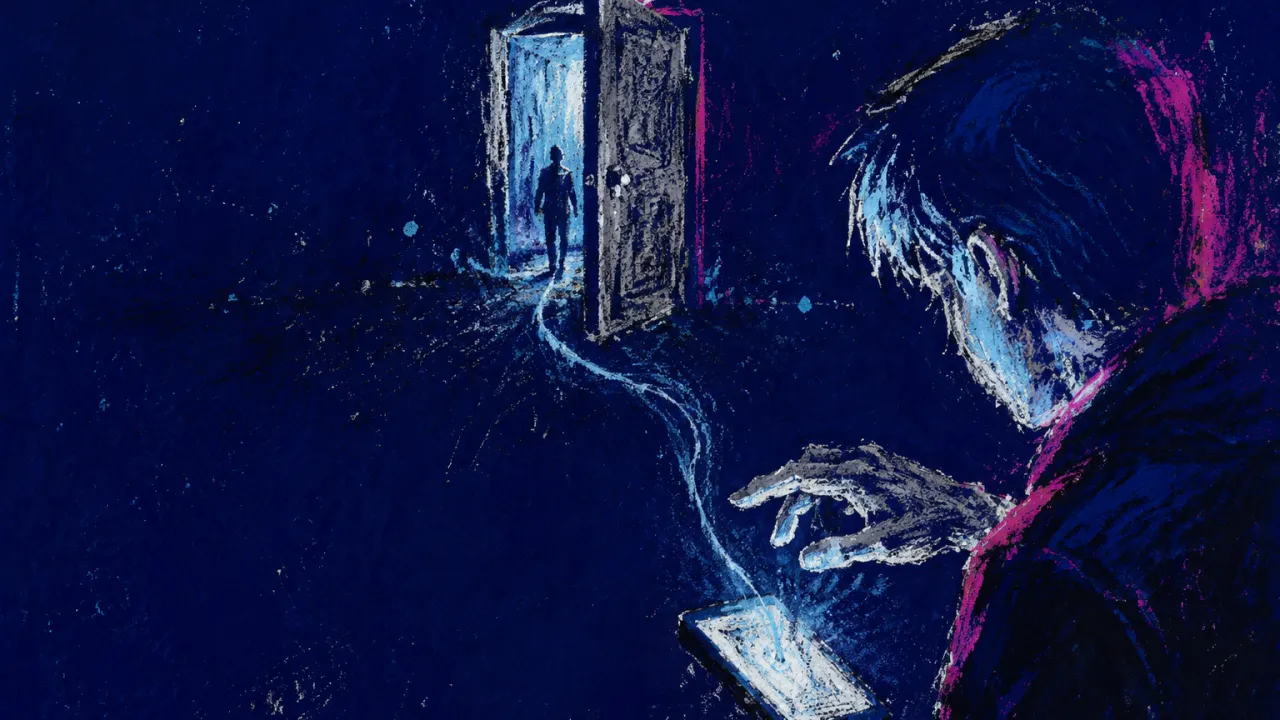
A solitary figure hovering over a lit phone as a thin silver signal pulls open a dark doorway nearby

What is this situation?

One-Touch Reentry Window — you think the loop is quiet for once, then your phone lights up with one tiny point of contact: a like on an old post, a view on your story, a “hey stranger,” a reaction emoji, a message with no context after weeks of absence. It usually happens in the most ordinary place, while you’re waiting for coffee, half-watching a show, getting ready for work, or finally not checking whether they’ve seen anything. The person does not fully return, explain, repair, or choose; they just touch the edge of your life through a screen and let the platform do the rest. Now the old thread is visible again, the typing box is there, the profile picture is back near the top, and the silence that had started to settle is interrupted by just enough contact to reopen the question. The power dynamic sits in the gap between access and accountability: they can reappear without having to stand in front of what happened, while you are left sorting whether this is a conversation, a test balloon, boredom, guilt, nostalgia, or nothing at all. The daily cost is not dramatic from the outside, which is part of what makes it so hard to name; it is the hand hovering over the phone, the shoulders tightening at a notification sound, the way one small tap can rearrange your whole evening. You are not dealing with a full return so much as a doorway left cracked open by digital access, much like Judgement, where a single trumpet call cuts through the air and pulls the figures below back into motion before they have chosen where to stand.

Why it's not you?

This is not happening because you are too reactive or because one small message should be easy to ignore. The structure of the situation is built around low-effort access: someone can reenter with a tap while leaving the meaning of that contact undefined. The pressure comes from the open channel, the unresolved history, and the way the platform makes reentry almost frictionless.

One-touch Reentry Window in Tarot Cards

The One-Touch Reentry Window is the moment a single notification, like, or low-effort message lets someone step back into a space they previously left open-ended. The body cue is small but immediate: your shoulders tighten, your hand hovers over the screen, and the day gets reorganized around a ping. This is an environmental, structural dynamic created by always-on apps, soft exits, and platforms that keep access available after clarity has been withheld. These Tarot Cards reflect the outline of that reentry pressure without telling you what to do next.

Wheel of Fortune
Upright
A great wheel hangs at the centre while figures rise and fall around its rim, turning recurrence into a visible system rather than an isolated surprise. The old contact's message, like, or story view can restart the same timing sequence: silence, low-effort return, renewed attention, uncertain exchange, and disappearance before any stable position is established. You may experience the latest signal as uniquely charged because it arrives in the present, but the wheel keeps the longer pattern visible. The structural issue is whether this moment changes the cycle's operating conditions or simply begins another rotation through access without accountability.
Justice
Reversed
Justice's balanced scales and upright sword present a cognitive standard in which evidence is weighed and relational claims are connected to observable consequence. Reversed, the standard is difficult to apply because digital access can impersonate significance: the contact is undeniable, yet accountability, explanation, and changed behaviour remain absent from the other side of the scales. You are encountering a belief-level pressure to treat being contacted as proof of being chosen, remembered, or owed repair. The image makes the missing weight visible, allowing the situation to be understood as an unequal evidence system in which one tap is being asked to carry conclusions that only sustained relational conduct could support.
The Moon
Upright
A narrow path runs between two towers under the Moon while a dog and wolf react from opposite sides and a crayfish emerges from dark water. The vague notification creates the same low-visibility terrain: one external signal is real, but its motive and destination remain obscured, allowing several incompatible interpretations to become active at once. You are not imagining the contact; you are trying to orient yourself with incomplete social information. The platform shows that they viewed, liked, or messaged, but it cannot show boredom, guilt, nostalgia, loneliness, or commitment, so the mind is left processing uncertainty that the sender could reduce only through clearer participation.
Judgement
Upright
An angel raises a trumpet above figures emerging from coffins, visually converting one call into the reactivation of an entire buried world. In a romantic context, a single message from an ex or unresolved partner can do the same: the relationship is not fully restored, yet its memories, questions, and possible futures are suddenly active again. The figures rise toward a reckoning, but the call itself is not proof that reckoning will occur. You can recognise the contact as consequential without treating it as a completed apology, renewed commitment, or mutual decision; the image separates the force of being summoned back into the relationship story from the substance required to rebuild it.
The World
Reversed
A central figure is enclosed by a laurel wreath while four fixed witnesses occupy the corners, presenting the image of a cycle that should be integrated and complete. Reversed, the complete-looking frame cannot deliver usable closure: the old contact remains technically inside your world, and one tap can expose the part of the cycle that was never socially resolved. The problem is not that you failed to move forward; platform access allows an unfinished relationship to cross back into the present without passing through explanation or repair. You are therefore asked to orient yourself inside a contradiction where life has continued in most areas, yet the open channel lets someone reactivate one unresolved edge as though completion were still pending.
Four of Cups
Upright
A hand extends one cup from a cloud toward a seated figure whose folded arms remain oriented toward the three cups already on the ground. The image closely mirrors a context-free message appearing at the edge of your day: an offer has entered the frame, but its source is partially disembodied and its relationship to the existing emotional history remains undefined. Your lack of immediate engagement does not erase the offer, and the offer's visibility does not oblige acceptance. The card locates the choice in the gap between being contacted and receiving something relationally usable, allowing the hovering cup to remain evidence of access without automatically becoming evidence of repair, commitment, or changed capacity.
Six of Cups
Upright
One child offers another a cup filled with flowers inside a sheltered courtyard, making a shared past feel compact, safe, and immediately transferable. An old friend's like on an archived photo, familiar meme, or brief message can operate in the same way, bringing the warmth of an earlier friendship into view without naming why contact faded. The memory may be mutual, but the work of reconnection is not yet mutual. You can feel the old role, inside jokes, and former closeness return through one small gesture while still lacking evidence that the friend has time, consistency, or willingness to build a present-tense friendship rather than briefly revisit the archive.
Seven of Cups
Upright
A silhouetted figure faces seven cups suspended in clouds, each containing a different promise, threat, or projection. One context-free message can produce the same interpretive display: perhaps they want to return, apologise, check access, relieve guilt, seek attention, revisit nostalgia, or simply pass time, with each story competing despite the evidence remaining only one small tap. The multiplicity is generated by missing context rather than by personal irrationality. You have been given a signal large enough to reopen possibilities but too small to rank them, so the mental workload expands precisely because the sender has not converted contact into a clear relational position.
Eight of Cups
Reversed
A cloaked figure walks away from eight stacked cups beneath an unsettled moon, with distance functioning as the only available route out of an emotionally incomplete arrangement. Reversed, the path does not become a simple homecoming; it becomes difficult to sustain, much like an old message thread returning to the top of your phone before the previous exit has fully consolidated. The contact reopens proximity without changing the conditions that made distance necessary. You may now feel pulled to revise your direction around a single tap, even though the sender has not demonstrated repair, continuity, or a shared destination; the structural question is whether digital reappearance has altered the road or merely made the abandoned cups visible again.
Two of Swords
Upright
A blindfolded figure holds two swords in a balanced cross while rocks obstruct the water behind them, making nonmovement the visible consequence of insufficiently safe information. The typing box creates the same external decision architecture: reply or stay silent, reopen or protect distance, even though the sender's vague contact has not supplied the context needed to compare those options cleanly. You are not facing a simple choice between courage and avoidance. The sender has transferred ambiguity into your hands while retaining the freedom to disappear again, so the crossed swords represent a rational pause inside an information imbalance rather than proof that you cannot decide.
Four of Swords
Reversed
A recumbent figure lies beneath three suspended swords while a fourth remains close at hand, turning stillness into something protected but never entirely free from interruption. Reversed, that physical arrangement captures an ordinary evening whose quiet is broken by one notification: your body may remain on the sofa or in bed, but your attention is suddenly back inside the old thread. The resting structure has not failed because you lacked discipline; it has been penetrated by a channel designed to deliver another person's return directly into your private routine. You are left carrying the practical cost through rereading, checking, delayed sleep, or lost focus, while the sender has not yet supplied enough context to justify the amount of space the contact occupies.
Seven of Swords
Upright
A figure carries five swords away from a distant camp while looking back, leaving two swords behind and keeping the engagement deliberately partial. The scene reflects a romantic contact who reaches back with one message or reaction but avoids standing fully inside the history, taking the benefits of renewed access while leaving explanation and repair behind. The contact may be real without being complete or straightforward. You are dealing with a pattern in which the sender can check whether the door remains open, gather reassurance, or revive your attention and then retreat again, making partial presence the mechanism through which accountability stays avoidable.
Page of Swords
Upright
The Page stands exposed to the wind, sword raised and gaze turned sideways, while birds and clouds amplify the atmosphere of circulating information. In a broader social network, this resembles an old contact who reappears through profile views, likes, reactions, or a low-context direct message, becoming visible without actually rejoining your social life. The platform permits observation and signalling from the perimeter of the relationship. You may therefore feel socially re-engaged before any mutual exchange exists, because their account, name, and activity have returned to your attention while their role in your current circle remains undefined.

One-touch Reentry Window in Tarot Card Reading Insights

The One-Touch Reentry Window shows up when a message or interaction reopens something that was never clearly closed. Other people bring this same digital reentry pattern into readings when one small contact point changes the whole emotional room. Tarot Reading Insights from sessions that sit with this kind of return.
Psychological Contexts Related to One-touch Reentry Window