Just A Signature?

A grounded look at cosigning pressure, relevant tarot cards, and tarot reading insights for contract-linked relationship strain.

Lease Cosigning Pressure
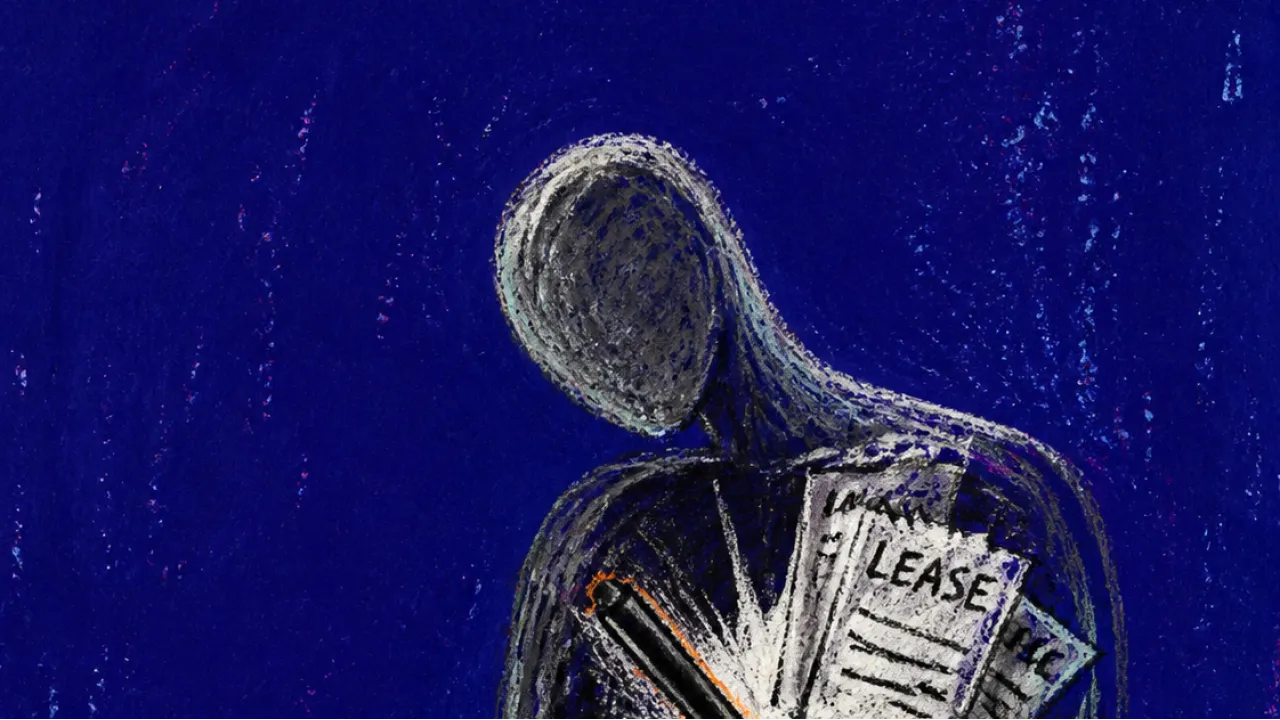
A solitary figure shrinking back as hands push lease papers and a pen toward their chest in deep indigo space

What is this situation?

Lease Cosigning Pressure — you get pulled into it when someone close to you says they need your name on a lease because the application will not go through without it. At first it is framed as quick, temporary, almost administrative: just a signature, just a backup, just helping them get approved before the unit goes to someone else. Then the messages start arriving with screenshots from the property manager, deadlines circled, rent figures half-explained, and a tone that makes hesitation feel like you are blocking their whole life from moving forward. They remind you how hard the rental market is, how little time they have, how they would do it for you, how nothing will go wrong because they have it handled. But the paperwork is not emotional in the same way they are; it places your name beside theirs, ties your credit to their payments, and turns their private housing problem into something that can follow you when you try to apply for your own place, move cities, or make a clean financial decision later. The pressure gets sharper because the relationship sits right on top of the contract: if you ask careful questions, you are being cold; if you need time, you are making things harder; if you say no, the disappointment lands in your inbox immediately. You find yourself rereading lease clauses late at night, checking messages before work, doing mental math around rent you will not be living under, and wondering why a request for help has started to feel like being cornered by someone else's urgency, much like the blindfolded figure on the Eight of Swords, surrounded by upright blades where every possible step seems to cut into something.

Why it's not you?

The problem is not that you are selfish for hesitating; the problem is that this request transfers risk onto you while calling it support. A lease cosign is not a casual favor when your name, credit, rental history, and future options are being used to secure someone else’s housing. The pressure belongs to the setup: urgency, emotional leverage, incomplete information, and a contract that does not disappear just because the relationship feels personal.

Lease Cosigning Pressure in Tarot Cards

Lease Cosigning Pressure is not just about one form or one favor; it is the pressure of having someone else’s housing timeline pushed onto your name, credit, and future options. The knot in your stomach when another text comes in is a body-level signal that the situation has become an environmental, structural dynamic rather than a simple personal request. The Tarot Cards below reflect the shape of that pressure: the contract, the uneven burden, the restricted exits, and the cost of being asked to carry risk that is not fully yours.

The Hierophant
Reversed
Inverted, the enthroned authority, kneeling initiates, and crossed keys no longer provide an unquestioned route to approval through obedience. The institutional setting links formal rules with social permission, mirroring a lease process in which property requirements and loyalty norms combine to tell you what a helpful person is supposed to do. You may be confronting a deeply learned script that support means compliance, family or partnership means shared credit, and requesting full information signals distrust. The inversion makes that script available for examination, revealing that institutional approval for someone else's home does not automatically outrank your own criteria for legal and financial consent.
The Lovers
Reversed
Inverted, the two figures, the angel above them, and the mountain between their landscapes no longer form a stable line of mutual alignment. The image makes a values conflict visible: a couple can care for each other while holding incompatible standards about financial risk, housing responsibility, and what commitment should require. You may be facing a partner who treats cosigning as an obvious next step while you understand it as a separate legal threshold. The blocked alignment does not reduce the issue to love versus selfishness; it reveals that the relationship currently lacks a shared framework for deciding who should carry housing risk and under what conditions.
Justice
Reversed
Inverted, the raised sword and suspended scales no longer organise the scene into a stable relationship between evidence, decision, and consequence. The imbalance mirrors a contract presented through emotion and partial explanations even though its legal language can assign full liability with little corresponding control. You may be told that the signature is only a backup, while the lease itself defines obligations more broadly and impersonally. The card exposes the decision's asymmetry: the applicant receives immediate use of the home, whereas your name can remain answerable for payments, fees, or rental-history damage that you did not cause and cannot directly prevent.
The Devil
Upright
The two chained figures stand beneath a larger authority, making a private bond subordinate to a material system of obligation. Their loose chains are crucial: family loyalty may make the arrangement feel compulsory, but the lease still requires an identifiable act of consent before the financial bond is created. You may be assigned the role of financially stable relative and told that using your credit is simply what family does. The card exposes how an inherited duty script can serve the contract, converting closeness into leverage and another household's rental instability into an obligation attached to your name.
Two of Pentacles
Upright
Looping two pentacles through an infinity-shaped ribbon while ships rise and fall behind him, the juggler shows a financial system kept functional through constant adjustment. The coins remain in motion, but the unstable sea makes clear that every added obligation increases the amount of volatility the system must absorb. You are being asked to fit another person's rent liability beside your own bills, credit needs, and future housing plans, even though their payment behaviour remains outside your control. The available skill is calculation, but the pressure obscures a harder structural fact: a budget can appear balanced today while an open-ended cosign keeps future capacity permanently in motion.
Six of Pentacles
Reversed
Inverted, the giver's scales, distributed coins, and unequal positions expose a family resource exchange that cannot be presumed fair merely because it is called help. The person controlling access to financial credibility can also be pressured by the people who claim that resource should circulate automatically within the family. You may possess the income profile or credit score the application requires, while the relative controls the home and monthly payments secured by it. The disrupted scales reveal a hidden distribution problem: their housing need is immediate and visible, but your contingent liability and reduced future flexibility are deferred and easier for the family to discount.
Ten of Pentacles
Reversed
Inverted, the multigenerational household beneath the arch and the ten pentacles distributed across the scene no longer form a stable system of shared material continuity. The home, elders, couple, child, and accumulated resources instead expose how one lease can pull several family roles and financial futures into the same unstable arrangement. You may be told that cosigning preserves family housing or prevents a relative from being displaced, while the contract simultaneously places your own future home and credit position at risk. The inversion reveals that family stability cannot be assessed only through the household gaining the unit; it also includes the household options constrained by the guarantee.
Two of Swords
Upright
Seated with a blindfold and two swords crossed tightly over her chest, the figure holds opposing consequences in static balance while rocks interrupt the water behind her. The scene captures a decision frozen by incomplete visibility: both positions can be maintained temporarily, but neither can be evaluated clearly while the blindfold remains part of the setup. You face financial exposure on one side and relational fallout on the other, with the applicant's deadline pressuring you to resolve the conflict before your questions are answered. The crossed swords preserve a pause, revealing that not signing immediately is a distinct decision state even when the messages insist that only approval or betrayal exist.
Seven of Swords
Upright
Carrying five swords away from the camp while glancing back at the two left standing, the figure makes selective possession of information and risk visible. Some blades are foregrounded, others remain behind, and the arrangement resembles a lease conversation in which approval deadlines are emphasised while liabilities, payment history, or fallback plans arrive only in fragments. You do not need to assume deliberate deception to recognise the structural problem: the person seeking approval knows more about their finances and intended tenancy than the person being asked to guarantee it. The card places strategic review back inside the choice, showing why incomplete disclosure changes the meaning of consent even when every reassurance is sincerely delivered.
Eight of Swords
Upright
Blindfolded, tied, and surrounded by upright swords, the figure gives physical form to the mental cache created by repeated messages, unread clauses, imagined defaults, and anticipated disappointment. The bindings are loose and the enclosure incomplete, but those facts are difficult to register while attention remains fixed on every possible consequence. You may reread the lease late at night, calculate rent you will not be living under, and rehearse how the other person will react if you refuse. The card separates internal paralysis from objective inevitability: your mind is processing a real conflict between legal exposure and relational pressure, while the pressured setup keeps those risks circulating without enough space for resolution.
Knight of Swords
Reversed
Inverted, the charging knight's raised sword, racing horse, and wind-struck landscape lose any stable relationship between speed and direction. Momentum becomes its own argument, reproducing the way a property deadline can be used to push a legally consequential decision faster than the available information can support. You may receive repeated messages that the unit will disappear, the manager is waiting, or the document must be returned today. The urgency is real for the applicant, but the card reveals how borrowed urgency can deprive you of the time needed to understand a liability that may outlast both the deadline and the current emotional intensity.
Two of Wands
Reversed
Inverted above the parapet, the figure's globe no longer sits securely between the fixed wand, the stone wall, and the open horizon. The image turns long-range possibility into constrained mobility: the world is still present, but access to it is compromised by an obligation anchored behind the walls. You may be considering your own move, rental application, city change, or financial reset while being asked to attach your name to someone else's lease. Their immediate housing route can therefore narrow your longer route, leaving you to plan around a contract whose duration and consequences are controlled elsewhere.
Eight of Wands
Upright
Eight wands cross the open sky at once above a river and distant buildings, turning rapid arrival into the dominant fact of the scene. Their shared trajectory resembles the compressed stream of lease links, screenshots, reminders, and property-manager updates that can make speed feel equivalent to necessity. You are receiving movement generated by someone else's housing timetable, but the clear landscape still allows the sequence to be observed rather than automatically obeyed. The card captures the timing pressure precisely: communication is moving quickly, while the contractual consequences attached to your response remain much slower and more durable.
Ten of Wands
Upright
Bent beneath all ten wands while still trying to reach the town ahead, the figure makes transferred workload physically visible. The destination remains reachable, but only by carrying a bundle large enough to obstruct sight and movement, echoing a lease request that imports another household's rent risk, paperwork, and monitoring into your own daily system. You may still be managing work, bills, messages, and plans for your own home while the cosigning request adds clauses to review, figures to verify, and consequences to track. The pressure is therefore not confined to one signature; it becomes an extra layer of life administration that consumes attention without giving you control over the tenancy.

Lease Cosigning Pressure in Tarot Card Reading Insights

When Lease Cosigning Pressure shows up, people often bring the same stuck question into readings: what does this ask really place on me, and what happens if I say no? The readings below move from the card list into how this kind of pressure appears inside Tarot Reading Insights.