Can the Buffer Hold?

A grounded look at saving under constant bills, with related tarot cards and Tarot Reading Insights from sessions.

Emergency Fund Building Phase
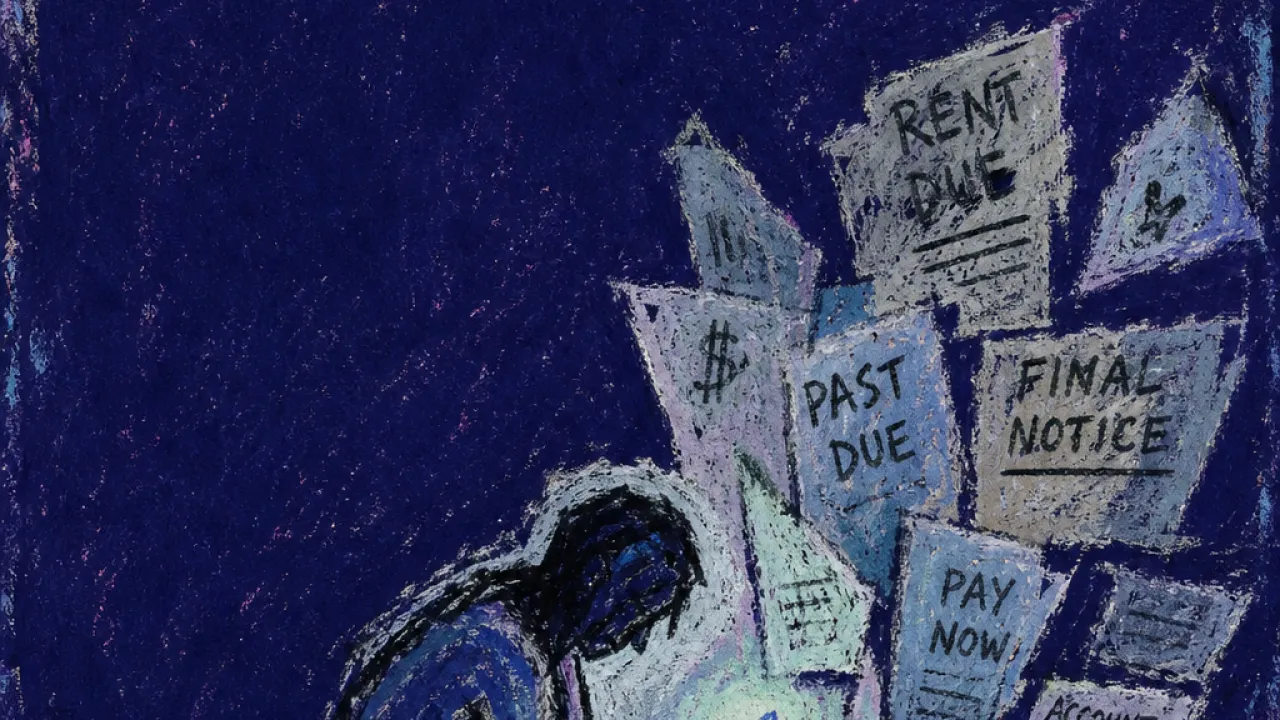
A solitary figure hunched over a small glowing reserve as bills press inward, leaving cold marks around cupped hands

What is this situation?

Emergency Fund Building Phase — you enter it the week a rent increase, dental invoice, broken phone, or delayed reimbursement shows you how thin the space is between ordinary life and a scramble. You open a savings app, name a separate account, set an automatic transfer for payday, and start treating that number like a small wall between you and the next unexpected expense. Then the outside world begins reaching for the same money: rent posts, groceries cost more than last week, your transit card needs topping up, a subscription renews, and a friend books dinner where splitting the bill is assumed before anyone checks what the night costs. Your landlord's calendar, your employer's payroll dates, utility due dates, bank notifications, and price changes all move with their own timing, while your buffer grows in slow increments. You are not buying luxury; you are deciding whether to refill the fund or replace the shoes that wore through on your commute. Ordinary invitations start to feel like pressure, not because people are wrong to ask, but because every yes touches the reserve you are trying to protect. At night, you check the balance again, watching pending payments clear one by one, and your shoulders tighten because the number can rise for weeks and then shrink in a single afternoon. The whole arrangement keeps asking you to hold onto a small square of security while the city keeps sending hands toward it, much like the figure on the Four of Pentacles, feet planted on two coins and arms locked around the one they cannot afford to drop.

Why it's not you?

The issue is not that you are bad with money; this phase is hard because outside systems keep charging on fixed dates while income arrives in limited intervals. Rent, food, utilities, transport, health costs, and payroll delays can all crowd the same account before the buffer has time to grow. That pressure has a shape: a savings goal being squeezed by a cost-of-living schedule.

Emergency Fund Building Phase in Tarot Cards

Emergency Fund Building Phase is the part of saving where rent, groceries, subscriptions, and due dates keep reaching for the same small buffer. The shoulder-tightening pause when a pending payment clears belongs to that outside pressure, not to a private failure. It is an environmental and structural dynamic: scheduled costs press inward while the reserve is still forming. These Tarot Cards reflect the visible shape of that pressure.

Wheel of Fortune
Upright
The central wheel turns while figures occupy rising and falling positions around it, presenting stability as something negotiated inside movement rather than outside it. Rent cycles, payroll dates, renewals, reimbursements, and price changes each rotate on their own timetable, periodically placing more pressure on the same account. The upright wheel keeps movement and adjustment available. You can recognise recurring high-pressure points and align transfers around them, using the emergency fund to reduce the impact of changing cycles rather than expecting the external calendar to become still.
Temperance
Upright
The uninterrupted stream passing between two cups depicts timing as calibrated movement rather than a single all-or-nothing moment. Transferring savings before every bill has cleared can protect the money early, but it can also force a return transfer when the operating account becomes too shallow. The upright flow preserves an adjustable route between the two containers. You can read the month for stable transfer windows, separating long-term consistency from rigid adherence to a date that repeatedly collides with essential charges.
The Tower
Upright
Lightning striking the tower, the crown forced from the roof, and figures falling through the dark sky present an external disruption that overwhelms the structure's existing margin. A rent increase, broken phone, dental invoice, or delayed reimbursement can play the same role by exposing how quickly ordinary life destabilises without accessible cash. The upright rupture makes the timing signal unmistakable: the old level of protection has already been tested by reality. You can use the aftermath as concrete information about the size, accessibility, and replenishment logic the next version of the emergency buffer needs.
Three of Cups
Reversed
The inverted circle of three friends with cups still raised preserves the image of closeness while disrupting its easy material flow. When a friend chooses an expensive venue or assumes an equal split, the emotional invitation and the financial terms arrive fused together. The reversed scene restricts access because the group's spending norm consumes resources you cannot freely release. The resulting friction does not prove the friendship is false; it reveals whether the relationship can separate care and inclusion from one default price point.
Ace of Pentacles
Upright
The hand extending a single pentacle above a cultivated garden makes financial security visible in its smallest workable form: one protected resource and an open path through the arch. The image mirrors the moment you create a separate account and give the first transfer a defined purpose rather than waiting for a large surplus to appear. The upright landscape keeps that path accessible, but it does not imply instant abundance. You have a concrete starting asset, a repeatable entry point, and enough material agency to begin building a buffer even while ordinary costs continue around it.
Two of Pentacles
Upright
The infinity loop around the two coins and the ships riding separate waves depict obligations moving on overlapping but unsynchronised cycles. Payday, rent, utility due dates, pending reimbursements, and automatic transfers can all be individually predictable while remaining collectively difficult to time. The upright stance shows usable responsiveness within that volatility. You can adjust transfer dates or monthly amounts without abandoning the fund's purpose, treating timing changes as cash-flow management rather than evidence that the savings phase has failed.
Four of Pentacles
Upright
The four pentacles positioned at the figure's head, heart, and feet show one financial rule influencing thought, emotion, and action at once. Building a buffer can strengthen practical self-protection, but it can also make an untouched balance feel like the only acceptable proof of progress. The upright structure provides a stable base from which that rule can become more precise. You can define security as a fund with a purpose, thresholds, and replenishment logic, rather than as a number that must never move even when a genuine emergency occurs.
Five of Pentacles
Upright
The two figures moving through snow beneath a lit window of five pentacles make material exposure physically visible: limited mobility, harsh conditions, and resources that do not feel readily accessible. This is the thin space revealed when a dental invoice, rent increase, or broken phone turns an ordinary week into a scramble. The upright scene names the material constraint without reducing it to personal incompetence. You can locate the pressure in the gap between fixed necessities and available cash, which clarifies why even a small accessible reserve changes the practical conditions of daily life.
Seven of Pentacles
Upright
The worker studying a crop that is substantial but unfinished embodies the cognitive strain of delayed reward. Your repeated transfers produce security that is difficult to feel because its value lies in an event not happening or in a future expense becoming less disruptive. The upright vine provides visible evidence that patient effort is becoming material capacity. You can redefine progress around resilience gained and recovery time shortened, not only around reaching a final target that keeps receding as urban costs change.
Eight of Pentacles
Upright
The worker's repeated hammer strokes and the row of completed pentacles show competence developing through unglamorous repetition. Building a reserve asks you to tolerate a process that may feel boring precisely because its strength comes from being predictable. The upright card makes method and skill accessible rather than demanding perfect motivation. You can understand each recurring transfer as practice in financial self-protection, with the system carrying more of the load as the habit becomes established.
Page of Pentacles
Upright
The Page holds one pentacle at eye level and studies it against a fertile but unfinished landscape. The scene fits the early stage of naming an account, learning how much can move on payday, and treating a modest balance as a practical system worthy of attention. The upright field leaves room for applied learning and expansion. You can develop a clearer definition of emergency, a realistic first threshold, and a replenishment pattern without needing advanced financial expertise or a large starting balance.
Knight of Pentacles
Upright
The stationary horse, cultivated rows, and carefully held pentacle place progress inside a slow operational timetable. Emergency-fund growth follows pay cycles and repeated transfers, while the protection it creates may not become obvious until several months have passed. The upright Knight gives the slow pace continuity and direction. You can distinguish a plan that is moving gradually from one that has stalled, using the recurrence of contributions and the fund's improving recovery capacity as timing signals.
Nine of Swords
Upright
The person sitting upright in bed with their face in their hands while nine swords line the dark wall closely mirrors checking a savings balance at night as pending payments clear. The account is materially limited, but darkness and repetition can make every possible invoice appear to arrive at once. The upright image makes the mental cost visible without turning it into a character flaw. You can separate confirmed charges, known due dates, and current balances from hypothetical losses, so the fund remains a practical buffer rather than an impossible demand for complete protection.
Seven of Wands
Upright
The lone figure meeting several raised wands from a defended position mirrors a private money boundary facing repeated requests from close peers. A dinner, birthday contribution, weekend away, or last-minute ticket may be reasonable alone while still exceeding the margin available across the whole month. The upright stance keeps the relationship field open without surrendering the boundary. You can make the cumulative pressure visible to friends and preserve forms of contact that do not require the reserve to subsidise every shared plan.
Ten of Wands
Upright
The figure carrying ten wands toward the town has both arms occupied and much of his forward view blocked by the load. Fixed rent, utilities, food, transport, health costs, and renewals can create the same crowded structure, leaving little physical or financial capacity for a reserve. The upright figure is still moving toward a destination, which keeps agency inside the burdened system. You can identify which costs are truly fixed, which recur by default, and which demands have been added without review, making the actual load visible before judging the savings pace.

Emergency Fund Building Phase in Tarot Card Reading Insights

When people bring an Emergency Fund Building Phase into readings, the question often sits around the same practical squeeze: how to keep a buffer intact while the calendar keeps charging. The insights below move from the card list into readings shaped by that pressure. Tarot Reading Insights from sessions.
Psychological Contexts Related to Emergency Fund Building Phase