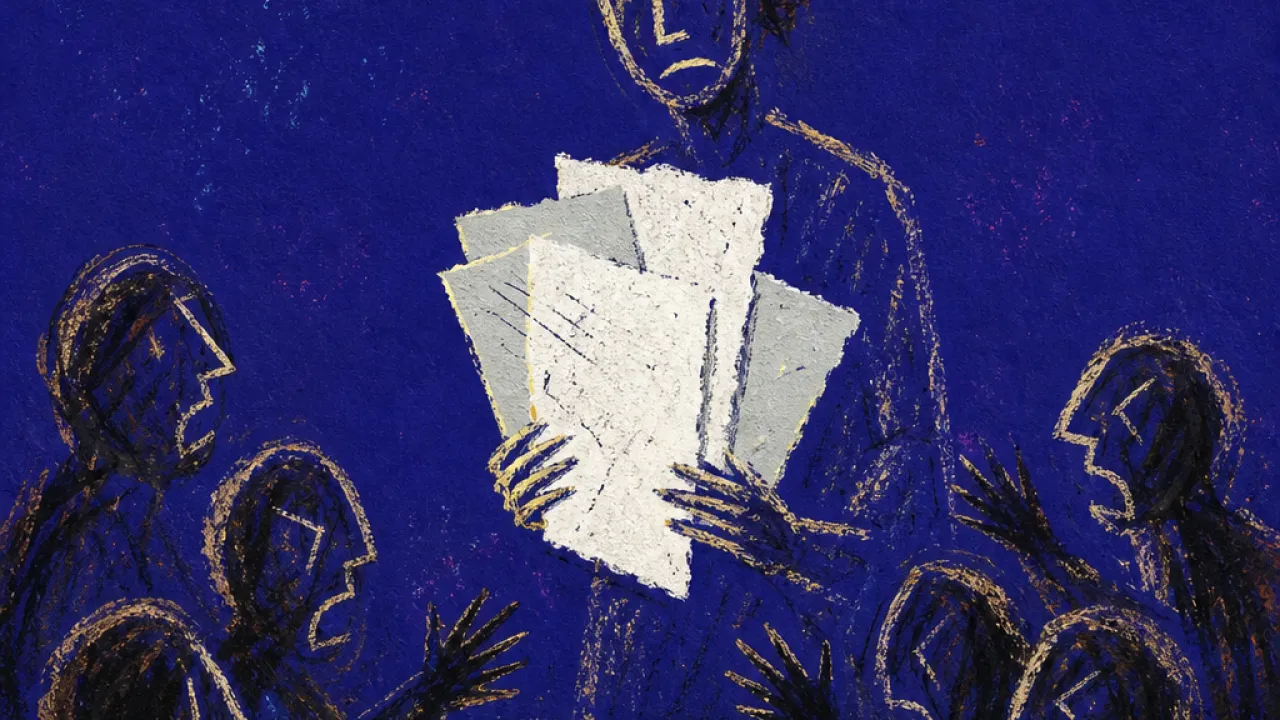
This Family Accountability Reckoning is the moment when old actions, selective memory, and uneven responsibility stop staying private. The tightness in your chest at the kitchen table or in the family group chat is not random; it is your body meeting an environmental, structural dynamic that has been kept vague for too long. These Tarot Cards do not decide who is right or wrong for you; they mirror the visible shape of responsibility, evidence, resistance, and repair inside this kind of family reckoning.
Judgement UprightThe angel's trumpet hangs over open coffins, turning what was sealed underground into a shared scene of exposure and response. The figures do not wake one at a time in private; they rise together, under the same sound, in front of the same visible symbol. That visual structure mirrors a family moment when old actions, avoided conversations, and inherited silences can no longer stay buried inside individual memory. You are not dealing with a vague feeling that something is off; the card frames the issue as a system-level reckoning where responsibility has to become visible before renewal can be real. The upright quality gives this reckoning a usable form. Accountability is not shown as punishment here, but as the first clear signal that the family story can be named, answered, and reorganized without everyone staying locked in the old containers.
Five of Cups UprightThree spilled cups lie in the foreground with their contents already on the ground, making the damage visible rather than theoretical. In a family system, that image fits the moment when old promises, uneven care, or repeated dismissals can no longer stay blurred inside a vague sense that something was off. The two upright cups behind the figure matter because the scene is not total collapse. The card holds loss and remaining structure in the same frame, which is exactly what makes accountability inside a family difficult: You may still have ties, history, practical contact, or some real care, while also needing the visible spill to be named. The distant dwelling keeps the idea of family stability in view, but the foreground insists that stability cannot be restored by stepping over the evidence. This context points to a reckoning where the path forward depends on whether the family can look at what was spilled without forcing You to minimize it.
Three of Pentacles UprightThe craftsperson stands on the bench with tools in hand while the robed figures look on with the plan. The work is visible, the standard is visible, and the unfinished structure makes contribution impossible to keep abstract. Inside a family system, this turns into a reckoning over labor, responsibility, and credibility. The card points to the moment when vague claims of care or loyalty have to meet what has actually been built, repaired, paid for, organized, or carried. The upright form keeps the reckoning constructive. Accountability is not framed as punishment; it is the shared inspection that allows a family structure to stop running on denial and start naming real contributions.
Ace of Swords UprightThe sword raises the crown into view, making the rule-maker visible instead of letting authority hide inside tradition or mood. The central blade creates a record-like line through the scene, the visual equivalent of naming what happened and asking which standard is being applied. In family dynamics, that becomes a reckoning around double standards, selective memory, and who gets excused from the rules. You regain agency by seeing accountability as a structure that needs daylight, not as a personal fight for approval.
Three of Swords UprightThe card places the wound at the center and arranges the swords so their directions can be seen. Nothing in the image lets the impact dissolve into vague atmosphere; the heart carries a visible record. Family Accountability Reckoning belongs here because some family patterns only become workable after the injury is named with enough precision. The issue moves from general tension to a concrete account of what was said, who carried it, and what repeated line of pressure keeps landing in the same place. The card supports agency by making accountability structural rather than theatrical. It does not require a perfect confession from everyone before you can see the pattern; it gives you a map of impact that can guide what contact, repair, or distance needs to be reassessed.
Page of Swords UprightThe sword rises as a clean line against clouds that have not cleared. The Page's serious expression and central placement make the image less about victory than about naming what is visible, even while the surrounding atmosphere remains unsettled. Family accountability often begins in exactly that kind of weather: partial memory, competing stories, and pressure to keep the old version intact. This card connects to the moment when You are no longer willing to let the family narrative stay vague, yet the act of naming facts still requires care, precision, and enough distance to keep from being pulled into the old script.
Knight of Swords UprightThe knight drives the white horse straight into the wind, sword raised above the line of hesitation. Everything in the image is organized around naming a target and moving toward it without disguising the direction of travel. In a family system, that visual structure becomes the moment when a pattern can no longer stay vague. The raised blade is not just aggression; it is a boundary of language, cutting through the fog of hints, denials, and polite avoidance. You meet this context when a family conversation stops being background tension and becomes a visible reckoning. The card mirrors the pressure of saying the clear thing in a room that has relied on speed, deflection, or tradition to keep the old structure intact.
King of Swords UprightAn upright king sitting squarely on a stone throne, with the sword raised in a clean vertical line, turns the scene into a chamber of evidence rather than a field of persuasion. The plain blue clothing, fixed gaze, and undecorated throne strip away performance and force the family system to deal with what can be named, remembered, and compared against reality. In a family accountability reckoning, the pressure is not just that someone is upset; it is that the household has run on selective memory, soft denials, or moving standards for too long. You are meeting the part of the family structure where clarity has to become external, spoken, and documented before any repair can be more than emotional theater.
Seven of Wands UprightThe wands do not float as abstract tension; they meet in direct lines of force. The open sky keeps the conflict visible, while the figure's raised wand turns a private position into something that can be challenged, tested, and held in public. A family accountability reckoning begins when an old pattern is named clearly enough that other people can no longer pretend it is only atmosphere. The card shows You standing inside the moment when clarity creates resistance, and resistance reveals the exact shape of the system being questioned.
No cards available for this filter.