Productive Procrastination Meets a 20-Minute Learning-Transfer Test

The 7:40 p.m. Learning-Transfer Gap: When Productive Procrastination Looks Like Learning
As an early-career Toronto knowledge worker, Casey (name changed for privacy) sat down to apply a method, and a new tutorial appeared just before the first draft, turning a planned practice block into productive procrastination. I recognized the pattern before I knew its details: the next tab was waiting at exactly the moment the work became visible.
At 7:40 p.m. in Casey's Toronto apartment kitchen, I watched them place a practice brief beside a notebook of highlighted course notes. They typed a heading, stopped, and searched for a better example; the radiator clicked, the laptop fan hummed, and their phone warmed one palm while the other kept moving across the trackpad.
Casey looked at me and said, 'I can explain the method, but I freeze when I have to make my own version. Why do I keep learning instead of using what I already know?'
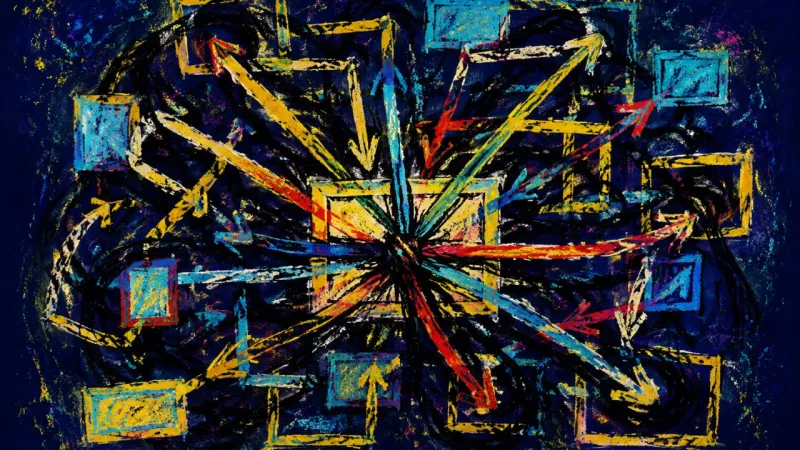
The contradiction was plain: they wanted to use existing knowledge, yet kept postponing use by continuing to learn. Their apprehension felt like a browser with twenty-six tabs open: every tab contained a possible answer, but none was the page where the work could reach a finished screen. Frustration sat behind the tight jaw, while self-doubt briefly softened whenever a new resource made the first attempt wait.
I am Hilary Cromwell, and I have spent a lifetime at Cambridge and on archaeological digs. I have seen enough ruined walls to know that a temporary fracture is not a final verdict. I told Casey I did not hear laziness in that pattern. I heard genuine curiosity recruited as protection when a rough result might be seen. I would not lecture them or turn the cards into a prediction. We would sit together in the evidence, dust off what was already sound, and draw a map toward clarity.
The Four-Layer Insight Ladder and the Shape of the Loop
I asked Casey to put both feet on the floor, breathe once without trying to force calm, and name the one task they had been avoiding. I shuffled slowly. The movement was a transition from a glowing browser to a shared table of images, not a supernatural test.
For this consultation, I used the Four-Layer Insight Ladder · Context Edition, a four-card tarot spread designed for the learning-transfer gap. I use tarot here as an objective visual language: the images give a fixed surface to a moving pattern, so we can examine the pattern without treating it as a character flaw or a fixed destiny.
This issue had the shape of an F6 systemic deconstruction. Information gathering created temporary relief, delayed practice created no evidence, and the absence of evidence sent Casey back to more information. A Celtic Cross or a Past-Present-Future spread could have added context, but it might have diluted the four linked functions we needed: the visible habit, the certainty rule beneath it, the integration lever, and the smallest experiment that could create feedback.
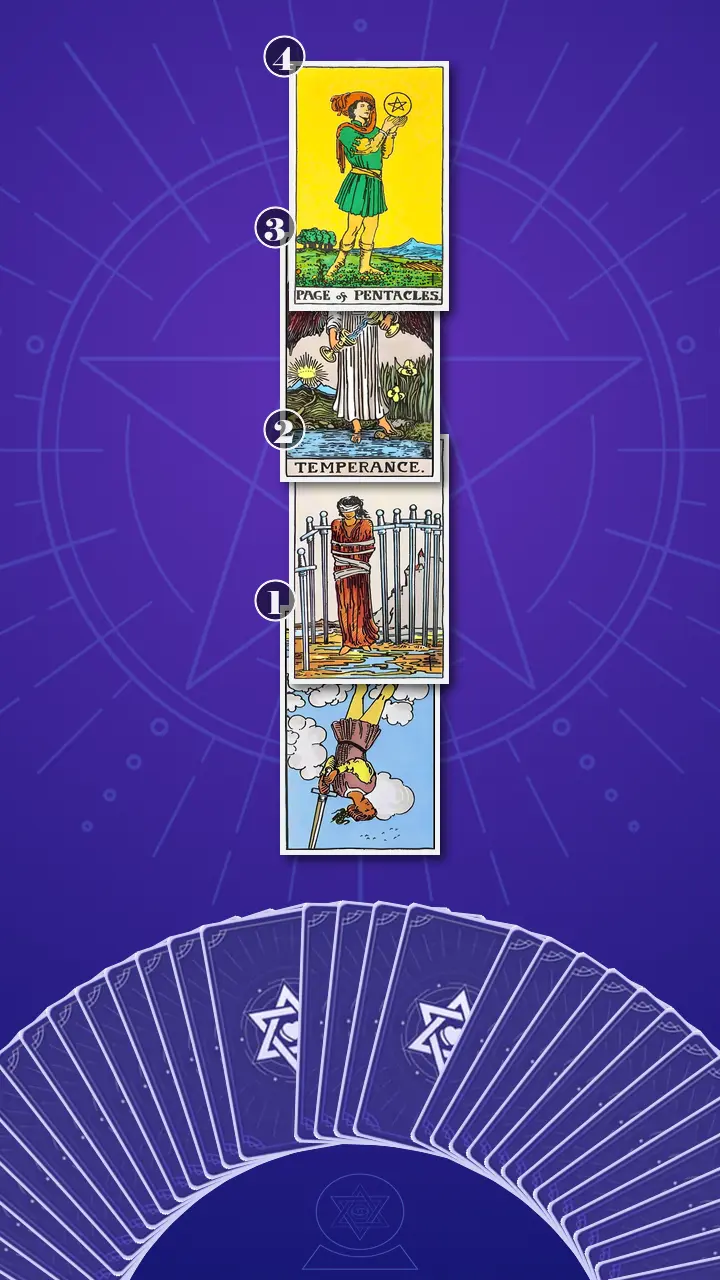
I placed the cards as a vertical ladder. The first position would show the surface pattern: the observable habit of opening more resources during a planned application block. The second would reveal the underlying restriction: the certainty rule and self-worth fear that turn a reasonable desire to learn well into procrastination. The third would identify the integration lever, and the fourth would define a grounded next step that could create evidence without requiring a perfect result.
Reading the Air Before It Becomes a Wall
The Raised Sword That Keeps Pointing Sideways
Now I turned over the card representing the surface pattern: the observable habit of opening more resources during a planned application block, which expresses the consultation issue of learning instead of using. It was the Page of Swords, in reversed position.
The Page held the sword upright but looked sideways, while wind moved through the scene and birds crossed the open sky. For Casey, the raised sword became a cursor ready to search again. At 7:40 p.m., they held the practice brief beside highlighted notes, typed a heading, and opened another expert thread for a better example. The mind was alert and genuinely interested, but the sword never became a decision. It stayed poised above the next search while the first usable draft remained invisible.
Reversed, the Page's Air was in excess. Curiosity had become scattered, inward-turned energy, and the habit of scanning had lost its closing point. This was not a deficiency of intelligence or effort. It was a blockage in follow-through. The next tab had become the mental equivalent of a TTC route planner recalculating on the same platform: movement everywhere, arrival nowhere. The next tab is not always the next step.
I asked Casey, 'When the brief begins to feel exposed, what do you open first: a new tutorial, a comparison thread, a cleaner template, or the task itself?'
Casey gave a short laugh with no amusement in it. 'That is almost rude. I am not doing nothing. I am learning.'
'I know,' I said. 'The purpose is not to discredit learning. The purpose is to notice when learning has been asked to protect you from contact with the work.' Learning can be real and still be a hiding place.
Casey's thumb stopped above the trackpad. They did not nod. They looked from the half-written heading to the stack of highlighted pages, their mouth tightening as though the sentence had landed somewhere physical. The pattern was not a moral failure; it was a clever form of delay that had begun outliving its usefulness.
The Rope That Feels Like a Rule
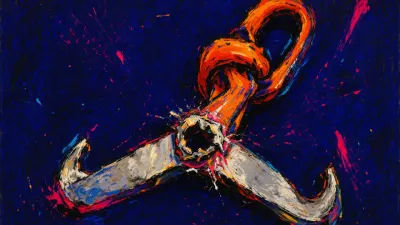
Now I turned over the card representing the underlying restriction: the certainty rule and self-worth fear that turn the reasonable desire to learn well into procrastination. It was the Eight of Swords, in upright position.
I saw Casey in front of a Google Doc with enough notes to make a modest draft, while a manager's request for one concrete example still waited in the background. When the question arrived, Casey could explain the framework smoothly, then offered to send a more considered version later and opened a new search window. Their eyes moved across the tabs, their breath shortened, and the thought appeared: 'If I submit this and it looks clumsy, people will see that I was only collecting information.'
The white blindfold and the loose rope mattered. The card did not say Casey had no options. The open ground beyond the ring of swords was still there. It showed how a felt restriction can become stronger than the actual circumstances. An unclear brief or a genuinely missing source would be a real constraint. But the rule that no draft was allowed until every relevant source had been checked was self-imposed, even though it felt like a locked gate.
I use a diagnostic I call Research Bottleneck Analysis for moments like this. On an excavation, when a trench stops yielding a clear layer, I do not accuse the soil of refusing to cooperate. I inspect where the material has become mixed. Casey's bottleneck was not the intake of information. It was the transfer point where information had to become visible, revisable, and therefore capable of receiving feedback.
I asked, 'When you imagine sending a rough draft built from what you already know, what consequence do you fear most: correction, embarrassment, lost credibility, or the feeling that the result says something final about your ability?'
Casey went quiet. Their jaw held tight, and for a moment their breath seemed to stop behind their teeth. They stared at the open space beyond the swords as if it were a door they had been told was not an entrance. 'A correction would be fine in theory,' they said. 'It is the possibility that the correction would prove I never really knew what I was talking about.'
I let that distinction remain visible. The brief relief from opening another source was real, but it was relief from being seen, not evidence that another source was necessary. That was the certainty rule: complete the method first, then perhaps the first attempt would be safe. Since complete certainty never arrived, the practice stayed in the dark.
When Temperance Turned Certainty into Contact
When I reached the third card, I slowed down. The radiator clicked off, and the kitchen seemed to gather around the small blink of the cursor. We had reached the visual turning point of the reading.
The Two Cups That Let Learning Answer Back
Now I turned over the card representing the integration lever: the active form of moderation that connects one lesson to one bounded use, rather than preserving an endless balance between preparation and action. It was Temperance, in upright position.
In the RWS image, the angel pours water between two golden cups, with one foot in water and one on land. Temperance changed Casey's question from 'Have I learned enough?' to 'What can this one idea meet in the real world for twenty minutes?' The two cups became a course note and a real work task. One idea could be poured into a private draft, workflow sketch, decision memo, or worked example, and the result could pour something back into the learning.
Upright, this was balance as an active exchange, not a perfect fifty-fifty split between studying and doing. It was patience with a direction. The missing spark did not need to arrive as pressure or bravado. It could begin as a small choice to let the task teach the lesson back.
Here I used my signature lens, Academic Stratigraphy. On an archaeological site, I separate foundation, later additions, and loose fill before deciding what can bear weight. I apply the same discipline to fragmented knowledge: identify the idea that is already structurally sound, remove the decorative clutter, and place that one idea into a context where it can be tested. Casey did not need another shelf for the archive. They needed one load-bearing fragment to meet the ground.
The Permission to Begin
Casey was caught in the old equation: if one more source could make the work safe, the first attempt could wait. The highlighted notes lay ready beside the brief; the laptop fan hummed, the phone was warm, and the jaw tightened as the search bar promised relief.
I said, You do not need more information to earn permission to begin. One existing idea used in a small test can teach you something that another polished explanation cannot.
You do not need another full shelf of information; pour one idea from one cup into a real-world experiment, as Temperance does.
For one beat, Casey froze. Their fingers hovered above the trackpad, their breath caught halfway, and their pupils widened as they stared at the two cups. Then their gaze lost focus, as if the manager's question, the blank Google Doc, and every postponed draft were replaying behind the blindfold. Their jaw tightened once more. 'But if I could have started with what I know,' they said, 'doesn't that mean I was wrong all this time?'
I let the question stand. 'It means your thoroughness was trying to protect you past the point where it could help.' Finally, Casey exhaled from deep in their chest. Their shoulders lowered, the fist around the phone loosened, and their eyes shone without turning the moment into a performance. Their voice came back smaller: 'I thought I needed more input, but I may need one contained exchange between what I know and what I can test.' Relief arrived with a brief, dizzy blankness. A clear path still asked them to choose. I asked, 'Now, use this new perspective to remember: was there a moment last week when this insight might have made you feel different?'
I made the first version deliberately private. I suggested a ten-minute timer, one note Casey already trusted, and a rough example that nobody else had to see. If the discomfort became too strong, they could use a fictional or sanitized case. Casey moved a saved article into a parking-lot note, closed two tabs, placed one note beside one draft, and began the timer. Their inner sentence changed to: 'I can keep learning later, but first I want feedback from contact with the task.'
This was the first measurable movement from apprehensive over-preparation and self-doubt toward measured self-trust. It was not mastery, and it did not erase the fear of an imperfect result. It changed the relationship between learning and use. Application was no longer a final exam after learning; it had become one of the ways learning could continue.
The Pentacle That Could Be Held
A Small Work Sample, Not a Verdict
Now I turned over the card representing the grounded next step: a small, observable learning-transfer practice that can create evidence of capability without requiring a perfect result. It was the Page of Pentacles, in upright position.
The Page studied one pentacle with full attention while standing in a cultivated field, with mountains waiting in the distance. For Casey, the pentacle became one tangible object: a one-page work sample, a tested workflow, a short recommendation, or a clearly documented example. The question was no longer 'What else should I learn first?' It was 'What can I make, test, or document with this today?'
Upright Earth offered grounded attention rather than a demand for a grand result. The field was cultivated, but it was not a finished landscape. The mountains marked a longer horizon, not a standard Casey had to reach before beginning. A small artifact could be held, checked, revised, and learned from without pretending to be mastery.
I reminded Casey not to overcorrect by banning further learning or forcing a large public deliverable. A private Google Doc was enough. A sanitized example was enough. Sharing with a trusted collaborator could be chosen later, but it was not owed to a manager, mentor, audience, or card. Casey put the phone face down and wrote one word at the top of the page: 'draft.' Their shoulders were still slightly raised, but their hands had stopped searching.
One Note, One Test: Finding Clarity Through a Bounded Experiment
When I set the four cards beside one another, their story was precise. The reversed Page of Swords showed restless information gathering. The Eight of Swords showed the certainty rule that made an imperfect attempt feel unsafe. Temperance provided a measured exchange, and the Page of Pentacles gave that exchange an object. What looked like a browser with twenty-six tabs was a self-reinforcing learning-avoidance loop: intake brought temporary relief, delayed application created no evidence, and the absence of evidence sent Casey back to intake.
The cognitive blind spot was subtle. Casey had been treating learning as proof that they were preparing responsibly, while treating use as the final exam that would judge their worth. My Research Bottleneck Analysis located the blockage at the transfer point, not at intelligence, effort, or access to information. The transformation direction was simple and practical: after each learning session, turn one concept into a twenty-minute observable test before opening another resource. That shift moves from waiting to feel ready toward building evidence through use.
To keep the advice structural, I used my Thesis Stratigraphy Framework. I normally use it to rebuild an essay outline so its core arguments pierce through intellectual clutter. Here I adapted it into three layers: one central claim at the top, two pieces of evidence already in hand beneath it, and one open question to carry into the next learning session. The framework gave Casey a scaffold without turning the scaffold into another elaborate system.
I told Casey plainly: a rough test is evidence, not a verdict. These were the next steps we agreed could stay small, private, and adjustable.
- Close the shelf after twenty-five minutesAfter one planned learning session this week, in a private Google Doc or workspace, close the resource tabs and choose one existing note. Set a twenty-minute timer and use it with one real task, writing an observable verb at the top: draft, compare, map, or test. Stop when the timer ends; nobody else needs to see it.If twenty minutes feels too exposed, make a five- or ten-minute fictional or sanitized version. Park the next resource instead of deleting it.
- Give one practice brief a modest finish lineBefore Friday, choose one unfinished practice brief and turn it into a one-page work sample using only the notes and examples already available. Use the Thesis Stratigraphy Framework: write one core claim, add two supporting points, and name one open question. Choose a recommendation, process map, or worked example instead of a complete portfolio piece.Keep it private or send it only to a trusted collaborator. The finish line is contact with the task, not public proof or polished mastery.
- Let the task teach the lesson backAt the bottom of the draft, write three lines: the source note, the real task it entered, and one observation from the attempt. Review only those observations at the end of the week, then choose one question for the next learning session.Record facts rather than judging quality. If the test produces no clear answer, that is still useful information about scope, timing, or the next question.
We agreed that the Four-Layer Insight Ladder had done its work by making the loop visible. The next move belonged to Casey. The cards could name a pattern, but Casey decided what to test, what to keep private, what to share, and what to revise. That is the practical heart of a learning-transfer tarot reading: not certainty delivered from outside, but enough clarity to make one chosen experiment possible.
A Quiet Proof on a Toronto Morning
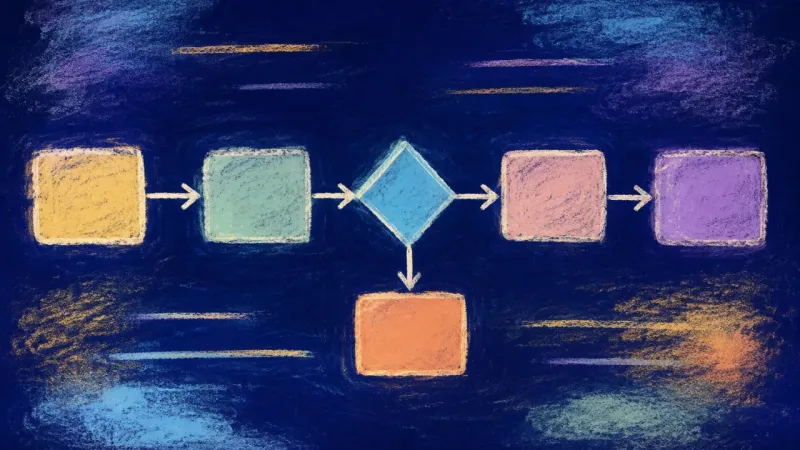
Six days later, I received a Slack message from Casey. They had completed the ten-minute version before opening another tutorial. The result was a rough process map based on one course note, and it showed exactly where the method became unclear in practice. Casey wrote, 'I am keeping it private for now, but I finally have a real question for my next study session instead of just a longer reading list.'
Their learning had not disappeared. It had changed direction. The next session began with feedback from contact with the work, and the work had become small enough to touch. That was the evidence-based self-trust Temperance had pointed toward: not the claim that every attempt would succeed, but the knowledge that an attempt could teach something without becoming a verdict.
The plan was clear enough for a full night's sleep, but morning still brought the thought, 'What if I got it wrong?' Casey smiled, reopened the private document, and revised one line. The doubt remained; it no longer had sole custody of the first move.
I did not give Casey mastery, and the cards did not perform the work. I offered a map, a historical perspective, and a patient place to inspect the layers. Casey chose the path. The journey to clarity began when they stopped asking information to grant permission and let one existing idea meet one real task.
The querent remains the author of the next chapter: the cards can name a pattern, but only Casey decides what to learn, test, share, revise, or leave alone.
When the cursor blinks over an unfinished practice brief and your jaw tightens, it can feel safer to collect one more source than risk an imperfect result revealing the fear that your worth depends on getting it right. But noticing that protective move is already a small layer of clarity; the next tab is no longer invisible.
If one existing note were allowed to become a small, private twenty-minute experiment, what would you be curious to notice before deciding whether it was good enough?