Productivity Theater in Your Side Hustle: From Tweaking to One Draft

The Blank Doc Beneath the Laptop Glow
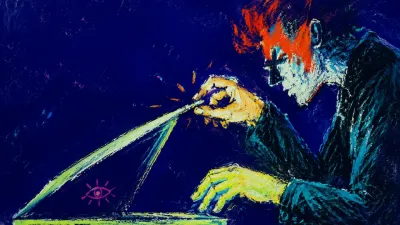
At 9:47 PM on a Tuesday, I watched Jordan (name changed for privacy) open a laptop at the kitchen table of their one-bedroom near Dupont, determined to finish the side-hustle deliverable they had promised themselves the week before. The laptop glow was the only light. Half-eaten toast had gone cold beside the trackpad, a lo-fi playlist was looping softly, and the document titled offer_v7_FINAL_final sat blank behind four tabs comparing project-management apps.
Jordan had arrived twenty minutes earlier with a simple plan: finish the sample. Instead, their fingers kept moving across the warm trackpad, their shoulders had climbed toward their ears, and every glance at the clock tightened something beneath their ribs. The workspace looked immaculate. The work looked like nothing. That is the particular exhaustion of productivity theater: a whole evening can look busy while the one thing that would make the side hustle visible remains untouched.
Jordan looked at me and said, “I keep making the workspace better instead of making the work. Why do I keep optimizing my side hustle instead of doing the work?”
I did not hear laziness in that question. I heard a capable person using research, branding, tools, and workflow design to stand just outside the moment when an imperfect result could be seen. The feeling sat in them like a smoke detector that had become excellent at detecting toast: technically functional, permanently shrieking about the wrong thing. “You didn’t lose focus,” I told them. “You aimed it somewhere safe. We can look at the pattern without judging it, then make a map through the fog toward finding clarity.”
The Ladder Between Setup and Shipping
I invited Jordan to put both feet on the floor, take one slow breath, and name the question they wanted the cards to examine. I shuffled gradually, not to create suspense or claim a fixed fate, but to give the mind a clean transition from the day’s noise into a more deliberate kind of attention.
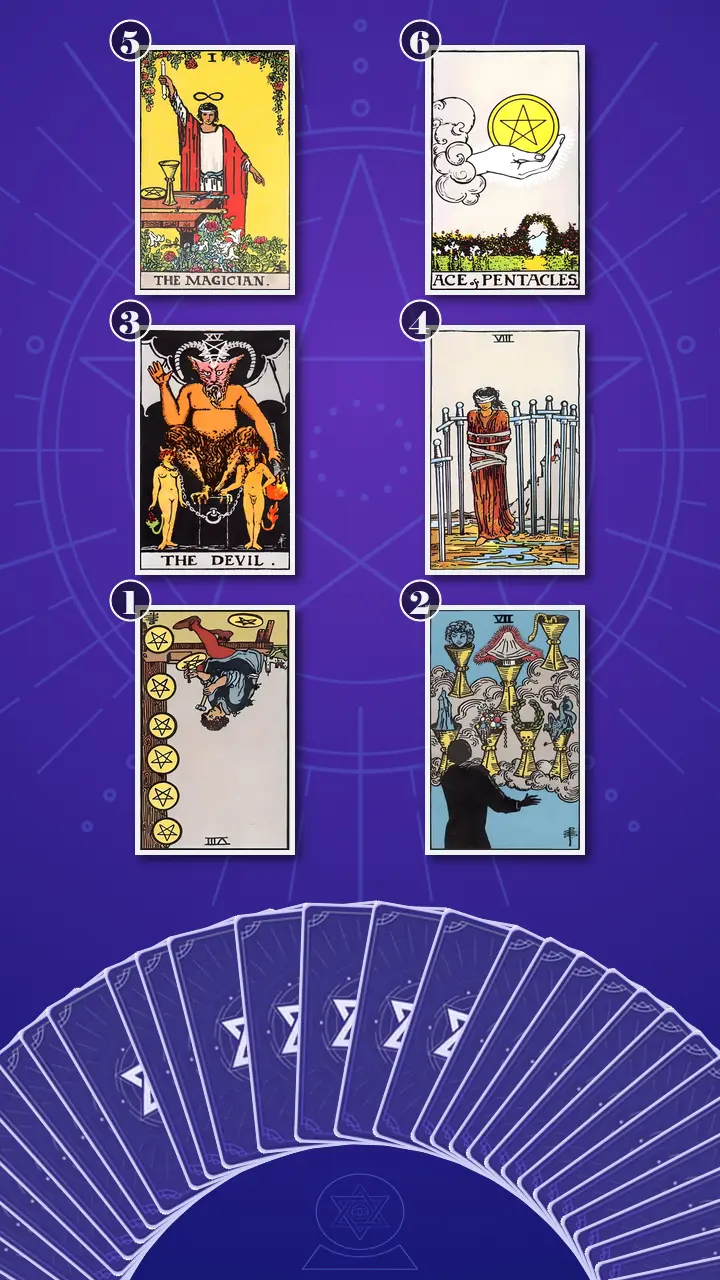
For this reading, I chose the Four-Layer Insight Ladder · Context Edition, a six-card tarot spread designed for a substitution loop like this one. A broad spread might ask about distant outcomes or external circumstances; this question needed something more precise. I wanted to separate what Jordan was doing from what the behavior protected, then move from the trigger and repeating payoff through the hidden belief, available agency, and one concrete next step.
The lower pair would show the visible optimization loop and the activation point that made setup feel more urgent than execution. The middle pair would expose the repeating attachment and the quiet belief that made real work feel unsafe until the side hustle was fully optimized. The upper pair would open into agency and grounded integration: what Jordan could use now, and what small piece of work could exist outside their head this week.
I arranged the cards in an ascending zigzag, leaving a deliberate gap between the middle positions. That gap mattered. It represented the place where a habit could be noticed before it automatically became another evening of tweaking. The cards would be a symbolic, psychological mirror, not an authority handing down a verdict. Jordan remained the person making every choice.
The Work That Stayed in Another Tab
The Hands That Never Reached the Deliverable
Now I turned over the card representing the presenting loop: the observable optimization behavior that replaces the central side-hustle task, including the stagnant energy identified in the diagnosis. It was the Eight of Pentacles, in reversed position.
The Eight of Pentacles usually speaks to focused craft, repetition, apprenticeship, and the patience of getting better through practice. Reversed here, its earth energy was not absent; it was misdirected. Jordan’s hands were genuinely working, but the effort had become a loop of polishing rather than a path toward completion.
“This is the 8 PM session that starts with ‘finish the sample’ and ends with renamed files, a recolored logo, and a third project-management app trial,” I said. “You did real work tonight, genuinely. Just not the work. Like the craftsman in the card, your hands stayed busy all evening. But the finished pieces remained out of reach while the one thing that mattered sat untouched in another tab.”
The row of finished pentacles behind the craftsman gave me the image I wanted: Jordan’s completed checklists, saved tutorials, reorganized boards, and colour palettes were proof of effort, but they had become a display wall separate from the hands that needed to make something testable. There was excess motion and a deficiency of visible completion.
Jordan gave a small, bitter laugh. “That’s painfully accurate. Maybe even a little rude.”
I let the laugh have its place. “The card is describing a behaviour, not sentencing a person. For the next week, the useful question is not whether you can become more disciplined. It is whether one limited deliverable can receive the first twenty-five minutes before analytics, templates, or tool comparisons.”
Jordan’s mouth tightened, then softened. They looked from the card to the blank document, and their thumb rubbed the edge of their phone without unlocking it. I could see recognition arriving with a little resistance, which is often more honest than an immediate nod.
The Buffet of Better Possibilities
I turned to the card representing the activation point: what makes optimization feel more urgent or rewarding than doing the work, and where the inner conflict between preparation and execution begins. The Seven of Cups appeared upright.
One blank hour, this card suggested, instantly becomes a buffet: switch niches, try a new platform, rewrite the offer, make a video, rebrand entirely. Every option feels urgent at the same volume. That is the trick. Choosing one would allow an imperfect version of the work to become visible, so the menu itself becomes the activity. The cups float. Nothing lands.
“What happened right before the last quick improvement spiral?” I asked. “Was it the blank document, someone else’s polished launch online, or the unexpectedly open hour that suddenly felt too important to waste?”
Jordan told me about a Saturday morning coffee-shop block on Ossington. They had guarded two hours all week, then spent fifteen minutes watching a freelancer’s story about reaching two hundred sales. Their chest tightened. They closed Instagram and immediately opened the dashboard to fix the banner, even though the banner had already been fine.
I pointed to the solitary figure in the card, standing apart from the vivid cups. “The possibilities are real ideas. They are not fake. But they are currently being watched rather than touched. The energy is scattered water: imagination is abundant, while grounded choice is underused. The options do not have to disappear. They only need to stop competing for action during this one work session.”
Jordan nodded slowly. “If I choose one version, I have to find out whether it works.”
“Exactly,” I said. “And a result that needs revision is information. It is not a character reference.”
The Chain That Sounded Like a Workflow
The Relief Hidden Inside One More Improvement
The room became quieter as I turned over the card representing the repeating attachment: the pattern and short-term payoff that keep the same substitution returning. It was The Devil, upright.
I use this card symbolically, never as a prediction and never as a label. Here, The Devil gave the optimization loop a clear shape. Jordan knew the next step: send the proposal, publish the page, share the sample. But first, one more improvement. Optimization offered a hit of control, a cleaner dashboard, and the feeling of motion. In exchange, it asked for only one thing: that Jordan postpone the vulnerable moment of showing what they had actually made.
“Let’s replay the Tuesday night in the present tense,” I said. “You open the Notion board. You see that it is beautiful, with its labels and colour-coded statuses, while the project remains frozen in Phase 1. You open the watch-later queue: a pricing workshop, two portfolio teardowns, a ninety-minute positioning course. You tell yourself, ‘Just one more tutorial, one more tool comparison, and then I’ll really start.’”
Jordan’s fingers curled around the edge of the chair. “I can start once the system stops changing,” they said.
“That sentence is the loop speaking in a reasonable voice,” I replied. “It sounds like logistics, but it protects you from the verdict you imagine the work will deliver. Optimization is procrastination wearing a productivity lanyard. It offers temporary relief because no unfinished proposal can reject you, and no unpolished sample can contradict the image you hope to grow into.”
I asked what the next improvement promised in the exact moment before they clicked it: relief, control, safety, permission to postpone. Jordan looked at the Devil’s two figures and then at the loose chains around them. “A few minutes where I don’t feel exposed,” they said.
“That is an honest answer,” I said. “The card does not tell you that you are trapped forever. It shows the bargain clearly enough to examine. The chain was always loose.”
For a moment, Jordan’s breathing paused and their hand hovered above the phone. Their gaze lost focus as if the coffee-shop banner, the blank offer page, and the latest comparison tab were replaying on the same small screen. Then their shoulders dropped by a fraction, and a low, reluctant “Oh” came from the centre of their chest. The habit had weight, but it did not have a lock.
What the Blindfold Calls Logistics
I turned over the card representing the hidden belief: the cognitive restriction that makes the actual work feel unsafe until the side hustle is optimized. The Eight of Swords appeared upright.
In the card, the blindfolded figure stands among swords with bound hands, yet the gaps between the blades are wide and the bindings are not sealed. The image makes a useful distinction between a felt restriction and an absolute one. Jordan’s restriction always sounded like logistics: “I can’t pitch until the site is done. I can’t post until the brand kit is consistent. I can’t charge until I’ve watched one more pricing video.” Meanwhile, the next visible action might take twenty minutes, and the tools to do it were already open.
“The rope feels real,” I said, “but the rule underneath it may be something you tied yourself: if the side hustle is not optimized, the work is not ready; if the work is not ready, publishing it could prove you are not as capable as you look.”
Jordan stared at the narrow space between the swords. “I can’t ship this until the offer is clear enough that nobody can misunderstand it.”
“Which part of that is a fact, and which part is a rule?” I asked. “A client may misunderstand a draft. That is a fact we can learn from and address. The belief that one imperfect draft will reveal your entire worth is a rule. It is not the same thing.”
The Eight of Swords showed the blind spot with uncomfortable kindness: Jordan had been treating readiness as a system state, like an algorithmic feed that would eventually learn the perfect content to serve. The feed kept offering research, tools, tweaks, and another soothing tutorial. The document waited. Their attention was not broken. It had been trained toward whatever reduced exposure.
Jordan leaned back, exhaled through their nose, and gave me a tired half-smile. “So the system is working exactly as designed. It is protecting me from being seen.”
“Yes,” I said. “And that means we can redesign the response without declaring war on yourself.”
When the Magician Used the Tools Already on the Table
The Toolkit Was Already Complete
Before I turned the fifth card, I asked Jordan to notice the space between the Eight of Swords and the card above it. The room seemed to hold its breath. The kettle clicked off in the next room, and the cursor in the real document blinked with an almost absurd calm.
Now I revealed the card representing the conscious turning point: the usable agency that can interrupt optimization and convert existing skills and tools into action. It was The Magician, upright, the bridge of this reading.
The Magician’s table already held a cup, a sword, a pentacle, and a wand. One hand rose; the other pointed down. I read that as directed use, not unlimited power. Jordan did not need a new platform, a new logo, or a complete migration to a superior workflow. They had operations skills from their full-time job, tools they already knew, one deliverable they had been circling for weeks, and enough attention for a bounded experiment.
“Here is the turn,” I said. “The table is already set. The move was never a better system. It is deliberate use of the current one, tonight, to make one real thing exist outside your head. Once actual feedback replaces imagined judgment, the fear loses its favourite food: speculation.”
I thought of Tony Stark building the first suit in a cave with a box of scraps. The reference was not about becoming a superhero or romanticizing constraints. It was about how limitations can concentrate a creative act. The Magician’s tools were modest, visible, and sufficient for the next move.
This was the point where I used my Limiting Belief Deconstruction lens. I asked Jordan to audit the belief as if it were a mechanism rather than an identity. The trigger was visible work. The hidden prediction was, “If I publish this imperfectly, people will see that I am not capable.” The protective behaviour was more research and system redesign. The short-term reward was relief. The long-term cost was no feedback, which then made the prediction feel even more convincing.
I added my Imposter Syndrome Decoding lens to separate authentic potential from the fear of being found out. “Your ability to create a better offer may be real,” I said. “Your ability to notice flaws may also be real. But the fear is trying to use those abilities as evidence that you must never show a first version. Potential is not proven by looking ready. It becomes knowable through contact with actual work.”
The temperature of the room changed. Jordan closed the comparison tab. The trackpad began to cool beneath their fingers. The kettle was silent. The document moved to the centre of the screen.
“Oh,” Jordan said. “It’s just a doc.”
For the first time that evening, the sentence did not sound dismissive. It sounded curious.
I brought us back to Saturday morning at the coffee shop: the hard-won two-hour block, the freelancer’s two-hundred-sales story, and the banner that was already fine. I reminded Jordan that this was not a character flaw; it was a protection strategy doing exactly what it had been designed to do.
You were never avoiding the work. You were avoiding the verdict you assumed the work would deliver. But unfinished work can’t be judged, improved, or appreciated; it can only be feared. One imperfect thing, finished, generates more truth than a hundred optimized plans. Done is the diagnostic.
Done is the diagnostic.
For a second, Jordan froze. Their breath stopped halfway in, their pupils seemed to widen, and the hand resting near the laptop went completely still. Then their eyes moved away from the card and lost focus. I watched them mentally revisit the Ossington coffee shop, the banner, the open settings panel, and the two hours that had vanished while nothing dangerous had actually happened. Their jaw tightened as a little anger entered the room, followed by grief for the time spent waiting to feel different.
“But does that mean I was wrong this whole time?” Jordan asked. The question came out low and sharp. “All those systems, all that research. Was it just pointless?”
“No,” I said. “Your skills are not pointless. The strategy became too expensive for the information it produced.”
That distinction reached them gradually. Their clenched fingers opened one by one. Their shoulders sank, not dramatically, but enough for the back of the chair to receive their weight. A tremor moved through the next breath, and the breath became a laugh that was almost a sob before settling into something steadier. Relief arrived with a small dizzy blankness: if the tools were already enough, there was no new system left to hide behind, and the next choice belonged to them.
“Now,” I invited, “use this new lens to think back to last week. Was there a moment when this insight could have made the situation feel different?”
Jordan looked at the blank offer document. “Saturday. I could have left the banner alone and written the sample. Even an awkward sample would have told me more than that banner did.”
That was the first step from restless control and fear of imperfect exposure toward grounded self-trust built through visible completion and real feedback. The cards had not made the decision. Jordan had heard their own mechanism clearly enough to choose a different experiment.
The First Coin on the Garden Path
I turned over the final card, representing grounded integration: the practical next step and early form of action within the current week. The Ace of Pentacles appeared upright.
The Ace is not the empire. It is the seed: one finished sample sent to one real person, one offer page published as-is, or one outreach message delivered before Thursday. Its earth energy was balanced and tangible. It asked for a beginning small enough to survive a busy week without heroics. Completion would mean that the work existed somewhere another person could see it, not that the entire side hustle had become flawless.
The single pentacle held above the garden path mattered more to me than the distant mountains. The mountains could remain. Jordan did not have to climb them tonight. The next step was one coin, one artifact, one piece of evidence.
“Ship the ugliest useful version,” I said. “Not the ugliest version as punishment. The ugliest useful version: limited, respectful of the person receiving it, and real enough to teach you something.”
Jordan glanced at the clock. “I want to do the twenty-five-minute timer, but I don’t have twenty-five minutes every evening. Some nights I get home from work and I have just enough energy to stare at the screen.”
“Then the timer is not a moral test,” I said. “It is a data-collection tool. Use ten minutes on a bad day. Open the file, write one ugly paragraph, or send one clear question. The experiment is reversible. It measures what happens when you approach the work; it does not measure your worth.”
The One-Page Reality Check
When I gathered the six cards into one story, I could see why the loop had become so convincing. Jordan’s operations training had taught them to bring order to complicated environments, and that skill had become a beautifully organized hiding place. The reversed Eight of Pentacles showed effort separated from output. The Seven of Cups widened uncertainty into a buffet of possible futures. The Devil revealed the temporary relief inside endless readiness, while the Eight of Swords showed the rule that made the attachment sound like necessity. Then The Magician gathered the resources already present, and the Ace of Pentacles turned that agency into one material beginning.
The core contradiction was not a lack of ambition. It was the desire to keep optimizing the side hustle versus the obstacle of doing the work. Jordan had been polishing the key without putting it in the lock. The cognitive blind spot was assuming that better conditions would remove the vulnerability of being seen. No system can provide that guarantee. The transformation direction was smaller and more practical: complete one deliberately limited, observable piece of work before making another system improvement, then let the response become information rather than a verdict on personal worth.
I used my Cognitive Reframing Protocol to put the insight on one page. I asked Jordan to write five short lines: the trigger, the fear prediction, the observable facts, one reversible experiment, and the data that would count as useful. This translated a vague fear of failure into logical risk-management data. It also gave the inner critic a job it could actually perform: observe, record, and learn, rather than redesign the entire operating system.
- Monday: The 25-Minute Ugly DraftBefore opening analytics, templates, Notion settings, or comparison tabs, set a twenty-five-minute timer and work only on the deliverable you have postponed longest. Keep the document or draft in front of you until the timer rings, then stop whether it feels polished or not.Implementation tip: On a bad day, reduce the experiment to ten minutes, one ugly paragraph, or one clearly written section. Small enough to start is the point.
- Wednesday: The One Artifact RuleChoose one finished-enough artifact, such as a sample, offer draft, or short introduction message, and send it to exactly one real person who can respond. This is not a launch; it is one bounded data point from the work itself.Implementation tip: Tell the person what kind of feedback you want and keep the experiment reversible. One response can inform the next version without deciding the future of your side hustle.
- Friday: The Made Versus Optimized LogAfter each side-hustle session for seven days, open the notes app and write one line: Made: ___. Optimized: ___. Record the ratio without explaining or judging it, so the pattern becomes visible while it is happening.Implementation tip: Treat resistance dressed as reasonableness as another observation. You are collecting attention data, not grading your character.
Jordan read the list twice. The first pass brought a wince; the second brought a practical nod. Nothing on the page required a dramatic rebrand, a perfect morning routine, or a promise to work harder forever. It asked for one visible act before another round of setup.
“That is actionable advice I can actually test,” they said. “I don’t have to solve the whole side hustle to find out what the next version needs.”
“Exactly,” I said. “The querent is the one who directs the tools. The cards can show the loop, but you decide whether to keep feeding it. Your job is not to prove that you were always ready. Your job is to make contact with the work often enough that self-trust has something real to stand on.”
A Seed, Not a Verdict
Four days later, Jordan messaged me that they had finished one sample and sent it to one person. That night, they slept a full night; in the morning, the first thought was still, “What if I’m wrong?” This time, they smiled, opened the sent file, and let the question sit beside the evidence.
I kept that small update because it was honest. The fear had not vanished, and the side hustle had not transformed into a flawless business while everyone else applauded. But the workspace was no longer the only thing producing visible progress. One artifact had crossed the boundary between intention and reality. Curiosity had begun to replace speculation.
That was Jordan’s Journey to Clarity: not an answer delivered by the cards, but a clearer relationship with effort, exposure, and feedback. The Magician had not granted new tools. Jordan had used the ones already on the table. The Ace of Pentacles had not promised an outcome. It had offered a beginning they could actually hold.
We’ve all ended a night with a tidier workspace and an emptier chest, calling the tidying progress because calling it fear would mean the work had to happen. I know how tender that recognition can feel. Seeing the loop is not another demand to perform; it is the first piece of information the loop could not reorganize away.
If, just for one evening, you let the system stay imperfect, what’s the smallest piece of work you’d want waiting for you at the end of it?