A Saved Streak, a Blank File, and Five Questions Tested at Work

The Streak Was Safe, but the File Was Still Blank
If you are a junior designer in Toronto protecting a learning streak after work while the Figma file meant to use those lessons stays blank, I may be describing a night you know.
Jordan, a 27-year-old non-binary product designer, came to me with a question that sounded simple: “Why do I chase learning streaks but avoid using what I learn?” Before I touched the deck, they told me what had happened at 11:47 the previous night.
They had been standing beside their bathroom sink when a red “streak at risk” alert lit up their phone. The electric toothbrush buzzed against the porcelain; cold tile pressed into their bare feet. With one hand, Jordan completed a four-minute quiz and watched the little flame return. Their shoulders dropped for one relieved breath. Then they remembered the interview guide due later that week, still an empty Google Doc.
“The streak was safe,” they said, rubbing one thumb across the other, “but the file was still blank.”
I asked what happened on more ordinary evenings. Jordan described reheated pasta cooling beside the laptop, a seven-minute front-end lesson, a screenshot of the completed progress ring, and another hour spent reorganizing a Notion database. When the unfinished prototype appeared in the dock, their fingers reached for the course tab almost automatically. Opening the real project made their chest feel as if a loading bar had stalled directly behind the sternum: pressure without movement, every second suggesting that something had gone wrong.
The conflict was not a lack of discipline. Jordan wanted to protect visible proof that they were learning, while avoiding the place where imperfect competence could be seen. The streak offered a clean number. A first draft could look painfully ordinary.
“I can start using it once I know enough,” Jordan told me. “But I’m beginning to think ‘enough’ keeps moving.”
“That makes sense,” I said. “The streak proves you returned; it cannot prove you used what you know. We are not here to shame the part of you that needed measurable progress. I want us to understand what that progress has been protecting, then find a form of application small enough that your self-worth does not have to sit the exam.”
Across cultures, I have learned that people rarely need a stranger to issue a verdict on their lives. They need a moment in which the knot can be seen without judgment. I told Jordan that our Journey to Clarity would use tarot as a psychological map, not as a prediction. “Let’s find out what one more lesson may be doing emotionally that the first draft has been asked to do.”
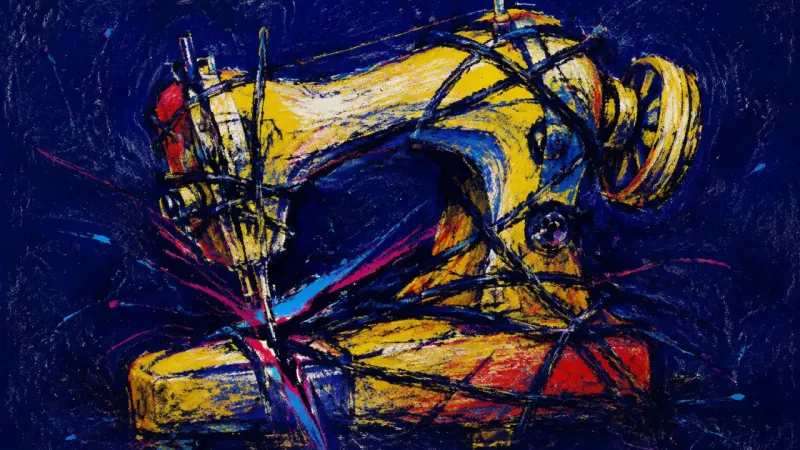
Choosing a Map for Tutorial Hell
I invited Jordan to place their phone face down, take one slow breath, and hold the unfinished artifact in mind rather than the streak number. I shuffled while they formed a narrower question: “What keeps me preparing, and what would help me use what I already know?” The brief ritual was not about summoning certainty. It marked a transition from reacting to the pattern toward observing it.
I chose the Transformation Path Grid (6) · Context Edition, a six-card tarot spread for breaking a learning-avoidance loop. I use this layout when a problem behaves less like a single decision and more like a self-reinforcing system. A broader spread could have scattered our attention across generic past and future influences. Jordan needed to see the loop itself.
I placed three cards across the upper row and three beneath them, like a workbench with a blocked shelf and a usable surface. The first position would show what streak chasing produced in daily life. The second would reveal how the reward system hooked Jordan’s need for validation. The third would uncover what remaining in the student role protected. Below them, the fourth position would supply the catalyst, the fifth a repeatable response, and the sixth a more integrated definition of learning.
The central column mattered especially: attachment above, grounded practice below. I wanted Jordan to see that tarot card meanings in context are not fixed fortunes. In this reading, they would help us distinguish attendance from application, a score from evidence, and preparation from protection.
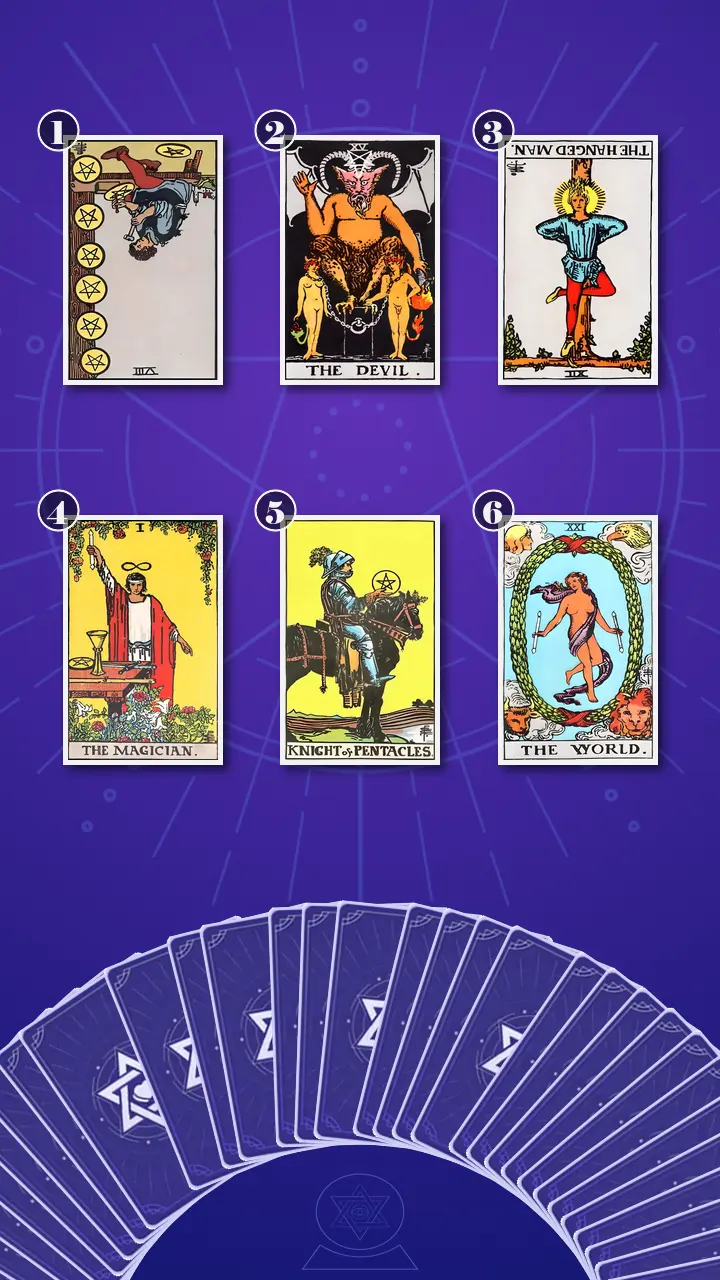
The Blocked Shelf of the Workbench
Position One: The Workbench Behind the Progress Ring
“Now I’m turning over the card representing what the streak-chasing behavior is doing in your daily life,” I said. The card was the Eight of Pentacles, reversed.
I pointed to the artisan’s repeated hand movement and the row of pentacles displayed like completed modules. In Jordan’s life, I read that wall as badges, progress rings, and course certificates. The single pentacle on the workbench was the lesson that still needed to become a research summary, a Figma screen, a code element, or a decision made at work.
I described the familiar evening back to them: another short lesson completed, the badge appearing, and the remaining hour spent refining a Notion knowledge base while the prototype stayed untouched. “The card is not saying your effort is fake,” I told them. “Another lesson can be real learning and still be the place you hide from the first draft.”
The reversal showed blocked Earth energy. There was an excess of countable repetition and a deficiency of contact with the messy feedback that turns repetition into craft. The more Jordan studied without applying, the less evidence they had of what they could already do. That absence of evidence then made the blank file feel even more dangerous.
Jordan gave a short laugh, but there was no amusement in it. Their fingers tightened around the mug and then released. “That’s so accurate it’s almost rude,” they said. “My nightly bargain is basically, ‘I did the lesson, so tonight still counts. I can make the thing when I know more.’”
I let the bitter humor settle. “Then this card has done its first job. It has separated genuine effort from the structure currently containing that effort. What did you complete yesterday, and what specific file was still waiting afterward?”
“A lesson on interview bias,” Jordan said. “The five questions I need for Thursday were still waiting.”
Position Two: When the Dashboard Became the Manager
“Now I’m turning over the card representing how the gamified reward hooks your need for validation and constrains your next choice.” I revealed The Devil, upright.
I kept my interpretation calm. The Devil did not mean danger, corruption, or an ominous future. In this position, it showed an attachment that had gained authority. I drew Jordan’s attention to the loose chains. The app could technically be closed, yet a “streak at risk” notification could make four minutes of study feel more urgent than a task Jordan had consciously chosen.
“The metric became powerful when it started deciding what you were allowed to postpone,” I said. “It promises immediate proof that you are disciplined, but its price is often the uncertain proof of making something.”
I thought of Black Mirror: Nosedive, not because Jordan’s situation was dramatic, but because the behavioral parallel was exact: a score designed to measure one narrow activity had begun governing mood, identity, and choice. The energy here was excess attachment. The platform’s reward was no longer simply encouraging learning; it was acting like an unofficial manager.
Jordan looked down at the face-down phone. Their breath paused, their gaze stayed on it for several seconds, and then their shoulders drew inward. “I know it’s only a number,” they said quietly, “but losing it would mean I’m not the person who keeps going. A broken streak feels like it would erase all the work.”
“That fear is real even though the metric is limited,” I replied. “The loose chain does not mean leaving is effortless. It means the authority can be renegotiated. We are not deleting every course or pretending tracking never helped you. We are asking the score to stop carrying evidence of your worth.”
Position Three: The Draft Held in a Loading State
“Now I’m turning over the card representing how repeated preparation keeps you suspended in the familiar student role.” The third card was The Hanged Man, reversed.
I described the scene this card brought into focus: Jordan in a Queen Street West coffee shop, a tutorial playing on one half of the screen and an untouched practice repository on the other. Notes moved neatly into Notion while the application remained in perpetual beta. The spinner looked active, but no new information was arriving.
The reversed Hanged Man showed a blockage of surrender and perspective. A thoughtful pause can produce insight. Jordan’s pause had continued after it stopped teaching them anything new. Its hidden function was to postpone exposure: if they remained a student, nobody had to evaluate the practitioner they were becoming.
Through a Jungian lens, I saw the disowned figure in the shadow: not a secretly incompetent person, but an ordinary developing practitioner who might make a basic screen, write an awkward interview question, or need revision. Jordan had allowed the polished future self into their identity, but not the unfinished present self required to reach it.
“Try finishing this sentence,” I said. “This pause would make sense if it were still teaching me something new, but right now it is protecting me from…”
Jordan became very still. Their eyes shifted away from the cards as if replaying a recent afternoon. Then they pressed both palms flat against their thighs and exhaled through their nose. “It’s protecting me from someone seeing that my work is still junior,” they said. “And from me seeing it too.”
I nodded. “That is the root. You have been treating an ordinary first attempt as though it could deliver a final verdict.”
When The Magician Put the Tools Within Reach
Position Four: The Catalyst Already on the Table
The room seemed to quiet before I turned the fourth card. Rain traced thin lines down the window, and then a streetcar bell sounded clearly beyond the glass. “Now I’m turning over the card representing what restores agency by translating existing knowledge into a concrete act.” I revealed The Magician, upright.
I asked Jordan to revisit the loop: the shortest lesson ends, the progress ring closes, and relief arrives for a few seconds. Then the blank Figma frame returns, the chest tightens, and another tutorial suddenly presents itself as the responsible next step. They had been calling that moment a knowledge problem.
I pointed to the four suit emblems on The Magician’s table. For Jordan, I named them as research notes, Figma, a code editor, and access to a real or fictional product problem. The card’s balanced energy was focused agency: not knowing everything, but deliberately combining what was already available into one observable act.
The streak is not proof of competence; put the four tools on The Magician's table and make one small thing with them.
I paused, then added, “The streak proves that you kept learning; the imperfect artifact is what lets learning answer back.”
This was where I used my Imposter Syndrome Decoding lens. I separated Jordan’s authentic potential from the fear of being “found out.” Their potential was not the fantasy of producing expert work on demand. It was the demonstrated capacity to understand a method, choose a tool, make a small attempt, observe what happened, and adjust. The fear had taken that developing capacity and imposed a false test: if the first visible result was ordinary, every lesson and every hope attached to it must have been fraudulent.
I followed with Limiting Belief Deconstruction, auditing the mechanism rather than arguing with the emotion. The blank frame triggered a prediction: “My work will look basic.” The prediction became an identity verdict: “Then I am not capable.” Another lesson reduced the immediate threat. Because no draft appeared, Jordan collected no evidence that a basic first version could be revised. The original belief returned stronger. What looked like a hunger for knowledge was partly a self-protection system activating at the exact threshold of growth.
Jordan’s breathing stopped for a beat. Their fingers hovered above the mug, motionless. Their eyes lost focus as if they were watching months of late-night choices replay behind the cards. Then their jaw set.
“But if that’s true, doesn’t it mean I’ve been doing this wrong for years?” they asked. The words came out sharper than anything they had said before. “I’ve spent so much time on those courses.”
I did not rush to turn the anger into a positive lesson. “It means the strategy served two purposes,” I said. “You learned real things, and you protected yourself from evaluation. We do not have to call the learning wasted in order to admit that the protection has outlived its job.”
Jordan stared at The Magician. The tension did not disappear all at once. First, one shoulder lowered while the other remained raised. Then their fist opened slowly against their leg. Their eyes reddened, and a breath left their chest with a faint tremor. Relief crossed their face, followed by something less comfortable: the blankness that arrives when an old excuse loosens and a real choice becomes visible. “So I don’t need the first thing to be good,” they said. “I need it to tell me something.”
“Exactly. You do not need to feel ready; you need one attempt small enough to teach you something specific.”
I placed a blank card beside The Magician and proposed a private test: no more than ten minutes, one recent lesson, and the smallest artifact it could support. Three interview questions. One Figma frame. One button state in CodePen. One written product decision. The course and search tabs would remain closed until the timer ended. Jordan could stop if the exercise became too exposing; even a two-minute attempt would count as contact with the skill.
“Now, with this new perspective, can you recall a moment last week when this insight might have changed how you felt?” I asked.
Jordan remembered the 3:18 p.m. request for a rough concept before a product sync. Instead of making one basic frame, they had searched for “best SaaS onboarding examples” until the meeting was close. “I thought a rough frame would expose me,” they said. “But one bad frame could have shown me what question I needed to ask.”
I heard the key shift in that sentence. This was not instant confidence. It was the first step from streak-driven performance anxiety toward evidence-based self-trust through imperfect application. Jordan was beginning to treat the artifact as information rather than identity.
The Slow Metric That Survives a Missed Day
Position Five: The Knight’s Cumulative Evidence
“Now I’m turning over the card representing a small, repeatable practice for using one lesson before collecting another.” The fifth card was the Knight of Pentacles, upright.
I pointed to the motionless horse, the single pentacle held steadily, and the plowed field. This was balanced Earth energy: patient follow-through without the quick chemical lift of a flame icon. Jordan did not need an ambitious public challenge. I saw two modest calendar sessions, each named after an output rather than an aspiration: “Draft five interview questions” and “Build one mobile navigation state.”
In the card’s modern-life scenario, Jordan would choose one method or component, make one version, and record what the attempt revealed. Progress would become cumulative evidence: drafts made, questions tested, decisions informed, and adjustments identified. A missed day could not erase any of it.
“A rough artifact is evidence about a skill in progress, not a verdict on the person making it,” I said. “The Knight is not asking for a dramatic transformation. The inner line is much quieter: ‘Nothing dramatic happened; I made one version and recorded what it taught me.’”
Jordan’s mouth softened into the beginning of a smile. They looked at the calendar on their phone without picking it up. “Two sessions sounds almost suspiciously small,” they said.
“Small is the design constraint,” I replied. “If the routine becomes another perfect tracking system, the old pattern has simply changed outfits.”
Position Six: Closing the Learn-Use-Reflect Loop
“Now I’m turning over the card representing the integrated learner you can become when study, application, reflection, and self-trust work together.” The final card was The World, upright.
I traced the oval wreath around the central figure. I read it as a closed learning cycle rather than a polished final outcome: study one technique, use it in a rough artifact, observe what happened, adjust the method, and then decide what information is genuinely needed next.
The World brought integration rather than perfection. Its balanced energy held the learner and practitioner in the same identity. Jordan would no longer have to finish learning before participating in work. A draft could count as completion because it had connected information to experience.
“The draft does not prove you are finished,” I said. “It shows you what learning is for.”
Jordan looked across the whole grid: the distorted repetition of the Eight of Pentacles reversed, the Devil’s score-based attachment, the Hanged Man’s suspended exposure, and then the lower path of agency, steady use, and integration. Their index finger moved from the upper row to the lower one.
“So the cycle isn’t ‘learn until I’m safe,’” they said. “It’s ‘learn, use, notice, choose.’”
“Yes. And because the cycle can begin again, a rough result is not a terminal judgment. It is simply the part that tells you what comes next.”
The One-Lesson, One-Artifact Rule
I gathered the six cards into one coherent story. Jordan’s real appetite for learning had become attached to an external score. That score offered immediate reassurance whenever a blank project activated the fear of looking ordinary. Remaining in the student role delayed the feared evaluation, but it also prevented the real-world evidence that could update Jordan’s beliefs. The result was a treadmill with a bright counter: visible movement inside the practice room, while the workshop door remained ten feet away.
The cognitive blind spot was the assumption that more preparation would eventually remove the emotional risk of application. It could close genuine knowledge gaps, but it could not guarantee a flawless first result. The transformation direction was not “stop learning” or “publish everything.” It was to make study answerable to use: after each completed lesson, create one low-stakes artifact before opening another.
I framed the next steps as experiments, not obligations. Jordan could keep every artifact private, reduce the time when work or health required it, and stop any exercise that became too activating. The purpose was to gather clearer evidence, not force exposure.
- Run the Cognitive Reframing ProtocolBefore the next application task, Jordan will spend three minutes answering four lines in a plain document: “What am I predicting will happen? What part is fact rather than fear? What is the smallest controllable risk? What evidence could a ten-minute attempt produce?” This turns a vague fear of failure into practical risk-management data.Keep the answers to one sentence each. The exercise is complete when it identifies a smaller test; it does not need to make the fear disappear.
- Use the Closed-Tab Application SprintAfter the next user-research or front-end lesson, Jordan will close the platform, set a 20-minute phone timer, and make exactly one private artifact: five interview questions in Google Docs, one Figma frame, or one component in CodePen labelled “attempt-01.” Course and search tabs stay closed until the timer ends.If twenty minutes feels too exposing, use five. The aim is contact with the skill, not portfolio quality, and Jordan may stop without publishing or sharing anything.
- Keep a Cumulative Evidence LogJordan will create a plain two-column note titled “Learned / Used” and schedule two 25-minute output-first sessions this week. After each session, they will write three lines: “What I tried,” “What happened,” and “What I need next.” The last line will decide whether another lesson is useful.No new Notion dashboard. Review for no more than three minutes, and count total uses rather than consecutive days so a missed session cannot erase earlier evidence.
I asked Jordan which step felt small enough to begin without turning into another performance. They chose the interview questions. Not because they felt completely ready, but because the task was specific, private, and connected to Thursday’s actual work.

A Week Later: A Draft, Not a Verdict
Six days later, I received a message from Jordan: “I did the ten-minute version before opening the course. I wrote five interview questions. Two were clunky, one was obvious, and two were actually useful. I knew what to review afterward.”
They had shown the questions to a trusted colleague with a narrow request: one reaction to the draft, not an assessment of Jordan’s overall ability. The colleague suggested changing the wording of one question and kept three for the research call. Jordan did not suddenly feel like an expert. They did, however, have something their streak had never been able to provide: evidence of knowledge surviving contact with ordinary work.
That night, they slept without rescuing the streak. The next morning, their first thought was still, “What if I’m doing this wrong?” They told me they smiled at the thought, opened “attempt-01,” and made one adjustment.
I understood that as the quiet proof of our Journey to Clarity. The cards had not made Jordan capable, and I had not handed them a hidden destiny. Jordan had used a tool already in their hands, observed what happened, and chosen the next step. Their confidence was no longer being asked to arrive before the evidence.
When the blank file makes your chest tighten and your hand reaches for one more lesson, I want you to remember the tender fear beneath that motion: an ordinary first attempt can seem capable of erasing the future self your streak has helped you imagine. Simply recognizing that fear means the dashboard no longer has to make the whole decision.
If one imperfect use could remain small, private, and free from proving anything about you, which tool already on your own Magician’s table would you be curious to try first?