Finding Clarity in the 4:53 p.m. Group Chat Silence
If you’re the friend who sends the first text, offers three time slots, and still ends up feeling weirdly guilty for wanting reciprocity—welcome to the “default planner” era (hello, group chat silence).
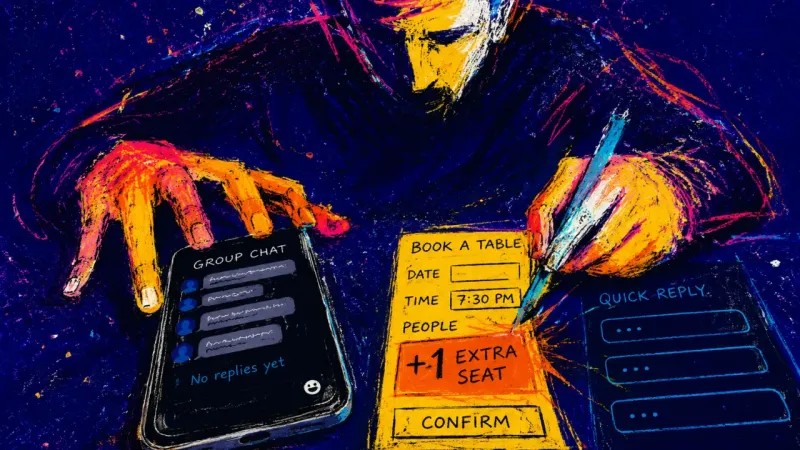
Jordan showed up on my screen at 4:53 p.m. sharp—Toronto office lighting doing that specific fluorescent buzz that makes everyone look like they haven’t blinked since lunch. Their phone was face-up beside the keyboard, warm from being picked up and put down every thirty seconds. Their thumb hovered over a draft message like it was a detonator.
“I’m already typing it,” they said, half-laughing, half-bracing. “The ‘Heyyy what’s everyone doing this weekend?’ thing. And I hate that I’m doing it again.”
I watched their shoulders sit just a little too high, like they were trying to hold their ribcage together. The feeling in the room—even through Zoom—was that restless phone-checking energy: tight chest, sinking stomach, eyes flicking to the corner of the screen where notifications would show up.
“So… what’s my next move?” Jordan asked. “Because I’m tired of being the one who makes everyone’s social life happen. But if I stop initiating, I’m scared I’ll disappear from people’s radar.”
The contradiction landed cleanly: you want mutual effort and clear reciprocity—and you’re also afraid that if you don’t keep pushing, the weekend will evaporate and you’ll be left alone with your own silence.
“I get it,” I told them. “And I’m not here to hype you into a dramatic cut-off or talk you into being ‘more chill.’ We’re here for something gentler and sharper than that: clarity. Let’s make a map of what’s actually happening, and what you can do this week that protects your time without punishing anyone—including you.”

Choosing the Compass: The Celtic Cross · Context Edition
I invited Jordan to take one slow breath—not as a mystical flourish, just a nervous-system handoff. The kind of micro-pause that separates “I’m reacting” from “I’m choosing.” While they exhaled, I shuffled on my side of the screen, the cards making that soft paper-thrum like an old paperback being opened to a familiar chapter.
“Today,” I said, “we’re using a spread called the Celtic Cross · Context Edition.”
When people ask how tarot works, this is the piece I always want to underline: a good spread is a structured conversation. It’s not a verdict; it’s a diagnostic-to-action chain. This version is perfect for what you’re asking because it doesn’t just describe the pain of being the default planner—it shows the mechanics behind it (present pattern, challenge, root fear), then gives you an ethical, actionable next move.
In this spread, I told Jordan (and honestly, I told the reader in my head, because I know you’re here for actionable advice):
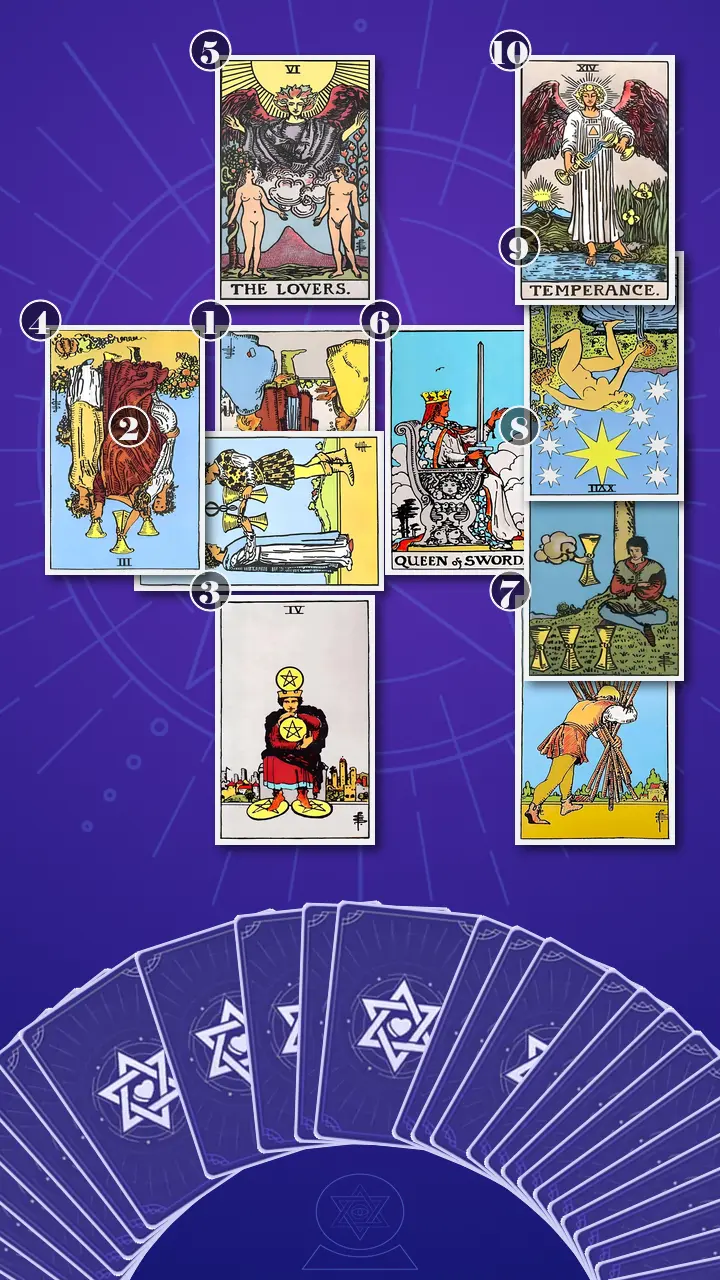
Card 1 will name the exact pattern you’re stuck in—your “default planner routine.” Card 3 will show the root driver under the routine. And Card 6—this is the customized part—won’t just predict the near future; it will point to your next move this week, the cleanest step toward balanced reciprocity.
Jordan nodded, then immediately glanced at their phone again like it might accuse them of something.
When Reciprocity Shows Its Math (and the Queen of Swords Cuts Through It)
Position 1: Current pattern of effort and reciprocity
“Now we turn over the card representing your current pattern of effort and reciprocity—the specific way you end up initiating plans,” I said.
Six of Pentacles, reversed.
I tapped the screen gently where the image would be if we were in the same room. “This is the tipped scale card. The classic symbol is one person distributing resources—money, attention, access—while everyone else reacts from below. Reversed, it’s not ‘generosity.’ It’s imbalance.”
And the modern translation was almost too precise: like when you’re the one sending the calendar link, proposing three time slots, doing the follow-up, and everyone else just… responds if and when it suits them.
“This card is the moment you open the group chat and offer options like you’re A/B testing subject lines,” I said. “Not because you love options. Because options feel like control. And control feels safer than waiting.”
Energetically, reversed Six of Pentacles is a blockage: giving that’s flowing mostly one way. You’re paying an invisible cost—time, emotional labor, the constant scanning for silence—so connection can keep existing.
Jordan let out a small, bitter laugh. It wasn’t dismissive—it was recognition with teeth. “That’s literally me,” they said. “Which is… kind of brutal.”
“Brutal, but useful,” I said softly. “Because if connection only happens when you carry it, it’s not connection—it’s coordination.”
Position 2: Primary challenge
“Now we turn over the card representing the primary challenge—what disrupts mutual planning and keeps the dynamic uneven,” I said.
Two of Cups, reversed.
“Two of Cups upright is the handshake. It’s mutual choosing. Reversed, it’s the broken mirror of that,” I said. “It can look like warmth in the vibe and emptiness in the follow-through.”
I watched Jordan’s face do that tiny flinch people do when a truth is accurate enough to feel like someone read their texts.
“This is like when the banter is good, the memes land, and then the second you ask for a day and time it turns into: ‘I’ll let you know.’ Or a heart-react with no actual plan,” I said. “Friendly doesn’t always mean reciprocal.”
Energetically, this reversed Cup card is a deficiency—not necessarily of care, but of matching action. It’s the obstacle because it keeps you stuck in ambiguity: you keep trying to pull mutuality out of chemistry.
Jordan’s fingers tightened around their mug, then loosened. “I keep telling myself they’re just busy,” they said. “And then I feel… stupid.”
“Not stupid,” I corrected, very gently. “Hopeful. But hope needs structure, or it turns into self-abandoning.”
Position 3: Root driver
“Now we turn over the card representing the root driver—the deeper need or fear that makes initiating feel necessary,” I said.
Four of Pentacles, upright.
This one always makes my artist-brain think of a figure in a museum who refuses to step back far enough to see the painting. They’re clutching the details so hard they can’t feel the whole thing.
“Four of Pentacles is control as comfort,” I told Jordan. “It’s gripping coins to your chest, wearing a coin like a crown, pinning coins under your feet. Nothing moves because movement would require risk.”
Modern translation: you’d rather book the table and coordinate the details than risk the discomfort of asking, ‘Do you actually want to see me—and will you initiate too?’
Energetically, this is excess—too much holding, too much stabilizing, so you don’t have to feel the vulnerability of being chosen. Planning becomes a substitute for asking.
Jordan stared at the card on their side of the screen for a beat. “That’s… upsetting,” they said, quietly. “Because it’s true.”
“It’s upsetting because it’s tender,” I replied. “And it’s also incredibly fixable once you see it.”
Position 4: Recent relational context
“Now we turn over the card representing the recent relational context—what past social experiences trained this pattern to feel normal,” I said.
Three of Cups, reversed.
“This is the party card,” I said, “but reversed it’s the subtle feeling of being on the edge of the circle.”
Modern translation: you were invited sometimes, but not consistently, so you started hosting or coordinating just to make sure there was a circle to belong to. You learned—maybe without anyone explicitly teaching you—that inclusion is something you earn by being useful.
Energetically, this is a blockage in belonging. Not dramatic rejection. Just that slow-drip uncertainty that makes you build your own proof of connection by creating plans.
Jordan’s eyes flicked away from the screen, toward their office window. “There’s this friend group,” they said, “where I’m always… kind of not sure if I’m actually in it unless I’m the one making something happen.”
“That makes a lot of sense,” I said. “Your nervous system learned a rule: if I don’t organize it, I won’t be included. Tarot is just showing you the rule so you can decide whether you still want to live by it.”
Position 5: What you consciously want
“Now we turn over the card representing what you consciously want—your ideal standard for connection and reciprocity,” I said.
The Lovers, upright.
Jordan exhaled like someone who’d been holding their breath to see if the deck would call them needy.
“This isn’t only about romance,” I said. “The Lovers is values-based choice. It’s ‘I choose what matches my integrity.’ You don’t just want plans. You want to feel chosen. You want co-created connection—not extracted participation.”
Energetically, The Lovers is balance—but it’s the kind of balance that requires a decision. Not a vibe. A standard.
“The real question,” I said, “isn’t ‘How do I get people to say yes?’ It’s ‘Who actually meets me with the same care and intention?’”
Position 6 (Key Card): Your next move this week
I slowed down before turning the next card. Even through a screen, I could feel the room go quiet—the way a theater does right before the line you’ll remember for years.
“Now we turn over the card representing your next move—the most grounded, self-respecting step you can take in the coming week,” I said. “This is the bridge card in your reading.”
Queen of Swords, upright.
Jordan’s mouth tightened immediately—like they were bracing for the accusation that they’d been doing it wrong. Their shoulders locked, then their hands went still on the desk.
“The Queen of Swords doesn’t do drama,” I said. “She does clarity. One clean ask. One clean boundary. She stops you from doing the emotional labor of managing someone else’s calendar.”
And then, because I’m Juniper and my brain is stitched together from paint and old films, I let my signature tool slide naturally into the reading—my Iconic Line Diagnosis.
“Have you ever noticed how the most unforgettable movie lines are never over-explained?” I asked. “In Casablanca, nobody says, ‘Here’s looking at you, kid, plus five alternate times, plus sorry for existing.’ The line lands because it’s precise. The Queen of Swords is asking you to text like that—like a final cut, not a rough draft you keep rewriting to avoid discomfort.”
Jordan gave a tiny, reluctant smile. “So you’re telling me my texts are… bad screenwriting.”
“I’m telling you your texts are auditioning,” I said, my voice lower now, café-table honest. “And you’re not afraid of being alone—you’re afraid the silence means you don’t matter.”
Jordan’s eyes sharpened. Then they blinked hard.
Setup: I could almost see the loop playing behind their eyes: it’s Friday at 4:53 p.m., they’re typing the super-flexible invite with three time options, because if they don’t keep the momentum alive, the weekend feels like it might disappear into silence. Their body knows the pattern before their mind catches up.
Delivery:
Stop auditioning for attention and start telling the truth, letting the Queen of Swords’ raised blade cut through vague maybes and protect your time.
There was a pause after I said it—just enough space for the sentence to echo without me rushing to soften it.
Reinforcement: Jordan’s reaction came in layers, like a wave you feel before you name it. First: a brief physiological freeze—their inhale caught halfway, their fingers hovering above the keyboard as if the air had turned thick. Second: cognitive seep-through—their gaze unfocused, like they were replaying a dozen group chats at once, every “maybe,” every “lol sorry I forgot,” every time they’d booked anyway. Third: the emotional release arrived not as relief, but as a flash of anger. “But if I do that,” they said, voice tight, “doesn’t it mean I’ve been… doing too much this whole time?”
I nodded. “It means you’ve been trying to secure belonging with logistics. That’s not ‘wrong.’ It’s survival. But you’re allowed to upgrade the strategy.”
Their shoulders dropped a fraction—still guarded, but less clenched. Their jaw loosened like they’d taken off a mouthguard they forgot they were wearing.
“Here’s the Queen’s gift,” I continued. “A clear invite is not a chase—it’s a filter. And no reply isn’t a puzzle you have to solve. It’s information you’re allowed to use.”
I leaned closer to the camera, like I was across from them in a café and not a rectangle in their browser tab. “Right now, with this new lens—can you think of a moment last week where, if you’d treated the silence as data instead of a verdict, you would’ve felt different?”
Jordan swallowed. “Tuesday,” they said. “I sent the message, saw ‘seen,’ and then… I opened OpenTable like it was an emergency.” They let out a shaky breath. “I could’ve just… waited.”
“Exactly,” I said. “This is a move from contracted, restless proving into calm self-respect. Not bravado. Not coldness. Just clarity.”
Position 7: Your role in the dynamic
“Now we turn over the card representing your role in the dynamic—how you’re carrying it and what it costs you,” I said.
Ten of Wands, upright.
“This is the invisible labor card,” I said. “The person bent under the bundle doesn’t just carry tasks. They carry the emotional responsibility of making sure connection stays alive.”
Modern translation: you propose, remind, confirm, adjust—and by the time the hangout happens, you feel more drained than excited. The cost shows up as that private tally: who ever initiates back, who just consumes the plan like a service.
Energetically, Ten of Wands is excess. You’re carrying more than your share, and your body is saying it before your mouth does.
Jordan did that slow nod that looks like grief and relief at the same time. Their exhale was sharp—like dropping a bag you didn’t realize you’d been holding.
Position 8: The social environment
“Now we turn over the card representing the social environment—the other people’s default energy around planning and follow-through,” I said.
Four of Cups, upright.
“This card is emotional autopilot,” I explained. “It doesn’t necessarily scream ‘they hate you.’ It says: distracted, passive, comfortable receiving, slow to initiate.”
Modern translation: your invite gets treated like a push notification—seen, ignored, forgotten. Like leaving tabs open forever. Low-commitment ‘maybe energy.’
Energetically, this is a deficiency of engagement. And it matters, because it means pushing harder won’t get you more reciprocity—it’ll just get you more tired.
“So it’s not that I’m unlikable,” Jordan said, almost pleading with the sentence.
“No,” I said. “It’s that you’re trying to get high-initiation behavior from low-initiation people. The Queen of Swords doesn’t yell at them. She just adjusts her investment.”
Position 9: Hope and fear
“Now we turn over the card representing your hope and fear—what you most want to be true, and what you’re afraid the silence will confirm,” I said.
The Star, reversed.
This is the moment the reading touched the rawest nerve: the part where Instagram Stories become a distorted dashboard for your social worth.
“Star reversed is hope getting wobbly,” I said. “Not because you’re hopeless. Because one unanswered message can feel like a referendum.”
I used the split-screen technique out loud, because it’s how I keep my own brain honest when I’m spiraling:
Left side (fact): message unread for 6 hours.
Right side (story): I’m not chosen.
Left side (fact): they replied ‘maybe.’
Right side (story): I’m embarrassing for wanting plans.
“And then the micro-behavior kicks in,” I said. “Deleting the direct text. Reopening Instagram. Checking ‘Active now.’ Trying to make meaning where there’s only missing information.”
Jordan’s cheeks flushed. “Yeah,” they whispered. “It’s like I’m refreshing a tracking link—except the package is my sense of belonging.”
“That’s Star reversed in one sentence,” I said. “And here’s your anchor: Let the response be data, not a verdict. Data informs where you invest. It doesn’t decide your worth.”
Position 10: Integration potential
“Now we turn over the card representing integration potential—what becomes possible when you act from clarity and balance rather than over-functioning,” I said.
Temperance, upright.
Temperance is the antidote to the boom/bust cycle: over-initiate, get resentful, go silent as a test, feel wrecked, repeat.
“Temperance is effort as a measured pour,” I explained. “Not an all-night refill. It’s pacing. Calibration. Clean exchange.”
Modern translation: you keep your invitations simple and consistent, invest where there’s follow-through, and let relationships evolve at a pace that feels respectful. And when you step back, you do it gently—not as punishment.
“Boundaries can be calm,” I told Jordan. “They don’t need to be a breakup speech.”
Jordan’s posture looked different now—still tired, but less contracted. Like their body believed, for the first time in a while, that they didn’t have to keep the whole social world spinning with their bare hands.
The One-Invite Reset: Actionable Next Steps for Calm Boundary Texting
I pulled the whole spread together for them in plain language—because tarot is only useful if it becomes a decision you can make on a Tuesday night.
“Here’s the story your cards are telling,” I said. “In the recent past, you learned to earn belonging by being useful (Three of Cups reversed). That trained you into over-functioning (Six of Pentacles reversed) as a way to control uncertainty (Four of Pentacles). But the challenge is that friendly vibes aren’t matching follow-through (Two of Cups reversed), and you’re carrying it like a second job (Ten of Wands). Your north star is mutual choice (The Lovers). Your bridge is clear communication and boundaries (Queen of Swords). Your fear is that silence equals not being chosen (Star reversed). And your integration is a sustainable dosage of effort (Temperance).”
“So what’s my blind spot?” Jordan asked.
“It’s this,” I said. “You’ve been treating clarity like it’s something you can manufacture through logistics. But clarity comes from one honest ask plus space. You can’t A/B test your way into being chosen.”
Then I offered them a small framework—my own Gallery Communication strategy, because it’s how I survive both art openings and relationships without dragging anyone by the sleeve.
“In a gallery, you don’t pull someone from painting to painting begging them to feel something,” I said. “You watch where they naturally stop. You notice what they return to. You let their attention tell the truth. This week, we do the same with your invitations.”
- The One-Invite Rule (Queen of Swords Text)Pick one person or one group chat. Send one specific plan with one time window: “I’m grabbing ramen on Thursday around 7 near Ossington—want to join?” No extra options. No apologizing.If you feel the urge to soften it with five backups, write the backups in Notes instead of sending them. Stop negotiating on their behalf.
- 48 Hours of Space (Mute-the-Chat Reset)After you hit send, mute or archive the thread for 48 hours. Let the response—or lack of it—arrive without you refreshing like it’s your job.If your chest tightens, put one hand on your sternum and name the sensation (“tight,” “buzzing,” “sinking”) for 10 seconds. No fixing. Then go do something physical for 15 minutes (walk, dishes, shower) before you check.
- Fact vs Story (Star-Reversed Reality Check)For one week, keep a tiny note: Facts (who initiated, who confirmed, who followed through) vs Stories (what you fear it means). Three bullets max per day. Use it to decide where you invest next week.Keep it contained: seven days only. Data helps you choose; it doesn’t measure your worth.
Jordan stared at the list like it was both terrifying and oddly relieving.
“I can do the text,” they said. “But the 48 hours… I don’t know if I can not follow up. I feel like I’ll crawl out of my skin.”
“That makes sense,” I said. “Your nervous system thinks follow-up equals safety. So we make it smaller: if 48 hours is too activating, start with 12. Or write the message and save it as a draft today. You’re allowed to stop the exercise at any point. The goal isn’t to prove you’re tough. The goal is to stop abandoning yourself.”
Then I gave them one more Temperance-flavored rule—because it’s the kind of thing that changes a week:
“Pick one wand to put down,” I said. “No booking for a group unless at least one person has clearly confirmed. If connection requires you to carry it, it’s coordination. And you’re not the unpaid social coordinator anymore.”

A Week Later: The Quiet Proof of Mutual Effort
Six days later, Jordan messaged me—a screenshot and a single line: “I did it.”
The screenshot was the Queen of Swords text in all its clean simplicity:
“I’m going to grab ramen Thursday around 7 near Ossington. Want to join?”
Below it: a reply I could practically feel in my own shoulders—“Yes. Actually, can we do 7:30? Also I’ll pick the place.”
Jordan added: “I muted the chat. I didn’t die. I went for a walk by the lake instead of refreshing. And when they answered, it felt… normal. Like it wasn’t a miracle. Just… mutual.”
They also told me something else, almost like an afterthought—something bittersweet and honest:
They tried the same approach with a different friend. The chat stayed quiet. Jordan still went to a small screening alone, bought popcorn anyway, and felt a sting in the first ten minutes—then the movie pulled them in. The next morning, the first thought was still “What if I’m wrong?”—but this time they exhaled and didn’t reach for their phone.
That’s the thing I wish more people knew about finding clarity: it rarely arrives as fireworks. It arrives as a jaw unclenching. As a weekend that doesn’t feel like a referendum. As one clean invitation that lets reality show itself.
And if you’re tired of being the one who makes plans happen, the hardest part isn’t the logistics—it’s the tight, quiet fear that if you stop reaching, the silence will prove you were never really chosen.
So I’ll leave you with the question I held for Jordan all week, like a steady lantern: if you gave yourself one week to make just one clear invite and let the response be honest data, what would you want to notice about who meets you halfway?
This story is adapted from psychological research, written so that those in a similar struggle can see their own pattern in it — and find their next step clearly.These insights are not a substitute for professional psychological, medical, legal, or financial advice.
Learn more about our Journey to Clarity.
How did this insight land for you?
🫂 This Resonates Deeply
🌀 Living This Story
✨ Now I See Clearly
🌱 Seeing New Possibilities
🧰 Useful Framework
🔮 The Confirmation I Needed
💪 Feeling Empowered
🚀 Ready for My Next Step
Author Profile
 AI
AI“I’ve always felt our lives are films currently in production. As an artist, I know that when you feel stuck, it’s often because you’ve bravely stayed in a painful scene for just a little too long. I’m not here to coldly analyze you. I want to sit closely with you, look at those difficult moments with profound empathy, and gently hand you the pen so you have the courage to write your next beautiful act.”
In this Love Tarot Reading :
Core Expertise
- Toxic Script Identification: Recognizing the repetitive, destructive roles you both automatically play (e.g., the Savior and the Victim) during conflicts.
- Dialogue Loop Auditing: Analyzing the specific triggering phrases that consistently escalate your arguments into dead ends.
Service Features
- The Pattern Interruption Script: A creative role-play directive to consciously change your default response to a known trigger, forcing the relationship dynamic to shift.
Also specializes in :
Explore Related Patterns:
Anxious AttachmentJordan's fear that stopping initiation will make them disappear from people's radar gives the friendship issue an attachment charge. The phone checking, Active Now scanning, and tight-chested waiting show how a delayed reply becomes more than scheduling friction; it starts to feel like a threat to connection. The pattern forms when the nervous system tries to restore closeness by reaching again, softening the ask, or keeping the group alive through effort. Anxious Attachment fits here because the drive to initiate is tied to the fear that silence means you are not held in mind. The work is not to become indifferent; it is to test whether connection can survive a little space.
Boundary DiscernmentThe one-invite reset gives Jordan a precise behavioral hinge: send one specific plan, leave space, and treat the reply or non-reply as information. The later screenshot shows the pattern in practice, and the quiet chat with the other friend shows the harder half: not converting silence into an emergency. Boundary Discernment fits because the next move is not a dramatic cutoff or a test. It is a clean separation between your effort and their response. You make the ask you can stand behind, then you let follow-through reveal where mutual investment actually exists.
Control CopingJordan's line that options feel like control, and control feels safer than waiting, names the engine under the planning loop. The calendar link, the three time slots, and the instant OpenTable reflex after a seen message are all attempts to turn ambiguity into something manageable. The defense is understandable: if you can keep the plan moving, you do not have to sit as long with the vulnerability of being chosen or not chosen. Control Coping fits because the core move is not simply making plans; it is using structure to regulate uncertainty, then mistaking that temporary relief for real reciprocity.
Defensive OverfunctioningThe repeated first text, the three time slots, the follow-up, and the silent labor of confirming plans put Jordan in the role of the person who keeps the friendship system moving. You can see the defense in how quickly a social gap becomes a task list: propose, remind, adjust, book, and make sure connection does not collapse. That strategy protects against the rawer question of whether other people will meet you halfway without being managed. When the pattern starts running the whole dynamic, your effort becomes proof of belonging and your exhaustion becomes the price of staying included. Defensive Overfunctioning fits because the behavior is not just being organized; it is using competence and logistics to carry relational uncertainty for everyone.
Rejection SensitivityThe fact-versus-story exercise makes the cognitive pattern unusually visible: unread for six hours becomes 'I'm not chosen,' and a vague 'maybe' becomes 'I'm embarrassing for wanting plans.' Jordan is not just noticing missing information; they are watching neutral or ambiguous cues turn into a verdict about social worth. That leap explains why the group chat silence feels so loud. Rejection Sensitivity fits because the pain point is the speed of the interpretation: before there is enough evidence, the mind fills the gap with exclusion. Treating the response as data interrupts that chain and gives you back room to choose where your effort actually belongs.
Defensive OverexplainingJordan's draft invite is not just an invite; it is a padded landing zone with extra time slots, softening, and backup options designed to make the ask feel less risky. The reading's movie-line comparison points at the same habit: the message keeps expanding because the discomfort of a clean request feels too exposed. Defensive Overexplaining fits because the extra wording is trying to manage the other person's possible reaction before it happens. You are not wrong for wanting to be considerate, but the pattern turns consideration into pre-negotiation. A clear one-window invite gives the other person a real chance to meet you, instead of asking your message to absorb all the uncertainty.
Explore Related Struggles:
Boundary Control StrainJordan's thumb hovers over the draft because the boundary is not abstract. Sending one clean invite and not chasing the response means surrendering the small control system that has been holding the social field together. Boundary Control Strain appears when protecting your time feels indistinguishable from risking connection. You want to stop carrying the group chat, but the moment you step back, the silence can feel like proof that you should have kept managing it. The boundary is healthy, yet the loss of control makes it feel dangerous. The next move asks for calm precision rather than a dramatic withdrawal. You can make one clear offer, leave enough space for others to act, and let your investment adjust to what they actually do. That is a boundary that protects your energy without turning distance into a test.
Clarity-Exposure SplitJordan wants to know the next move, but the move itself is exposing: one specific invitation, one time window, no extra cushioning, and then space. That simple text removes the fog that extra options were quietly preserving. Clarity-Exposure Split is the strain between wanting a clean answer and fearing what a clean answer might reveal. You can keep manufacturing possibilities through logistics, or you can let one honest ask show whether the other person is willing to meet you. The clarity you want requires giving up the protection of over-management. This struggle is tender because it asks you to stop confusing control with safety. A precise invite does not make you needy or cold; it lets reality become visible. From there, your next move can be based on actual response, not on the story you had to build while waiting.
Read Receipt Worth LockJordan's phone keeps becoming the measuring device: unread for six hours, seen with no answer, maybe instead of a plan, Active now without a reply. The missing response does not stay neutral for long; it starts to feel like evidence about whether they matter. Read Receipt Worth Lock names the moment information turns into a verdict. You are looking at a gap in communication, but your body reads it as a referendum on being chosen. That is why the urge to refresh, reopen, soften, follow up, or make a backup plan can feel so urgent. The cleanest shift is to restore the difference between data and worth. A reply can tell you where to invest next; it cannot measure your value. When you let silence stay information, you regain the ability to choose instead of auditioning for reassurance through the chat window.
Reciprocity DeficitJordan keeps turning warmth into logistics: the first text, the extra time slots, the follow-up, the restaurant search, the quiet monitoring of who responds and who lets the plan sit. The friendships are not empty, but the exchange is uneven enough that connection starts depending on one person doing most of the reaching. That is where Reciprocity Deficit becomes more than frustration. You are not just annoyed that people are slow to reply; you are stuck in a social equation where your effort creates the appearance of mutuality while the actual follow-through stays lopsided. The group can feel friendly in tone and still fail to meet you in action. The next move in this struggle is not to punish the silence or over-explain your needs. It is to let effort become measurable. One clear invitation gives other people room to show whether they can participate in the relationship without you carrying the entire exchange.
Utility-Belonging FusionJordan learned to make the circle exist by organizing it. Hosting, coordinating, suggesting options, and keeping momentum alive became a way to stand inside the group instead of waiting at its edge. Utility-Belonging Fusion shows up when usefulness starts feeling like the price of being included. You are not simply making plans because you enjoy structure; the planning becomes proof that you still have a place. When nobody else initiates, the old rule tightens: if you stop being useful, you might stop being visible. The hard part is that logistics can create an event, but they cannot prove belonging. A cleaner move asks you to separate your social worth from your coordinating function. You can offer one real opening and then watch who meets you as a person, not just as the one who makes the weekend happen.
Energy Distribution StrainJordan does not just send invitations; they carry the emotional weight around the invitation. They propose, remind, confirm, adjust, monitor the silence, and then arrive at the hangout already tired from making it happen. Energy Distribution Strain is the imbalance between where your effort goes and what actually returns. You are spending social energy on coordination, reassurance, and damage control, while the relationship gives back too little initiation to replenish that effort. More pushing does not create more mutuality; it only moves more of the cost onto you. A measured next move changes the dosage. One invitation, one waiting period, one honest read of the response. When effort becomes proportional instead of automatic, you can notice which connections energize you and which ones only function when you keep pouring.
Explore Related Emotions:
Ambiguity DreadThe banter lands, the memes work, and then the actual plan turns into maybe, a heart react, or an open-ended I'll let you know. The story's ache sits in that gap between social warmth and practical follow-through. Ambiguity Dread shows up when friendly signals do not reliably convert into shared effort. You are not reacting to one unclear reply; you are trying to live inside a relationship atmosphere where missing information keeps acting like a verdict. The next move becomes less about forcing certainty and more about letting action, not vibe, answer the question. A clear invitation gives the ambiguity a boundary, so you can see what is actually being offered instead of trying to decode every soft signal.
Boundary GuiltYou feel weirdly guilty for wanting reciprocity, and even the idea of sending one clean invite without five backup options feels charged. The story shows the guilt most clearly when not following up seems less like protecting your time and more like risking the whole connection. Boundary Guilt appears when a reasonable limit feels like a social offense. You are not asking for too much by making one honest ask and leaving space; you are allowing the relationship to show its actual shape. The guilt is the old reflex that says your needs must be softened before they are allowed to enter the chat. Your next move asks you to let a boundary be simple, not punitive, and to notice who can meet you without being managed into it.
Control FatigueJordan opens OpenTable after a seen message like it is an emergency, adds options to the invite, and tries to manufacture clarity through logistics. Your body reaches for control because waiting leaves too much room for the silence to mean something. Control Fatigue shows up when the strategy that once made connection feel possible starts draining the person using it. You are not managing every detail because you love managing every detail; you are gripping the details because they seem safer than asking whether someone will choose you back. The one-invite reset loosens that grip without abandoning your desire for connection. It lets you make a clean move, step back, and learn from the response instead of exhausting yourself trying to pre-edit other people's effort.
Grounded AgencyThe clean ramen text, the muted chat, the walk by the lake, and the choice to attend the screening alone all show a different rhythm. You still feel the sting of uncertainty, but you do not immediately hand the wheel back to the phone. Grounded Agency is the shift from proving to choosing. You send the invite you can stand behind, protect the space after it, and let follow-through guide your investment. The power here is not cold detachment; it is the steady ability to act from self-respect while reality has room to answer. This feeling matters because your next move is not about becoming unreachable or dramatic. It is about making one honest move, then refusing to treat every silence as a job opening for your nervous system.
Message DreadYour phone stays face-up beside the keyboard, warm from being picked up every thirty seconds, while your thumb hovers over the draft like the text might detonate something. Before anyone replies, your body is already living inside the notification window. Message Dread is not just about sending a text. It is the way silence starts demanding interpretation, how seen status, Active now, and unread hours become tiny screens where your sense of belonging gets refreshed and reloaded. You are not waiting for information neutrally; you are waiting with your chest tight because the reply feels like it might decide where you stand. Naming this feeling helps separate the message itself from the meaning your body is rushing to attach to it.
Mutuality HungerYou keep sending the first text, offering the time slots, and doing the follow-up, but the story is not really about wanting more activity in the calendar. It is about wanting connection that meets you back instead of connection you have to manufacture from other people's passive availability. Mutuality Hunger shows up because you are looking for the felt evidence of shared care. The ramen reply lands differently because someone not only says yes, but also offers to pick the place. That small act matters because it turns the plan from a solo performance into a shared exchange. The next move becomes clearer when you stop measuring connection by whether people enjoy the plan once it exists and start noticing who helps the plan exist at all. You are not asking for intensity; you are asking for matching effort that lets you feel chosen without having to keep proving your usefulness.
Replaceability DreadYou say that if you stop initiating, you might disappear from people's radar, and the story shows how quickly a quiet group chat becomes a test of whether you count. Being on the edge of the circle has trained you to create the circle yourself so there is proof that you are still inside it. Replaceability Dread appears because the silence does not merely feel inconvenient; it starts to feel like evidence that your place is optional. You keep reaching because not reaching opens the harder question of whether anyone would look for you. This is the emotional core of the next-move question. Once you can name the dread, you can stop letting other people's delayed replies define your value and start using their follow-through as information about where your effort belongs.
Resentful ExhaustionYou propose, remind, confirm, adjust, and then arrive at the hangout already more drained than excited. The story makes the cost visible through raised shoulders, a tight voice, and the private tally of who initiates back and who simply consumes the plan. Resentful Exhaustion is not simple tiredness. It is the exhaustion that turns sharp when effort keeps flowing one way and the group treats your coordination as background infrastructure. You still want connection, but your body is already protesting the unpaid role it has been carrying. The next move has to protect your energy because continuing to over-function would only make the resentment more convincing.
Unseen Effort GriefThe invisible labor is everywhere: first texts, calendar math, reminders, confirmations, emotional scanning, and the quiet accounting of who never starts anything. By the time the plan exists, part of you has already spent more than the evening can give back. Unseen Effort Grief is the ache of realizing that connection has been preserved by work other people may never notice. It is not only resentment; there is a softer sadness under it, the wish that someone would see the care inside the coordination and volunteer to carry some of it without being prompted. This grief matters because it explains why the issue feels bigger than one weekend plan. You are not just tired of logistics; you are mourning the gap between how much care you put in and how little of that care seems to be recognized.
Explore Related Contexts:
Designated Organizer BurdenJordan sends the first message, supplies several time options, follows up, confirms, and adjusts the details while everyone else remains free to respond when convenient. Those repeated actions have assigned Jordan a functional role that the group now benefits from without having to formally acknowledge it. The external problem is not simply that Jordan plans more often. The group's social calendar has become dependent on one person's unpaid coordination, making connection available only after Jordan performs the work required to produce it. When you occupy this role, stepping back can appear to threaten the entire social routine because no shared planning structure exists underneath your effort. Naming the burden lets you separate being a friend from being responsible for keeping every friendship operational.
Emotional Labor ImbalanceBy the time a hangout occurs, Jordan has usually proposed the idea, offered options, monitored the replies, sent reminders, confirmed the details, and adapted the arrangement. Friends can then consume the finished plan as a service without contributing an equivalent share of the work behind it. That unequal division extends beyond calendar administration. Jordan's time and attention are repeatedly used to manage uncertainty for the whole group, while responsibility for whether connection happens remains concentrated in one place. You can recognize this context by examining who performs the work before the social event becomes visible. A fairer exchange does not require identical personalities or perfectly equal message counts, but it does require other people to take observable responsibility for initiating, deciding, or following through.
Friendship Boundary ResetJordan sends one invitation, mutes the thread, and adopts a rule against booking for a group until at least one person has clearly confirmed. When a different friend leaves the chat quiet, Jordan continues with a planned screening instead of reopening the scheduling process. These actions redraw the practical boundary around Jordan's time. Friends retain complete freedom to accept, decline, or remain passive, but their indecision no longer receives unlimited planning labor or control over whether Jordan's evening proceeds. A boundary reset gives you a position between chasing and staging a punitive disappearance. You can initiate when you genuinely want to, stop after the clear invitation has been made, and let future investment follow the level of effort that other people actually demonstrate.
Care Reciprocity TestJordan uses the same one-invite approach with two people and receives materially different results. One friend confirms, negotiates the time, and offers to choose the restaurant, while the other leaves the invitation unanswered. Because Jordan does not escalate either conversation with extra options or repeated follow-ups, the responses reveal how much practical effort each friendship can currently return. The stable invitation becomes a fair test of reciprocity rather than a strategy for forcing the same outcome from everyone. You can use that evidence to decide where your time has room to circulate instead of treating every silence as a problem you must repair. The purpose is not to rank friends after one message, but to notice repeated patterns of initiation, confirmation, rescheduling, and follow-through before assigning more of your planning capacity.
Direct Communication TrialJordan replaces the flexible weekend prompt and its multiple time slots with one specific invitation to get ramen on Thursday around seven near Ossington. The friend answers directly, requests a thirty-minute adjustment, and volunteers to choose the place. The concise invitation creates a clear social decision instead of asking Jordan to anticipate and manage every possible scheduling obstacle. It gives the other person enough structure to participate while leaving them responsible for demonstrating interest through a concrete response. For you, this kind of trial can turn communication into a clean point of contact rather than an extended audition. One clear ask preserves your initiative while making the other person's contribution, hesitation, or nonresponse easier to observe without additional negotiation.
Soft ExclusionJordan describes being invited sometimes but not consistently and remaining unsure whether they are genuinely part of the group unless they make something happen. No one delivers a direct rejection, yet dependable inclusion is also never established. This places Jordan near the edge of the circle, where access is intermittent and group membership must be repeatedly activated through personal effort. The absence of an explicit exclusion can make the structure harder to evaluate because friendliness and peripheral status can coexist. When you are in this position, more coordination may create another event without clarifying whether the group will include you independently. Allowing other people room to initiate gives you more reliable evidence about whether your place in the circle exists beyond the usefulness you provide.