The 11:58 p.m. WhatsApp Trial
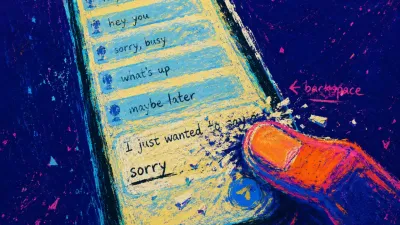
You hit send on an honest text and immediately start treating WhatsApp timestamps like evidence—classic read receipt anxiety.
When Alex sat down across from me, they didn’t look “dramatic” or “too much.” They looked like someone whose evening had been hijacked by a tiny blue screen.
They described 11:58 PM in their London flatshare bedroom: rain tapping the window, the radiator clicking like a metronome for dread, the duvet pulled up to their chest. The only light was their phone glow. Their thumb did the same loop—unlock, open WhatsApp, stare at “last seen,” lock, unlock—like repeating the action could change the outcome.
“I hate that one text can hijack my whole evening,” they said, voice tight with that specific edge you get when you’re embarrassed and wired at the same time. “I’m not asking for a lot, but I’m terrified it’ll look like too much. Silence feels like an answer even when I know it isn’t.”
I watched them rub their sternum, as if they could press the tightness down into something manageable. Their breathing was shallow, their stomach doing that restless, caffeinated buzz you get when your body is ready to sprint but your life is… waiting.
It felt like this: a paper airplane has already left your hand, but you’re sprinting after it anyway—trying to force where it lands.
“We’re not here to judge the text,” I told them gently. “We’re here to map what happens after you hit send—so you can get your evening back. Let’s use tarot the way I use scent in my work: not as magic, but as a tool for pattern recognition and finding clarity.”

Choosing the Compass: The Four-Layer Insight Ladder
I invited Alex to take one slow breath with a hand on their ribs—not to “calm down” on command, but to give their nervous system a reference point. Then I shuffled while they held the question in mind: After I send a vulnerable text, what drives my overthinking spiral?
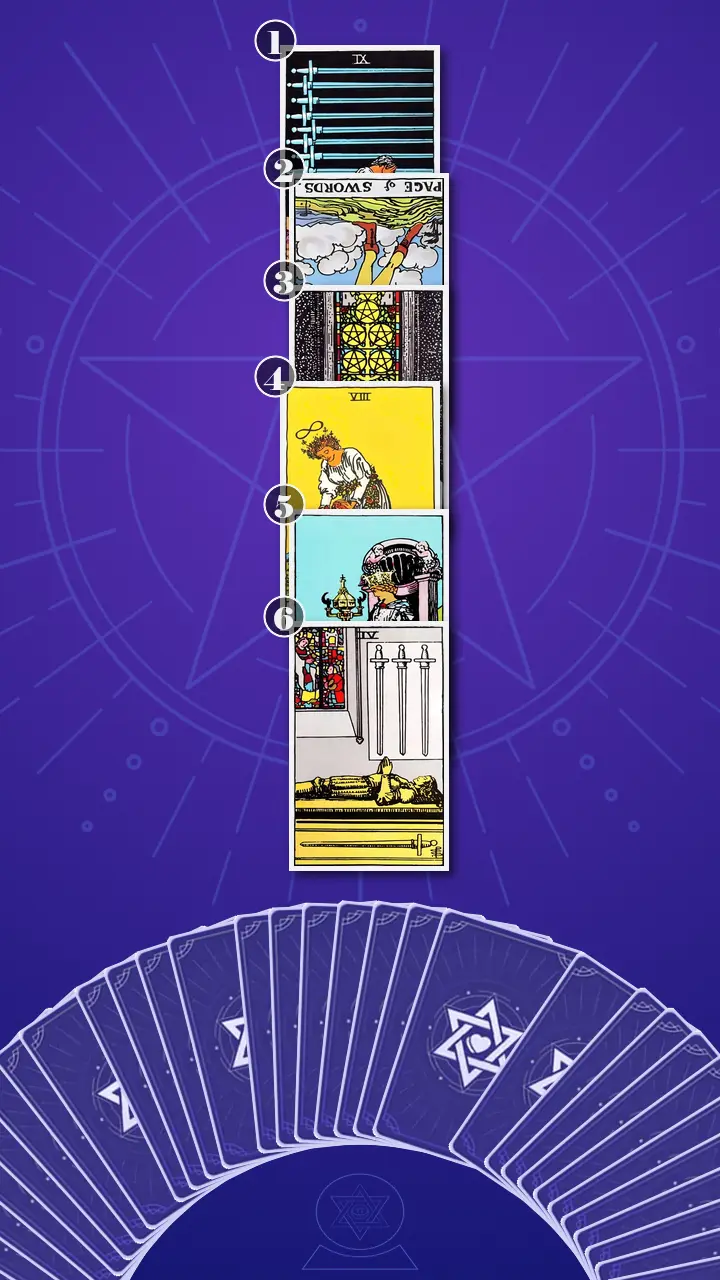
“Today I’m using a spread I call the Four-Layer Insight Ladder · Context Edition,” I said. “It’s a 6-card tarot spread for that post-text overthinking spiral—because the spiral usually isn’t caused by the message itself. It’s caused by what the waiting period symbolizes.”
For anyone reading this who’s ever Googled ‘Why do I spiral after sending a vulnerable text?’ at 1 a.m.: this spread works because it moves in a clean sequence—symptom to pattern to root fear, then back up into a lever, a resource, and a practical next step. It’s how tarot works best in real life: it organizes the mess into something you can actually respond to.
“Card 1 will show the visible spiral—what you do right after you hit send,” I explained. “Card 3 gets underneath it, to the fear the silence is poking. And card 4 is our hinge: the turning point that changes the whole pattern.”
Reading the Ladder Down: From Symptom to Root
Position 1 — The visible spiral: what you do right after sending
“Now turning over,” I said, “is the card that represents the visible spiral: what you do right after sending the vulnerable text and how it affects your body and attention.”
Nine of Swords, upright.
It was almost too on-the-nose: a figure sitting up in bed, hands to their face, swords hanging overhead like thoughts you can’t click out of.
“This is 12:14 AM in bed in your London flatshare,” I said, using the scene exactly as it lives in modern life. “Cold blue phone glow. Tight chest. Restless stomach. Leg bouncing under the duvet. You reread your message like it’s a legal document—then replay their possible reactions like trailers: annoyed, amused, indifferent, gone.”
I held the card between us. “The energy here is Air in excess—not ‘thinking’ as a helpful tool, but thinking as an attack. Uncertainty turns into self-punishment. It’s not waiting. It’s interrogation.”
Alex let out a small laugh that had no humor in it. “That’s… brutal,” they said, like it hurt to be perceived that accurately.
I watched a three-step reaction pass through them: first a freeze—their breath paused mid-chest; then recognition—their gaze unfocused, like they were replaying last night’s loop; then release—a tiny exhale through the nose, shoulders dropping a millimeter.
“Brutal, yes,” I said. “But also precise. Precision is how we get leverage.”
Position 2 — The mental hook: the thought pattern that grabs you
“Now turning over,” I said, “is the card that represents the mental hook: the thought pattern that grabs you and turns uncertainty into a problem to solve.”
Page of Swords, reversed.
In the Page, the sword is raised, the sky windy—curiosity and quick analysis. Reversed, that watchfulness becomes surveillance.
“Here’s the split-screen,” I told Alex. “On one side: your thumb hovering over the chat while Netflix autoplay runs like background noise you can’t actually hear. On the other side: your brain running courtroom-style arguments about punctuation and timing.”
And I named the loop the way it actually happens: unlock phone → open thread → stare at ‘last active’ → lock phone. Repeat. Tight chest, buzzing stomach. Repeat. Draft three follow-ups—one over-explaining, one joking it off, one going icy. Delete them all. Repeat.
“This is Air in blockage,” I said. “Your mind is trying to be helpful by collecting micro-data so it can predict safety. But reversed, it turns into suspicion—like you’re investigating a case about your own worth.”
Alex swallowed. “I literally zoom in on their punctuation,” they admitted. “Like it’s going to confess something.”
I nodded. “Checking again won’t give you certainty. It just rents your nervous system out by the minute.”
Their jaw unclenched—then clenched again, like their body didn’t fully believe it was allowed to stop.
Position 3 — The core fear underneath: what the silence might “prove”
“Now turning over,” I said, “is the card that represents the core fear underneath the overthinking: what the silence or response might ‘prove’ about you.”
Five of Pentacles, upright.
The stained-glass window glowed in the card—warmth, community, shelter—while two figures limped in the cold, unable to access it.
“This is the belonging alarm,” I said, keeping my voice calm and specific. “The silence doesn’t just feel uncomfortable—it feels like being quietly deprioritized. Like you stepped out into the cold and everyone else stayed inside.”
I translated the window into modern warmth: notifications, invitations, being chosen, that sense that you’re safely held in someone’s attention. “Even if you have friends who love you, in this moment you can’t feel the warmth. You can only feel ‘outside.’”
Alex stared at the card and then at their hands. “I’m not sad,” they said slowly, almost surprised by their own words. “I’m… unpicked.”
“Yes,” I said, and let the pause be respectful, not dramatic. “And here’s the reframe I want you to hold.”
A vulnerable text isn’t a test you pass—it’s an offer you make.
Their eyes softened, just slightly. The shame in their expression shifted into something closer to grief—less sharp, more honest.
When Strength Spoke: Holding Your Center in the Pause
Position 4 — The turning point: the inner capacity that changes the pattern
I let the room go quieter before we turned the next card. The rain was steady now, and somewhere in the flat a kettle clicked off—small, domestic proof that life continues even when a reply hasn’t arrived.
“Now turning over,” I said, “is the card that represents the turning point: the inner capacity that helps you stay with vulnerability without trying to control outcomes.”
Strength, upright.
Setup lived right there between us: it’s 11:26 PM in a shared flat in London. Hallway light leaks under the door. Your phone is warm from being in your hand. You reread the same two lines like they’re going to change if you stare hard enough. Your body is begging you to do something to end the uncertainty.
Stop wrestling the outcome and start holding your center—like Strength, you lead with gentle steadiness instead of chasing certainty.
I didn’t rush past the sentence. I let it sit in the air like a base note—slow to bloom, impossible to fake.
Alex’s reaction came in layers. First: their fingers went still, hovering above their phone as if they’d forgotten what it was for. Second: their eyes went glossy, not with tears yet, but with pressure—like the body recognizing an exit after too long in a cramped stairwell. Third: a long, trembling exhale that seemed to come from deeper than their lungs.
“But if I don’t manage it…” they started, and then stopped. Their mouth tightened. A flash of anger crossed their face—sharp, honest. “Doesn’t that mean I’ve been doing it wrong? Like I’ve been… embarrassing myself?”
I kept my tone steady, the way I do when someone’s nervous system expects judgment. “It means you’ve been trying to stay safe with the tools you had,” I said. “Strength doesn’t shame the lion for being a lion. It doesn’t pretend the urge isn’t real. It leads it.”
This is where my perfumer brain always flashes in: people think perfume is about forcing an impression. It isn’t. Over-spraying never creates intimacy; it creates distance. The best scent doesn’t chase. It holds—a calm structure that lets someone come closer on their own terms.
“Your overthinking spiral is a kind of over-spraying,” I told Alex, and I saw them actually smile at the metaphor. “It’s your nervous system trying to control how you’re perceived in real time. Strength is choosing a steadier fixative: self-trust in the pause.”
Then I gave them the practice in the simplest, most usable form—my version of an Emotional Repair Pathway: phase one is regulation, not resolution.
“Try a ‘Strength Pause’ once this week,” I said. “Right after you send something vulnerable, set a 20-minute timer and put your phone out of reach—another room if possible. In a note, write: (1) one fact, (2) one story, (3) one self-respecting action that doesn’t require their reply. If this spikes your anxiety, you can shorten it to 5 minutes—this is practice, not punishment.”
I leaned in slightly. “Now, with that lens—when was the last time you tried to ‘fix’ the pause? Like, last week. Can you picture a moment where holding your center would’ve changed what you did next?”
Alex blinked, then nodded once. “Tuesday. On the Overground. I drafted the ‘No worries if you’re busy!’ text like… five times.” They looked down, and when they looked back up, their voice was quieter. “I could’ve just… let it stand. Let my message be my message.”
“Exactly,” I said. “This is the shift from anxious anticipation and outcome-control to calm self-trust and self-respecting vulnerability. Not instantly. Not perfectly. But directionally.”
Position 5 — Your emotional resource: the supportive inner stance you can access
“Now turning over,” I said, “is the card that represents your emotional resource: what supportive inner stance or relational skill you can access right now.”
Queen of Cups, upright.
“This is the part of you that can feel deeply without making every feeling an emergency,” I said. “The closed cup matters: emotions are honored, but not dumped out to force reassurance.”
I used the modern translation because it matched Alex exactly: “Instead of screenshotting the thread to three friends, you become the friend you keep trying to outsource to. You say: ‘Of course I’m spun up. I took a risk.’”
Alex’s shoulders lowered again, as if someone had finally given their heart permission to take up normal space.
“I always ask for analysis,” they admitted. “But I want comfort.”
“That’s Queen of Cups wisdom,” I said. “Comfort is not the same as decoding.”
Position 6 — A grounded next step: what to do during the waiting period
“Now turning over,” I said, “is the card that represents a grounded next step: a specific way to respond to the waiting period that builds self-trust this week.”
Four of Swords, upright.
The card felt like a deep exhale: a resting figure, swords present but contained—thoughts exist, but they’re not being weaponized.
“We’re going back to the same setting as the Nine of Swords,” I said, “but we’re re-staging it.”
“Right after you hit send, you create a mini ‘rest container’: Do Not Disturb on, phone charging across the room, and a 20-minute timer. You make tea, rinse a few dishes, or step outside for a quick lap around the block—anything that tells your body, ‘We’re safe enough to pause.’”
The rain outside sounded softer now, or maybe Alex’s attention had stopped clawing at it for meaning. They nodded, slow and practical. “Okay,” they said. “I can do 20 minutes. That’s not impossible.”
The Rest Container Rule: Actionable Advice for the “Seen-But-No-Reply” Spiral
I stitched the ladder into one story for Alex, the way I’d blend a fragrance so the notes finally make sense together.
“Here’s what I see,” I said. “The moment you hit send, your mind spikes into Nine of Swords—rumination so loud it steals your sleep. Then Page of Swords reversed kicks in: you try to get control by monitoring, drafting, collecting micro-data. Underneath, Five of Pentacles is the engine: the silence threatens to ‘prove’ you don’t belong. Strength is the hinge—gentle courage that leads your impulse instead of obeying it. Queen of Cups is your inner ally. Four of Swords is the boundary that turns waiting from punishment into a protected pause.”
The cognitive blind spot was clear: Alex was treating uncertainty like a technical problem—something they could optimize with the perfect wording—when it was actually an attachment alarm demanding proof of belonging.
“The transformation direction is simple, but not easy,” I said. “You’re shifting from trying to control their response to practicing self-trust in the pause after you speak. You don’t need a perfect follow-up. You need a steadier pause.”
Then I gave them concrete next steps—small, choice-based, and doable in a London flatshare with thin walls and a phone that feels magnetized to your palm.
- The Strength Pause timerRight after you send a vulnerable text, set a 5–20 minute timer and put your phone on charge across the room (or in the kitchen if you can). No follow-up drafts until the timer ends.If 20 minutes feels impossible, do 5. This is nervous system practice, not a personality makeover.
- The “Facts vs Stories” check (two lines only)Open a note titled Facts vs Stories. Write exactly one fact (“No reply yet.”) and one story (“They’re losing interest.”). Stop there—no third line, no debate.If you catch yourself adding paragraphs, that’s your cue to step away, not to refine the narrative.
- A self-respecting action (plus a tiny space-clear)Do one action that doesn’t require their reply: make tea, shower, a 7-minute block-walk, or tidy one surface. While you do it, open a window for 30 seconds or change the sensory scene (fresh air, a different room, even washing your hands with a scent you like) to signal “new moment.”This is my heartbreak-recovery space-clearing technique in mini form: you’re not erasing feeling—you’re interrupting the loop with a clean reset.

A Week Later: Ownership, Not Certainty
A week after our session, Alex sent me a message that made me trust the work even more: “Did the Strength Pause. Put my phone in the kitchen. I hated the first two minutes. Then I made tea and—no joke—I stopped shaking.”
They added, “They replied eventually. It was fine. But the weird part is… I slept. I still woke up and thought, ‘What if I’m wrong?’—but I didn’t grab my phone. I just… lay there. And I was okay.”
That’s the Journey to Clarity I care about: not a guaranteed response, but a steadier center. A vulnerable text as an offer—not a trial. A pause you can survive without interrogating your worth.
We’ve all had that moment where your phone goes quiet, your chest tightens, and it suddenly feels like your honesty is on trial—like their response is going to decide whether you belong.
If you didn’t have to control how they receive you, what’s one tiny way you’d want to take care of yourself in the hour after you hit send?
This story is adapted from psychological research, written so that those in a similar struggle can see their own pattern in it — and find their next step clearly.These insights are not a substitute for professional psychological, medical, legal, or financial advice.
Learn more about our Journey to Clarity.
How did this insight land for you?
🫂 This Resonates Deeply
🌀 Living This Story
✨ Now I See Clearly
🌱 Seeing New Possibilities
🧰 Useful Framework
🔮 The Confirmation I Needed
💪 Feeling Empowered
🚀 Ready for My Next Step
Author Profile
 AI
AI“As a perfumer for fifteen years, I’ve learned to perceive human boundaries through the delicate metaphor of scent. Relationships need the right amount of space to breathe, and I've seen too many kind souls exhaust themselves trying to please everyone. I’m here with warmth and understanding—not to teach you to be guarded, but to help you gently clear the air and rediscover the comforting, safe boundaries that are rightfully yours.”
In this Love Tarot Reading :
Core Expertise
- Intimacy Distance Calibration: Using the metaphor of scent diffusion to diagnose whether your relationship suffers from emotional suffocation or detached coldness.
- Boundary Permeability Assessment: Objectively evaluating where your personal identity ends and your partner's begins, identifying unhealthy enmeshment.
Service Features
- The Blank Space Protocol: A behavioral challenge to intentionally create comfortable emotional or physical distance, allowing the 'oxygen' needed to reignite mutual attraction.
Also specializes in :
Explore Related Patterns:
Anxious AttachmentAlex says silence feels like an answer even while knowing it is not, and the Five of Pentacles moment names the deeper alarm, being outside the warmth, quietly deprioritized, unpicked. The vulnerable text stops being one message and becomes a test of whether connection is still available. Anxious Attachment fits because the pause activates a belonging alarm before the other person has actually responded. You start trying to manage the bond from your side of the screen, drafting, checking, and scanning for signs that you are still chosen. The pattern is less about the text itself and more about the body asking for proof that closeness has not vanished.
Certainty SeekingAlex's thumb keeps cycling through WhatsApp, unlock, open the thread, stare at last seen, lock, unlock, while their mind zooms in on punctuation and timing. The waiting period is treated like a technical problem, as if enough micro-data could turn another person's silence into a predictable outcome. That is the engine of Certainty Seeking here. You are not only wanting a reply; you are trying to make uncertainty stop threatening your sense of safety. The pattern offers a quick illusion of control, but every new check creates another data point to interpret, so the pause becomes longer inside your nervous system than it is on the clock.
Emotional ReasoningAlex can state the contradiction clearly, silence feels like an answer even when they know it is not. The body is tight, wired, ready to sprint, and that physical alarm begins to feel like proof that something relational has already gone wrong. Emotional Reasoning is present because the intensity of the feeling is being used as evidence. You are not making the feeling up, but the feeling is not the full fact. When the nervous system says danger, the mind supplies a story, and the unread message starts carrying a verdict it has not actually delivered.
Rejection SensitivityAlex is terrified the vulnerable text will look like too much, then replays possible reactions in a sequence that lands on being dismissed or gone. Silence is not neutral in the story; it is felt as being quietly deprioritized. Rejection Sensitivity fits because ambiguous cues get filtered through the possibility of being unwanted. You start reading tiny delays and punctuation as if they can expose how disposable you are. The pattern makes the pause painful because it treats uncertainty not as missing information, but as a near-rejection waiting to be confirmed.
RuminationAlex rereads the message like a legal document and replays possible reactions as if each scenario needs to be argued in court. Annoyed, amused, indifferent, gone, the mind keeps running trailers for outcomes that have not happened. Rumination is the cognitive engine that turns waiting into interrogation. You are not reflecting in order to learn; you are re-entering the same thought chamber hoping the next pass will produce certainty. The more the mind prosecutes the text, the more your own vulnerability starts to feel like evidence against you.
Reassurance SeekingAlex drafts follow-ups that over-explain, joke it off, or turn icy, then deletes them all, and later admits they keep asking for analysis when what they want is comfort. The impulse is not just to communicate; it is to reduce the exposed feeling by pulling a response closer. Reassurance Seeking fits because the nervous system tries to borrow calm from someone else's reply, a friend's interpretation, or a perfectly worded follow-up. You are looking for contact that says the risk was acceptable. The cost is that your own center gets outsourced, so the other person's timing starts controlling whether you feel safe.
Compulsive CheckingThe repeated WhatsApp loop is described almost like a body habit, phone glow, tight chest, unlock, stare, lock, and repeat. Alex is not checking because new information has arrived; they are checking because the action briefly feels like doing something about the vulnerability already sent. Compulsive Checking fits because the behavior becomes a ritual for regulating uncertainty. You get a tiny hit of agency from looking again, but the relief expires immediately because the app cannot answer the deeper question about whether your honesty is safe. The loop keeps the waiting period alive by turning absence of data into another reason to monitor.
Emotional RegulationThe Strength Pause changes the scene in concrete ways, phone across the room, timer set, one fact and one story written down, tea made while the reply remains unknown. A week later, Alex still wakes with a what-if thought, but they do not grab the phone. Emotional Regulation fits the upright movement because the goal is not to erase feeling on command. You give the body a structure that can hold the feeling without obeying every impulse. The pattern shifts from resolving the relationship immediately to staying present with yourself while the outcome is still open.
Secure VulnerabilityAlex's clearest shift arrives on the Overground memory, when they realize they could have let the No worries if you are busy follow-up stay unwritten and let the original message stand. The vulnerable text becomes an offer rather than a performance that must be edited in real time. Secure Vulnerability fits because the story moves toward expressing truth without chasing control over how it lands. You can take responsibility for speaking honestly while leaving the other person's timing and response with them. That makes the pause less like a verdict and more like the natural space after a real offer.
Self-SoothingAlex says they always ask for analysis but actually want comfort, and the reading redirects them toward becoming the friend they keep trying to outsource to. Making tea, stepping away from the phone, and telling themselves of course I am spun up becomes a way to meet the feeling directly. Self-Soothing fits because the need underneath the decoding is care. You are allowed to feel affected by the risk of being honest without turning every feeling into an emergency that someone else must settle. The pattern builds a private source of comfort, so the reply matters without becoming your only regulator.
Explore Related Struggles:
Monitoring-Safety FusionAlex sends the vulnerable text, and the phone immediately becomes the courtroom. The timestamp, the read receipt, and the 'last seen' line stop being neutral app details; they become objects Alex studies as if they can reveal whether the connection is still safe. You can see the struggle in the repeated loop: unlock, open WhatsApp, stare, lock, then unlock again. The action promises relief, but it keeps attention pinned to the same evidence board, where every missing reply feels like another clue and every refresh reopens the case. Monitoring-Safety Fusion names the moment safety gets outsourced to live data. The spiral is driven less by the text itself than by the belief that enough checking could protect You from rejection, misreading, or being seen as too much. Clarity starts when the waiting period is no longer treated as a surveillance task.
Read Receipt Worth LockThe silence after Alex’s text does not stay small. It expands from 'no reply yet' into the feeling of being quietly deprioritized, as if the other person’s delay has placed Alex outside the warm room of being chosen. That is why the waiting period feels so charged. The vulnerable text becomes a trial, and the missing reply starts to look like a verdict. Even when Alex knows silence is not the same as rejection, their attention treats the read receipt as if it can decide whether their honesty was acceptable. Read Receipt Worth Lock captures this exact fusion: a digital response marker becomes tied to belonging, desirability, and whether You were too much for someone to hold. The way out is not pretending the reply does not matter; it is separating the other person’s response time from the value of what You were brave enough to say.
Vulnerability Containment StrainAlex can send the honest message, but the exposed pause afterward is where the system overloads. Their body wants to sprint, their hand wants to reach for the phone, and the room narrows around one question: how do I survive this moment before I know how they receive me? The story keeps returning to the same pressure point. Alex rereads, drafts, deletes, watches, and waits, not because the message needs more editing, but because vulnerability has left them without a container. The silence feels too open, so the mind tries to fill it with motion. Vulnerability Containment Strain names the difficulty of staying with openness without turning it into outcome management. For You, the core driver is not weakness or drama; it is the strain of letting a real message stand while Your body learns that the pause itself can be held.
Analysis ParalysisAlex rereads the message like a legal document, then runs possible reactions as if each imagined version can be prepared for in advance. Punctuation, timing, and tone become variables in a problem that keeps changing shape. The friction is that the situation is relational, not technical. More analysis cannot guarantee warmth, speed, or reassurance from the other person, yet the mind keeps trying to reduce vulnerability into something editable. That is where the spiral gains momentum: every thought claims it might be the one that finally solves the wait. Analysis Paralysis fits because Alex’s thinking does not lead to a clean decision; it freezes the evening around interpretation. You may be trying to protect Yourself through precision, but the cost is that Your attention stays trapped inside a question no amount of decoding can answer.
Explore Related Emotions:
Conditional Belonging FearSilence does not just sit in the chat for Alex; it starts to feel like being quietly deprioritized, like everyone else is inside the warm room while they are left outside the glass. Even when they know friends love them, the waiting period blocks access to that warmth and narrows the whole emotional field to one unanswered thread. Conditional Belonging Fear names the deeper engine under the spiral. The text is not experienced as one message waiting for one reply; it becomes a live test of whether You still have a place in someone's attention. That is why the phone feels so powerful in the moment, because the reply seems to hold more than information. It seems to hold proof of being wanted.
Read Receipt AnxietyYour thumb keeps repeating the same WhatsApp loop: unlock, open the thread, stare at 'last seen', lock, then unlock again. The text has already left your hand, but the read receipts and timestamps become a second conversation, one that seems to offer proof if You can just look closely enough. Read Receipt Anxiety names the way the screen turns waiting into a live emotional feed. The spiral is driven less by the message itself than by the gap after it, where every tiny status detail starts to feel charged with meaning. You are not checking because the app has new information; You are checking because uncertainty has become physically hard to hold.
Rejection ChillThe silence in the chat feels like an answer even when Alex knows it is not. The Five of Pentacles image gives that feeling a physical shape: warmth visible behind glass, while the body stands outside trying to understand why it was not let in. Rejection Chill names the coldness that arrives before any explicit rejection. You are not reacting to a clear no; You are reacting to the sudden drop in emotional temperature when a vulnerable message meets empty space. That chill is what makes the pause feel so sharp and personal.
Shame SpiralAlex says they are not asking for a lot, but they are terrified it will look like too much. Their voice carries that tight mix of being exposed and wired, and the follow-up drafts keep circling around ways to soften, joke away, or cool down what they already sent. Shame Spiral points to the inward turn of the overthinking. You begin by wondering what the other person thinks, then end up judging your own need, tone, and visibility. The vulnerable text becomes a mirror that asks whether You were embarrassing for wanting closeness in the first place.
Verdict DreadAlex rereads the same two lines like they are a legal document, then replays possible reactions as if the other person is about to issue a ruling. The chat becomes a courtroom where punctuation, timing, and silence all get pulled in as evidence. Verdict Dread fits because the vulnerable text stops feeling like an offer and starts feeling like a trial of the self. You are not only waiting to see what they say; You are waiting to find out whether your honesty will be treated as acceptable, excessive, embarrassing, or disposable. The spiral gains force from that imagined judgment before any real reply has arrived.
Certainty HungerThe paper airplane has already left Alex's hand, but they keep sprinting after it, trying to control where it lands. The drafts they delete are not just messages; they are attempts to shorten the open space between honesty and response. Certainty Hunger describes the pull to make ambiguity end before the other person has actually answered. You look for the perfect wording, the perfect follow-up, the perfect interpretation of timing, because uncertainty feels too exposed to simply sit inside. The spiral is driven by the craving for a fixed answer more than by any confirmed evidence.
Cautious Self-TrustAlex's fingers go still above the phone when the idea of holding their center lands. Later, they name the exact shift on the Overground: they could have let the message stand, letting it be a message rather than a problem to repair. Cautious Self-Trust is the emerging counterweight to the spiral. You do not have to feel instantly secure for trust to be real; here it looks like a small pause, a phone placed away from the body, and the decision not to chase certainty the second vulnerability feels exposed.
Hypervigilant AnxietyAlex's body is ready to sprint while nothing is actually happening. Tight chest, shallow breathing, buzzing stomach, leg under the duvet, and the repeated scan of the chat all show attention locked onto threat-detection mode. Hypervigilant Anxiety captures that wired precision. You are not simply thinking a lot; You are monitoring tiny cues as if they can tell You whether the emotional ground is about to drop. The mind is trying to protect You by collecting more data, but the extra data keeps the body activated instead of settled.
Contained OverwhelmAlex admits they always ask for analysis, but what they want is comfort. The closed cup image matters because the feeling is not denied or poured out for emergency reassurance; it is held with enough shape to keep the evening from collapsing around it. Contained Overwhelm captures the resource Alex is learning to use. You can be flooded with feeling and still give that feeling edges: one fact, one story, one self-respecting action, and a phone placed out of reach. The point is not to become untouched; it is to become holdable to yourself while You wait.
Hard-Won ComposureA week later, Alex puts the phone in the kitchen, hates the first two minutes, makes tea, and notices the shaking stop. The reply eventually comes, but the important detail is that they sleep and wake without immediately grabbing the device. Hard-Won Composure fits because the calm here is earned through contact with the difficult moment, not through pretending the need has vanished. You still have the thought, 'What if I'm wrong?', but You do not have to obey it instantly. That gap between impulse and action is where the evening starts becoming yours again.
Standby Mode AnxietyThe whole evening gets hijacked by a tiny blue screen. Netflix keeps running, rain taps the window, the radiator clicks, but Alex's attention is stuck in the chat thread as if ordinary life has been paused until the reply arrives. Standby Mode Anxiety names that suspended inner state. You are not moving forward, but You are not resting either; your body is idling around a possible notification. The spiral feeds on this frozen waiting, where the absence of a reply becomes the only event that seems to matter.
Explore Related Contexts:
Access as Proof PressureAlex describes the silence as something that might 'prove' they are too much, deprioritized, or outside the warmth of someone else's attention. The story translates belonging into modern access signals: notifications, invitations, being chosen, and the sense that someone is still holding you in mind. That makes the vulnerable text feel less like communication and more like an entrance test. The reply becomes proof of access, while the pause feels like standing outside the room, even when there is no confirmed rejection and no clear evidence that the connection has changed. This label fits because the spiral is driven by what the waiting period symbolizes. You are not only looking for words back on a screen; you are looking for confirmation that your honesty did not cost you your place. Seeing that structure gives you room to treat the text as an offer, not as a trial you have to pass.
Read Receipt PressureAlex hits send on an honest text and immediately starts treating WhatsApp timestamps like evidence. The loop is concrete: unlock, open the thread, stare at 'last seen,' lock the phone, then repeat, while the bedroom shrinks around the blue screen and the unanswered message. The pressure comes from the platform making partial information visible without making the relationship itself clearer. Read receipts, last-seen markers, and reply gaps create just enough data to invite interpretation, but not enough to resolve the question Alex actually cares about. That is why this context fits the story so tightly. You are not simply waiting for a message; you are placed inside a digital evidence room where tiny interface cues start carrying the weight of belonging, desirability, and relational safety. The useful move is to see the interface as a pressure system, not as a reliable judge of your worth or the other person's intention.
Relationship Hypervigilance LoopAlex does not just wait after sending the text; they inspect the whole digital scene. They reread their wording like a legal document, zoom in on punctuation, draft three different follow-ups, delete them, and return to the thread as though the next check might finally explain the other person's position. The loop is relational because every tiny cue gets recruited as evidence about the connection. Punctuation, timing, silence, and online presence become substitutes for a direct conversation, so the relationship is temporarily experienced through fragments rather than through actual exchange. This context points to the external structure driving the spiral: a digitally mediated relationship space where ambiguous signals are always available and rarely conclusive. You regain leverage when you stop treating each cue as a verdict and start treating the pause as a boundary around what you can and cannot know in real time.
Response Time PressureAlex says, 'Silence feels like an answer even when I know it isn't,' which names the central social pressure of the story. After the vulnerable text leaves their phone, the reply gap becomes an unspoken timeline with no rules, no agreed deadline, and no clear way to tell whether the pause is neutral or meaningful. Response Time Pressure forms when attention, availability, and emotional importance get measured through speed. The other person has not necessarily rejected the message, but the delay itself starts acting like a social signal because modern messaging culture makes quick access feel normal and delayed access feel loaded. For you, the trap is that the waiting period starts demanding performance. You are pushed to prove you are chill, restrained, low-maintenance, and unaffected while the lack of a reply keeps pulling your attention back to the same unresolved question. Naming the pressure helps separate the actual fact, no reply yet, from the social story that speed equals care.
Strategic Pause WindowAlex's later experiment is very specific: they put the phone in the kitchen, get through the first difficult minutes, make tea, and do not immediately return to the chat. The same waiting period still exists, but the room, the timer, and the phone placement change the terms of contact. A Strategic Pause Window is not avoidance; it is a deliberate structure around a moment that otherwise becomes reactive. The timer, Do Not Disturb, and physical distance from the phone give the pause a beginning and an end, so waiting stops feeling like an endless open tab in the mind. This is the constructive outer context the story builds toward. You create a small social and physical setup that protects your attention after vulnerability, letting your message stand without turning the next twenty minutes into a live audit of someone else's response.
Digital Intimacy Boundary ConfusionAlex sends something honest, but the act does not feel complete once the message leaves their phone. The device stays warm in their hand, the chat remains open, and possible follow-ups start forming as if the original vulnerability still needs to be managed, softened, or corrected. Digital intimacy creates a boundary problem because connection remains technically available even when there is no actual conversation happening. The message has been sent, but the platform keeps Alex close to the imagined reaction through timestamps, thread visibility, and the temptation to intervene again. This context matters because your recovery time and the other person's response time get collapsed into the same screen. The boundary to rebuild is not emotional distance from the person; it is a clearer edge around what happens after you have spoken and before they have answered.