Habit-Stack Overload: Letting One Journal Sentence Count Alone

When Habit-System Overload Filled the Whole Screen
If you can meet a visible work deadline but freeze at a seven-item tracker in the privacy of your bedroom, habit-system overload may have turned self-care into a pass-fail test.
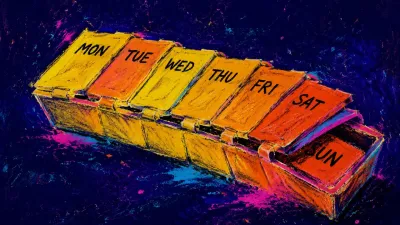
Maya, a 27-year-old junior product designer in London, sat across from me with both hands wrapped around a coffee she had barely touched. She pushed her phone across the table and showed me a screenshot taken at 7:10 that morning: seven habits, fifty-five minutes, every item waiting in a tidy vertical line.
As she described the scene, I could see it through her words. Grey light leaked around the curtain in her flat-share bedroom. The radiator ticked beside the bed. Her phone was warm in her palm as she dragged journaling above meditation, moved it back, recalculated the sequence, and watched the total remain stubbornly unchanged.
Before her feet reached the floor, she had already accounted for exercise, meditation, journaling, supplements, planning, reading, and language practice. Her shoulders rose. Her chest felt as though someone had laid a heavy winter duvet across it and sewn seven alarm clocks into the fabric. She closed the tracker, opened Instagram, and watched productivity clips until it was nearly time for work.
“I can hit deadlines when other people are waiting for me,” she said. “But with my own routine, one missed step makes the whole morning feel pointless. I spend more time rebuilding the tracker than following it. Why do I keep avoiding my routine after stacking too many habits?”
I heard the contradiction immediately: she wanted to maintain a routine by adding more support, yet the added support had fused into one load she could no longer enter selectively. The first habit felt heavy because it was carrying the implied weight of all seven.
“I’m not hearing laziness,” I told her. “I’m hearing a routine that has been made responsible for proving far too much about you. We’re not going to use the cards to grade your discipline or predict whether you’ll succeed. We’ll use them to make the pattern visible, then find the smallest place where you can take back choice. Let’s draw a map through the fog.”
Choosing the Switchback Map
I invited Maya to take one unforced breath and hold a single question in mind: “What makes beginning feel like an obligation to finish everything?” I shuffled slowly while the aroma of coffee settled between us. After twenty years of reading cards, I still treat this moment as a transition for attention, not a performance of mystery.
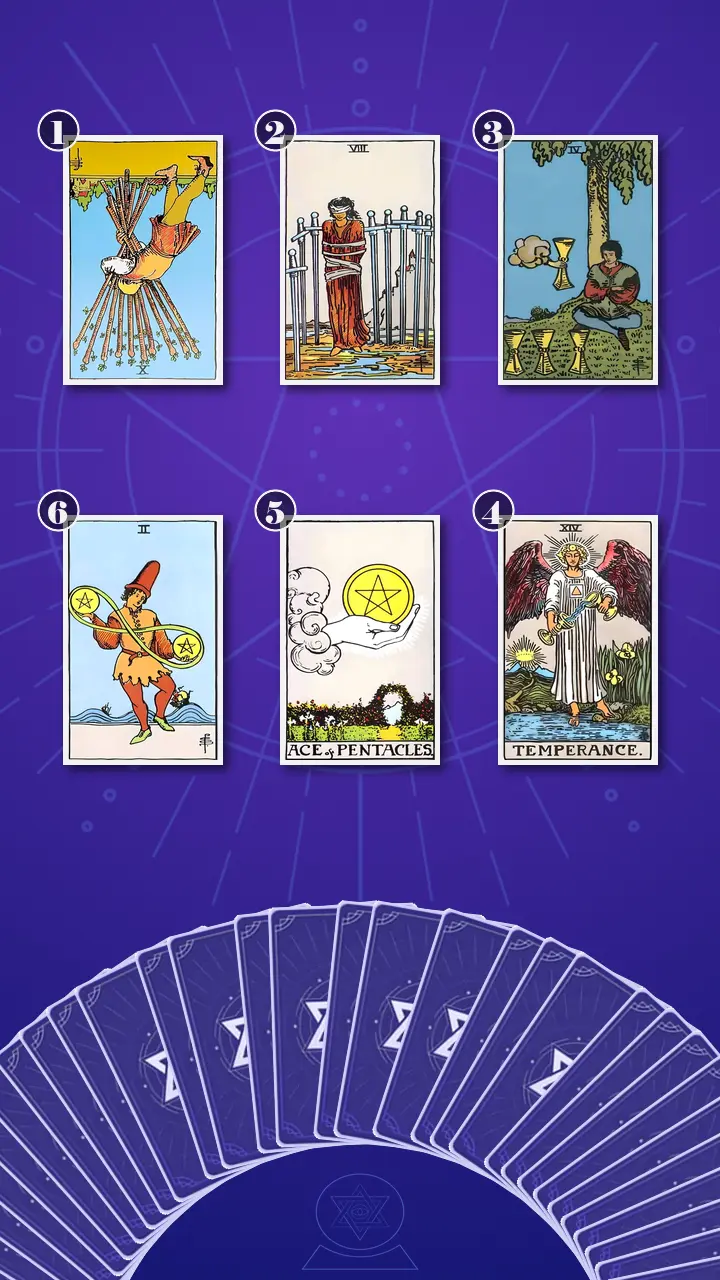
I chose the Transformation Path Grid · Context Edition, a six-card tarot spread arranged like a switchback path. The upper row enters the overloaded system through its visible symptom, immediate blockage, and deeper loss of meaning. The lower row returns through calibration, one practical action, and flexible integration.
I chose this spread because Maya’s problem was not primarily a question about the past or a prediction about the future. It was a feedback loop. She added habits to feel consistent, experienced the resulting stack as indivisible, postponed starting, lost contact with each habit’s purpose, and then responded by adding stricter rules or a better tracker. A broad Celtic Cross would have introduced more influences than we needed. This grid was the smallest map capable of showing why the loop persisted and where it could change direction.
I explained that the first position would show the observable moment when the full routine became too heavy. The second would expose the rule that made one habit feel contractually tied to the rest. The fourth, our pivotal position, would identify the energy capable of interrupting the cycle. That is how tarot works in my practice: the images provide structured prompts, but card meanings in context emerge through the person’s real behavior, language, and choices. The cards are a mirror and a map, never a verdict.
The Bundle, the Fence, and the Unwanted Cup
Position 1: Seven Habits Bound into One Load
I turned over the card representing the current observable symptom of habit stacking overload: scanning the complete routine, feeling its total burden, and abandoning the sequence before beginning. It was the Ten of Wands, reversed.
In the card, a figure bends beneath ten tightly bundled wands. The bundle blocks the carrier’s view, even though a destination remains visible in the distance. I placed the image beside Maya’s screenshot. Ten wands filled one field of vision; seven linked habit cards filled the other.
At 7:10, Maya had not encountered seven separate decisions. She had encountered one fifty-five-minute demand. She could have written the first journal sentence, but her inner calculation was, I could do the first thing, but starting it means agreeing to all of this. She rearranged the order, watched the total stay the same, and closed the app without beginning.
The individual habits were not necessarily too difficult. The problem was an Excess of Fire energy: too many worthy intentions compressed into one mandatory load. Reversed, that excess tipped into collapse. Because Maya had not permitted herself to set down six wands while keeping one, relief could only arrive by dropping the entire bundle. This was the productivity version of an overpacked cabin bag. The answer was not a stronger zip; it was deciding what belonged on this particular trip.
Maya gave one short laugh, but no amusement reached her face. Her fingers tightened around the coffee cup before slowly releasing it.
“That is painfully accurate,” she said. “Almost rude, actually.”
“The card is describing the load, not accusing the carrier,” I replied. “Wanting all seven habits came from wanting support. We only need to separate that good intention from the rule that says support must arrive as a complete bundle.”
Position 2: The Contract Nobody Asked Her to Sign
I turned over the card identifying the immediate rule that converted overload into procrastination: the belief that beginning one habit obligated Maya to complete the whole stack. It was the Eight of Swords, upright.
The figure in this card is blindfolded and loosely bound inside a partial enclosure of swords. The restriction feels complete, but the fence is not sealed. An open route exists, even if the figure cannot yet trust what she cannot see.
I brought Maya back to 7:12 under the duvet. She considered writing one sentence, then instantly calculated what would follow: exercise, meditation, supplements, planning, reading, and language practice. Her actual choice was small, but her inner rule expanded it: If I journal, I’m committing to meditation and exercise; if I cannot do all three, the journal entry does not count. Scrolling offered a permitted exit from a sequence that appeared to have none.
I described this as an Air-energy Blockage. Maya’s mind was doing what a product system does when every task has been configured as a blocking dependency. A two-minute item could not ship until the entire roadmap looked achievable. The tracker displayed options, but her completion-or-nothing rule translated them into a contract.
“Your routine stopped being support when it became evidence for the prosecution,” I said. “Every checkbox now seems to testify either for or against your reliability.”
Her breath paused. Her gaze moved away from the card and held on the rain-streaked window as if she were replaying several mornings at once. Then her shoulders drew even closer to her ears.
“If I shorten it, I feel like I’m admitting I can’t be trusted,” she said quietly. “Like I’m organized only when someone at work is watching.”
“That fear is real,” I said, “but it is not the same thing as an external barrier. The open space in this card asks a precise question: if one practice were allowed to count without obligating the rest, what choice would become available?”
Position 3: When Helpful Habits Lost Their Names
I turned over the card revealing the root of the meaning-collapse split: repeated stacking had disconnected Maya’s habits from their felt purposes and turned them into interchangeable requirements. It was the Four of Cups, upright.
The figure sits with folded arms before three cups while a fourth is offered and left unexamined. I asked Maya to picture the previous Sunday at 9:43 p.m.: the kettle hissing in the shared kitchen, the faint smell of washing-up liquid, and a polished #SundayReset video recommending breathwork. Meditation, exercise, and journaling were already waiting like the three visible cups. Breathwork became the offered fourth. She added it anyway, even as her stomach dropped.
This was stagnant Water, a Deficiency of felt connection rather than a shortage of beneficial ideas. Algorithmic wellness content had taught the system to keep recommending “one more useful thing” until Maya’s own preference disappeared from the feed. Journaling, movement, mindfulness, and language learning no longer carried distinct meanings. Each practice registered as one more box capable of producing guilt.
“Which habit would you genuinely miss because of its effect,” I asked, “not because an empty checkbox would bother you?”
Maya’s fingers stopped circling the rim of her cup. Her eyes unfocused for several seconds. When she answered, her voice was slower.
“Journaling. Not pages of it. Just putting one thought somewhere outside my head. I do notice the difference.”
The room went quiet enough for me to hear the soft click of the heating. Even the coffee steam had thinned, mirroring the moment when a crowded routine began to separate into individual choices again.
When Temperance Poured Only What Could Fit
Position 4: The Amount the Morning Could Actually Hold
I turned over the card locating the transformational trigger that could challenge the overload cycle: calibrating the routine to present capacity and allowing selective completion to count. It was Temperance, upright, the key card of the reading.
The room seemed to settle around it. In the image, water moves carefully between two cups. One foot rests on land while the other meets water. Nothing is forced into stillness, and nothing is poured merely to prove that more can be carried. The energy here is Balance: measured transfer, responsive adjustment, and patience with the size of the available container.
I asked Maya to imagine two simple columns in her tracker: anchor and optional. Journaling could move into the first. The other six habits could remain visible without becoming conditions of entry. On an office morning, one sentence could be the complete dose. On a home morning, she could choose an extension. Either way, stopping would be built into the design.
I watched her return to the familiar trap: the tracker says fifty-five minutes, her shoulders contract, and she begins redesigning rather than acting. She wanted consistency so badly that the system created to prove it had made every beginning feel unsafe. Reducing the dose still looked suspiciously like surrender.
I used what I call an Energy Extraction Audit. I did not ask whether exercise, journaling, meditation, or study were objectively good. I asked when each micro-habit withdrew attention and when it returned something Maya could actually feel. Seven simultaneous withdrawals at 7:10 were over-extracting her baseline energy before any delayed benefit could arrive. Temperance was not recommending weaker commitment. It was changing the timing and dose of the exchange.
“Consistency is not finishing the stack,” I said. “It is returning to one meaningful practice without making every other habit a condition of entry.”
Your routine is not a test you must pass; build a livable rhythm by pouring only what fits between Temperance's two cups.
I let the sentence remain between us.
Maya’s breathing stopped first. Her right hand hovered above the phone without touching it, and her eyes widened slightly as though the seven-item list had appeared in the air again. Then her gaze lost focus. I could almost see the memory sequence moving across her face: the late alarm, the unopened journal, the quick swipe that dismissed every reminder. Her jaw tightened.
“But doesn’t that mean I’ve been doing it wrong this whole time?” she asked. The question came out sharper than anything she had said before. Anger flashed across her expression, followed almost immediately by hurt. “I put so much effort into building this.”
“It means the system gave you new information,” I said. “You built it in good faith. You do not have to insult your past effort to revise a design that no longer fits. Adjustment is one of the ways self-trust becomes credible.”
Her fingers curled once, then opened on the table. A long breath left her chest. Her shoulders lowered, but relief did not arrive as simple brightness; for a moment she looked almost unsteady, as if setting down the bundle had revealed the responsibility of choosing what mattered. Then she gave a small, disbelieving nod.
“Now, with this new perspective, think back to last week,” I invited. “Was there a moment when this insight might have made the morning feel different?”
“Tuesday,” she said. “I had twelve minutes before my stand-up. I could have written one sentence and stopped. I thought stopping would make it pointless, but I think the sentence was the part I actually wanted.”
I named the shift plainly. This was not a leap from avoidance to perfect discipline. It was one step from overwhelm and fear-driven tracking toward grounded self-trust: allowing an honest, selective commitment to provide better evidence than forced endurance.
We tested the idea for no more than ten minutes. I asked Maya to circle the one habit whose actual effect she would miss, write a two-minute version beside it, and move everything else into an optional section for the following morning. She chose “one journal sentence,” and agreed to record only whether she attempted the anchor. I reminded her that this was a one-day experiment, not a permanent rule. If editing the tracker created more pressure, she could close it, place the journal somewhere visible, or stop the experiment entirely.
One Seed and Two Moving Hands
Position 5: A Beginning Placed in the Real World
I turned over the card translating moderation into an actionable next step: selecting one meaningful anchor habit with a physical cue and a concrete minimum version. It was the Ace of Pentacles, upright.
A single pentacle rests in an open hand above a cultivated garden path. The image offered a direct contrast to the bundled Ten of Wands. Maya did not need to carry ten intentions through the gate. One tangible beginning was sufficient.
I connected the card to a simple scene. Before bed, Maya could place her journal open on the desk with a pen beside it and write at the top of the page, One line counts. In the morning, she could write that line before opening Notion, TikTok, or Slack. Continuing would remain available, but it would not be required to validate the beginning.
The Ace carried grounded Earth energy in the form of available potential. It did not promise that one sentence would transform her life, and I did not present it that way. It made the next choice visible and testable. As a product designer, Maya understood the difference between rebuilding an entire Figma file and testing one useful interaction with an actual user. This was a minimum viable routine: one real action before another elaborate system.
She touched the corner of the Ace with one finger and smiled with a trace of caution.
“One sentence looks almost too small,” she said.
“Its job this week is not to prove the final size of the habit,” I replied. “Its job is to make beginning possible without hidden terms. One meaningful habit can stand on its own.”
Position 6: Consistency That Moves with the Day
I turned over the final card, representing integration as flexible consistency: habits could be shortened, moved, or paused without making the routine, or Maya herself, a failure. It was the Two of Pentacles, upright.
The figure handles two pentacles connected by an infinity-shaped ribbon while ships rise and fall on waves behind him. Unlike the compressed carrier of ten wands, this figure remains upright by moving. The card’s Balance is dynamic rather than motionless.
I translated the image into Maya’s hybrid week. Journaling and a short walk could remain adaptable anchors. On a home day, she might write at her desk and extend the walk. On an office day, she could type one sentence on the Tube and walk from the station. After a late alarm, she could choose only one. None of those versions required backfilling, punishment, or deleting the rest of the week.
“Consistency is a return, not a perfect sequence,” I said. “A changed connection does not cancel the whole journey. It means the route needs updating.”
Maya looked from the Two of Pentacles back to the Ten of Wands. I watched recognition move through a three-part chain: her brow tightened at the old bundle, her eyes traced the lighter infinity loop, and then a quiet “Oh” escaped as her shoulders softened again.
“So the routine can have an office version, a home version, and a late version,” she said. “I don’t have to keep pretending every morning has the same container.”
“Exactly,” I said. “Adaptation does not invalidate continuity. It is what allows continuity to survive contact with daily life.”
A Routine Sized for the Life Already Happening
I drew the six cards together into one coherent story. Over the previous year, Maya had kept adding rungs to a carefully built ladder until the ladder became too heavy to climb. The Ten of Wands reversed showed the visible collapse beneath that accumulated ambition. The Eight of Swords revealed the rule tying every rung to every other rung. The Four of Cups showed why motivation could not solve the problem: the habits had lost their individual meanings. Temperance restored proportion, and the two Pentacles grounded that proportion in one visible beginning and an adjustable way of continuing.
The cognitive blind spot was not that Maya had failed to find the right routine. It was that she had confused strictness with reliability, scale with seriousness, and adaptation with evidence that she could not trust herself. Her morning system kept asking an imaginary perfect day to set the budget for a real hybrid-working life.
The transformation direction was clear: move from treating the full habit stack as an indivisible daily exam to returning to one meaningful anchor, with a minimum version and a legitimate stopping point. Everything else could remain optional until time, energy, and interest made it sustainable. A smaller routine was not a smaller promise; it was a promise sized for the life she actually had.
I made one boundary explicit. Tarot had not selected journaling for Maya. Maya had selected it by noticing which practice produced a felt effect she valued. The spread helped us separate burden, rule, meaning, and action, but the authority to keep, modify, pause, or reject any habit remained hers.
The One-Anchor Reset
I translated the reading into two small experiments. The first drew on my Daily Clutter Deconstruction: I do not ask someone to clean or optimize an entire life. I look for one physical decision surface where psychological noise has accumulated. For Maya, the crowded tracker, unopened journal, and phone competing on the same desk created a tiny landscape of unfinished instructions. Reorganizing one corner could give Temperance’s two cups a physical form: one anchor in view, everything else out of the immediate path.
- Run the 15-Minute Physical Anchor Experiment. Within the next 48 hours, spend no more than 15 minutes on one corner of the bedroom desk. Place the journal open with a pen beside it, define one sentence as the minimum, up to five minutes as the optional extension, and the timer as the stopping point. Move the other six habits into an optional tracker section for seven days. If reorganizing starts becoming another project, stop after placing one object in view. Preparing the cue is enough for the experiment, and seeing it never creates an obligation to use it.
- Use the Seven-Day Flexible Return Protocol. Before each morning’s first real commitment, choose a home, office, or late version of the anchor. Record only attempted or not attempted, without streaks, percentages, or backfilling. At the end of seven days, spend up to eight minutes answering: What supported me, what became performative, and what can stay paused? Treat shortened, moved, skipped, and stopped versions as information. The experiment may be modified or ended at any point; no result is a verdict on discipline or readiness.
These were not promises of a fixed outcome. They were low-pressure ways to test whether the routine’s rules matched Maya’s actual capacity. The smallest version remained valid precisely because completing it did not unlock a new demand.
A Week Later, One Line in the Grey Morning Light
Six days later, I received a message from Maya. She sent a photograph of her desk in the same thin London morning light: an open journal, a black pen, and one handwritten sentence. The rest of the tracker was still under a heading marked Optional, not owed.
“Office morning,” her message read. “I wrote one line and stopped. My first thought was that I was cheating. Then I noticed I still wanted to come back tomorrow.”
She told me the plan felt clearer and that she had slept more soundly, but her first waking thought had still been, What if I drop it again? This time, she had smiled at the thought, written one sentence, and left for the Tube.
I did not mistake that one line for a solved life, and I did not credit the cards with doing the work. The modest proof was that Maya had made a conscious choice, respected her stopping point, and allowed the rest of the morning to remain unfinished. The power belonged to her willingness to use real capacity as data.
For me, that was the heart of this Journey to Clarity. The six-card Transformation Path Grid had traced habit-system overload from burden, restriction, and lost meaning into calibration, a grounded beginning, and flexible consistency. It had not handed Maya certainty. It had helped her see where choice had been hiding inside a system that looked sealed.
When the full routine appears in your mind before your feet reach the floor, that heavy chest may be carrying more than seven habits. It may also be carrying the fear that setting one down will expose you as someone who cannot be trusted. Simply noticing that hidden weight means you are no longer standing at the beginning of the same loop.
If one practice could stand on its own tomorrow, held like the single pentacle and measured between Temperance’s two cups, what tiny version would you feel curious enough to meet without owing the rest of the stack?