The Concert Shirt Went Back; Six Days Later, One Release Felt Possible
The Concert Shirt at 10:12
If you are a late-twenties junior creative sharing a small city apartment, a weekend reset can turn into sentimental clutter paralysis the second an old concert shirt slips from the closet.
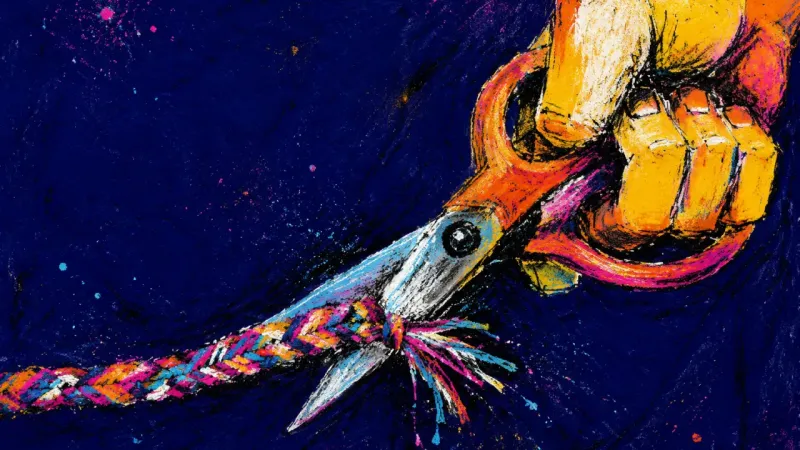
I watched Jamie (name changed for privacy) stand in their compact Toronto bedroom with a donation bag hooked over the closet handle. It was 10:12 on a Saturday. Dust and laundry detergent warmed the air, a streetcar bell rang somewhere below, and the shirt's faded cotton had gone soft at the collar from years of wear.
Jamie lifted it from a compressed shelf, opened their phone, and found the camera-roll album from the concert. Twenty minutes passed in the blue-white glow of photos: old friends with their arms around one another, a former haircut, a version of Jamie who looked both less certain and somehow easier to recognise. Their phone warmed their palm. Their fingers clamped around the fabric. Then the shirt went back exactly where it had been.
"I want a closet I can use," Jamie said, not looking at me. "But when I touch something like this, letting it go feels like evicting the person who wore it."
The feeling had weight. I could see it in the small lift of their shoulders and the way their hands remained curled after the shirt was put down: a tight chest, clenched fingers, heavy hands, as though the object had asked them to carry an entire earlier life at once.
I said, "That does not sound like laziness or a lack of organisation. It sounds as though each object has been assigned the job of proving that a former version of you was real. The object is small; the job you have given it is enormous."
As a perfumer, I have spent years noticing when one atmosphere spills into another. A trace of smoke can make a clean room feel like a crowded bar; a strong note can drown out everything else without meaning to. Jamie's closet had become like that. Every past chapter was still diffusing through the same small space, leaving too little clear air for the person living there now.
"Let us make a map," I told them. "Not a verdict about what you should keep. A map toward clarity, with every decision still yours."
Choosing a Map Through Sentimental Clutter
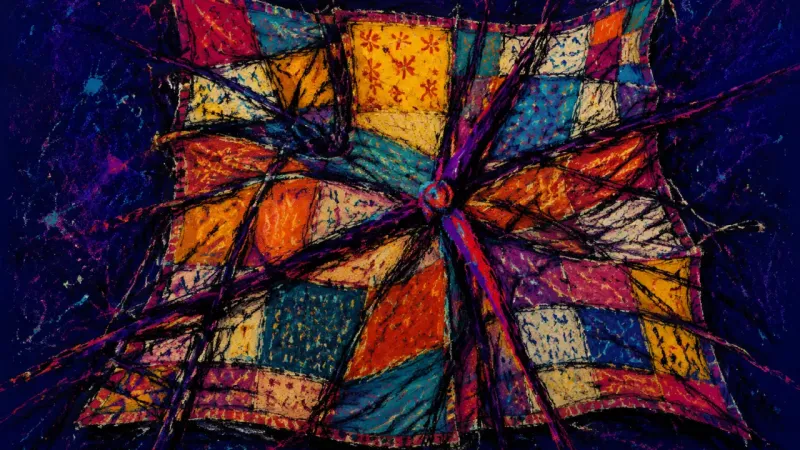
I invited Jamie to take one ordinary breath and hold the question in mind: why does decluttering feel like losing part of myself? Then I shuffled slowly. The cards were not there to predict a loss or tell Jamie what their home had to look like. They gave us a structured way to separate a present feeling from the rule that feeling had quietly become.
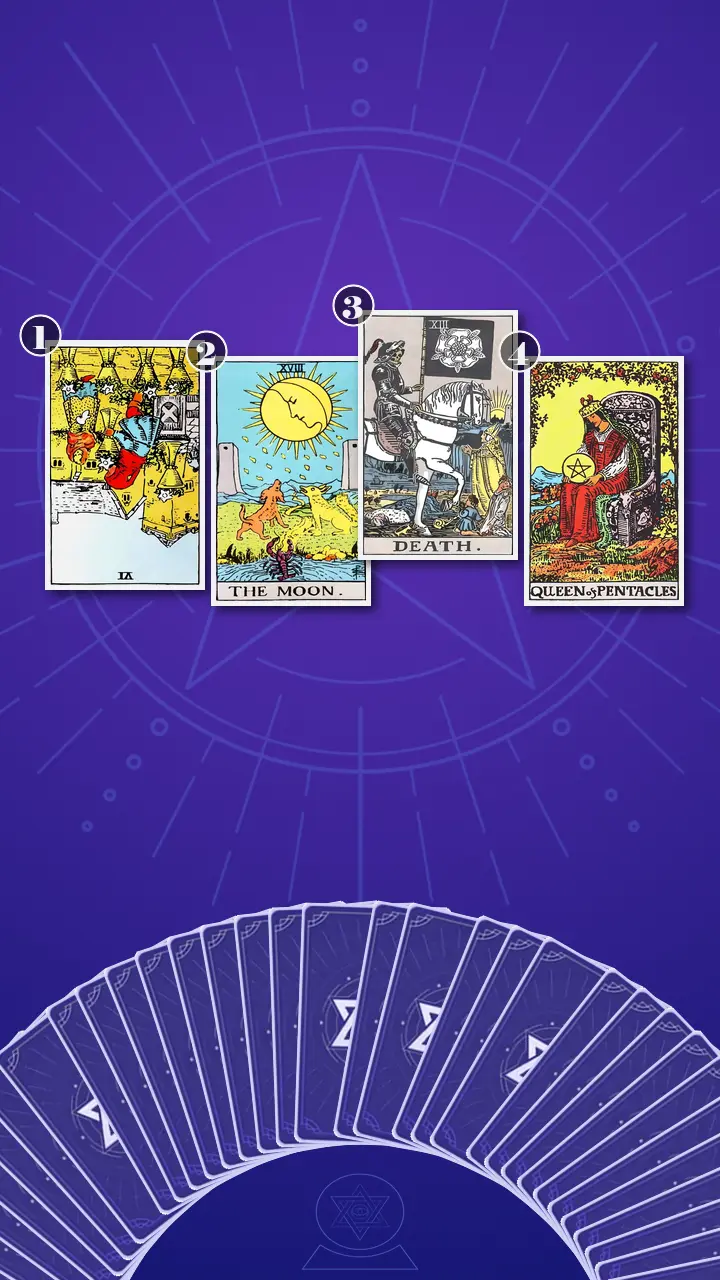
I used the Four-Layer Insight Ladder · Context Edition, a four-card tarot spread for sentimental decluttering. It suited this career-crossroads-like moment of the inner self because the visible task was simple, while the loop beneath it was not. A larger spread would have added noise. This one follows the actual pattern: the behaviour, the hidden fear, the transformational threshold, and the next grounded experiment.
The first card would show how the avoidance loop appears in real life. The second would look beneath it, at the unnamed warning that makes every choice feel unsafe. The third, raised slightly above the others, would be the bridge: the perspective shift that could change the decision itself. The last would translate that insight into a home that could support work, rest, and the present tense.
Reading the Map, One Shelf at a Time
The Return to the Same Shelf
Now I turned over the card representing presenting symptom and emotional energy: the Six of Cups, reversed.
The card carries tenderness toward the past, but reversed, that tenderness had become blocked into a loop. I described what I saw in Jamie's Saturday morning: the old concert shirt, the camera-roll archaeology, the reconstructed friendship, the careful refolding. The memory was real and worth respecting. But the emotional current had become an automatic keep command.
"Before I decide, I need to remember the whole story," I said, giving language to the pattern. "And once I remember it, letting go feels worse."
Jamie made a brief, dry laugh and rubbed their thumb across the shirt's hem. "That is so accurate it is kind of rude."
I smiled, because the recognition mattered. "Your home does not have to become a museum to prove your life happened. This card is not asking you to care less. It is showing where care has been made responsible for permanent storage."
The reversed energy was excess rather than failure: too much meaning routed through too little physical space. Jamie wanted less stuff, but not less of themself. The Six of Cups showed that the two had been accidentally fused.
The Warning With No Named Threat
Now I turned over the card representing underlying fear and cognitive blind spot: The Moon, upright.
I thought of the Moon's winding path between two towers, with the familiar dog and the wilder wolf calling into the dark. For Jamie, it looked like sitting among half-labelled boxes at 11:18 p.m., a streetcar rumbling outside, holding a small gift and feeling certain that release would be cruel, disloyal, or irreversible without being able to name what present-day harm it would cause.
"The Moon is not proof that something bad will happen," I said. "It is the experience of receiving an emotional security warning with no named threat. It feels urgent, but it does not tell you what evidence would make the choice safe."
I watched Jamie's breath pause. Their gaze moved from the card to the crowded closet, then went unfocused for a second, as if a dozen unfinished sorting sessions had begun replaying behind their eyes. Finally, their jaw loosened.
"I cannot name what will be damaged," they said quietly. "So I cannot prove it will be safe."
"Exactly. Discomfort can mark significance without issuing a keep command." I let that sit. "The blind spot is not that you are sentimental. It is that uncertainty has been promoted into a storage rule."
In that moment, I remembered a familiar perfumery problem: when a room has too many competing notes, the answer is not to deny any one note existed. It is to create enough space to tell what is actually present. Jamie had been treating every wave of guilt as evidence, rather than asking what the guilt was trying to protect.
When Death Crossed the Crowded Shelf
The room became quieter as I turned over the raised card, the spread's bridge. Now I revealed the card representing transformational threshold: Death, upright.
I named it plainly. This was not a literal prediction, and it was not a command to purge. Death is about a deliberate ending: allowing an old form to change so life can continue honestly. The white rose on its dark banner was not a negation of what came before. It was a visible act of remembrance moving through a threshold.
Jamie looked at the card as though it had asked the question they had been avoiding: what if a life chapter can remain meaningful after its container changes? Their mind was still caught in the old equation, where the right decision had to guarantee no grief, no regret, no possibility of losing contact with a former self.
You do not need to keep every object to keep yourself intact; choose a conscious ending and let Death's rider carry the old form toward a more lived-in present.
For a few seconds, neither of us spoke. Jamie's fingers froze above the shirt. Their eyes widened, then softened, and moisture gathered at the lower lids without falling. Their attention seemed to move inward, replaying not just the concert night but all the occasions when an item had been made to stand in for a friendship, an achievement, a difficult season, a self they had worked hard to become.
Then their hands opened. Their shoulders dropped by degrees, as if a strap had finally been loosened. The exhale that followed was unsteady and long.
"But if I let something go," they said, their voice catching before it steadied, "does that mean I was wrong to keep it for all this time?"
"No," I said. "It means it served a purpose then. We are not putting your past on trial. We are asking what form of care fits now."
There was relief in Jamie's face, but also a brief blankness after it, the small dizziness that can come when a burden has been carried so long it has started to feel like part of the body. Clarity gave them a path, and a path returned responsibility. I did not rush that vulnerability.
"A memory can remain part of you after the object stops taking up space," I continued. "Release is not erasure; it is a change of format. Now, with this new lens, can you think of a moment last week when that would have felt different?"
Jamie looked at the shirt. "The fact that I can still tell you the whole story without opening the photos," they said. "That feels... obvious, but not small."
This was the real shift: from attachment-laden anxiety and fear of identity erasure toward cautious trust in continuity. Death did not promise that every release would feel easy. It showed that identity could travel forward without requiring every old container to remain on the shelf.
The Home as a Living Garden
Now I turned over the card representing grounded integration and the next experiment: the Queen of Pentacles, upright.
The Queen sits in a cultivated garden, holding one pentacle with attention. Her care is selective, material, and warm. I translated her into Jamie's home: one intentional memory container, a few objects that could actually be seen or used, and a clear surface for the laptop, charger, breakfast, or a quiet evening.
"This is not minimalism as a personality test," I said. "It is stewardship. Care is also deciding what gets to occupy your present."
The Queen's energy was balance. She did not ask Jamie to reject the sentimental self, nor to preserve every version of it in production forever. As a UX designer, Jamie understood the comparison when I offered it: a design system works because selected components remain accessible, not because every abandoned draft has to stay on the live screen.
Jamie nodded, and I saw their shoulders soften further. "A memory box is not the same thing as a whole apartment archive," they said.
"Exactly. The Queen lets a home become a living environment instead of a warehouse for proof."
The Seven-Minute Continuity Test
The story of the spread was clear. The Six of Cups showed the tender memory loop. The Moon showed the undefined fear that turned emotion into an automatic keep rule. Death offered the bridge: preserve meaning without preserving every object. The Queen of Pentacles gave that insight a physical boundary and a workable sorting practice.
Jamie had not failed at decluttering. Their cognitive blind spot was subtler: they had confused an emotional reaction with a permanent instruction. The transformation was to preserve chosen records while allowing present usefulness, selected significance, or voluntary release to guide the room.
I gave Jamie two deliberately small next steps. Neither required a dramatic purge, a shopping trip for perfect storage, or an argument with their own history.
- One-object continuity testOn Wednesday after dinner, sit beside the existing maybe pile, set a seven-minute phone timer, and choose one low-stakes item, never a fresh-grief object, vital document, or treasured gift. In Notes, write one sentence beginning "This reminds me of..." and one beginning "It mattered because..." Then ask whether the meaning needs this object, one photo, the sentence, or no extra record. You may keep it, release it to the donation bag by the door, or stop without deciding.Treat the sentence as a continuity test, not a full biography. If your chest tightens sharply, put the item aside and end the timer. Keeping it remains a valid choice.
- The living-home boundaryWithin 72 hours, choose one box, drawer, or shelf already in the apartment as a memory container for a single category, such as concert keepsakes. Let only deliberately chosen records live there, and leave enough room for the lid to close easily. Put one selected object where it can be seen this week, then clear the nearby surface for current work, rest, or getting ready.This is Luca's Physical Boundary Protocol: use a sensory cue to separate archive mode from recovery mode. After sorting, close the container, wash your hands with a distinct soap or make tea, and leave the closet area. The scent change helps your nervous system register that the high-pressure decision moment is over.
I explained that the scent cue was not magic. It was a boundary in the most practical sense: a clear signal that the atmosphere of sorting did not have to follow Jamie into the rest of the evening. Work-life bleed happens in rooms; so does memory-life bleed. A small physical transition can help the mind stop treating every pause as unfinished business.
A Week Later, a Usable Shelf
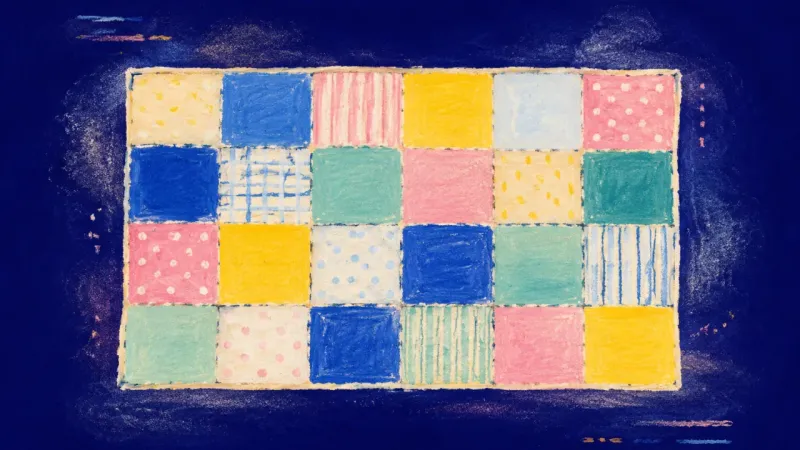
Six days later, Jamie sent me a photo. The concert shirt was still there, folded in an intentional memory box with two other keepsakes. But an old event lanyard had gone into the donation bag after seven minutes and two sentences in Notes. Beside the box, a clear section of shelf held their current work bag.
"I thought I would feel like I had edited myself out," Jamie wrote. "Instead I felt sad for about five minutes, then I made tea and used the desk without moving three piles first."
That was the proof I wanted them to notice: not a spotless apartment, not a solved identity, but one chosen ending and one surface returned to the life currently happening there. The cards did not take anything from Jamie. They helped them see that their own discernment could hold both tenderness and space.
When the donation bag is open and your hands keep returning each object to the shelf, the tightness in your chest may not be about stuff at all. It may be the fear that making room could make you less real. But your memories are not trapped in cotton, paper, or a crowded drawer; they are already carried in the person who can recognise what mattered.
If one memory could remain fully yours after its object changed form, which low-stakes item would you be curious to see differently?