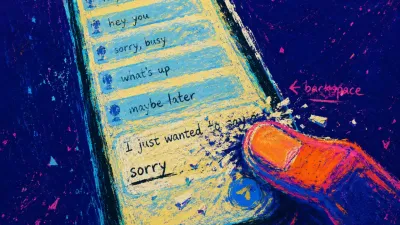
The 6:40 p.m. Rain Check: When a Friend Cancels and You Feel Relieved and Rejected
If you answer “all good ❤️” in the group chat and then reopen it four times looking for hidden meaning, I want to say this first: I do not hear drama in that. I hear rejection-sensitive social ambivalence—the very modern ache of wanting closeness, needing rest, and hating that those two truths show up in the same body.
Jordan brought me a Thursday-evening scene from her Toronto apartment so vividly that I could almost step into it with her: half-zipped boots by the door, tote bag slumped over a dining chair, makeup done, radiator clicking in the corner. At 6:40 p.m., her phone buzzed warm in her hand with “Can we reschedule?” and her shoulders dropped before she had even finished reading. Then her chest tightened, her stomach went heavy, and she sent back “No worries ❤️” while her mind was already reopening the chat in three directions at once.
“I hate how much I want people to follow through,” she told me. “And the worst part is that I’m relieved when they cancel.” There it was, clean and painful: she wanted the plan to confirm connection, and she wanted the pressure of the plan to disappear. The hurt in her felt like missing the last stair in the dark—small enough that other people might not notice, but sharp enough to jolt her whole center of gravity.
I nodded. I always watch the shoulders and the neck before I watch the words; years of reading people taught me that the body leaks the truth faster than the chat thread does. “That drop in your body makes sense,” I told her. “Your body says one thing. Your mind turns it into another. Let’s not force a verdict yet. Let’s draw a map and see where the split begins.”
Choosing the Compass: The Shadow Spread for Mixed Feelings
I asked Jordan to put both feet on the floor, take one slow breath, and hold the last rain check text in mind while I shuffled. I never treat this part as theater. For me, it is a focusing device—a way to help the nervous system stop scrolling long enough to notice what is actually present.
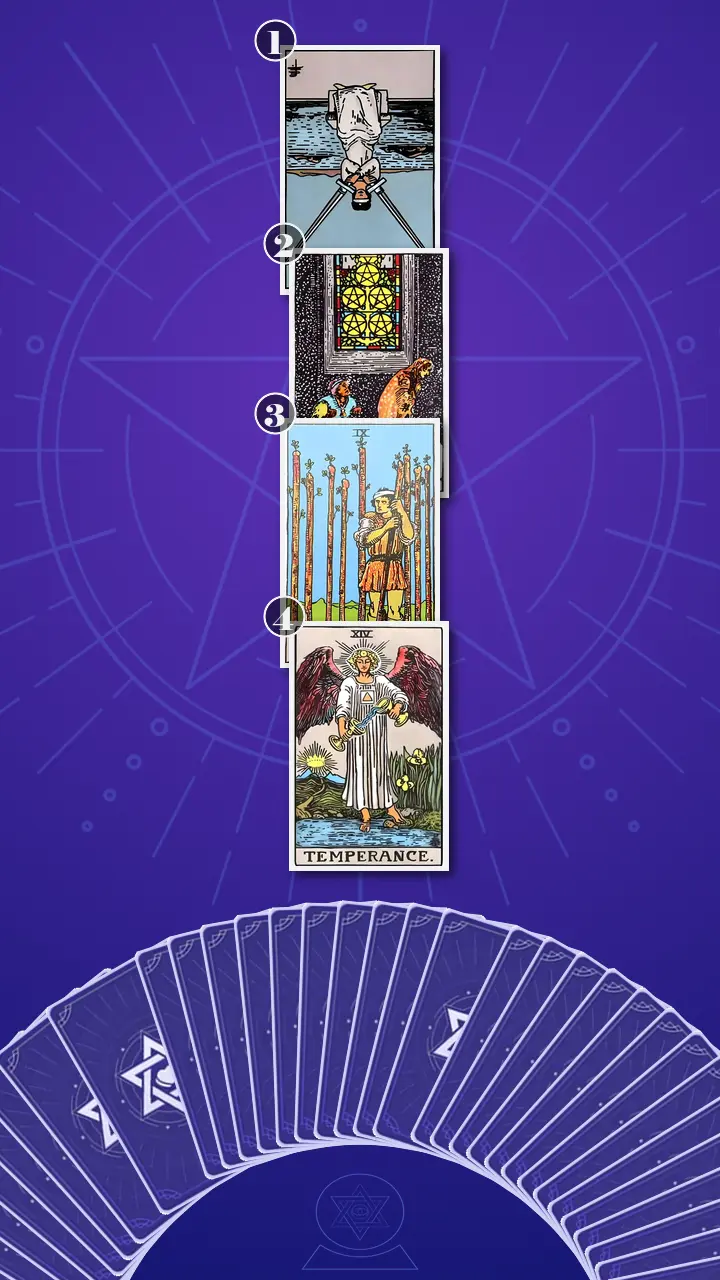
For this question, I chose The Shadow Spread tarot reading for mixed feelings after canceled friendship plans. It is one of the clearest ways I know to answer a question like, “Why do I feel relieved when my friend cancels plans and then immediately rejected?” because how tarot works best here is not through prediction, and not through generic card meanings detached from life. I wanted card meanings in context. This spread separates the chain with precision: the surface reaction, the root wound under it, the protective pattern that keeps the cycle alive, and the integration path that offers grounded next steps.
I told her what each position would do. The first card would show the immediate swing between exhale and injury. The second would reveal what the changed plan seems to prove about belonging. The third would expose how she braces for connection long before the hangout starts. The fourth—the bridge card—would show how to hold hurt and relief together without turning either one into self-rejection.
Reading the Split Screen of Hurt and Relief
Position 1: The Chat Thread With Two Tabs Open
Now flipped is the card representing the immediate split reaction described in the diagnosis: the observable relief-and-rejection swing after a friend cancels. The card was the Two of Swords, reversed.
In modern life, this is the exact scene Jordan had already handed me: the breezy heart-emoji reply in the group chat, then the TTC reread, the kitchen reread, the before-bed reread, all in search of one final answer to a feeling that is genuinely split. One tab in her mind says, “Thank God, I can stay home.” The other says, “Of course. I was the easiest plan to move.” It is very Inside Out 2: several feelings at the console at once, and none of them are actually lying.
Reversed, the Two of Swords shows blockage in the old strategy of compartmentalizing. The blindfold becomes unreadable digital tone. The crossed swords over the chest become the self-protective “I’m fine.” The dark water behind the figure is the emotional surge building underneath the composed surface. Relief is not proof you did not care. It only means one part of you stopped bracing for a moment.
Jordan reacted in a precise three-step sequence I know well: her inhale caught, her thumb stopped against the rim of her coffee cup, and then she gave one short laugh with no humor in it. “That’s accurate enough to be rude,” she said. I smiled, gently. Once someone feels seen that exactly, the shame starts losing altitude.
Position 2: The Warm Room You Think Everyone Else Got Into
Next came the card representing the hidden wound: what the cancellation seems to prove about belonging or worth. The card was the Five of Pentacles, upright.
This is the card I see when one canceled dinner stops being dinner and starts feeling like rank. In real life, it looks like Jordan on her couch later, takeout open, TV paused, blue phone light on her face, finding one dim Instagram Story of the same friend out with other people and feeling as if she has accidentally seen the reservation list with her name missing. The lit stained-glass window becomes everybody else’s easy closeness on a screen. The snowy street becomes the lonely over-interpreting state her nervous system drops into when uncertainty starts masquerading as exclusion.
Upright, the Five of Pentacles is scarcity in excess. Not proof of low worth, but a wound that reads one data point as a total social catastrophe. A reschedule is a calendar change, not automatically a worth verdict. But this card explains why Jordan’s body does not experience it that way. The moment hits an older sentence: I am easy to leave out. Warmth is happening somewhere else.
As I said that, a pale strip of evening light from the window landed across the card like a pane of glass. Jordan looked down at it, not at me. Her jaw loosened first, then her eyes glossed. “It never feels like just one plan,” she said quietly. “It feels like… proof.” That was the wound speaking, not the evidence.
Position 3: Already Tired, Already Guarded, Already Performing
The third card represented the defense strategy and limiting pattern: how Jordan braces for connection in ways that make cancellation feel soothing and painful at once. The card was the Nine of Wands, upright.
Its meaning in context was immediate. This is Slack fatigue rolling straight into “should I still go out tonight?” This is dry eyes at 5:56 p.m. in a downtown office, fluorescent light still buzzing, while part of your brain is already running the evening like a rehearsal app: outfit, route, timing, whether you will seem fun enough, whether you need an escape line, how chill you should look. The hangout starts costing energy hours before it happens. By the time the cancellation arrives, the body treats it like permission to stop performing.
Here, I used the lens I rely on more than any spread diagram: energy flow diagnosis. I have learned, from cruise decks and consulting rooms alike, that shoulders, neck, and jaw tell me when the psyche has built a fence. Jordan had already described the exact modern fatigue pattern—screen-induced exhaustion, social-overload headache, the little vise at the base of the skull that comes from trying to stay pleasant after too many pings. The Nine of Wands is not contradiction. It is excess vigilance. It is a firewall around connection.
A small professional flashback crossed my mind then: passengers on transoceanic voyages dressed for dinner, smiling beautifully, shoulders lifted almost to their ears as if charm itself were a life raft. I learned at sea that protection is not the enemy. But protection without flow turns connection into a threat.
So I gave her the line the card wanted in plain English: “You were not contradictory. You were braced.” Then I added, because it mattered, “Your nervous system heard ‘never mind’ before your ego heard ‘not chosen.’”
This time her response was not laughter. It was a long exhale. Her shoulders dropped a second time, but more honestly. “Wait,” she said, eyes lifting to the card, “so maybe I’m not flaky. Maybe I’m just already armored by the time the plan gets there.” That was the first click of change.
When Temperance Poured Between Two Cups
Position 4: The Bridge Between Rest and Belonging
When I turned over the final card, the room went oddly still. Even the radiator had stopped its little commentary. This was the bridge card—the integration path, the healing direction, the actionable way of relating differently. It was Temperance, upright.
Temperance is balance, yes, but not the bland kind. In modern life, it looks like refusing to let every invitation become a referendum on your worth. It looks like a shorter catch-up, a coffee walk, a Sunday voice note, a direct “I’d still love to see you—can we do something easier this week?” It is one foot on land and one in water: emotional honesty grounded in practical pacing.
Because I am Venetian by blood and habit, I read this card through water. In Venice, if water cannot circulate through narrow passages, it turns stale. I call this Venetian Aqua Wisdom. Jordan had been trying to dam one feeling and flood the other—either act unbothered, or collapse into feeling unwanted. Temperance asked for circulation instead: let hurt move, let relief move, and do not let either harden into a verdict.
I slowed the moment down. “Think of that city-evening second,” I said, “shoes on, bag packed, one last glance at the chat, the phone warm in your hand. Your shoulders loosen at ‘Can we reschedule?’ and then your chest tightens like you’ve just been quietly deprioritized.”
You do not have to choose between acting unbothered and feeling unwanted; like Temperance's two cups, you can hold your hurt and your relief long enough to hear what each one is telling you.
I let the sentence sit in the air. Then I gave her the quieter truth beneath it. “The cancellation did not expose one true feeling. It exposed two real needs at once: the need for rest, and the need to know you still matter.”
Jordan’s reaction came in layers. First, her face went blank in that tiny stunned way people do when a pattern finally loses its costume. Then her eyes unfocused, as if she were replaying last Thursday frame by frame: the buzz of the phone, the instant exhale, the immediate spiral. Then came the resistance. “But if that’s true,” she said, her voice suddenly sharper, “doesn’t that mean I’ve been making every plan into some kind of test?”
“Not on purpose,” I said. “It means your system has been trying to get certainty and safety from the same place. That is different.” I watched her jaw unclench, her shoulders sink, and then that strange small stillness pass through her—the light dizziness that sometimes follows clarity, when the old job of overthinking briefly disappears and responsibility returns to the self. “You can want people and want less pressure at the same time,” I told her. “That is not inconsistency. That is honesty.”
I asked her, “Now, with this new lens, think back to last week. Was there a moment when this would have changed how you felt?” She nodded slowly. “If I’d just admitted I was tired and disappointed,” she said, voice thinner but steadier, “I probably wouldn’t have spent the whole night turning it into a verdict.” Exactly. That was the shift: from braced, tone-reading self-rejection to the first flicker of steadier self-trust around changing plans.
From Verdict to Pacing: Actionable Next Steps
By the time the four cards were on the table, the story was clean. The reversed Two of Swords showed the split-screen moment: body relief and mental injury colliding. The Five of Pentacles showed why it hurts so fast: a changed plan wakes up an older belonging fear and turns uncertainty into imagined rank. The Nine of Wands revealed the blind spot: Jordan was treating even casual connection like something she had to manage perfectly, so relief after cancellation was data, not disloyalty. Temperance showed the transformation direction: stop using plans as proof that you are wanted, and start naming rest and belonging separately so connection can be shaped rather than cross-examined.
The cognitive blind spot was subtle but decisive: Jordan kept asking a changed plan to answer a much bigger question—Do I matter?—when most changed plans can only answer a smaller one—What fits right now? That is why finding clarity here required not more FBI-level tone analysis, but a different rhythm. Clarity lands better when the plan fits your actual capacity.
She looked at me and said, “This still feels dramatic for one text.” I shook my head. “That is exactly why the next steps have to be small. We are not turning dinner into a dissertation. We are teaching your system not to confuse sensation with sentence.”
- The Both-Feelings PauseThe next time plans change, open your Notes app before you reply and write exactly two lines: “Relieved because…” and “Hurt because…” Write one sentence for each, then stop. After you send your reply, put your phone face down for 10 minutes so the chat does not become a courtroom.If that feels weirdly intense for a small text, good—keep it tiny on purpose. One sentence each is enough. This separates body sensation from meaning-making.
- The Verdict-Free RescheduleIf you still want connection, send one clean follow-up within 24 hours: “Totally okay — I was also looking forward to seeing you. Want to pick a lower-key time next week?” Use it with a friend you actually want to keep close.No essay, no hidden accusation, no fishing. Draft it first if you need to. A request for clarity is information, not begging for worth.
- Capacity-Matched ConnectionThis week, propose one hangout that matches your real bandwidth: a coffee walk, a 45-minute lunch, a grocery run together, or “come over in sweats and order noodles.” If evenings are where your body braces most, test a weekend afternoon instead.This is my Temperance rule and my canal rule: keep the water moving. Lower-pressure is not lower-value; it is more honest pacing.
I told her that this was the practical heart of the Shadow Spread tarot reading: not deciding whether the friend was guilty, but learning how to respond when a friend reschedules without spiraling. The friendship could then become something she participates in, not something she auditions for.

A Week Later: The Quiet Proof
Five days later, Jordan sent me a message. It was short enough to trust. “Did the two-line note,” she wrote. “Turns out I was relieved because I’d had a brutal Slack day, and hurt because they didn’t offer another time. I asked if she wanted coffee Saturday instead. She said yes.”
That was the proof I wanted for her—not a perfect social life, not permanent certainty, just a cleaner moment inside the same kind of trigger. She had not solved belonging. She had interrupted the old algorithm that turned every rain check text into evidence.
She told me later that she slept through the night after sending it, though her first thought in the morning was still, “What if that sounded needy?” This time, she laughed, made coffee, and left the thought alone. Clearer, not cured. That is usually how real change arrives.
When I think about our session now, I do not remember the cancellation text. I remember the moment the two cups appeared on the table and stopped demanding a winner. That was the whole Journey to Clarity: from one hand on the lock and one hand on the exit sign, to a steadier willingness to ask, with honesty, what kind of connection actually fits.
When a simple “can we reschedule?” makes your shoulders drop and your chest tighten in the same breath, the hardest part is often not the canceled plan—it is the flash of feeling both spared and somehow easier to leave. If that lives in you too, then the next time plans shift, what would it look like to use your own two cups and ask for one smaller, more honest thing this week: a little more connection, or a little more ease?
This story is adapted from psychological research, written so that those in a similar struggle can see their own pattern in it — and find their next step clearly.These insights are not a substitute for professional psychological, medical, legal, or financial advice.
Learn more about our Journey to Clarity.
How did this insight land for you?
🫂 This Resonates Deeply
🌀 Living This Story
✨ Now I See Clearly
🌱 Seeing New Possibilities
🧰 Useful Framework
🔮 The Confirmation I Needed
💪 Feeling Empowered
🚀 Ready for My Next Step
Author Profile
 AI
AI“Having traveled across cultures... I've learned that what we often lack isn't a simple answer, but a moment of being truly understood. I use a Jungian psychological lens to help you deconstruct your subconscious patterns—not to prove anything, but to be the gentle companion who helps you unravel your knots, free of judgment, so you can reconnect with your inner wisdom.”
In this Introspection Tarot Reading :
Core Expertise
- Shadow Integration Audit: Objectively mapping suppressed emotions (anger, shame, grief) that are covertly draining your psychological bandwidth.
- Inner-Critic Neutralization: Deconstructing the harsh, subconscious self-judgment loop that masquerades as 'self-discipline'.
Service Features
- The Active Imagination Protocol: A structured psychological journaling technique to safely dialogue with your 'Shadow', turning internal friction into deep self-compassion.
Also specializes in :
Explore Related Patterns:
Certainty SeekingThe TTC reread, the kitchen reread, and the before-bed reread show a mind trying to make uncertainty give a final answer. Jordan is not rereading because the words are complicated. She is rereading because the changed plan has been recruited to answer a much bigger question: 'Do I matter?' Certainty Seeking fits because the defense mechanism is not ordinary curiosity. It is an attempt to convert ambiguous relational data into emotional safety. The chat becomes a courtroom, and every tone cue is asked to prove whether the friendship is secure. For you, the trap is that more analysis can feel like control while actually keeping the wound open. The clearer move is to separate the small question from the big one: the small question is what fits now, and the big question is whether you are valued. Most reschedule texts can only answer the first.
Exclusion SpiralJordan on the couch with takeout, the TV paused, and blue phone light on her face gives the spiral its social shape. One Instagram Story of the same friend out with other people does not stay one data point; it becomes a scene where everyone else seems to be inside the warm room and she is outside looking in. Exclusion Spiral fits because the mind starts collecting exhibits after the first sting. The cancellation, the lack of an immediate alternative time, the rereads, and the social media glimpse begin to organize themselves around one painful theory: other people are easier to choose. That loop creates the feeling of evidence even when the actual evidence is thin. For you, the intervention is not to shame yourself for noticing details. It is to stop letting every detail join the same prosecution. A reschedule can be disappointing, and an Instagram Story can sting, without either one becoming a complete social ranking system.
Fearful-Avoidant AttachmentJordan's shoulders dropping at 'Can we reschedule?' before her chest tightens gives the pattern its clearest anchor. The body registers escape from pressure first, then the mind registers the cancellation as possible social threat. Those reactions are not random opposites; they come from the same system trying to protect closeness and protect autonomy at the same time. The friendship plan has become both a doorway into belonging and a demand to perform. You want the reassurance of follow-through, but the actual hangout has already started costing energy through rehearsal, impression management, and the need to seem easy to be around. When the plan disappears, one part of you feels spared while another part feels unchosen. Fearful-Avoidant Attachment fits because the story does not show simple withdrawal or simple clinginess. It shows a push-pull loop: connection is wanted, connection feels pressurized, cancellation relieves the pressure, and then the relief itself gets tangled with fear of being left out. The useful audit is not 'Which feeling is true?' but 'What need is each feeling trying to protect?'
Rejection SensitivityThe breezy 'No worries' followed by repeated chat rereads shows the nervous system scanning ambiguity for rejection. A short reschedule text becomes much larger than logistics because it touches the sentence Jordan names later: 'I am easy to leave out. Warmth is happening somewhere else.' Rejection Sensitivity appears when uncertain social data is processed as possible devaluation before there is enough evidence. You may know intellectually that people reschedule for ordinary reasons, but the body treats the ambiguity as a ranking signal. That is why a small message can feel like missing the last stair in the dark. The pattern is not that you are being dramatic. It is that your attention system is over-weighting signals of exclusion and under-weighting neutral explanations, especially when the other person does not immediately offer repair. Naming the sensitivity gives you a pause point before one changed plan becomes a verdict about your place in the relationship.
Relationship Performance AnxietyThe hangout begins in Jordan's nervous system before the hangout begins in real life. Dry eyes at the downtown office, fluorescent light, Slack fatigue, outfit calculations, route planning, escape lines, and the pressure to seem fun enough all make a casual plan feel like a performance task. Relationship Performance Anxiety fits because the friendship is not only being desired; it is being prepared for like an evaluation. The body braces for how to appear, how to manage energy, and how to stay pleasant after too many pings. By the time the friend cancels, relief makes sense because the anticipated audition has been called off. That relief does not prove you do not care. It shows that connection has become over-managed. When you can lower the performance load through shorter plans, easier timing, or more honest pacing, the friendship has a better chance of feeling like participation instead of a test.
Emotional ReasoningThe instant body sequence is precise: shoulders drop, chest tightens, stomach goes heavy, and then the mind starts translating. Jordan's body gives two signals, and the interpretation system tries to turn them into one clean sentence about what the cancellation means. Emotional Reasoning fits because sensation starts functioning like proof. Relief gets interpreted as not caring enough, while tightness gets interpreted as being rejected. The feeling is real, but the verdict built from the feeling may be distorted. For you, the useful move is to keep sensation and meaning in separate lanes for a few minutes. 'My body feels relieved' and 'I feel hurt they cancelled' can both be true without either one proving a final story about your worth, loyalty, or place in the friendship.
Emotional RegulationThe two-line note, 'Relieved because...' and 'Hurt because...', changes the loop by slowing the first reply. Instead of letting the chat become a courtroom, Jordan gives each feeling one clean sentence and stops before analysis turns into self-interrogation. Emotional Regulation fits because the shift is not about choosing the correct feeling. It is about differentiating affect: relief belongs to capacity, hurt belongs to connection, and neither has to become a character judgment. That is how the nervous system stops confusing sensation with sentence. The later moment matters too: she notices 'What if that sounded needy?' and leaves the thought alone. That is not permanent certainty or a perfect social life. It is a steadier internal boundary around one thought, one feeling, and one direct request.
Energy ConservationThe first shoulder drop at 6:40 p.m. matters because it arrives before the rejection story has fully formed. Jordan's body recognizes a release from demand, especially after the kind of Slack-heavy day that makes another social performance feel expensive. Energy Conservation fits the relief side of the question. Your system may be protecting bandwidth, not rejecting the friend. Wanting to stay home can be a capacity signal, especially when the plan has already been running in your head for hours. The repair path is to stop treating lower-pressure connection as lower-value connection. A coffee walk, a shorter catch-up, or a weekend afternoon can preserve closeness while respecting actual capacity. That distinction lets rest and belonging stop competing for the same space.
Explore Related Struggles:
Chosen-Worth BindJordan does not only receive a scheduling change. She receives it through a body that immediately starts asking whether she was the easiest person to move, and later through a phone screen that makes other people's closeness look like a room she was left outside of. You can see the pressure placed on the plan when the text is asked to answer a question much bigger than logistics. A reschedule can tell you what fits right now, but Jordan's system asks it to answer whether she matters, whether she was chosen, and whether warmth is happening somewhere else without her. Chosen-Worth Bind names that compression. The struggle is not wanting a friend to keep plans; that is ordinary. The bind appears when follow-through becomes evidence of worth, so every changed plan starts feeling like a verdict instead of information.
Rest-Permission SplitJordan has her boots half-zipped, her bag ready, and her face done when the cancellation lands. Her shoulders drop before the message is even fully processed, which shows how much of her body was waiting for permission to stop, even while another part of her wanted the plan to prove the friendship still held. You can feel the split because rest is not arriving as a self-authorized choice. It arrives through someone else's cancellation, so the relief carries a cost. The same text that frees your evening also removes the expected signal that someone followed through for you. Rest-Permission Split fits because the story keeps separating capacity from belonging. You are not simply happy the plan disappeared, and you are not simply hurt that it changed. You are caught in a structure where ease feels allowed only after connection gets interrupted.
Vigilance-Connection SplitJordan is already rehearsing the evening before she ever sees her friend. Outfit, route, timing, whether she will seem fun enough, whether she needs an escape line, and how chill she should look all turn a casual plan into a monitored performance. You can understand the relief because the cancellation stops a threat-response that has been running for hours. Connection is wanted, but it is approached through guardedness, self-monitoring, and the sense that one wrong level of energy could expose too much. Vigilance-Connection Split fits because the story does not frame friendship as unwanted. It shows connection becoming costly when protection gets there first. The canceled plan feels soothing because the guard can stand down, then painful because the same distance can still read as not being chosen.
All-or-Nothing BelongingJordan sees one dim Instagram Story and the whole social field changes shape. A canceled dinner stops being one plan and starts looking like a reservation list where everyone else's name is visible and hers is missing. You are watching ambiguity collapse into a binary. Either the friendship is secure or she has been quietly moved to the edge. That is why one changed plan can hit with disproportionate force; the mind is not weighing evidence, it is trying to locate itself inside or outside the circle. All-or-Nothing Belonging captures the way the story turns a partial signal into a total social reading. The pain is not just that someone canceled. It is the sudden narrowing of the map, where a single text seems to decide whether you are included at all.
Explore Related Emotions:
Belonging AmbivalenceHalf-zipped boots, a slumped tote, and the 6:40 p.m. buzz put two needs in the same body before the mind can edit them. Your shoulders drop at 'Can we reschedule?', while your chest tightens around what the change might say about your place in the friendship. Belonging Ambivalence names the exact double bind: contact matters, and the pressure of contact has already been costing you energy. When both are true, the emotional task is not to prove one feeling false; it is to separate the need for rest from the need to know you still matter.
Guarded LongingJordan says she hates how much she wants people to follow through, then admits she is relieved when they cancel. That is not a clean exit from connection; it is closeness approaching a body that has already built a fence around itself. Guarded Longing holds the ache of wanting the friend and wanting protection from the pressure of being with the friend. You still want the door open, but part of you is standing behind it with one hand on the lock and one hand on the exit sign.
Rejection ChillThe takeout, paused TV, blue phone light, and dim Instagram Story make the cancellation feel colder than the actual words on the screen. You are not only reading 'can we reschedule'; you are seeing a warm room somewhere else and wondering why your name seems missing from it. Rejection Chill is the body's fast drop when uncertainty starts to feel like exclusion. The chest tightens before the facts are complete, because the changed plan has brushed against the fear of being easy to move, easy to postpone, or quietly ranked lower.
Verdict DreadThe TTC reread, the kitchen reread, and the before-bed reread turn one text into a case file. Your mind keeps asking the changed plan to answer a question it cannot safely answer: 'Do I matter?' Verdict Dread is the pressure that arrives when a calendar change starts acting like a ruling on your value. The fear is not only that tonight fell through; it is that the cancellation might be the final sentence your mind has been bracing to hear.
Social BurnoutDry eyes at 5:56 p.m., fluorescent light still buzzing, and a brain already rehearsing outfit, route, timing, and how chill to seem make the hangout start long before the hangout starts. By the time the cancellation arrives, your body treats it like permission to stop performing. Social Burnout links the relief to the hidden cost of getting socially ready. The cancellation feels soothing because the plan has already been spending your energy for hours, which means the need is not less friendship; it is a social shape that matches your actual capacity.
Evidence AnxietyThe breezy 'No worries' reply does not end the moment; it opens three more tabs in your mind. The chat, the tone, and the Instagram Story all become objects to inspect, as if one more detail will finally make the feeling make sense. Evidence Anxiety names the strain of trying to make an inner reaction airtight. You are looking for proof because the body has already reacted, and the mind wants a clean reason before it allows the feeling to exist.
Guilt-Free RestYour shoulders loosen before the rejection-story has time to form, which gives the relief its own evidence. The body is not making a moral statement about the friendship; it is registering that the evening suddenly has air in it. Guilt-Free Rest is the permission to read that exhale as a capacity signal instead of a betrayal. Once rest is allowed to be real, connection can be reshaped into a coffee walk, a shorter catch-up, or a lower-key plan instead of a test of loyalty.
Cautious Self-TrustFive days later, the two-line note gives Jordan a cleaner split: relieved because the Slack day was brutal, hurt because no new time was offered. She asks for coffee Saturday, gets a yes, and still notices the next morning thought about sounding needy without letting it take over. Cautious Self-Trust is not permanent certainty. It is the small, deliberate steadiness of believing your own mixed signals enough to make one honest request, then leaving the leftover worry alone instead of handing it the steering wheel.
Explore Related Contexts:
Conditional Belonging PressureThe message stops being about timing once no new plan is offered. At that point, the same reschedule starts reading like a measure of whether you are easy to move aside. You are not inventing drama out of nowhere; you are tracking a friendship rule that feels conditional, where follow-through stands in for proof. That is why "it feels like proof" lands so hard: the message has started to answer a bigger question about where you stand.
Friendship WhiplashYou are in a Thursday-evening scene that flips twice in seconds: the text says the plan is moving, and your body answers before your words do. The shoulders drop, the chest tightens, and the polite "No worries" arrives while you are still reading for tone, not once but four times. That is why the cancellation feels like a sudden social jolt rather than a neutral calendar update. One part of you gets the release of staying home; another part gets the shock of watching an expected evening vanish under your feet, which is exactly what gives the moment its whiplash.