Minimizing Your Wins When Friends Celebrate You (and Why Praise Feels Unsafe)
If your friends hype your win in the group chat and you instantly answer with “lol it was nothing” because compliment deflection feels safer than being seen… you’re not alone. And you’re not “bad at taking compliments.” You’re doing something your nervous system thinks is smart.
Jordan met me over a video call from their Toronto condo, the kind with the permanently-in-use kitchen island and the faint glow of a laptop that never fully closes. They angled their phone toward the window without thinking—streetcar bells were soft in the distance, and the fridge did that steady hum that makes silence feel even louder.
“It keeps happening,” they said, rubbing their thumb over the edge of their phone case like it was a worry stone. “My friends are genuinely excited for me, like full ‘LET’S GOOOO’ energy. And I… shrink it. I make it smaller. I crack a joke. It’s like I hit undo-send on pride.”
They described Wednesday at 9:41 p.m.: thumbs hovering over the group chat, typing I got the offer, then editing it into something safer—lol don’t get excited, it’s probably not a big deal. The moment they hit send, their throat tightened like they’d swallowed a zipper halfway up. Not panic exactly—more like a body-level alarm that said: don’t take up space.
“I want to be seen,” Jordan said, voice quiet with that particular kind of embarrassment that isn’t about shame as much as exposure. “But being seen feels… risky. Like if I accept it, I’m inviting judgment. Or jealousy. Or a fall.”
I nodded, letting the words land between us. I’ve spent years training my nose to catch what’s present even when it’s faint—how fear can hide under humor the way bitterness hides under sugar. “We can work with that,” I said gently. “Not by forcing you to be louder. By finding clarity about what you learned, and giving you one safer way to stay in the moment when the spotlight hits.”

Choosing the Compass: How the Five-Card Line Tarot Spread Works Here
I asked Jordan to take one slow inhale, one slow exhale—not as a ritual for the universe, but as a clean transition from spiraling to observing. While I shuffled, I spritzed a single cleansing citrus spray into the air beside my desk. It’s a tiny sensory reset I use in sessions: bright, brief, not performative—just enough to remind the body, we’re here, now.
“For this,” I told them, “I want to use a Five-Card Line tarot spread.”
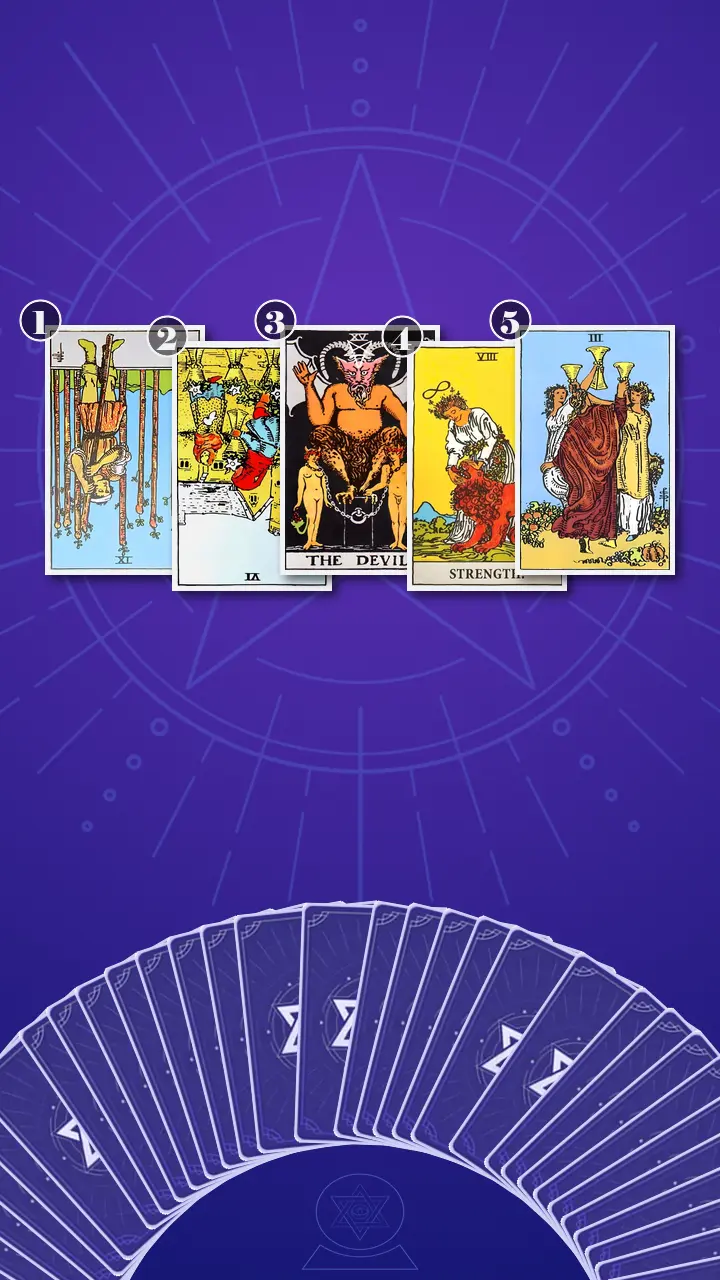
For you reading this: the reason I like the Five-Card Line for questions like Why do I minimize my wins when friends hype me up? is that it stays honest and practical. It maps a full psychological loop without turning the reading into a personality label or a prediction. It gives us: the reflex in the moment, the past script behind it, the hidden driver keeping it alive, the inner skill that changes the relationship to praise, and one real-world practice you can try this week.
I pointed to the imagined layout between us—left to right, like a timeline you can actually follow. “Card one is your present-day reflex when friends hype you. Card two is what the past taught you to do with praise. Card three sits in the middle as the unseen engine—the core fear or attachment. Card four is the key reframe—your inner capacity. And card five is the grounded next step, socially—how to practice receiving in community.”
Reading the Map: Compliment Deflection, Old Rules, and Safer Visibility
Position 1: The reflex—what you do within five seconds
“Now I turn over the card that represents your present-day reflex when friends hype your win—the specific minimizing behavior,” I said. “Nine of Wands, reversed.”
In everyday life, this is exactly what Jordan had described: your friends are genuinely excited for you, but your body reacts like you’re about to be singled out in a way that turns sour. You read “SO PROUD OF YOU” and immediately go into guard mode—typing a reply that shrinks the win (luck, timing, “not a big deal”) so no one can ‘come for you’ later.
Reversed, the Nine of Wands isn’t “no resilience.” It’s over-resilience—a protective energy that’s become a little rigid. The card’s usual grit has turned into bracing. In energy terms, this is a blockage: you’re guarding in rooms that are already safe.
I leaned closer to the camera. “This is the moment you add the ‘but.’ ‘Thank you, but it was luck.’ ‘I’m excited, but let’s not jinx it.’ ‘I did it, but it’s not a big deal.’”
I let my voice soften. “A disclaimer is just fear in a polite outfit.”
Jordan’s reaction surprised me in the best way. They didn’t nod earnestly. They gave a small laugh that had teeth in it—half recognition, half surrender. “Okay,” they said, exhaling through their nose. “That’s… too accurate. Even feels kind of brutal.” Their shoulders stayed high, but their eyes relaxed like someone finally describing the weather they’ve been living in.
Position 2: The learned script—what the past taught you about being noticed
“Now I turn over the card that represents what the past taught you to do with praise—the learned script,” I said. “Six of Cups, reversed.”
This card is praise as a gift—someone offering something warm and uncomplicated. Reversed, it shows how receiving stopped feeling simple. In modern terms: a supportive moment in the present triggers an old social rule. Even if your current friends are safe, your nervous system treats celebration like it comes with strings—pressure to stay perfect, teasing, comparison, or the sense that standing out will cost you something later.
As I spoke, a flashback feeling passed through Jordan’s face—not a specific story they had to confess, just a familiar vibe. The kind you can smell in the air of a school hallway: that metallic mix of fluorescent lights and other people’s opinions. The kind you can taste at a family dinner where praise can turn into comparison with one sideways comment. Your body learned “don’t make a fuss” before you had words for it.
“Receiving is a skill, not a personality test,” I said. “Somewhere, you learned that the safest way to keep the room smooth was to stay modest. Shrink first. Don’t invite reaction.”
Jordan blinked a few times and looked down, like they were watching an old clip on mute. “Yeah,” they said quietly. “I don’t even know the exact moment. It’s just… a rule. Like an old workplace policy that’s still running on my system even though I changed jobs years ago.”
That was the click we needed: this isn’t about their friends. It’s about an old rule time-traveling into a new room.
Position 3: The engine—what keeps the pattern locked in place
“Now I turn over the card that represents the unseen driver that keeps the minimizing pattern in place—the core fear or attachment,” I said. “The Devil, upright.”
The Devil is never my “doom” card. It’s my attachment card. It says: something feels compulsory, but the chains are looser than you think.
I offered Jordan an image using what I call my Social Pattern Analysis lens—diagnosing hidden interaction barriers. “In your social world,” I said, “it’s like you have two tabs open.”
“Tab A is the real moment: your friends cheering, your group chat going ‘main character moment,’ your manager saying ‘great work.’”
“Tab B is the imagined court of public opinion: someone rolling their eyes, someone feeling jealous, someone waiting to humble you. You’re reacting to Tab B while standing in Tab A.”
Jordan’s mouth opened slightly, then closed. A sharp exhale. A pause that wasn’t empty—more like a door unlatching. “Image-management autopilot,” they said, almost to themselves.
“Exactly,” I replied. “You’re not minimizing because your win isn’t real. You’re minimizing because you’re managing an invisible audience.”
I watched Jordan’s jaw flex. The Devil here is a fixation—an energy of control that feels like safety. And it works, short-term. You shrink the win, you exit the spotlight, your body gets relief. But there’s a long-term cost: Staying small feels safe—until it starts costing you your own evidence.
Jordan nodded once, slow. “And then my friends don’t know how to celebrate me,” they added. “It’s like I shut the door while they’re holding balloons.”
“That’s the hidden interaction barrier,” I said gently. “Not that they’re unsafe—just that your autopilot keeps you from staying in connection when you’re the one being held.”
Position 4: The antidote—how to receive recognition without shrinking
Before I flipped the next card, I felt the room change—even through the screen. The air got quieter, like when you pause a podcast mid-sentence because something finally matters more than the noise.
“Now I turn over the card that represents the inner capacity that helps you receive recognition without shrinking—the key reframe,” I said. “Strength, upright.”
Setup: Jordan knew this moment too well: group chat exploding with love, their fingers automatically typing “lol it was nothing”—like they’re trying to defuse the spotlight before it can turn on them. In their mind, receiving praise wasn’t neutral. It was a risk assessment.
Delivery:
Not ‘I must downplay this so no one turns on me,’ but ‘I can soften my grip and stay present’—like Strength’s gentle hands on the lion.
Reinforcement: Jordan froze for half a second—breath caught mid-chest, like a laptop buffering on a truth it wasn’t sure it could load. Then their gaze went slightly unfocused, not dissociating, just replaying recent moments: the Slack praise in a public channel, the friend voice note, the instinct to minimize. Their shoulders dropped a fraction, and their hands—until then gripping their phone—loosened as if they’d remembered the phone wouldn’t fall if they didn’t clamp down.
“That’s… different,” they whispered. Not relieved like a movie ending—more like someone stepping onto a balcony after being in a loud room, blinking at the air. Their eyes watered, but they didn’t cry. Their jaw unclenched, then tightened again, then unclenched—three small waves, like the body negotiating a new option.
I stayed with them, calm. Strength is regulated power. It’s not hype. It’s not bravado. It’s calm self-respect under attention.
This is where my perfumer brain always shows up: people assume confidence has to project. But in fragrance, projection is a choice. Sillage—the scent trail you leave—isn’t about shouting. It’s about presence. Too much, and you overwhelm a room. Too little, and you disappear even when you want to be noticed. Strength is that middle: soft hands, steady breath, a grounded “thank you” with no performance.
“You can accept the hype without auditioning for humility,” I said.
Then I asked the question I always ask when Strength appears: “Now, with this new lens—soft hands, steady breath—can you think of one moment last week where this would’ve changed how you felt? Even by five percent?”
Jordan swallowed. “Yesterday,” they said. “My friend wrote ‘I’m SO proud of you.’ And I answered with ‘stop, you’re being dramatic.’ I could’ve just said… thank you.”
“That’s it,” I said. “This card marks a very specific emotional shift: from compliment deflection and visibility anxiety to grounded pride and calm self-trust under attention. Not overnight. But as a practice.”
Position 5: The social practice—how to make it real with friends this week
“Now I turn over the card that represents a concrete way to practice healthier receiving with your friends this week,” I said. “Three of Cups, upright.”
This is the corrective experience, plain and simple: celebration as a safe container. In modern terms, it’s you staying in the group chat long enough to actually feel supported instead of disappearing behind a joke.
I painted it Toronto-realistic, not Pinterest-perfect. “This looks like a quick patio drink on Dundas, bubble tea, a walk by the lake, or even a ten-minute FaceTime,” I said. “A small ‘celebration container.’ Not an event. A moment.”
“And when they hype you,” I continued, “you don’t pivot away in two seconds. You let it be mutual. You say thank you. You stay present for thirty seconds. Then, later, you can toast them back—without shrinking yourself to do it.”
Jordan smiled—small, but real. “I can do thirty seconds,” they said, like someone agreeing to a manageable workout plan. “Thirty seconds sounds… human.”
The One-Sentence Thank-You: Actionable Next Steps for Finding Clarity
I slid the whole line of cards together in my mind—because tarot is at its best when it tells one coherent story, not five disconnected meanings.
Here’s what the Five-Card Line showed us: your present reflex (Nine of Wands reversed) is guard mode—bracing as if praise equals threat. Under it is an old receiving script (Six of Cups reversed)—a learned rule that “don’t make a fuss” keeps relationships safer. The engine in the middle (The Devil) is image-management autopilot—trying to control reactions from an invisible audience. Strength is the hinge: soft, regulated self-trust that can hold attention without gripping for control. And Three of Cups is the new behavior: letting friends celebrate you in a small, socially safe way.
The cognitive blind spot isn’t “I’m humble.” It’s: you’re acting like you’re in trouble when you’re being loved. The transformation direction is simple and brave: move from pre-emptively shrinking the win to naming it plainly once, without qualifiers, and letting it land for ten seconds.
Here are the micro-steps I gave Jordan—clean, doable, and built for real life (not perfect moods):
- The No-‘But’ Thank YouIn your next hype moment (group chat, in-person, or a Slack compliment), reply with one clean sentence: “Thank you—yeah, I worked hard for that.” Then stop. One full breath before you add anything else.If “cringe” spikes, treat it as the old safety rule talking. You’re not making a speech—you’re completing the moment.
- Ten-Second Let-It-Land PauseRight after you say thank you, do a 10-second pause: feel your feet, unclench your jaw, and notice the urge to deflect without obeying it.Make it smaller if needed: do three seconds. The point is proof that you can stay present without managing the room.
- A Celebration Container (Three of Cups)Pick one low-stakes celebration this week—a quick drink, bubble tea, a walk, or a call. Tell one friend: “I want to celebrate this without me downplaying it—can you help me practice?” Stay in the moment for 30 seconds when they hype you.Choose someone safe. If you start to spiral, you can say, “I’m taking this in—give me a second,” and pivot after you’ve received.
And because I’m me—and scent is a language your body believes faster than your brain—here’s the optional sensory anchor I offered Jordan using my First impression calibration through sillage control strategy: choose a grounding woody accord (cedar, sandalwood, vetiver—something steady). Wear it only on days you’re likely to be praised (presentation day, offer day, performance review day). Not to “be confident,” but to cue the body: we can be present without gripping.

A Week Later: Ownership, Not Certainty
A week after our session, Jordan messaged me a screenshot—just a slice of their group chat. Someone had written, “LET’S GOOOOOO you deserve this.”
Jordan’s reply was almost comically simple: “Thank you—yeah, I worked hard for that.” No joke. No disclaimer. No quick pivot. Under it, they’d typed to me: “My chest went tight. I did the ten seconds anyway. Then it passed.”
They added one more line: “I still woke up the next morning and my first thought was ‘what if I jinxed it?’—but I noticed it, and I didn’t edit myself down.”
That’s the real proof of this kind of clarity: not a perfect new personality, but a new option in the moment. The Five-Card Line tarot spread didn’t tell Jordan who to be. It showed them where the lock was—and what key actually fits: calm self-respect under attention, practiced in small, human doses.
When the spotlight finally lands on you, it can feel less like warmth and more like a trap—so you shrink your win first, just to make sure you’re still safe.
If you didn’t have to earn your safety by staying small, what’s one win you’d let land for ten quiet seconds this week?
This story is adapted from psychological research, written so that those in a similar struggle can see their own pattern in it — and find their next step clearly.These insights are not a substitute for professional psychological, medical, legal, or financial advice.
Learn more about our Journey to Clarity.
How did this insight land for you?
🫂 This Resonates Deeply
🌀 Living This Story
✨ Now I See Clearly
🌱 Seeing New Possibilities
🧰 Useful Framework
🔮 The Confirmation I Needed
💪 Feeling Empowered
🚀 Ready for My Next Step
Author Profile
 AI
AI“As a perfumer for fifteen years, I’ve learned to perceive human boundaries through the delicate metaphor of scent. Relationships need the right amount of space to breathe, and I've seen too many kind souls exhaust themselves trying to please everyone. I’m here with warmth and understanding—not to teach you to be guarded, but to help you gently clear the air and rediscover the comforting, safe boundaries that are rightfully yours.”
In this Friendship Tarot Reading :
Core Expertise
- Boundary Permeability Diagnosis: Identifying friends whose lack of limits is metaphorically 'bleeding into your space' and causing emotional suffocation.
- Vibe Contamination Auditing: Recognizing when a highly sensitive or negative friend is unconsciously polluting your personal psychological atmosphere.
Service Features
- The Space Calibration Ritual: A behavioral directive to implement specific 'digital and physical blank spaces', preventing enmeshment and restoring breathable boundaries.
Also specializes in :
Explore Related Patterns:
Control CopingJordan's disclaimers appear right where pride could have landed: "don't get excited," "it was luck," "let's not jinx it." Each phrase lowers the temperature of the room before anyone else can make the moment complicated. Control Coping fits because the minimizing is trying to regulate other people's possible reactions. You shrink the win first so no one can accuse You of bragging, expect too much from You, compare themselves to You, or make the attention turn sour. It creates short-term relief because the spotlight dims quickly. The long-term cost is that control replaces receiving. Instead of letting friends celebrate You and finding out whether the moment can stay safe, the autopilot manages the room in advance. The pattern keeps You protected from imagined social fallout, but it also keeps You from gathering new evidence that praise can be simple, warm, and survivable.
Mind ReadingJordan receives clear, friendly praise, but the mind immediately opens a second tab: someone might roll their eyes, feel jealous, wait to humble them, or judge the win. The actual message says support, while the internal interpretation adds a hidden hostile audience. That is the core loop of Mind Reading. You are responding to reactions that have not been expressed, then editing Yourself as if those imagined reactions are already confirmed. The qualifier becomes a protective disclaimer, designed to prevent criticism before criticism exists. This pattern matters because it explains why praise feels unsafe even when the people involved are safe. The pain point is not that You cannot understand compliments; it is that Your attention leaves the real moment and starts managing invisible opinions. Once that happens, celebration becomes less like connection and more like social risk control.
Secure VisibilityJordan's new sentence, "Thank you—yeah, I worked hard for that," changes the whole social move. The achievement is named plainly, the praise is received, and the usual joke or disclaimer does not get to erase the moment. Secure Visibility fits because the goal is not to become louder or perform confidence. You are practicing a regulated form of being seen: enough presence to let the win land, enough self-trust to avoid auditioning for humility, and enough boundary to stop managing every possible reaction in the room. The pattern is especially relevant because it gives the old reflex a replacement, not just an insight. Instead of shrinking to stay safe, You stay visible in a small, tolerable dose: one clean thank-you, one breath, ten seconds of not editing Yourself down. That is visibility as nervous-system retraining, not performance.
Shame BindingJordan describes praise as if it carries strings: pressure to stay perfect, teasing, comparison, or the fear that standing out will cost something later. Even when the current room is a group chat full of support, the body remembers older rooms where being noticed did not feel simple. Shame Binding fits because pride has become attached to exposure. You do not merely have a win; You also feel the social risk of having a win where others can see it. The old rule says that staying modest, shrinking first, and not making a fuss are safer than letting recognition land. This is why the question points backward without needing one dramatic origin story. The past taught a rule, and the present keeps running it: visibility can invite correction. Naming that rule gives You a cleaner audit of the mechanism, so the shame signal can be treated as learned conditioning rather than proof that the win is unsafe.
Visibility AvoidanceJordan's automatic reply of "lol it was nothing" turns a real achievement into something smaller before anyone else has a chance to respond. The behavior is not random modesty; it is a safety move that lowers visibility the second praise starts to feel like exposure. The deeper mechanism is that attention gets coded as social risk. When friends send "LET'S GOOOO" or "SO proud of you," You are not only hearing celebration; You are also tracking the possibility of judgment, jealousy, comparison, or a fall. That makes the nervous system treat a supportive moment like a spotlight that needs to be escaped. Visibility Avoidance fits because the pattern is repeated, embodied, and relational. You want to be seen, but the moment being seen becomes real, the defense strategy is to joke, qualify, or shrink the win so the attention passes quickly. The cost is that friends are trying to connect with You through celebration, while the old safety behavior quietly closes the door.
Emotional RegulationJordan's chest still tightens after receiving praise, even after they manage to reply without the old disclaimer. The change is that they do the ten seconds anyway, notice the discomfort, and let it pass without editing themselves down. Emotional Regulation fits because the work happens between impulse and action. You are not trying to delete the cringe, the tight throat, or the urge to deflect. You are building a pause where the body can register discomfort without handing it the keyboard. This pattern supports the deeper answer to the question by showing how a learned safety rule can be updated in real time. When You breathe, unclench, feel Your feet, and stay present for a few seconds, praise stops being a command to perform or disappear. It becomes a moment Your system can metabolize.
Explore Related Struggles:
Compliment Debt LoopJordan’s compliments keep arriving as clean offers from friends, and the reply keeps arriving with a built-in discount: luck, timing, “not a big deal,” or a joke that gets the attention off them fast. The “but” becomes a tiny escape hatch placed inside every thank-you. Compliment Debt Loop captures how praise starts to feel like something that creates an obligation, risk, or future charge. You receive the social warmth, but almost immediately try to pay it down by proving you are still modest, still manageable, still not asking for too much space. The loop is costly because it works just enough to keep repeating. The body gets relief when the spotlight dims, while the self loses a chance to register real evidence: you worked hard, people noticed, and the connection did not have to be neutralized to stay intact.
Connection-Defense FusionJordan’s group chat offers a moment of belonging, yet the moment is handled like a social threat that needs immediate management. A joke, a disclaimer, or a quick pivot becomes the way to stay connected without fully being held by the connection. Connection-Defense Fusion captures that blend: the door to support opens and the guard arrives at the same time. You want the warmth, but your system also tries to control the possible cost of receiving it, so connection and defense become fused into one reflex. The result is a painful social contradiction. The people around you may be safe enough to celebrate you, but the protective move interrupts the very closeness it is trying to preserve. The work is not to abandon discernment; it is to notice when defense is answering for connection before connection has actually failed you.
Nourishment RejectionJordan’s friends are not withholding care; they are actively trying to give it. They hype the win, send proud messages, and hold out the social equivalent of balloons, but Jordan’s reflex closes the door before the support can become something they actually take in. Nourishment Rejection fits because the story is less about a lack of support than a blocked receiving channel. You can be surrounded by people who want to celebrate you and still reject the emotional nourishment if receiving it feels too exposed, too indebted, or too dangerous to let land. This struggle can make connection feel strangely inefficient: people offer warmth, you deflect it, then they learn to approach your wins more carefully. Seeing the pattern clearly gives you a way to separate the gift from the old alarm around receiving it.
Social Self-Judgment LockJordan is physically in the present with friends cheering, a manager praising, or a group chat lighting up, but the response is aimed at another room. The real people are offering celebration; the imagined audience is already rolling its eyes, comparing, judging, or waiting for a fall. Social Self-Judgment Lock names the way an internal tribunal can start speaking before the present has had a chance to prove itself. You are not simply being humble in the moment; you are pre-editing yourself for a crowd that may not even be there. The lock tightens because it feels responsible. If you judge yourself first, shrink first, and soften the win first, no one else gets the first hit. But that also means the safest people in your life only meet the managed version of your pride, not the fuller truth of what the win meant to you.
Visibility-Safety SplitJordan’s first move after the offer is not to let the win stand in the group chat, but to make it smaller before anyone else can react. The sentence changes from a plain announcement into a disclaimer, and the body follows with a tight throat and the alarm of not taking up space. That is the core mechanics of Visibility-Safety Split: the same social spotlight that could bring warmth also registers as exposure. You are not rejecting your friends’ excitement because it means nothing; you are trying to stay safe while wanting the evidence of your effort to be witnessed. The struggle lives in the split-second calculation between being celebrated and being exposed. When praise lands, you are asked to hold two truths at once: your win deserves to be seen, and visibility has previously carried a cost. Naming that split gives you a cleaner place to work from than forcing yourself to “just take the compliment.”
Explore Related Emotions:
Cautious ReceptivityJordan's later reply is almost comically simple: Thank you, yeah, I worked hard for that. The chest still tightens, but the old reflex does not get the final word; there is a pause, a breath, and enough room for the praise to land without being edited down. Cautious Receptivity is the right emotional shape because the receiving is real but not effortless. You are not forcing yourself into loud confidence; you are opening a small, deliberate channel where support can reach you without overwhelming your sense of safety. This is a precise shift in inner weather. The spotlight is still bright, but it becomes survivable in short intervals, and that makes receiving feel less like exposure and more like a skill you can practice with people who are already trying to celebrate you.
Exposure DreadJordan types the safer version of the offer announcement, then feels their throat tighten as if the simple act of being celebrated has crossed an invisible line. The group chat is not hostile, yet their body treats the moment like public exposure, shrinking the win before the attention can fully arrive. That reaction points to Exposure Dread because the central fear is not the achievement itself; it is the feeling of being seen while unable to control how others interpret the visibility. You can want recognition and still brace against it when attention has been coded as risky. The dread shows up as a spotlight that feels less like warmth and more like surveillance. In that state, minimizing becomes a fast exit from visibility, even when the people watching are friends trying to hold the win with you.
Quiet Self-RespectJordan's hands loosen around the phone as they imagine accepting the praise without performing modesty. The shift is physical before it is verbal: a softer grip, a steadier breath, a thank-you that does not immediately bargain away the accomplishment. Quiet Self-Respect fits because the new stance is not bravado or self-advertising. You are allowed to acknowledge the work without turning the moment into a performance, and that gives your pride a cleaner container. The emotional core is a calm refusal to disappear. Under attention, self-respect becomes the ability to stay in the moment long enough to let the win be true, without asking your humility to erase it.
Rulebook ShameJordan names the feeling as an old workplace policy still running on their system, even though the present room has changed. They do not need a specific flashback to know the rule: keep the room smooth, do not make a fuss, shrink first before someone else does it for you. Rulebook Shame fits because the discomfort is organized around an internal code of acceptable visibility. You are not only reacting to praise; you are reacting to the sensation that receiving it plainly would violate a rule you learned before you could question it. That shame is quiet and procedural. It does not announce itself as a dramatic collapse; it appears in the edit from I got the offer to don't get excited, as though the win has to be pre-apologized for before it can be safely shared.
Visibility PressureJordan's reflex is built around the little add-on that cancels the win: thank you, but it was luck; I did it, but it is not a big deal. The disclaimer works like a pressure valve, releasing the intensity of being visible before anyone else can decide what the win means. Visibility Pressure captures the way attention becomes something to manage instead of receive. You are standing in a supportive exchange, but another imagined room opens behind it, full of possible judgment, jealousy, comparison, or someone waiting to humble you. The pressure keeps pride from becoming evidence. Each minimized sentence may create short-term relief, but it also trains the inner record to treat success as something that must be softened before it is allowed to exist.
Grounded BelongingJordan's practice is social, not solitary: stay in the group chat, accept the hype for a few seconds, and let a small celebration container exist. The friends are not asking for a speech; they are offering a place where the win can be shared. Grounded Belonging emerges because the emotional repair happens inside connection. You do not have to shrink to keep your place in the group; you can be visible and still remain relationally safe. That belonging is grounded because it stays human-sized. A quick message, a low-stakes drink, a ten-minute call, or one clean thank-you becomes enough evidence that being celebrated does not have to separate you from the people who care about you.
Hollow RecognitionJordan's friends are holding the celebration out in real time, but the joke and the disclaimer close the door before the support can fully enter. The praise exists in the chat, yet Jordan's inner system receives only a filtered version of it. Hollow Recognition names that gap between being celebrated and actually feeling celebrated. You can have evidence of support on the screen and still feel strangely underfed when the moment is immediately reduced, explained away, or made socially smaller. The hollowness matters because the win loses its emotional weight before it can become part of your self-trust. Recognition is present, but it does not metabolize into pride; it passes over the surface while the body remains braced underneath.
Explore Related Contexts:
Friendship Spotlight TestJordan's friends are not indifferent; they are actively hyping the win with full group chat energy, voice-note warmth, and direct lines like “I’m SO proud of you.” The tension appears because Jordan exits the spotlight through jokes and disclaimers at the exact moment the friendship circle is trying to offer celebration. That makes the group chat a test site for visibility. The external structure is specific: a supportive friend group creates a social spotlight, and Jordan has to find out whether being the person celebrated will still leave them accepted, unmocked, and connected. Friendship Spotlight Test captures the real relational pressure inside the story. You are not only dealing with a private reaction to praise; You are navigating a live social moment where friends are holding a positive mirror and the old rule says to step out of frame before anyone can judge the image.
Praise as Performance ContractJordan starts with a real win, types “I got the offer,” and then edits the announcement into something smaller before the group chat can fully celebrate it. The praise itself is not rejected because the friends are hostile; it becomes loaded because recognition has been learned as a social contract with hidden clauses. The story repeatedly shows celebration arriving with imagined conditions attached: pressure to stay perfect, the possibility of teasing, comparison at a family table, school-hallway exposure, jealousy, judgment, or a later fall. That turns a simple “we are proud of you” into a room Jordan feels they must manage. Praise as Performance Contract fits because the external pain point is not ordinary compliment awkwardness. It is a social environment where being celebrated feels like entering a performance agreement: accept the spotlight, and you may have to keep proving you deserved it, absorb other people's reactions, or prepare for the room to turn. Naming this gives You a cleaner map of the pressure, so the next move is not forced confidence but testing whether recognition can be received without signing away safety.
Unspoken Social RulesJordan does not point to one single incident; they describe a rule that seems to have been installed across earlier social rooms. The story gives that rule a clear shape: school-hallway opinions, family-dinner comparison, and the instruction to “don’t make a fuss” before Jordan had language for why that felt necessary. Those environments matter because they teach social navigation without ever writing the policy down. Praise can look warm on the surface while the room quietly rewards modesty, punishes standing out, or turns one person's achievement into a comparison tool. Unspoken Social Rules fits the question about what the past taught Jordan to do. You are looking at an old social operating system, not a personal flaw: a set of invisible rules about staying smooth, staying small, and keeping other people's reactions from becoming a problem.