One Adviser Email: From Readiness Tests to a Bounded Return Plan

The 11:40 p.m. Readiness Test After Academic Leave
If you are a Toronto undergraduate on academic leave who can quote the re-entry policy but still cannot press submit, registration season may be turning academic return anxiety into a nightly routine.
When I met Jordan, they joined my consultation from their Toronto kitchen at 11:40 p.m. after a café shift. The fridge hummed behind them, cold tea left a bitter film on their tongue, and the university portal cast blue light across a colour-coded Google Sheet. I watched them type “consistent confidence” beneath six other readiness conditions, close the unfinished re-entry form, and let their shoulders drop for five brief minutes.
Then Jordan said, “I keep saying one more month, but I no longer know what the month is meant to change. I want to return, but I don’t trust wanting it as evidence.”
I could see the contradiction in the way their hands stayed still while their shoulders remained lifted: they wanted a workable return to university, yet feared that one difficult week would prove the return had been premature. Their uncertainty felt like waiting at a station for a train called Complete Certainty, watching the timetable refresh even though that service had never been listed.
“You are not failing because this decision has become difficult,” I told them. “You have been trying to protect your recovery and your future at the same time. We can use the cards as a mirror, not a verdict, and draw a map through the fog. The aim of our Journey to Clarity is not to make the decision for you. It is to help you see what evidence, support, and flexibility would let you choose your next step.”

Choosing the Compass at the Academic Crossroads
I asked Jordan to place both feet on the floor, loosen their hands, and take one slow breath while holding the question without trying to answer it. I shuffled deliberately. The small ritual was a transition from portal tabs and readiness trackers into focused observation, not a test of whether the universe had selected a date.
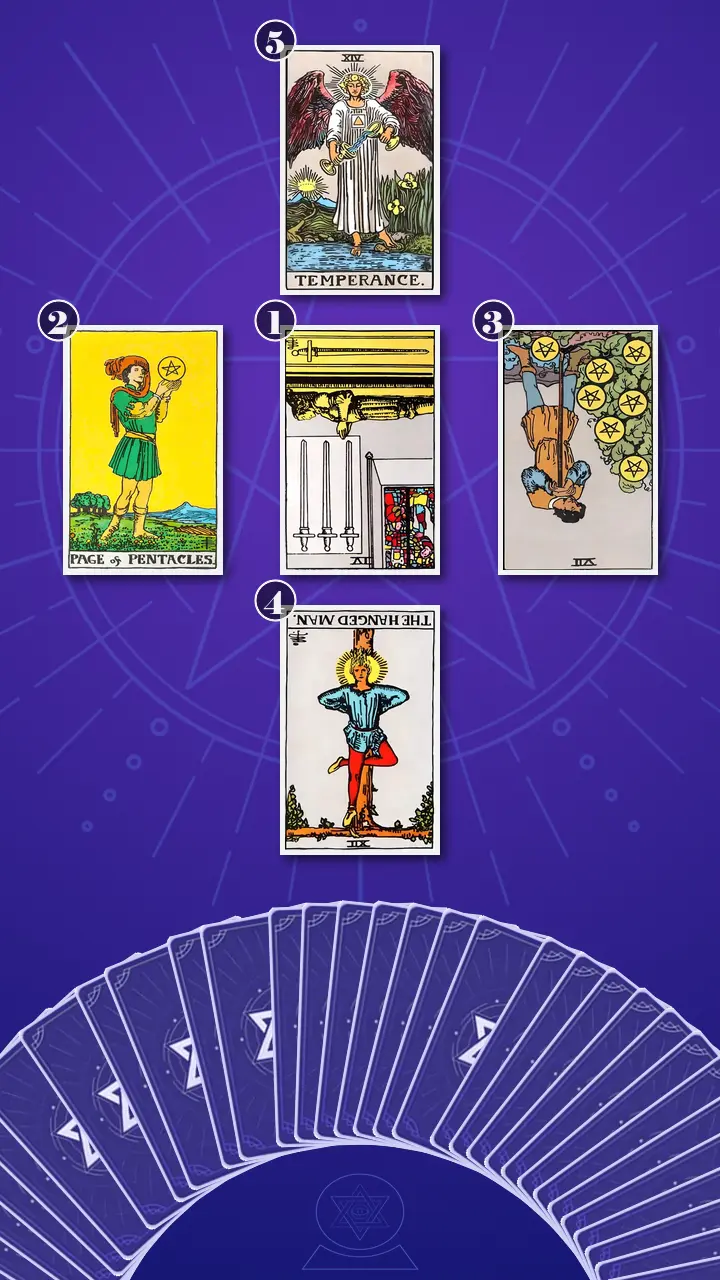
Today, I used a classic Decision Cross spread. When someone asks when to return from academic leave, the word when can tempt us toward prediction, but the real question is usually which decision criterion can hold uncertainty responsibly. This five-card structure compares returning with continued waiting, reveals the hidden rule making both options feel unsafe, and offers an integrating principle for a proportionate next step.
For you, this is also a practical example of how tarot works when card meanings are read in context. The centre card shows the present symptom: preparing for re-entry while remaining unable to complete the decision. The left and right cards examine what a limited return and another period of waiting could activate. The lower card exposes the concealed fear beneath the choice, and the upper card offers guidance rather than a predetermined destination.
I laid the cards like a small compass at a crossroads: the present in the centre, the two options on a horizontal line, the hidden influence below, and the integrating perspective above. I began in the middle, moved toward the practical possibility of return, crossed to the waiting option, dropped into the fear beneath it, and finally looked upward for a way to let rest and participation share the same week.
Reading the Map: Card Meanings in Context
The Rest That Never Quite Rests
“Now I’m turning the card that represents the present symptom: repeatedly preparing for re-entry while remaining unable to complete a return decision.”
I turned the Four of Swords, in reversed position.
In the image, a body lies still beneath three suspended swords, while a fourth rests below. For Jordan, that was the 11:40 p.m. kitchen table exactly: formally on leave, physically away from lectures, but mentally inside the next semester. They reread the reduced-course-load guidance, checked the student portal, revised the readiness spreadsheet, and closed the form whenever another condition seemed necessary. The pause was supposed to restore capacity, but the checking had become another job.
This is blocked air: thought keeps moving while the body and formal schedule remain paused. The energy is not a lack of effort. It is restless recovery, where every ordinary low-energy day becomes a data point in a readiness exam. The spreadsheet behaves like project acceptance criteria rewritten whenever the launch date gets close. The more Jordan monitors whether rest has worked, the less rest can actually tell them.
I use a lens I call Seasonal Energy Diagnostics. It is not a medical diagnosis and it does not decide whether someone should return. It asks whether a person is respecting the season they are in. A leave can be winter dormancy, a necessary period for roots to recover. But trying to measure every bud before it opens can become its own form of pressure. I said, “No one can force a spring harvest during winter dormancy, Jordan. But we also don’t have to stand in the dark with a clipboard forever, testing whether spring has been authorised.”
Jordan gave a short, bitter laugh. “That’s a little brutal.”
“I hear that,” I said. “The card is not calling the leave a mistake. It is separating genuine restoration from constant monitoring. Both can happen in the same week, and only one of them is likely to create new evidence.”
Jordan exhaled sharply and rubbed the rim of their mug. Their expression held recognition and irritation together, as though they had just found their own browser history reflected in the stained-glass window of the card.
The One-Pentacle Beginning
“Now I’m turning the card that represents what returning with current capacity could activate, including the practical resources and responsibilities that would need to be tested rather than assumed.”
I turned the Page of Pentacles, in upright position.
The Page holds one pentacle at eye level. They are not carrying an entire harvest, promising a perfect semester, or pretending the distant mountains are close. They are studying one tangible thing with enough attention to learn from it. In Jordan’s life, this looked less like a dramatic academic comeback and more like a 20-minute adviser meeting with one question: “What is the smallest reversible academic commitment available to me?”
The upright earth here offers a grounded beginning. It does not promise that a reduced-load return will feel easy or produce a particular outcome. It offers a way to gather information through direct experience: one course, one supported commitment, one conversation about accessibility, or one plan that includes add/drop and withdrawal dates. The Page turns return from a verdict on recovery into an apprentice-level experiment in present capacity.
I placed the card beside Jordan’s phone and said, “A bounded return is data, not a verdict. What if returning could answer a question instead of proving something about you?”
Jordan sat forward. They opened a note and saved the phrase “trial, not verdict.” Their shoulders did not fully relax, but their hands moved from the closed mug toward the keyboard. “I could ask about one course,” they said. “That doesn’t mean I’m promising a whole semester.”
“Exactly,” I said. “The Page studies one pentacle. It does not sign for the whole field.” I thought of Dorothy taking the first step along the road in The Wizard of Oz: the journey begins with available capacities and companions, not advance proof that every mile will be manageable.
The Month That Keeps Moving
“Now I’m turning the card that represents what continued waiting may protect, what it is expected to produce, and whether it is still creating useful change or simply extending the standstill.”
I turned the Seven of Pentacles, in reversed position.
The worker in this card leans heavily on the hoe and studies the crop below them. I asked Jordan to picture the last Sunday of the month: laundry turning in the basement dryer, warm detergent in the air, a Notion page titled “Return Decision” open beside a rent notification. Last month’s target had been “three mostly good weeks.” The new draft required “stable motivation.” The finish line had moved without any new event proving that the earlier marker was insufficient.
The reversed earth asks about diminishing returns. It does not say that waiting is wrong, or that a person on leave owes anyone a rapid comeback. It asks a narrower question: what observable change is another month meant to produce, and when will that change be reviewed? Without an answer, waiting can become an auto-renewing subscription that continues because cancelling it would require a decision.
“Waiting is useful when you can name what it is meant to change,” I said. “If you extend the leave, that can be a deliberate choice. Give the month a purpose, two observable markers, and a fixed review date. Otherwise, the lack of new evidence may simply be the result of never running a small test.”
Jordan looked back at the tracker. “I keep saying one more month,” they said quietly, “but what observable change am I actually waiting for?”
I let the question sit without turning it into pressure. Social comparison was part of the field too: classmates’ LinkedIn internships, graduation posts, and advanced-course updates had become an artificial clock. I call this Social Clock Decoupling: separating core self-worth from milestones that belong to other people’s circumstances. Their classmates’ timestamps could inform practical planning, but they could not define Jordan’s readiness.
Jordan’s gaze stayed on the seven pentacles. Their jaw tightened, then softened. Waiting remained available, but it no longer had to remain automatic.
The Pause That Became a Rule
“Now I’m turning the card that reveals the core fear and delayed-gratification rule beneath the choice: the belief that complete healing must precede any academic experiment.”
I turned the Hanged Man, in reversed position.
The card shows an illuminated head, a calm face, and one ankle tied to a living wooden frame. The original pause may have offered Jordan perspective. The reversed position asks whether suspension has continued after it stopped generating a new point of view. At the Toronto Public Library, Jordan had once typed, “Could we discuss one course?” in reply to an adviser and deleted it because naming a possible return felt dangerously close to declaring the leave complete.
The hidden rule sounded careful but behaved like a locked door: I cannot move while any uncertainty remains. If Jordan returned and had one difficult academic week, they feared it would prove they had misjudged their recovery, wasted the leave, or lost control of their progress. The pause had helped them. Moving now felt like betraying the very care that had made movement possible.
“Your leave is not wasted because you test what it made possible,” I said. “A difficult week would be information about the structure, workload, or support needed. It would not erase the reason you took leave.”
Jordan’s breath stopped. Their fingers hovered above the unsent adviser reply. Then their eyes lost focus, and I could see them replaying the form, the deadlines, and the imagined scene of explaining a change of plan to someone at the university. Finally, they let out a small, uneven breath and said, “The leave helped me, and if I move now, I’m scared I’ll invalidate it.”
“That is the rule we are examining,” I replied. “Care and control are not the same thing. Readiness can be a threshold, not a feeling that never flickers.”
A tear gathered but did not fall. Jordan wiped it away, not defeated, just briefly exposed by the possibility that caution could remain honourable without becoming permanent suspension.
When Temperance Poured Between Two Cups
The Bridge Between Rest and Participation
The room grew quieter before I turned the final card. Even the fridge seemed to lower its hum. I had been holding the upper position for last because it was not a command to return; it was the bridge that could make either a bounded return or an intentional continuation of leave more workable.
“Now I’m turning the card that identifies an integrated readiness criterion and a bounded next step that can respect healing without making certainty a prerequisite.”
I turned Temperance, in upright position.
Water moved continuously between two cups. One of the angel’s feet stood on land and the other met water. In the distance, a path passed between mountains toward light. The card’s energy was balance as an active process: study, rest, paid work, support, and adjustment in conversation with one another.
I returned to my Seasonal Energy Diagnostics and let the metaphor become practical. A season does not require the whole landscape to change at once. It asks what can be tended now without forcing the soil. For Jordan, Temperance meant a minimum viable return with protected restorative time, named support, enough flexibility to adjust, and a review point before an important institutional deadline.
At 11:40 p.m., the portal glowed beside another colour-coded tracker. Jordan had added one more readiness condition, closed the form, and earned five minutes of relief before the question began running again. I asked them to hold that scene without turning it into evidence against themselves.
Readiness is not the absence of hard days. It is enough stability, support, and flexibility to try one bounded step without treating the result as a verdict on your recovery.
You do not need a perfectly healed state before you move; choose a measured and adjustable return, as Temperance pours between two cups rather than emptying either one.
For a second, Jordan did not blink. Their thumb stopped above the phone, and their shoulders remained high as if the old rule were waiting for a correction. Then their gaze moved from the card to the adviser email, the café schedule, and the blank spaces in their calendar. I watched the idea travel through the practical details rather than remain a beautiful sentence. Finally, their jaw unclenched. Their hands opened on the table, and a long breath moved through their chest with a faint tremor at the end. Relief came first, followed by a brief, almost dizzying blankness: without the impossible test, there was suddenly room for a real choice. “But what if it still goes badly?” they asked. “Then we review the evidence, use the support, reduce or pause within the available options, and learn what the structure needs,” I said. “Now, use this new view to recall whether there was a moment last week when this insight might have made you feel differently.”
Jordan looked at the two cups again. “I don’t have to empty the recovery cup to put something back in the student cup,” they said. That was the shift from waiting for complete healing and certainty toward calibrated self-trust: not a promise that fear would disappear, but a first willingness to let evidence and care inform each other.
Finding Clarity With a Reversible Return
When I gathered the spread into one story, I saw a clear sequence. The Four of Swords reversed showed a leave that had become mentally crowded by readiness checks. The Page of Pentacles offered a small academic beginning capable of producing real information. The Seven of Pentacles reversed asked whether another month had a defined yield. The Hanged Man reversed revealed the hidden rule that movement must wait until discomfort vanished. Temperance integrated the whole pattern: rest was not the enemy of momentum, and momentum did not have to cancel rest.
The cognitive blind spot was treating internal certainty as the only valid evidence. Jordan had been waiting at a timetable that could not display the train they wanted, then interpreting the absence of a departure time as proof they needed to keep waiting. The transformation direction was from indefinite postponement to a practical threshold: observable capacity markers, flexible support, a bounded commitment, and a fixed date for reviewing what actually happened.
I told Jordan, “The cards do not own the decision. You do. A Decision Cross tarot spread can compare the shape of returning from academic leave with the shape of continued leave, but it cannot consent to a course, override your needs, or guarantee an outcome. Its value is that it helps us ask a better question.”
We wrote the question in plain language: What level of participation can I responsibly test, and what evidence will I use to decide what comes next? I then offered three small next steps.
- The Winter Dormancy RitualFor seven days, make no new decision about returning and add no new readiness condition. In a phone note, record one thing under “Restores Capacity” and one thing under “Reopens the Same Decision” each day. Do this after a café shift or at the kitchen table, without reopening the portal to search for reassurance. If a genuine institutional deadline requires a response, ask only for the factual information needed.One line per column is enough. This is a bounded pause, not an indefinite extension and not a productivity scorecard. Let rest be rest long enough to discover whether it changes your usable capacity.
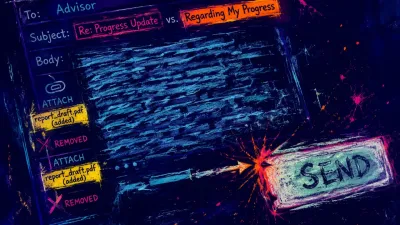
- The Information-Only Adviser EmailDuring one café break this week, draft and send: “Could we book 20 minutes to discuss the smallest reversible re-entry option and the deadlines attached to it? I am gathering information, not confirming a return date.” Ask about the minimum course load, support or accommodations, add/drop and withdrawal dates, and financial implications. At the end, write down one option in plain language, such as “one course with a review before the add/drop deadline.”Put the boundary in the first line so the meeting does not feel like an enrolment promise. If a meeting feels too large, send one sentence asking which staff member handles phased re-entry.
- The Two-Cup Readiness CheckSet an eight-minute timer and divide a phone note into “Minimum Capacity,” “Support I Can Use,” and “Review or Exit Point.” Add one observable item under each, then sketch a sample week with one 25-minute academic block, existing café shifts, one protected restorative block, and buffer time. Choose a fixed review date, such as two weeks after a trial begins or before the add/drop deadline, and write one adjustment option beside it.Write “enough to test,” not “proof that nothing will go wrong.” If eight minutes feels too much, write one person you could ask about a reversible option and one date for reviewing the question.
These next steps do not force a return. They make both choices more honest. Continuing leave can be valid when it has a named purpose, observable changes to look for, and a fixed review point. Returning can be valid when it is bounded, supported, and adjustable. The aim is not action for its own sake; it is useful evidence without sacrificing autonomy.

A Small Proof, Not a Grand Comeback
Four days later, I received a message from Jordan: “I sent the information-only email. I’m asking about one course, not declaring an academic comeback. I also put a review date in my calendar.”
The next morning, they woke after a full night’s sleep and thought, “What if I’m wrong?” The thought remained, but this time they smiled, opened the calendar, and left the review date where it was.
That was the first evidence, not a solved life: Jordan had moved from waiting for complete healing to practising calibrated self-trust. The cards had not created the courage or chosen the pace. They had helped Jordan recognise the capacity already present and build a structure gentle enough to use it.
When every registration email tightens your shoulders, it is exhausting to want your student life back while fearing that one hard week would prove you never had control of your progress. If readiness only had to be enough for one adjustable step, what small version of returning would you feel curious enough to imagine, with one cup held steady while the other keeps receiving rest?