Six Open Tabs to One Real Task: Letting Evidence Earn the Next Step

Committing to Feel Life Moving at 11:40 p.m.
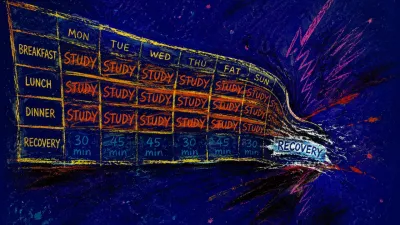
You open a course page just to look, but within an hour you have paid the deposit, added the deadlines to Google Calendar, and turned career pivot anxiety into a four-month obligation. I recognized that pattern when Jordan (name changed for privacy), a twenty-eight-year-old operations coordinator in Toronto, sat across from me with her phone face down on the table, as if it might start asking what she was doing next.
At 11:40 p.m. on the Sunday before our session, she had been at the narrow kitchen table in her condo with six tabs open for certificates, job listings, and evening classes. Her laptop base had grown hot against her wrists; the refrigerator compressor hummed beneath the traffic outside, and the blue checkout button shone in the dark window. She paid the deposit before reading the syllabus.
When I asked what had brought her in, she gave me a tired half-smile. 'I just need to pick something and make it real. If I leave it open, I will waste another year.' She wanted to feel that life was moving, but she feared that staying uncommitted meant life was standing still. Her hands kept shifting the phone a few centimetres and shifting it back, while her jaw held the hard pressure of a door she had been trying to force open from the wrong side.
I did not hear a lack of ambition in her story. I heard a nervous system trying to turn an open week into a milestone before the silence could say anything painful about her worth. I told her that the brief relief after a commitment and the later heaviness did not make her careless or broken. It made a loop visible. 'We can look at the loop without judging the person inside it,' I said. 'Today, I want to help us draw a map of the fog so you can decide what deserves your time, money, attention, and identity.'
A Grid for the Loop, Not a Verdict
I invited Jordan to put both feet on the floor, take one slow breath, and name the question exactly as it was: why did she keep committing just to feel that her life was moving? I shuffled slowly while she focused on the difference between wanting an activity and wanting the relief of no longer having to wonder.
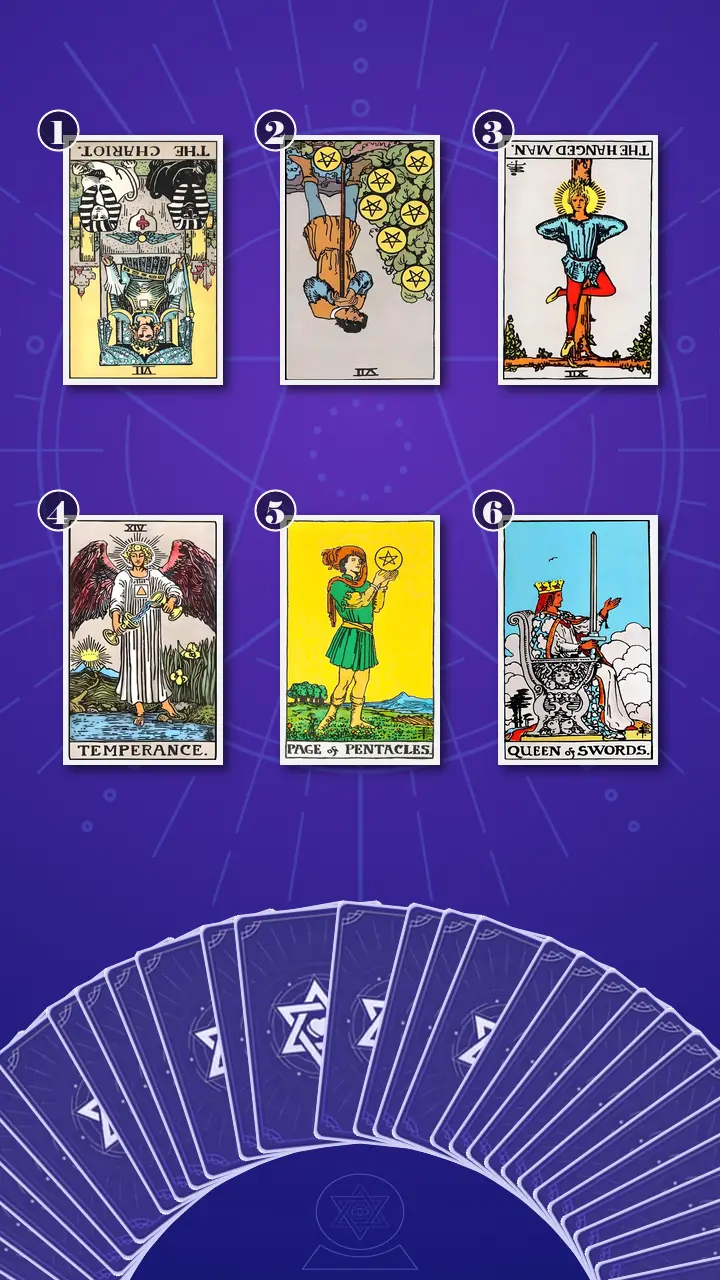
For this reading, I chose the Transformation Path Grid · Context Edition. It is a six-card spread arranged in two rows of three. I use it when a person is not simply choosing between two clear options, but repeating a feedback loop: an open period feels like stagnation, a fast commitment creates temporary relief, the commitment crowds capacity, resentment or withdrawal follows, and the resulting discomfort creates pressure for an even stronger plan.
That is also how tarot works in this consultation. The cards are not a prediction machine and they do not remove Jordan's responsibility for her choices. They are an objective visual language for separating a trigger from a behaviour, a short-term reward from a long-term cost, and a genuine preference from a fear dressed up as a deadline. The card meanings matter in context, because the context belongs to the person living the pattern.
The top row would show the observable behaviour, the immediate blockage, and the psychological root. The lower row would show the leverage point, the practical experiment, and the decision-making capacity Jordan could integrate. I explained that the spread would not tell her which career she must choose. It would show her how to gather enough evidence to choose, decline, or wait with more self-trust.
Reading the Calendar That Looked Like a Compass
The Chariot Reversed: Two Browser Tabs, Two Future Selves
I began with the position that presents the diagnosis-level behaviour, the observable current state through which the pattern was operating. The card was The Chariot, in reversed position.
The traditional image showed an armored driver standing rigidly in a chariot, with a black sphinx and a white sphinx facing different directions. There were no visible reins. I saw the card's energy as an excess of will combined with a blockage of coordination: determination was present, but desire, capacity, and priorities had not agreed on where to steer.
The modern-life translation was immediate. Jordan had said yes to a visible cross-team project in Slack on Monday, paid for an evening certificate on Sunday, and begun drafting a career-pivot announcement before trying the actual work. From the outside, the deadlines made her look driven. Inside, the commitments pulled toward incompatible versions of herself. A full calendar could display motion while hiding direction.
I placed the card beside the two browser tabs she had described: a management certificate in one, a creative programme in another. 'If I can get both onto the calendar,' I said, following the thought she had already given me, 'I will not have to admit that I do not know which one I want.' That was the difference between visible speed and chosen direction. The reversed Chariot did not accuse her of doing too much. It showed why adding destinations could not make opposing forces move as one.
Jordan did not nod. She let out a short laugh with a bitter edge and looked toward the window. 'That is too accurate,' she said. 'Almost cruel.' Her thumb pressed into the side of her phone, then released it. I told her I was not asking her to become less ambitious or to build a rigid ninety-day plan as punishment. I was asking which commitment had an actual driver, and which one had only been added because an empty block felt unbearable.
The Seven of Pentacles Reversed: Refreshing the Crop Before It Could Grow
I turned the card for the position that identifies the immediate blockage, the main obstruction keeping the current method from producing meaningful change. It was the Seven of Pentacles, in reversed position.
The worker on the card paused beside a vine heavy with pentacles, but the reversed position made that pause intolerable. I read the energy as excessive impatience with delayed evidence. Jordan was asking a new course, role, or routine to produce an identity update before it had even produced ordinary data.
Four days after enrolling, she had refreshed the course dashboard on the TTC near Bloor-Yonge. The rails had shrieked around the curve, damp wool coats had crowded her shoulders, and her phone had felt warm in her palm. No badge, feedback, or sudden certainty appeared, so she opened a page for an advanced qualification. The thought beneath the movement was simple: 'If this were right, I would feel certain by now.' She was trying to demand a harvest from soil that had barely been turned.
I compared the behaviour to refreshing delivery tracking five minutes after placing an order and concluding that the package must be lost. Early uncertainty was not failure; it was what beginnerhood felt like before enough contact with reality had accumulated. When meaningful feedback moved slowly, Jordan escalated the commitment or searched for a more serious-looking one, because a larger fee or harder-to-reverse plan seemed more likely to create proof.
Her hand drifted to the edge of the spread and stopped. She stared at the seven pentacles, then rubbed one knuckle with her thumb. I could see a small jolt of recognition travel through her face. 'So I keep checking for proof before there is enough time for proof to exist,' she said. 'And then I call that being responsible.' I agreed that the distinction mattered. Responsibility was not the same as forcing a result to appear on schedule.
I said quietly, 'You may want the relief of a plan more than the life inside that plan.' Jordan looked down, and the first card seemed less like a criticism than a diagram. The impatience loop had a shape: check, doubt, escalate, feel briefly safer, then inherit the weight of the escalation.
The Hanged Man Reversed: When an Open Evening Feels Like a Verdict
I turned the card for the position that reveals the psychological root, the belief or fear generating the blockage beneath the visible commitments. The card was The Hanged Man, in reversed position.
The figure hung by one foot, with a relaxed crossed leg, a composed face, and a bright halo around the head. Upright, the image can represent chosen suspension and a new perspective gained by releasing immediate control. Reversed in this position, it showed a blockage in that capacity. Jordan was not simply impatient with waiting. She experienced the unfinished stage as a threat to worth, so she interrupted reflection before it could become useful information.
I brought us back to a quiet evening in her small city apartment. Dinner was finished. The calendar held an empty two-hour block. The radiator clicked, wet pavement hissed beyond the window, and the laptop reopened because silence had started to sound like a verdict. She would begin an application, accept an invitation, create a launch date, or message a friend, not because the activity had become more desirable, but because the plan would let her say that something was happening.
'If I stay undecided tonight,' I asked, 'what does that seem to say about you?' Jordan's breathing paused. Her gaze went slightly unfocused, as though the question had moved her from the kitchen table into a series of Sunday nights she had tried to fill before they could be felt. Her fingers tightened around the edge of the chair. Then her eyes returned to the suspended figure, and a long breath left her chest.
'That I am drifting,' she said. After another pause, she added, 'Or that I am not as capable as everyone thinks.' I let the room stay quiet. I did not rush to replace that admission with a motivational phrase or a new task. I wanted the calm face of the Hanged Man to remain visible long enough for her to see that stillness could be an observational position rather than a public failure.
'An unfinished season is not evidence of an unfinished worth,' I told her. The sentence did not make her instantly peaceful. Her jaw softened, then tightened again. She looked embarrassed by the tears gathering in her eyes, and I reminded her that recognizing a pattern was not the same as promising never to repeat it. The point was to find the moment before the deposit button, the automatic Slack yes, or the public announcement when another choice became possible.
When Temperance Poured Between Two Cups
The Measured Pour That Changed the Question
I turned to the lower-left card, the position that introduces the leverage point challenging forced progress: calibrated pacing that combines desire, practical capacity, timing, and evidence before escalation. It was Temperance, in upright position.
The room seemed to settle as I placed it down. Temperance stood with one foot on solid ground and one in water, transferring a controlled stream between two cups. In the distance, a narrow path led toward light. I read the energy as balance, not passivity: a deliberate movement that stayed in contact with both feeling and reality.
The card offered Jordan a third option between immediate commitment and indefinite indecision. She could stay in contact with an interest without handing it her whole calendar. A seven-day trial, two short sessions, a small cost cap, and a scheduled review could let the actual activity speak before an imagined identity took over. The goal was not to make every choice reversible forever. The goal was to make the size of the investment proportionate to the evidence available.
At this point, I used one of the diagnostic tools I have developed over a decade of sitting with people beneath their private night skies: Macro-Cycle Phase Identification. I do not use it to declare a fixed destiny or tell someone that a planet has forbidden action. I use it to locate the season they are actually in. Jordan's stable job, uncertain specialization, Toronto's living costs, her workplace's reward for quick ownership, and a constant stream of peer milestones had created a low-tide phase for certainty. That did not mean she had to wait for life to rescue her. It meant that forcing a flower open would not make spring arrive sooner.
Then I applied my Systemic Friction Auditing lens. I stripped away the idea that more hustle could override the structural pause. The course fee competed with rent and savings. The certificate occupied Tuesday and Thursday evenings. Her job already rewarded immediate responsiveness. Her feed compressed other people's years of work into polished announcements. Her calendar had no field for why each block deserved her limited attention. The friction was not a character defect. It was a system asking one person to carry more simultaneous commitments than her actual capacity could coordinate.
At 11:40 on a Sunday night, six tabs glowed above a crowded calendar. Jordan had not read the syllabus, yet her hand was already on the deposit button because an expensive plan felt easier than an evening with no proof of progress. I named that moment as the setup for the heart of the reading: she was trying to purchase movement before she had checked whether she wanted the life inside the plan.
You are not behind because growth is unfinished; choose the measured pour of Temperance and give each small test only the time, money, and identity it has earned.
Jordan's breath stopped halfway through an inhale. Her pupils widened, and the fingers that had been tapping her phone went still. For a second, she looked at Temperance as if the card had taken a sentence she had been repeating and held it up to the light. Then her jaw set. 'But doesn't that mean I was wrong every time?' The anger came first, clean and hot, because self-forgiveness can feel like an accusation against the self that survived. I let the question stand. 'No,' I said. 'It means those choices gave you information, and some were made under pressure. We are auditing a loop, not prosecuting a person.' Her eyes dropped to the two cups. The anger thinned into a long, uneven exhale; her shoulders sank, her fist opened, and the rain outside became audible again. She blinked hard, eyes shining, and gave a small laugh that held relief and vertigo together. For one quiet beat, she had no new plan to grab. That blankness frightened her, but it was also space.
'Now, use this new perspective to recall whether there was a moment last week when this insight could have made you feel different,' I invited. I watched her close her eyes, not to receive an answer from the card, but to revisit the moment when a director asked for a project owner, when a course countdown flashed, and when she had mistaken the relief of saying yes for evidence of desire.
This was the first visible crossing from pressured urgency and relief-seeking commitment toward grounded discernment through measured experiments, proportionate investment, and self-trust. Temperance did not ask Jordan to stop wanting growth. It gave growth a different unit of measurement: not the size of the promise, but the quality of the contact and the honesty of the next review.
The Page of Pentacles: One Real Task Before a New Identity
I turned the card for the position that translates the catalyst into a practical method, the seven-day, low-cost experiment through which the new perspective could be tested. The card was the Page of Pentacles, in upright position.
The Page studied a single pentacle at eye level in an open landscape. Fertile fields surrounded the figure, and distant mountains waited without demanding to be crossed that afternoon. The energy was grounded beginnerhood, a balance of curiosity and attention. Unlike Jordan's six competing tabs, the Page did not try to know the entire route. One tangible encounter was enough for the next piece of evidence.
I asked her to imagine completing one free sample lesson instead of enrolling in the full programme, trying one representative operations-analytics task, or speaking with one person about the ordinary workday in a field she was considering. The relevant question was not whether she could immediately imagine a new title beside her name. It was whether her curiosity survived the unglamorous part: reading the instructions, cleaning the data, sitting through the introductory session, or doing the first imperfect draft.
'Interest gets a test; evidence earns escalation,' I said. 'The test can stay private. It can cost zero dollars, or no more than twenty-five. It can take two thirty-minute sessions. The point is not to settle your life in a week. The point is to discover whether you would willingly repeat the real activity after the novelty has worn off.'
Jordan's hands moved from the phone to the edge of her notebook. She wrote down one possible sample lesson, then added a second line: what held my attention, what drained me, what would I willingly try next? Her expression was still cautious, but the caution had changed texture. It was no longer gripping the brakes while the vehicle accelerated. It was the Page of Pentacles looking carefully at one object before deciding what it was worth.
The Queen of Swords: Clarity Can Sound Like Yes, No, or Not Yet
I turned the card for the position that describes the intended cognitive integration, the perspective and boundary that would answer the fear beneath the pattern. It was the Queen of Swords, in upright position.
The Queen held a sword upright in one hand and extended the other in an open but selective gesture. I read the energy as clear judgment with room for relevant information. The sword separated evidence from urgency; the open hand stayed receptive without giving every opportunity access to Jordan's calendar, budget, or attention.
At the seven-day review, she would compare the trial with her actual desire, workload, cost, energy, and trade-offs. Then she could choose a limited yes, a not yet with a new review date, or a no. A limited yes might mean one meeting, two hours, or one month with a defined scope. A no could be one concise sentence. Neither answer required a long defence or certainty about the rest of her future.
I paired the Page's single pentacle with the Queen's sword. 'I tried the real activity, and this is what the evidence says,' I told her. That sentence moved the centre of authority away from the public announcement and back toward the person who would live with the consequences. Jordan looked at the six cards, then at the calendar on her phone. She did not look triumphant. She looked able to edit.
Her first draft of a boundary was almost comically short: 'I need to check my current capacity; I will get back to you tomorrow.' She read it aloud, then added, 'Thanks for thinking of me. I cannot take this on.' A small smile appeared when she realized neither sentence needed an anxious autobiography. I reminded her that clarity could sound like yes, no, or not yet, and that all three could be autonomous decisions rather than proof of failure.
From Insight to Action: The Seven-Day No-Escalation Trial
I laid the cards in their two rows and traced the pattern with one finger. The reversed Chariot showed Jordan filling her calendar with destinations before one direction had earned sustained attention. The reversed Seven of Pentacles showed her demanding a harvest before a new effort had time to grow. The reversed Hanged Man revealed why the demand felt so urgent: an unfinished identity looked to her like exposed evidence of low worth.
Temperance changed the structure of the problem. It showed that a pause and a plan were not the only available choices. A measured experiment could keep desire in contact with reality without handing over the entire schedule. The Page of Pentacles made that experiment concrete, and the Queen of Swords gave Jordan language for what the evidence meant. The greenhouse flower did not need to be forced open to prove that spring had arrived. It needed light, room, and a chance to reveal whether it could keep growing.
I named the cognitive blind spot plainly: Jordan had been treating the relief after saying yes as proof that she wanted the commitment, and treating a dense calendar as proof that she had direction. She had also been tempted to overcorrect by building a stricter plan, announcing it publicly, and making revision feel like failure. I told her that a better plan could still reproduce the same pressure if it was used to escape uncertainty rather than to learn.
The transformation direction was practical. She would move from pressured urgency to tolerable openness, from openness to a bounded experiment, from the experiment to grounded evidence, and from evidence to a proportionate boundary. This was not a promise that every choice would work. It was a way to let each next level of time, money, attention, and identity be earned instead of purchased as emotional relief.
A Smaller Unit of Progress
I gave Jordan three next steps. Each one was deliberately small enough to begin on an ordinary week, when work was busy, rent was real, and the initial excitement had already started to fade.
- Use the Orbital Sync ProtocolFor the first 72 hours after a new course, job application, project request, social commitment, or career-pivot idea creates a rush, pause forced escalation. Put the possibility on a seven-day no-escalation note, set a time cap and a cost cap, and make no deposit, public announcement, or workload expansion unless an immediate contractual or safety issue requires action.I call this the Orbital Sync Protocol because it gives psychological expectations time to catch up with actual cyclical reality. The minimum version is one sentence in a note: 'I am interested, and I am not deciding the next level for 72 hours.'
- Run the One-Pentacle TestDuring the seven-day trial, choose one real, representative encounter with the interest: complete one free sample lesson, attend one introductory session, draft one project brief, or ask one person in the field for a twenty-minute conversation. Afterward, record what held your attention, what drained you, what it cost, and what you would willingly try next.If the life-sized question feels too large, use the ten-minute version. Open the sample lesson or tutorial, do one genuine task, and write one honest sentence. Stopping there still creates evidence.
- Hold the Yes, Not Yet, or No ReviewOn the review date seven days later, compare the trial with your desire, available capacity, budget, energy, and trade-offs. Choose yes with defined limits, not yet with a new review date, or no. For a new request from a manager, colleague, friend, or programme, use a short reply such as, 'I need to check my current capacity; I will get back to you tomorrow.'Do not write an anxious autobiography to defend the answer. A limited yes can name one meeting, two hours, or one month; a no can remain a no. The smallest truthful boundary is enough.
These next steps were not instructions from the cards. They were tools Jordan could accept, adapt, or decline. The spread had shown a pattern, but she remained the person with the authority to decide what counted as enough evidence and what her life could reasonably hold.

A Week Later, the Quiet Proof
A week later, I received a message from Jordan. She had completed one free sample lesson, left the full programme unopened, and scheduled a twenty-minute informational call. She had not announced a career pivot. She had made a smaller promise and kept it.
She finished the lesson, sat alone in a Queen Street cafe with an espresso cooling beside her, and felt disappointed and lighter at once. The choice was clear but vulnerable: she had not enrolled, yet she had not abandoned her curiosity either.
'I think I want to try one more real task before I decide,' she wrote. 'The what-if is still here, but it is not driving the car.'
I held that sentence for a moment before replying. The change was not that Jordan had solved her career or stopped feeling pressure forever. The change was that she had created a space where desire could arrive before obligation. She had let an unfinished answer become information instead of a verdict.
That was her first quiet proof of finding clarity: not a new title, a perfect plan, or a guarantee about the future, but one measured experiment that earned the next question. Tarot had helped us make the pattern visible. Jordan made the choice, set the boundary, and owned the direction.
When an open week makes your jaw tighten and your hands reach for another application, it may be because unfinished growth feels less like possibility and more like public evidence that you are falling behind.
If one interest were allowed to remain a seven-day experiment instead of becoming your next identity, what would you be curious to notice about it?