Buying Relief, Carrying More?

A clear audit of compulsive consumption, the tarot cards that mirror it, and reading insights showing how this loop appears.

Compulsive Consumption
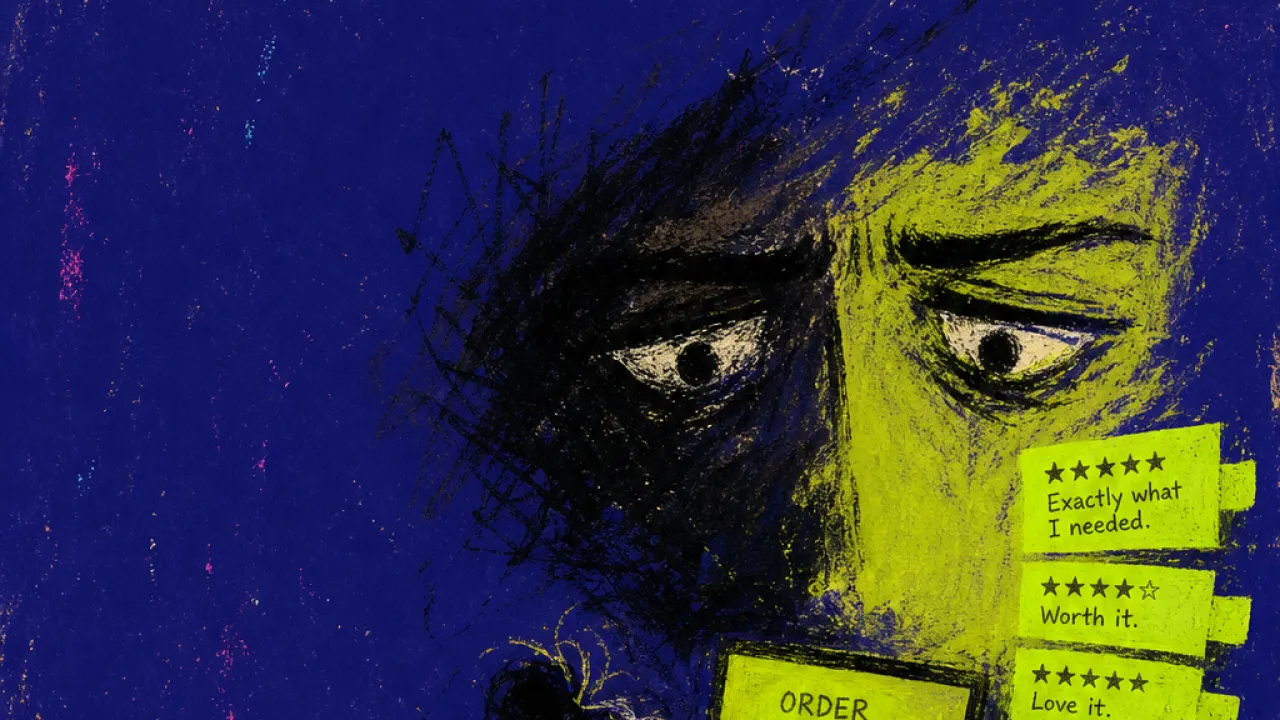
What is this really?

Compulsive Consumption is the pattern where you reach for another purchase, upgrade, delivery, subscription, saved resource, or aesthetic reset whenever inner pressure starts to rise, as if adding one more thing could make the whole system feel workable again. The move makes sense: a tangible object, fresh input, or polished setup can give an unprocessed need a shape you can hold, track, compare, and control. Yet the relief often turns into cognitive load, because the thing that briefly made chaos feel organized becomes another object to maintain while the original pressure stays chained in place, much like the figures before the black cube altar in the Devil.

Why did it happen?

At some point, reaching for something visible may have helped you come down from moments that felt messy, exposed, or impossible to name. A package, a saved guide, a new setup, or one more review could make the room feel less chaotic because it gave your hands and attention somewhere to go. Now the same inner pattern can become a subconscious loop: pressure rises, input answers it, the body gets a brief lift, and then the tired feeling returns with more objects, tabs, plans, or choices to carry.

How does it feel?

  • You open a shopping app after a tense message, thumb hovering for half a second before tapping “add to cart,” then you check the delivery date like it is a countdown to relief. In that moment, your breathing may get a little faster, your chest may feel lifted for a few seconds, and then a flat heaviness can settle back in once the confirmation screen disappears. Let the pause exist without turning it into another task to fix.
  • You save another productivity template, course, or tutorial with a tiny nod, as if the future version of you just got one step closer, then you leave the tab open beside work you have not touched yet. Afterward, your eyes may feel dry, your forehead tight, and your stomach slightly hollow from staying in preparation mode. It is okay to notice the stall before deciding what it means.
  • You stand in your room with a new organizer, device, or aesthetic upgrade still in its packaging, moving it from one surface to another while the older pile remains in the corner. Your shoulders may tighten as the space looks both improved and more crowded, and the small burst of control can turn into a background buzz. You can let that mixed feeling be present without forcing an instant conclusion.
  • You scroll through reviews late at night, jaw set, comparing nearly identical options until the words blur and the “best choice” starts to feel urgent. Your neck may get stiff, your eyes may sting, and the body can feel wired even while you are sitting completely still. Not knowing yet is allowed to be part of the room.
  • You treat yourself after feeling unseen at work, in dating, or after a draining conversation, tapping the payment button with a quiet exhale before putting the phone face down. For a moment there may be warmth in your chest, then a drop in your mood, like the body received a signal but not the contact it needed. This can simply be a signal to observe, not a verdict on you.

Compulsive Consumption in Tarot Cards

The reflex to buy, save, upgrade, or scroll when pressure spikes is the pattern this page is naming. You might recognize it in the dry eyes, tight forehead, and hollow stomach that appear after staying in preparation mode too long. From a Jungian perspective, archetypal theory gives language to the way desire gathers around visible objects and charged rituals. The Tarot Cards below reflect the unconscious dynamics underneath that loop.

The Devil Upright
The black cube altar anchors the entire scene, and the chained figures remain arranged before it as if the setup itself has become a ritual. The chains are visible, repetitive, and strangely accepted, even though the collars do not appear locked tight. Compulsive Consumption follows the same structure. The psyche keeps returning to a charged object, input, or ritual because each repetition creates the feeling of movement without forcing actual release. The altar becomes the belief that more feeding will eventually become freedom. In personal growth, You might collect books, courses, frameworks, tools, or optimized routines while postponing the uncomfortable act of living the change. The card exposes the difference between nourishment and captivity: some inputs expand the self, while others keep the self circling the same altar.
Reversed
The Devil's downward torch creates heat without opening the space. The flame activates the chained figure's tail, but the activation does not free the figure or change the structure of the scene; it only intensifies the loop inside the same enclosure. Compulsive Consumption appears when the mind keeps feeding the timing problem with more inputs instead of metabolizing what is already known. More forecasts, more content, more tools, more strategies, and more symbolic confirmation can create the sensation of movement while the actual decision remains untouched. In timing work, the reversed Devil points to an exhausted search for certainty disguised as preparation. You may be gathering signs because sitting with the present conditions feels too exposed. The card shows where consumption is no longer informing the choice; it is delaying contact with the choice.
Seven of Cups Reversed
The jewels, castle, wreath, snake, and dragon sit in the cups like highly charged objects in a showroom of possible upgrades. They promise power, comfort, recognition, stimulation, and transformation, but the figure still stands outside the system that would make any of them usable. That is where Compulsive Consumption enters the lifestyle field. You may buy planners, storage tools, wellness products, apps, decor, supplements, or new systems because acquisition creates a quick sensation of movement before the slower routine has been built. The Seven of Cups makes the mechanism visible by separating the object from the life it is supposed to create. The purchase can feel like contact with the desired future, but the card shows that the real shift happens only when the object stops being a symbol and becomes part of a maintained structure.
Nine of Cups Reversed
The cups can be read as a feast, a sensory surplus, or a completed circuit of gratification. Reversed, the seated stillness stops looking restful and starts looking stuck, as if the available comfort has become the only movement left in the scene. The pleasure remains, but it loops back into itself. Compulsive Consumption appears when fast relief becomes the substitute for emotional processing. In the family context, this can follow contact that leaves you feeling judged, infantilized, compared, or guilty. The system reaches for something immediate because the deeper family pattern is too tangled to metabolize in the moment. You are not being reduced to a habit. The card points to a regulation strategy that works briefly and then asks for repetition, revealing that the real charge is not in the purchase, the food, the scroll, or the treat; it is in the family dynamic your body is trying to come down from.
Ace of Pentacles Reversed
The coin is the largest object in the image, and the hand's energy is organized around keeping it stable. In reversal, the focus can stay fixed on obtaining and holding the object while the path underneath remains underused. Compulsive Consumption uses acquisition as a short-term regulator for the anxiety of redesigning life. You may buy the storage solution, wellness product, app, device, course, or aesthetic upgrade because the object gives the nervous system a brief sense of control. The reversed Ace of Pentacles clarifies the cost: the material tool becomes another thing to manage when it is not integrated into the actual rhythm of the day.
Four of Pentacles Reversed
The pentacles sit on the crown, against the chest, and beneath the feet, turning possession into a full-body identity system. The figure does not simply own the tokens; he is arranged by them, as if the self becomes more stable when more is held. In the reversed state, that symbolic structure can turn acquisition into emotional regulation. More objects, tools, upgrades, backups, or systems promise a brief sense of control, but the underlying need for safety is never actually metabolized. Compulsive Consumption appears when You use possession to quiet the friction of daily life. The card's closed posture reveals the paradox: accumulating more can feel like protection while increasing the physical and cognitive load that the lifestyle system was trying to reduce.
Nine of Pentacles Reversed
The gold pentacles, grape clusters, embroidered fabric, and private estate crowd the scene with signs of having enough. Yet the eye keeps finding another object of value, another surface, another proof that the garden is cultivated. Compulsive Consumption turns that abundance into a regulation loop. For You, lifestyle repair may start to look like buying the next organizer, wellness product, app, or upgrade when the actual friction is exhaustion, unclear priorities, or a daily system with too many moving parts. The card shows how material improvement can briefly quiet disorder without resolving the structure underneath.
King of Pentacles Reversed
The king's attention can collapse into the pentacle until the object becomes the main proof of control. Around him, vines, grapes, robes, throne, and estate produce an image of abundance that can feel nourishing upright, but visually overfull when reversed. That overfullness mirrors a regulation strategy built around acquisition. The psyche tries to soothe uncertainty by adding something tangible: another item, upgrade, tool, routine, supplement, app, or aesthetic improvement. In lifestyle terms, Compulsive Consumption appears when You keep buying, collecting, upgrading, or redesigning because the next object seems like it will finally stabilize the system. The card reveals the trap: material input can briefly create control while quietly increasing the maintenance load.

Compulsive Consumption in Tarot Card Reading Insights

For anyone who recognizes the reflex to buy, save, upgrade, or scroll when pressure spikes, others have brought the same pattern into readings. Here is how the cards appeared when someone sat with that loop instead of adding another input. Tarot Reading Insights that speak to this pattern are below.

Psychological patterns related to Compulsive Consumption