Is Healing Becoming Homework?

A grounded look at between-session therapy pressure, related tarot cards, and tarot reading insights around progress, homework, and evaluation.

Therapy Homework Performance Pressure
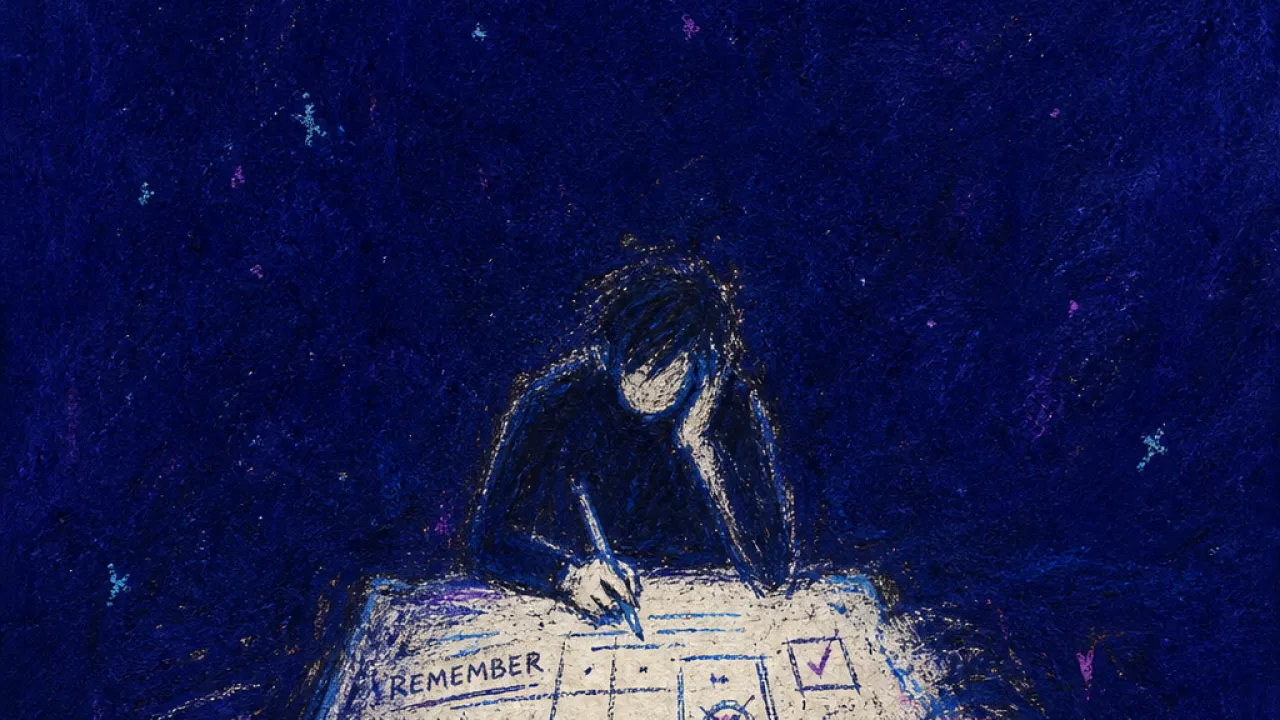
A hunched figure over a glowing worksheet as calendar squares and waiting hands press the page inward in deep indigo space

What is this situation?

Therapy Homework Performance Pressure — you leave a therapy session with a worksheet in your bag, a journaling prompt in your notes app, or a tracking task you promised to try before next week, and what was meant to support you starts to feel like another assignment waiting to be graded. At first it looks simple: fill out the thought record, notice the pattern, practice the exercise, write down what came up. Then the reminders start stacking up around ordinary life — the unread PDF in your inbox, the half-finished journal entry beside your bed, the app notification asking how your day went, the next appointment sitting on your calendar like a quiet deadline. You may like your therapist, and you may understand why the homework exists, but the format creates a strange power dynamic: someone will ask about it, someone will notice whether you tried, and suddenly your private mess has to arrive next session in a usable form. You catch yourself preparing answers instead of simply living through the week, wondering whether you are doing therapy correctly, whether your progress sounds convincing, whether your notes are insightful enough, whether forgetting the exercise means you failed at getting better. The work that was supposed to give you room can start occupying the room instead, turning evenings, commutes, lunch breaks, and even rest into places where you are silently measuring yourself against an invisible standard, much like the figure on the Eight of Pentacles, bent over another coin at the bench, trying to make the inner work look finished enough to show.

Why it's not you?

This is not a sign that you are bad at therapy or unwilling to change. A support tool can become pressure when it is framed, scheduled, tracked, or reported back in a way that makes your week feel evaluated. The problem is the assignment-like shape of the situation, not a flaw in your effort.

Therapy Homework Performance Pressure in Tarot Cards

Therapy Homework Performance Pressure turns the space between sessions into another place where you are expected to produce something readable, trackable, and ready to discuss. The tight chest that shows up when the worksheet reminder appears is not separate from the setup; it is part of an environmental, structural dynamic where care starts to feel formatted like assessment. The cards below do not judge whether you did the work correctly; they reflect the shape of pressure, repetition, and being watched by a standard. Here are the Tarot Cards that tend to mirror this kind of therapy-adjacent pressure.

The Hierophant
Reversed
A formal teacher occupies the central seat while two learners receive instruction beneath raised symbols and crossed keys. Reversed, the approved learning route becomes too narrow, allowing one worksheet, prompt style, or tracking method to stand in for the entire process of change. You may begin treating compliance with the method as proof of readiness to grow and difficulty with the format as proof of resistance or failure. The deeper constraint is standardization: when a support practice becomes the only legitimate route, your development is measured against the container instead of the container being assessed for how well it supports development.
Judgement
Reversed
An angel's trumpet calls exposed figures upward from their open containers, creating a scene of review, response, and transition. Reversed, the call is blocked by self-doubt and fear of an adverse verdict, so developmental reflection becomes a test of whether you can demonstrate that you are getting better. You may treat every missed exercise as evidence against your capacity to change or search for a more impressive account of progress before the next session. The growth system stalls when feedback is translated into judgement, because the energy that could examine patterns is redirected toward defending a passable identity as a committed, improving client.
Two of Pentacles
Reversed
Two pentacles swing inside an infinity loop while rough water lifts ships behind the juggler. Reversed, the balancing act stops reading as flexible coordination and starts showing an ordinary week overloaded by one more tracked obligation. You may be moving between work, meals, commutes, messages, domestic tasks, and recovery time while a worksheet or tracking notification repeatedly asks to be picked up again. The pressure is produced by a support task competing for the same finite capacity as everyday life, so dropping the therapeutic exercise can feel like personal failure even when the underlying problem is an overcrowded system.
Three of Pentacles
Reversed
An artisan stands on a bench before two robed figures who hold and inspect a plan inside a formal building. Reversed, the collaborative review loses reciprocity and begins to resemble a quality check, closely matching the fear that private therapy notes must be converted into usable work for someone else to assess. You may arrive focused on whether the worksheet is good enough rather than whether the exercise revealed anything relevant, even when the therapist has not asked for polished output. The growth container becomes blocked when collaboration is experienced as review, because performance management starts shaping what material is produced and what unfinished material remains hidden.
Seven of Pentacles
Reversed
A worker leans on a tool and studies pentacles growing from a plant, pausing between effort and visible return. Reversed, the pause becomes an impatient progress audit: the work has happened, but the next review point arrives before the results feel mature enough to display. You may experience the recurring therapy appointment as an artificial harvest date, measuring whether the week produced enough insight, practice, or change to report. The timing pressure is structural because private development rarely follows a weekly output cycle, yet the calendar can make an uneven process feel late, unproductive, or insufficiently convincing.
Eight of Pentacles
Reversed
A seated craftsperson repeats the same careful action across a row of displayed pentacles, with the workbench separating practice from the distant town. Reversed, deliberate learning contracts into perfectionistic production, where every entry must look complete enough to count as evidence of development. You may confuse growth with the quality of the worksheet, the consistency of tracking, or the sophistication of what you can report next session. The development gap is structural: a practice intended to support experimentation becomes a performance contract, making messy integration harder to recognize because it cannot always be displayed like finished craftwork.
Four of Swords
Reversed
A recumbent figure lies beneath three suspended swords while a fourth sword rests beside the body. Reversed, the chamber no longer protects a genuine pause; the swords remain overhead like pending prompts, unfinished notes, and questions that will return at the next appointment. You may technically be off the clock while still treating bedtime, a commute, or a quiet weekend as another chance to catch up on therapeutic work. Rest becomes unofficial preparation time because the unfinished exercise remains attached to an anticipated check-in, making the pressure visible in the loss of spaces where nothing has to be processed or reported.
Seven of Swords
Upright
A figure carries selected swords away from a camp while looking back toward the people in the distance, leaving two swords behind. The scene captures selective presentation: not necessarily dishonesty, but the strategic curation that appears when raw experience is expected to arrive at the next session in a coherent, usable form. You may prepare polished answers, emphasize the exercise you completed, or hide the blank page because showing unfinished work feels socially risky. The resulting introspective distortion is that the record begins serving anticipated audience management, while less organized or less impressive material remains outside the account.
Eight of Swords
Upright
A blindfolded, loosely bound figure stands inside a partial ring of swords, with open ground present but difficult to perceive. The visible restraints mirror an invisible therapeutic rubric: there may be no formal grade, yet anticipated questions about whether you tried can narrow what feels permissible to think, record, or admit. You may monitor whether an observation is insightful enough, whether forgetting an exercise proves resistance, or whether an incomplete worksheet makes you a difficult client. The trap is maintained by uncertainty about the evaluation criteria, so private reflection becomes constrained before another person has actually judged it.
Nine of Swords
Upright
Nine swords line the wall above a person sitting upright in bed with their face covered, while the patterned quilt keeps the scene anchored in a private nighttime space. The pending task has left the session and entered the hours when there is no immediate action to take, turning an unfinished exercise into after-hours mental review. You may replay what you will say about the worksheet, fear that forgetting it means you are failing at therapy, or mentally draft a more credible account of the week. The card locates the pressure in rumination generated by anticipated evaluation, while leaving open the distinction between an actual response from the therapist and the harsher review taking place before the appointment.
Ten of Wands
Upright
Ten bundled wands fill the carrier's field of vision as the figure leans toward a town that is close but difficult to reach. The load turns many individually manageable pieces into one obstructive burden, closely matching the way a PDF, journal prompt, tracking app, practice exercise, and appointment reminder can accumulate around a normal week. You may understand the purpose of every task and still find that their combined weight changes how you move through evenings, commutes, and rest. The strain comes from carrying therapeutic follow-through as another responsibility category, especially when each unfinished piece appears to say something about whether you are working hard enough at change.

Therapy Homework Performance Pressure in Tarot Card Reading Insights

When Therapy Homework Performance Pressure makes every journal prompt, worksheet, or check-in feel like something you have to get right, other people bring that same between-session tension into readings. The readings below show how this pressure can appear when someone sits with the cards around therapy, progress, and the fear of not doing enough. Tarot Reading Insights from sessions with this theme.


Psychological Contexts Related to Therapy Homework Performance Pressure