Why Won't the Records Match?

A grounded look at mismatched records, related tarot cards, and reading insights from similar administrative confusion.

Administrative Identity Mismatch
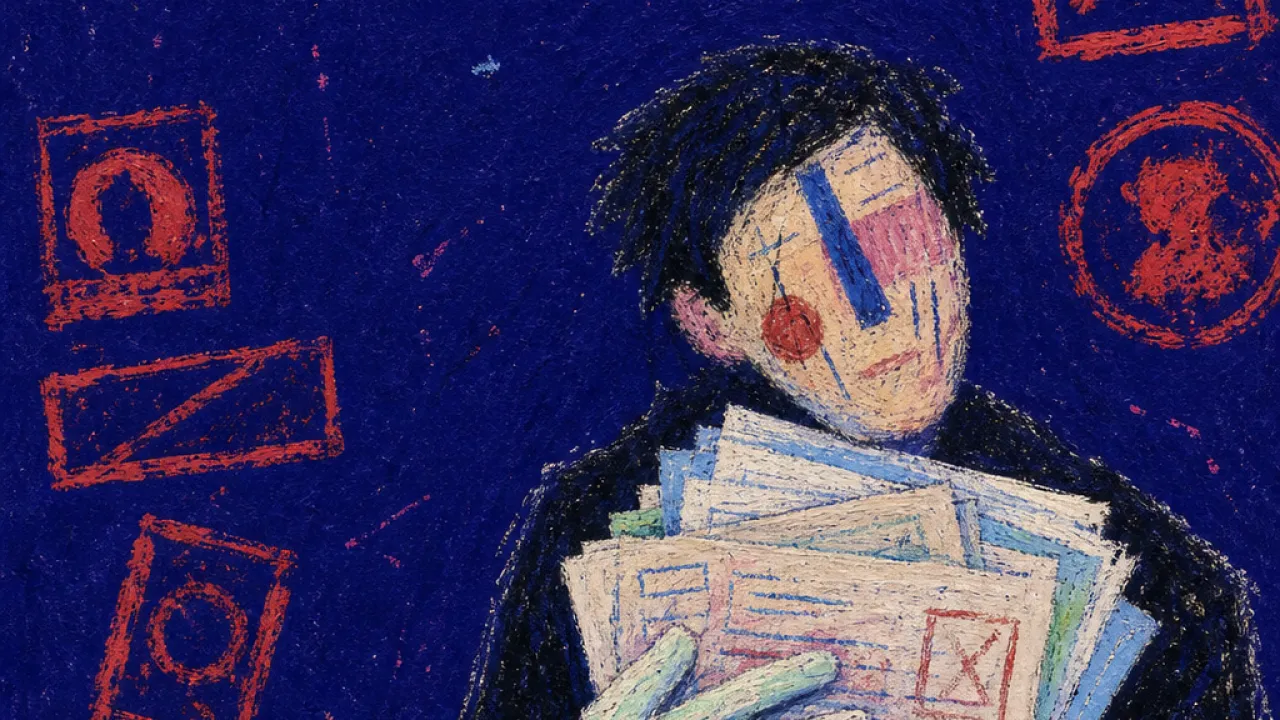
A solitary figure holding documents as red error marks and counter windows press mismatched labels into deep indigo space

What is this situation?

Administrative Identity Mismatch — you enter a normal errand expecting it to be boring, not personal, and then the form, portal, receptionist, HR system, school office, bank app, or government counter stops you at the same point: one piece of your identity does not match another. Maybe your name appears one way on your ID, another way in your email, another way in payroll, student records, insurance, immigration paperwork, or an old account you cannot easily update. You type the correct details and the screen flashes red; you hand over documents and the person across the desk asks for another version; you explain the same timeline again, choosing your words carefully because one wrong answer can send you back to the start. The mismatch turns everyday access into a chain of small interrogations: prove you are you, prove this record belongs to you, prove the old version and the current version connect, prove that the system's confusion is not your fault. It follows you into appointments, onboarding, applications, refunds, background checks, travel plans, campus services, and customer support chats where the agent can only read what the database allows them to see. Over time, the drain is not just the paperwork itself, but the way every ordinary transaction becomes conditional, delayed, or quietly exposing, leaving you to carry a folder, a screenshot, a PDF, and an explanation for something that should have been simple. Much like Justice on the Rider-Waite-Smith card, seated with scales and an upright sword, the whole scene feels like a gate where everything must be weighed, named, and verified before you are allowed through.

Why it's not you?

The problem is not that you are disorganized, difficult, or asking for special treatment. The problem is that administrative systems often treat mismatched records as your burden to resolve, even when the mismatch was created by rigid forms, old databases, or institutions that cannot talk to each other. This is a paperwork problem with human consequences.

Administrative Identity Mismatch in Tarot Cards

In Administrative Identity Mismatch, the repeated rejection of your own details turns ordinary access into a checkpoint. The body part of it is concrete: the tight jaw, the held breath, the folder of documents you keep ready because the next desk or portal may question you again. This is an environmental, structural dynamic built into systems that only recognize clean matches, not lived complexity. These Tarot Cards reflect the shape of that pressure before any decision is made about what to do next.

The Hierophant
Reversed
Two petitioners face a formal authority beneath crossed keys, placing access to the institution behind prescribed rules and recognised credentials. A school office reproduces this architecture when enrollment, exam, transcript, and campus systems each demand the approved version of a student's identity. You may be sent from the registrar to IT, from IT to admissions, and back again because each office follows a valid but incompatible procedure. The reversed institutional pattern shows that the blockage is created by fragmented authority: every office can enforce its rule, while no single office owns the complete correction.
Justice
Reversed
The scales compare two sides beneath a fixed sword, and the pillared seat turns that comparison into an institutional ruling. In education, admissions files, registrar records, exam systems, financial aid, and campus accounts can each hold a different version of the same student identity. You may have completed the academic work yet remain locked out of enrollment, records, assessment access, or campus services because the databases cannot establish continuity. The reversed scene makes the distinction visible: the school is evaluating record alignment at the gate, not your capacity to study or your legitimacy as a student.
Two of Pentacles
Upright
A figure keeps two pentacles moving inside an infinity-shaped loop while ships rise and fall on the waves behind him. The objects remain in motion, but maintaining continuity requires constant handling because neither side is allowed to settle or disappear. You may manage a legal name, an old account name, a payroll version, a shortened email identity, and several document formats at once so routine transactions keep working. The upright motion reflects functional but costly adaptation: the path remains usable only because you continuously track which version each system expects.
Three of Pentacles
Reversed
Three people consult beneath an institutional arch, with a visible plan linking specialised roles to one shared build. In the blocked version of that arrangement, admissions, the registrar, campus IT, financial aid, and exam services each retain a different specification for the same student. You are forced to carry updates between offices because the educational institution has distributed authority without building a reliable reconciliation process. The reversed card reveals a coordination failure inside the school: your student identity is continuous, but the teams responsible for representing it are not working from a continuous record.
Five of Pentacles
Upright
Two figures pass beneath an illuminated institutional window while remaining outside in harsh weather. In an educational setting, the light resembles a campus whose classes, records, funding, library, or digital services are present but inaccessible to a student whose identity fields do not align. You can be admitted, enrolled, or academically active and still be excluded from the infrastructure that confirms those roles. The card shows the mismatch as a material access gap rather than an academic deficit: the educational resource exists, but the administrative bridge between the student and the record is missing.
Eight of Swords
Upright
A blindfolded and bound figure stands on wet ground inside a fence-like arrangement of eight swords, while the distant castle places authority elsewhere. The restriction is immediate and embodied, yet the swords do not represent a personal failure; they form an external structure that limits what can be seen and done from the current position. You may begin bracing for every identity check, editing your explanation in advance, or treating a red portal message as if it questions your legitimacy rather than its own data. The image separates administrative uncertainty from personal identity: repeated scrutiny can narrow your internal field of view, but the confusion still originates in the system surrounding the transaction.
Ten of Wands
Upright
A bent figure carries all ten wands toward a visible town, with the load filling his field of view even though the destination remains reachable. The journey continues, but responsibility has accumulated onto one person rather than being distributed across the system that produced it. You may arrive at every appointment with a folder, screenshots, PDFs, reference numbers, and a rehearsed account of how the records connect. The upright image names this as transferred administrative labour: access can still be pursued, but the institutions have made you carry the full proof chain from one checkpoint to the next.

Administrative Identity Mismatch in Tarot Card Reading Insights

Administrative Identity Mismatch often follows people into readings when paperwork, portals, and official names keep turning ordinary steps into proof requests. The shift from cards to readings shows how others have brought this same administrative pressure into a session. Tarot Reading Insights from sessions shaped by mismatched records and repeated verification.