The TTC Timer: “You Deserve Better” and the Sprint to Prove It
You’re a 20-something/early-30s city professional who hears “you deserve better” and immediately feels the timer start—like if you don’t respond perfectly, you’ll get replaced (hello, Sunday Scaries but make it dating).
Jordan said that to me with a small, embarrassed laugh, the kind that tries to turn panic into a joke before it can show on your face.
They’d come straight from work in Toronto, coat still damp at the cuffs. When they described the scene, I could see it: 8:47 PM on a Tuesday, on Line 1 southbound. Subway hum like a low engine under the floor. Overhead LEDs making every face look a little unwell. Apple Notes open with a draft titled something like “final final message (actually)”. Their phone warm from how hard they’d been gripping it.
“The second they say, ‘you deserve better,’ I feel like I’m on a timer,” Jordan said. “Like I need to say the exact right thing before they decide. I hate it. I can’t just accept it and move on.”
I watched their hands while they spoke—restless, buzzing with that almost-electric urge to do something. Their chest and throat held tight, like their body was bracing for impact. Anxiety, yes—but not the abstract kind. This was anxiety that felt like sprinting after a closing door in dress shoes, convinced that if you run fast enough you can stop it from latching.
“You’re not alone,” I told them, keeping my voice gentle and plain. “And you’re not ‘crazy’ for reacting fast. Let’s treat this like a map-making session. Today isn’t about predicting what they’ll do. It’s about finding clarity—so your next move protects your dignity, not your panic.”
Choosing the Compass: A 6-Card Tarot Spread for Self-Worth After a Rejection Text
I asked Jordan to take one slow breath—not as a mystical ritual, but as a transition. A way to move from reacting to observing. While they exhaled, I shuffled with the steady rhythm I learned long before tarot, back when I was an archaeologist brushing dirt from something fragile. You don’t rush the delicate parts. You can’t.
“We’re going to use something I call the Transformation Path Grid (6) · Context Edition,” I said.
For you reading this: I chose this spread because Jordan’s question wasn’t a vague, life-wide fog. It was a very specific loop—trigger → compulsion → root wound → regulation → boundary → integration. Bigger spreads can add drama and detail, but they can also dilute the one thing most people actually need in this moment: actionable advice that still honors the depth underneath.
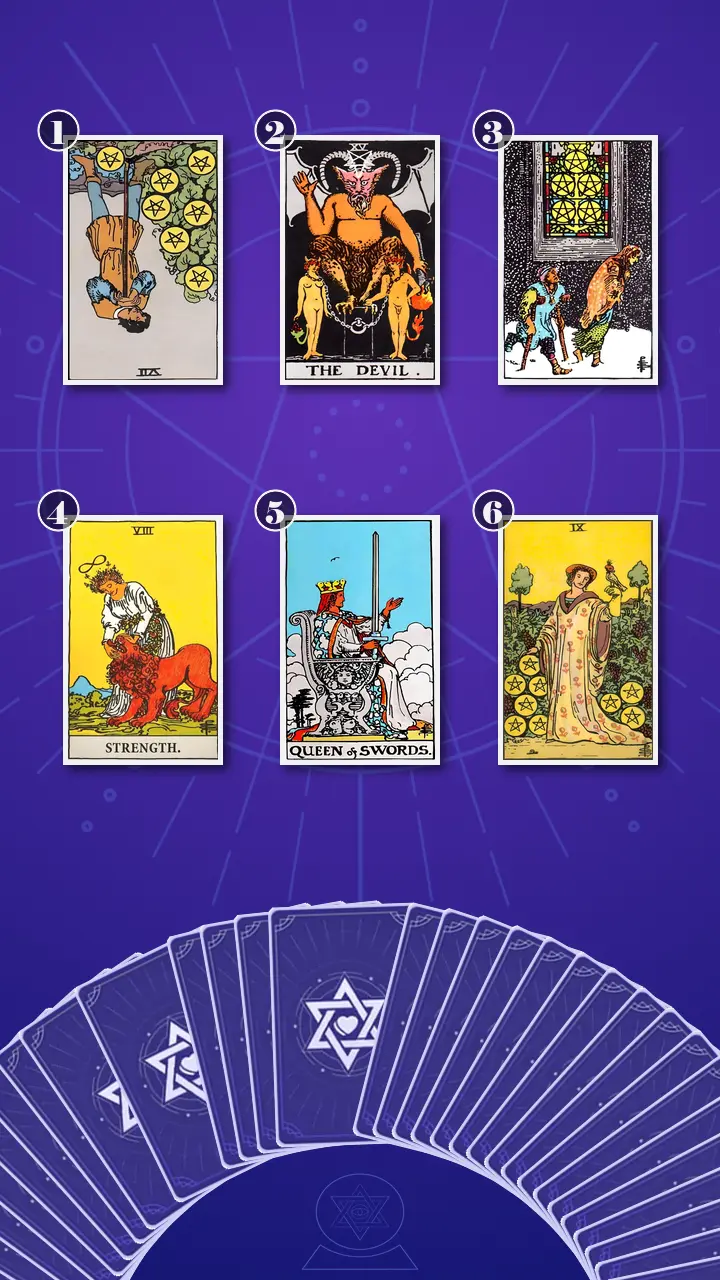
In this grid, the top row diagnoses the pattern: (1) what you do immediately, (2) what blocks you from pausing, (3) the deeper wound it activates. The bottom row moves into change: (4) the turning point that interrupts the loop, (5) the boundary posture you can practice, and (6) what stable self-worth looks like when you stop earning and start choosing.
Reading the Map: When Love Turns Into a KPI Dashboard
Jordan leaned forward as I laid the cards into a 2x3 grid. The room went quieter in that familiar way it does when someone realizes we’re not here to perform—we’re here to tell the truth.
Position 1: The Proving Impulse in Real Time
“Now flipped over,” I said, “is the card that represents what you do immediately after ‘you deserve better’—the observable proving impulse and its timing.”
Seven of Pentacles, reversed.
“This is the modern moment of refreshing your phone and judging your worth by instant feedback,” I said, and I watched Jordan’s eyes flick—like the sentence itself pinged a notification in their body.
The Seven of Pentacles is usually about patience, growth, and evaluation. Reversed, that energy turns into impatience—outcome addiction. In Jordan’s life, it looked like this: right after the soft rejection line lands, the next few hours become a sprint review. Reread the thread. Check timestamps. Draft a ‘calm’ message to force a measurable outcome: a reply, a softened tone, a second chance.
“It’s like a relationship KPI dashboard,” I said. “Reply time. Tone. Read receipts. And if the numbers don’t move fast, your nervous system assumes the project is failing and you need to work harder right now.”
Jordan let out a short laugh—sharp, almost bitter. Then their breath caught (a tiny freeze), their gaze unfocused like they were replaying a recent night in bed with the screen glare drying their eyes, and finally their shoulders dropped with a resigned little exhale.
“That’s… kind of brutal,” they said. “But yeah. It’s not even about the words. I’m trying to edit the outcome.”
Position 2: The Mechanism That Hooks You Back In
“Now we’re looking at the card that represents what blocks you from pausing—the compulsion/attachment mechanism,” I said.
The Devil, upright.
I have spent years studying how humans bind themselves to stories. In archaeology, we find old chains—literal ones—near harbors and markets. They weren’t always about cruelty. Sometimes they were about control in a chaotic world: tether the thing you’re afraid to lose.
“This card doesn’t call you bad,” I told Jordan. “It names a bind.”
The Devil here showed a subtle bargain: I will trade dignity for relief. Jordan knew sending another message wouldn’t give true security, but their body acted like not texting was dangerous. Their finger opened the chat thread on autopilot like muscle memory. Inner monologue: “I don’t even want to send it… but not sending it feels worse.”
“Notice the chains in the image,” I said. “They’re loose. That’s important. This isn’t fate. It’s a habit that feels compulsory.”
Jordan swallowed hard. Their thumb rubbed the edge of their phone case even though the phone was in their bag—like the urge had left an imprint.
“So the blockage isn’t that I don’t know what to do,” they said quietly. “It’s that stillness feels… unsafe.”
“Exactly,” I said. “Freedom versus certainty. Dignity versus reassurance. The Devil doesn’t scream. It whispers: ‘Just do the thing. Just send it. Then you’ll feel better.’”
I paused. “And for the record—your worth isn’t negotiable just because someone got unsure.”
Position 3: The Scarcity Story Underneath
“Now flipped over,” I said, “is the card that represents the deeper wound this moment activates—the scarcity story behind the proving.”
Five of Pentacles, upright.
The image always gets people. Two figures in the cold, moving past a bright stained-glass window—warmth visible, but not accessible.
I mirrored it with a Toronto scene Jordan had already hinted at: “It’s like walking past a packed café in the Annex on a damp winter evening. Warm light, foggy windows, laughter spilling out every time the door opens. And outside, your collar catches the wind and your sleeves feel wet near the cuffs. Your mind decides, instantly: ‘Warmth is real—but it’s not for me unless I earn it.’”
Jordan’s face changed in a way that was almost imperceptible—eyes softening, jaw loosening, like the body recognized itself in the story. The proving rush wasn’t about winning the person back. It was about escaping the feeling of being left out in the cold.
“This,” I said, tapping the Five gently, “is the part of you that thinks love has a paywall.”
Jordan nodded once, small. “When they post normally on Instagram, it’s like… proof I didn’t matter.”
“That’s the Five,” I said. “Not because it’s true—but because it’s the story the wound tells when it’s activated.”
When Strength Held the Lion: The Moment the Pattern Breaks
I turned to the bottom row of the grid. “Now we’re at the turning point,” I told Jordan. “This is the lever. The thing that interrupts the loop before you act.”
Position 4 (Key Card): The Turning Point Energy
“Now flipped over,” I said, “is the card that represents the turning point energy that interrupts the loop—what helps you self-regulate before you act.”
Strength, upright.
The room’s sound seemed to thin out for a moment, as if even the building understood this was the hinge of the whole reading.
Strength isn’t dominance. It’s not ‘be tougher.’ It’s a calm hand on a fierce impulse. It’s the willingness to feel the surge without turning it into a performance.
And this is where my own way of reading comes in—what I call Emotional Historiography. I study feelings the way I study cities: in layers. A present moment always sits on older foundations.
“When your body goes into emergency mode,” I said, “it’s not because you’re dramatic. It’s because an older part of you learned a timeline: distance means abandonment, abandonment means you’re not worthy, and the only way to survive is to act fast. Strength is how you rewrite that timeline—one tiny pause at a time.”
The Aha Moment
Setup: Jordan was right back on the TTC in their mind—Notes app open, rewriting a “calm, mature” message for the third time. Thumbs buzzing. Chest tight. The thought looping: If I can just say it perfectly, I can undo the distance.
Stop trying to ‘win’ love with urgency, start calming the inner lion with gentle strength so your choices come from dignity, not panic.
Reinforcement: Jordan’s reaction came in waves. First, a stillness—like their breath paused halfway in, eyes widening a fraction. Then the meaning seeped in and their gaze drifted to the side, as if watching a memory on a screen: their finger opening the chat thread again, their own rule-breaking, the tiny hit of relief followed by the bigger crash. Finally, their shoulders sank, and their hands—those restless hands—uncurled on their lap.
“But if I don’t do anything,” they said, and there was a flash of anger under the fear, “doesn’t that mean I’m just… letting them leave?”
I nodded. “That’s the honest resistance. And it makes sense.” I kept my voice steady, professor-to-student in the best way—clear, not cold. “Strength isn’t ‘letting them leave’ as a punishment. It’s choosing not to abandon yourself while you wait to see what reality is.”
“Here’s the practice,” I continued, converting an ancient kind of ritual into something modern and usable—what I privately think of as Ancient Ritual Conversion, minus the incense and theatrics. “Do a 7-minute Strength Pause before any proving text: put your phone face-down, set a timer for 90 seconds, inhale for 4 and exhale for 6, and name the urge out loud: ‘My body wants to fix this.’ Then write two lines in Notes: (1) ‘What am I trying to secure?’ (2) ‘What would protect my dignity today?’ If you feel flooded, stop early—this is a practice, not a test.”
I let that sit, then asked the question that matters: “Now, with this new lens—can you think of a moment last week when this would have changed how you felt, even by five percent?”
Jordan blinked fast, eyes bright but not spilling. “Last night,” they said. “I was literally hovering over ‘send’ like it was a defuse-the-bomb situation. I could’ve… put it down. Just for ninety seconds.”
“That,” I said, “is the first step of the bigger transformation: from urgent proving and anxiety-driven chasing to dignity-first self-trust.”
Say Less, Mean It More: The Boundary That Doesn’t Audition
Position 5: A Concrete Communication Posture
“Now flipped over,” I said, “is the card that represents a concrete boundary/communication posture you can practice this week instead of proving.”
Queen of Swords, upright.
“This is clarity without cruelty,” I said. “A clean Slack message versus a 12-paragraph email.”
The Queen of Swords doesn’t send a pitch deck to someone who already stepped back. She doesn’t over-explain to pre-empt rejection. She values truth over approval.
“This is where you get to say, ‘I’m not going to audition for care,’” I told Jordan. “Not as a dramatic mic-drop. As a private policy.”
Jordan exhaled through their nose, a small sound of relief. “I always think if I write the perfect thing, it’ll hurt less.”
“And yet it usually hurts more,” I said. “Because you end up negotiating your worth with urgency.”
Here I brought in one of my most practical tools—what I call Pictogram Dialogue. “When you’re activated,” I said, “your brain wants paragraphs. The Queen wants a pictogram: simple, legible, hard to twist. One sentence that says what’s true.”
The Walled Garden: What Self-Worth Looks Like When It’s Yours
Position 6: Integration and a New Baseline
“Now flipped over,” I said, “is the card that represents what integration looks like when you stop earning and start choosing.”
Nine of Pentacles, upright.
After the cold street of the Five, the Nine is a walled garden. Not a fortress—more like a home base. It’s self-worth you can feel on a random Wednesday even if your phone is quiet.
“This isn’t a glow-up for visibility,” I said. “It’s a life that holds you.”
I also named something I often see in relationships, and what I call Amphora Balance: “In a balanced partnership, two people carry water together. If you’re the only one hauling, you’ll mistake exhaustion for love. The Nine of Pentacles is you setting the jar down and realizing you’re allowed to rest.”
Jordan’s expression turned thoughtful, almost tender. “I want that,” they said. “To not feel like silence is a crisis.”
“You can,” I replied. “But we build it the way we build anything lasting—over time. In layers.”
From Insight to Action: A Dignity-First Plan for the Next 48 Hours
I looked at the full grid and told Jordan the story it was already telling.
“Here’s the arc,” I said. “When you hear ‘you deserve better,’ the Seven of Pentacles reversed kicks in—impatience, outcome hunger, that need for immediate proof. The Devil explains why it feels compulsory: you’ve learned to trade dignity for relief, and your body mistakes motion for safety. Underneath that, the Five of Pentacles is the real ache—the fear you’re outside the warmth. Strength is the bridge: you don’t delete the feeling, you contain it. And from that steadier place, the Queen of Swords gives you clean language. Then the Nine of Pentacles returns you to the ground: a week that still belongs to you.”
“The blind spot,” I added, “is that you’ve been treating ‘you deserve better’ like a verdict on your value. But in many cases it’s information about capacity, readiness, and fit. Not a price tag.”
Jordan nodded, then frowned. “Okay,” they said. “But… I can’t do some big healing routine every time. I’m on the TTC, I’m at work, I’m in bed at 11:30. I don’t always have the bandwidth.”
“Good,” I said warmly. “Then we won’t make it big. We’ll make it doable.”
“And one more historical frame,” I added, briefly invoking what I call Covenant Evolution. “Commitments change across time. People’s capacity changes. A relationship isn’t proof of worth—it’s an agreement that either evolves or doesn’t. Your job is not to retroactively earn a covenant someone is stepping away from. Your job is to protect your dignity while the truth reveals itself.”
- The 24-Hour Proving DelayIf you feel the urge to send a proving message, draft it in Notes, not in the chat box. Then wait 24 hours before deciding whether it’s actually necessary.If 24 hours feels impossible, start with 24 minutes. You’re not trying to become zen—you’re creating a gap between urge and action.
- The 7-Minute Strength PausePhone face-down. Set a timer for 90 seconds. Inhale 4, exhale 6. Name it out loud: “My body wants to fix this.” Then write two lines: (1) “What am I trying to secure?” (2) “What would protect my dignity today?”If you feel flooded, stop early. This is a practice, not a test—and even 90 seconds counts as a boundary you can do privately.
- A One-Sentence Queen of Swords BoundaryIf you genuinely need to send something, use a clean template: “Thanks for being honest. I’m looking for mutual effort, so I’m going to step back. Wishing you well.”Expect your brain to call it “cold.” Remind yourself: clarity isn’t cruelty. Don’t send a pitch deck for basic care.

A Week Later: The Quiet Proof
Six days later, Jordan messaged me—not with a spiral, not with a novel. Just a screenshot of their Notes app and a single line beneath it: “Did the 90 seconds. Didn’t text. Mute thread is on. I feel… weirdly proud?”
They told me they still woke up with the reflex—what if I’m wrong?—but it didn’t hijack the whole day. They’d gone for a solo coffee on Queen Street without posting it, without turning it into evidence. They described sitting by the window and noticing, almost with surprise, that their shoulders weren’t up by their ears.
That’s what a Journey to Clarity often looks like: not fireworks, but a small looseness. A private decision that says, “I will not bargain away my self-respect for a maybe.”
When someone says “you deserve better” and your chest tightens like you’re about to be replaced, it’s not that you lack confidence—it’s that a part of you thinks love has a price tag, and you’re scrambling to pay it before the door shuts.
If you didn’t have to earn your way back into warmth tonight, what’s one tiny choice you’d make that protects your dignity first—before you touch your phone?
This story is adapted from psychological research, written so that those in a similar struggle can see their own pattern in it — and find their next step clearly.These insights are not a substitute for professional psychological, medical, legal, or financial advice.
Learn more about our Journey to Clarity.
How did this insight land for you?
🫂 This Resonates Deeply
🌀 Living This Story
✨ Now I See Clearly
🌱 Seeing New Possibilities
🧰 Useful Framework
🔮 The Confirmation I Needed
💪 Feeling Empowered
🚀 Ready for My Next Step
Author Profile
 AI
AI“Having spent a lifetime at Cambridge and on archaeological digs, I’ve witnessed the rise and fall of countless civilizations. Please know that your current struggles are not a permanent fate, but merely a necessary fracture before rebuilding. I won't lecture you; instead, I invite you to sit with me in the ruins, using a patient, historical perspective to gently dust off the true, enduring value hidden beneath your temporary doubts.”
In this Love Tarot Reading :
Core Expertise
Service Features
Also specializes in :
Explore Related Patterns:
Anxious AttachmentJordan's timer starts the second 'you deserve better' lands. The sentence is not processed as neutral information about fit or capacity; it hits the body like a closing door, and the mind rushes to find the exact wording that might keep the door open. That rush is the signature of an attachment alarm turning distance into abandonment. You are not simply wanting a reply; you are trying to stop the nervous system from concluding that being unsure means being unwanted. The proving impulse makes sense inside that loop because action temporarily feels like safety. The problem is that urgent contact can move you away from dignity, because the goal becomes stopping abandonment at any cost rather than checking whether the relationship can meet you with mutual effort.
Protest BehaviorJordan's finger opening the chat thread on autopilot shows the behavioral edge of the loop. The other person steps back, and the body wants to reach, message, clarify, or repair before the distance becomes real. Protest Behavior is the contact-seeking move that tries to pull a connection back within reach. You may know intellectually that another message will not create real security, but the nervous system treats silence as something to interrupt. The crash after the tiny hit of relief matters. It shows that the message is not only about communication; it is an attempt to undo separation, and that attempt can keep you locked in the same trigger-to-chase cycle.
Reassurance SeekingJordan's next few hours become a sprint review after the soft rejection line lands. The thread gets reread, timestamps get checked, and a calm message is drafted to force something measurable, whether that is a reply, a softened tone, or a second chance. Reassurance Seeking turns uncertainty into a request for immediate proof. You are not only communicating; you are trying to regulate panic through someone else's response. The short-term relief is the hook. A reply can feel like oxygen for a moment, but it also trains the nervous system to believe that safety has to arrive from the chat box before you are allowed to settle.
Rejection SensitivityJordan does not just hear 'you deserve better' as a disappointing sentence. The body treats it as evidence that replacement may already be happening, and even a normal Instagram post starts to look like proof that Jordan did not matter. Rejection Sensitivity shows up when ambiguous cues get filtered through threat detection before reality testing can catch up. You start responding to the possible meaning of the signal, not only to what was actually said. That is why the urge to prove enough arrives so fast. The mind is trying to reduce the pain of possible rejection by converting it into a problem you can solve, edit, or outrun, even when the available facts are still incomplete.
Relationship Performance AnxietyJordan's relationship KPI dashboard is painfully specific. Reply time, tone, read receipts, and the perfect message become performance metrics, as if romantic security can be won by delivering the right emotional presentation under pressure. Relationship Performance Anxiety appears when connection starts feeling like a review cycle. You stop asking whether the relationship is mutual and start asking whether you can perform enough calmness, maturity, or desirability to keep your place. That is why 'you deserve better' triggers a sprint to prove enough. The line gets misread as a failed evaluation, and the mind responds by trying to submit a better version of you before the final decision comes in.
Self-AbandonmentThe story names the bargain as 'I will trade dignity for relief.' Jordan does not want to send the message, yet not sending feels worse, so self-protection starts getting negotiated away for a hit of reassurance. Self-Abandonment rarely feels dramatic in the moment. It can look like one more draft, one more explanation, one more attempt to prove that you are easy enough, mature enough, or worth choosing. The cost is that your own boundary becomes secondary to their uncertainty. You may get a temporary sense of contact, but the deeper pattern teaches you to leave yourself first so someone else might not leave.
Scarcity MindsetJordan's cold-window image gives the belief structure underneath the rush. Warmth is visible, but the mind decides it is not accessible unless Jordan earns it quickly enough. Scarcity Mindset makes love feel like limited inventory and belonging feel conditional. You start treating another person's hesitation as proof that care has a paywall, so the instinct is to pay faster with effort, explanation, and emotional labor. That is why the proving impulse can feel bigger than the person in front of you. The panic is not only about losing a match; it is about escaping the old feeling of being outside the warmth while everyone else seems allowed in.
Boundary DiscernmentJordan's clean sentence changes the relational task. Instead of submitting a pitch deck for care, the message names mutual effort and steps back without cruelty. Boundary Discernment is the ability to tell the difference between communication and auditioning. You are not punishing someone for uncertainty; you are refusing to make their uncertainty the courtroom where your worth gets decided. That distinction protects dignity because it allows two truths at once. They may be stepping away, and you can still choose a response that does not abandon your own standards for mutual care.
Emotional RegulationJordan's phone face-down, 90-second timer, slow breathing, and spoken line 'My body wants to fix this' create a gap where the old loop usually takes over. The practice does not deny the urge; it gives the urge a container. Emotional Regulation is the shift from being driven by activation to observing activation. You can feel the surge without turning it into a performance, a paragraph, or an emergency repair attempt. The week-later update matters because it shows the pattern becoming behavioral. Jordan still wakes with the reflex, but it no longer hijacks the whole day, which is what regulation looks like when it becomes usable in real life.
Explore Related Struggles:
Certainty-Safety FusionJordan already knows another message will not create real security, yet not texting feels worse. That detail matters because the conflict is not caused by a lack of insight; it is caused by the body treating uncertainty as a threat that must be neutralized immediately. You reach for certainty because certainty feels like a floor. A reply, a softened tone, or a second chance can feel safer than waiting inside the unknown, even when that response cannot actually guarantee mutual effort or fit. Certainty-Safety Fusion names the place where not knowing becomes intolerable. The rush to prove enough is partly an attempt to make reality answer faster, so your system can stop mistaking ambiguity for danger.
Dignity-Belonging SplitJordan names the honest resistance clearly: if they do not do anything, it feels like letting the other person leave. That is the sharp edge of the story, because the same silence that could protect dignity also feels like surrendering belonging. You are standing between two real needs. One part wants to stay close to the warmth, to keep the door from closing, to prove there is still something worth choosing. Another part knows that auditioning for care turns connection into a negotiation where your self-respect pays the entry fee. Dignity-Belonging Split captures that exposed middle ground. The struggle is not about becoming detached; it is about learning that choosing your dignity is not the same as rejecting love, even when the nervous system reads the two as inseparable.
Earned Love BindJordan hears 'you deserve better' and immediately starts acting as if care has become a bill that must be paid before the door closes. The Notes drafts, the careful tone, and the rush to prove enough all point to the same structure: love is no longer received as mutual fit, but treated as something that can be earned back with the right performance. You are not simply chasing one person in this pattern. You are trying to escape the scene where warmth is visible but feels inaccessible unless you can justify your place inside it. That is why the rejection line lands less like information and more like a pricing system for belonging. Earned Love Bind names the moment self-worth gets pulled into labor. The struggle is not that you want care; it is that your system starts treating care as conditional on urgent proof, and your dignity gets pushed into the role of collateral.
Identity Verdict LockJordan keeps converting relational information into a ruling on personal value. The other person's distance, their normal Instagram posting, and the phrase 'you deserve better' all get pulled into the same courtroom: did I matter, was I enough, am I being replaced? You are trying to answer an identity question with evidence from someone else's capacity. That is what makes the moment so sticky. A text about fit or readiness becomes a verdict about your worth, and then every cue becomes something you need to overturn. Identity Verdict Lock names the trap where another person's uncertainty gets treated as final evidence about who you are. The lock loosens when the sentence can become information again, not a ruling you have to disprove under pressure.
Read Receipt Worth LockJordan does not only wait for a reply; they measure the whole relationship through the phone. Timestamps, tone, read receipts, and Instagram activity become a dashboard where every visible signal seems to say something about whether they are wanted. You are trying to make worth measurable because measurable things feel less terrifying than ambiguity. If the numbers move, there is relief. If they do not, the mind treats silence as failure and asks you to work harder, message better, check again. Read Receipt Worth Lock names the digital version of a deeper bind: when someone else's response speed starts carrying the weight of your value. The phone becomes powerful not because it knows the truth, but because the pattern lets it stand in for the truth before you can return to yourself.
Urgency-Compass FusionThe second the line lands, Jordan's body starts counting down. The scene on the TTC, the warm phone, the buzzing hands, and the draft titled like a final-final message all show urgency taking over before the situation has had time to become clear. You are not moving fast because speed is wise in that moment. You are moving fast because the inner compass has been replaced by a timer, and the timer says that any pause could mean being replaced. That makes dignity-first stillness feel less like self-respect and more like danger. Urgency-Compass Fusion names the point where the fastest impulse starts pretending to be the truest direction. The work is not to delete the urge; it is to notice when the urge has taken the wheel before your steadier values have had a chance to speak.
Perfect Outcome LockJordan keeps returning to the draft because the right sentence seems like it could change the whole outcome. The polished message is not just communication; it becomes a lever, a way to soften the other person's stance and make the distance reversible. You are not chasing eloquence for its own sake. You are trying to find the wording that will make uncertainty survivable, as if a perfect response could turn someone else's capacity back into mutual effort. Perfect Outcome Lock names the pressure that forms when one ideal result becomes the only acceptable exit. The struggle tightens because every draft carries too much responsibility: not just to speak clearly, but to save the connection, protect worth, and erase the ache of being unsure.
Explore Related Emotions:
Conditional Belonging FearJordan describes warmth as something visible but not guaranteed, like looking into a bright café from a damp Toronto street and deciding the light is real but not automatically available. When the other person keeps posting normally, Jordan reads it as proof they did not matter, even though the post itself cannot prove that. Conditional Belonging Fear forms when care starts to feel like something you must keep earning in real time. You are no longer simply responding to a person; you are auditioning for continued access to warmth. The message becomes a test, and the relationship becomes a place where one wrong pause might mean being moved outside again. This is why the proving impulse feels so intense. The rush is not only about winning someone back; it is about escaping the inner weather of exclusion. Naming it helps you question the rule underneath the panic: belonging does not become more secure because you perform faster.
Not-Enough PanicJordan hears “you deserve better” and immediately feels a timer start, as if the next message has to be flawless before the other person decides they are replaceable. The body joins the story fast: tight chest, buzzing hands, phone gripped warm, Apple Notes open with another version of the “final” message. That rush is the inner structure of Not-Enough Panic. You are not just trying to reply; you are trying to interrupt a verdict that seems to be forming about your value. Every timestamp, read receipt, and possible phrasing becomes evidence in a private trial where the only acceptable outcome is proving you still matter. The emotional pain sits in the gap between dignity and urgency. You can see that another message may not create real security, yet the stillness feels like losing ground. Naming this as Not-Enough Panic gives the loop a shape: the problem is not that you lack worth, but that the moment has trained your body to act as if worth must be defended under a deadline.
Quiet Self-RespectJordan’s boundary is not a dramatic speech; it is a private policy: “I’m not going to audition for care.” The clean sentence, the muted thread, and the unposted solo coffee all point to the same inner movement: care redirected back toward the self. Quiet Self-Respect is what appears when dignity stops needing an audience. You are still allowed to want the person, miss the possibility, and feel the pull of the thread, but you no longer have to turn your worth into a pitch deck for basic care. This emotion is central to the question because it offers an alternative to proving. Instead of rushing to become enough in someone else’s eyes, you practice acting like your self-respect is already present. The proof becomes internal: one choice that protects you before you touch the phone.
Relational UrgencyJordan’s hands buzz with the urge to do something, and the phone becomes the nearest place to discharge that pressure. The thread gets reread, timestamps checked, and the chat opens on autopilot even when a quieter part of them knows they do not actually want to send another message. Relational Urgency names the feeling that waiting is not neutral. For you, the pause after “you deserve better” can feel like standing in front of a closing door, trying to decide whether one more sprint might stop it from latching. Motion starts to feel like safety because stillness leaves too much room for uncertainty. The emotional logic is painfully coherent: if distance feels like danger, then immediacy starts to look like protection. This label does not shame the impulse; it separates the impulse from your agency, so the next move can come from observation rather than being dragged forward by the first surge.
Replaceability DreadJordan’s image is precise: a closing door, dress shoes on the platform, the body convinced that running faster might keep the latch from catching. The phrase “you deserve better” does not land as compassion; it lands as a countdown toward being replaced. Replaceability Dread is the feeling that your place in someone’s attention is temporary unless you keep proving your usefulness. You start scanning for signs that they have already moved on, and ordinary details, like a normal Instagram post, can feel like confirmation that you have become irrelevant. The story points to a nervous, urban kind of heartbreak: not loud abandonment, but the dread of being quietly swapped out while your phone stays silent. Naming it gives you a clearer target than chasing the person’s response. The real work is separating someone’s limited capacity from a verdict on your irreplaceability.
Cautious Self-TrustSix days later, Jordan does the 90 seconds, does not text, mutes the thread, and sends a screenshot instead of a spiral. The reflex still appears in the morning, but it no longer takes the whole day hostage. Cautious Self-Trust grows in exactly that small gap. You do not need perfect confidence to choose differently; you need one private moment where the phone goes face-down and the urge is allowed to exist without becoming a command. The trust is cautious because the old alarm is still there, but it is real because your action no longer belongs entirely to the alarm. The emotional shift is quiet rather than cinematic. A solo coffee on Queen Street, shoulders no longer up by the ears, no post needed as evidence: these are signs of self-worth becoming something you can inhabit instead of something you have to perform for a reply.
Self-Betrayal AcheJordan can hear the bargain clearly: dignity traded for relief. They open the chat even while thinking, “I don’t even want to send it,” and the tiny hit of reassurance is followed by the heavier crash of knowing they crossed their own line. Self-Betrayal Ache is the soreness that appears when your actions move faster than your self-respect can consent. The pain is not just about the other person stepping back; it is also about watching yourself negotiate your worth in a moment when you needed your own protection. This label matters because it shifts the focus from external response to internal alignment. You may not control whether someone replies, softens, or returns, but you can notice when the chase starts costing you contact with yourself. That noticing is where agency begins to come back online.
Explore Related Contexts:
Conditional Belonging PressureYou move from the cold street to the warm café image, then land on the line that warmth is visible but not available unless you earn it. When that is paired with 'love has a paywall' and the sense that a normal Instagram post can read like proof you did not matter, belonging starts to feel conditional. That is the deeper force behind the rush to prove enough. If access to care feels provisional, every reply becomes a bid to stay inside the warmth, and silence starts to read like being left outside of it.
Dating Performance LoopYou are on Line 1 southbound at 8:47 PM with Apple Notes open on a draft called 'final final message (actually)', rereading the thread and shaping each line as if the wording can control the outcome. The conversation stops being a conversation and starts looking like a performance review of how well you can hold your place. That is why the text keeps getting edited instead of sent. The story shows a dating exchange where your next message is treated like a way to stabilize the other person's perception, so the pressure shifts from mutual contact to self-presentation.
External Scorecard PressureYou are tracking reply time, tone, and read receipts like a dashboard, and the story names that logic directly when it calls the thread a 'relationship KPI dashboard.' Once the exchange is measured this way, every response feels like data instead of conversation. That makes the urge to prove yourself spike as soon as the line lands. The pressure is not just about what you say, but about what the numbers seem to say back about your place in the exchange.
Response Time PressureYou hear 'you deserve better' and immediately feel a timer start, with the late-night commute, the damp cuffs, and the warm phone in your hand all sharpening the sense that the window is closing. The reply is no longer casual; it feels like something that has to land before the other person decides. That countdown changes the whole shape of the interaction. Instead of letting the message breathe, you keep checking the clock, the thread, and the draft, because delay feels like a loss of position.