The 11:47 p.m. Relationship Reset
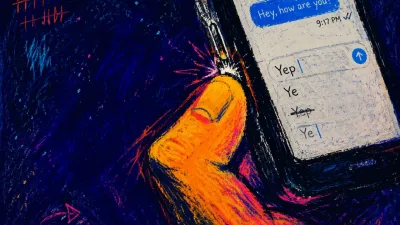
I knew the scene before Alex (name changed for privacy) finished describing it: a 29-year-old hybrid UX researcher in Toronto who could map every edge case in a user journey, yet one late-night 'I miss you' message could make the entire relationship feel ready to launch again. At 11:47 p.m. in the small bedroom of their shared flat, Alex reopened an archived iMessage thread, recorded a vulnerable seven-minute voice note, moved the next evening's plans, and started packing an overnight bag. The phone felt warm in their palm; the radiator clicked behind them while their shoulders leaned toward the screen.
'Why do I rush back into full intimacy every time we reconnect?' Alex asked me. 'We already know each other, so taking it slowly feels fake. When they come back, my whole body says fix it now.' I heard the contradiction clearly: Alex wanted to restore constant contact, private disclosure, physical closeness, and familiar couple routines immediately, while fearing that a slower pace would make the fragile reconnection disappear.
I saw longing move through them like a TTC train pulling out while they were still running beside the platform, one hand reaching for the closing doors. Relief arrived whenever a reply came through, but the moment the phone went quiet, their chest tightened and their thumb went searching for another sign. This was not a flaw in their capacity to love. It was a rhythm that had become too fast to hear what the present relationship was actually saying.
I told Alex, 'I am not here to make a prediction about the other person or persuade you to leave, stay, wait, or rush. I want to help you notice what the urgency is protecting, what has truly changed, and what your consent feels like at each layer. We can draw a map through the fog. The journey to clarity starts with giving your own evidence a voice.'

Choosing the Compass: The Shadow Spread
I asked Alex to place the phone face down, feel both feet on the floor, and take one breath without trying to solve the relationship. I shuffled slowly while they held the question in mind. I treated the ritual as a transition into focused attention, not as a mysterious verdict: a few quiet seconds in which the familiar impulse could be observed before it became an action.
For anyone wondering how tarot works in a relationship reading, I explained that the cards would function as a structured reflection tool. I chose The Shadow Spread, a five-card F5 Inner Excavation layout, because Alex was asking why they repeatedly rushed back into intimacy, not what the other person secretly felt or what the relationship was destined to become. A Celtic Cross would add external and future-facing layers that were not needed here, while a conventional relationship spread could pull attention away from Alex's own boundaries and agency.
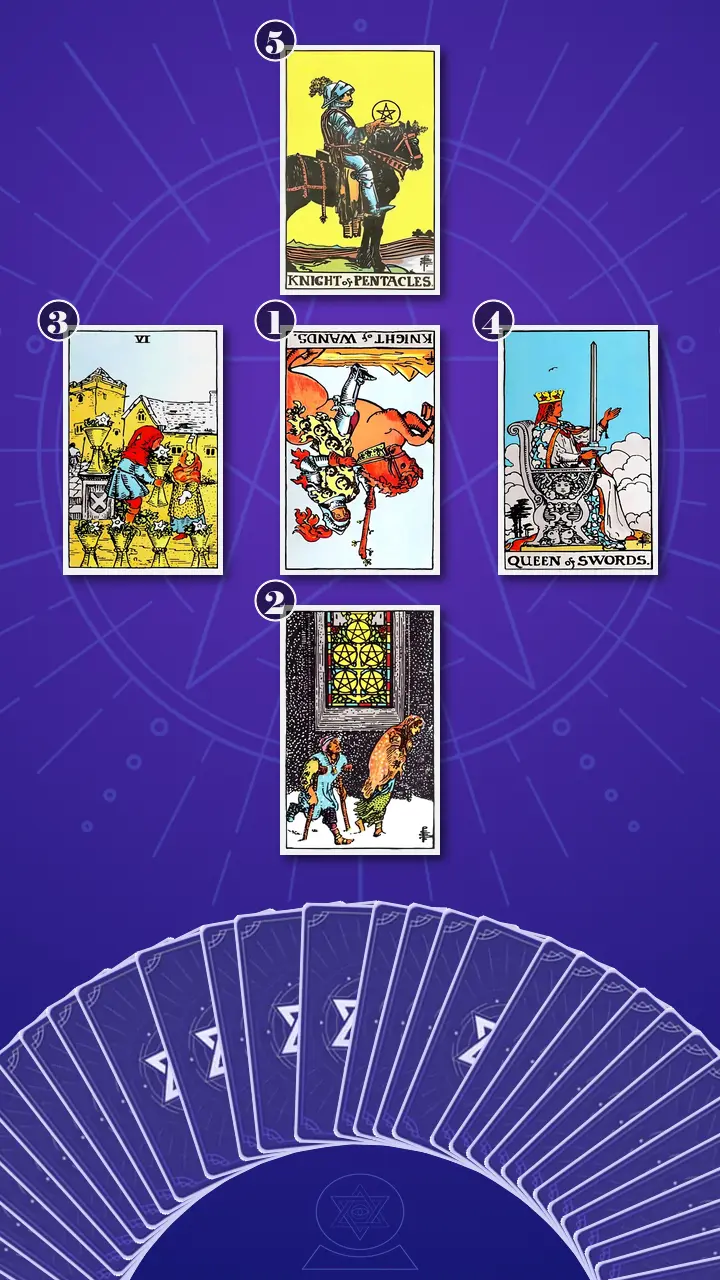
The five positions would trace the pattern in order: the first would show the observable behaviour, the second the protective fear beneath it, the third the nostalgic trigger that gives it momentum, the fourth the transforming resource, and the fifth the everyday practice that could make trust observable. I told Alex that the layout was a compass, not a command. The cards could help name the pattern, but Alex would decide what access to grant, what pace felt consensual, and what evidence was enough.
Reading the Map: When Chemistry Moves Faster Than Trust
The Rearing Horse and the Message That Became a Relationship
The card I turned over first represented the observable problem: restoring constant contact, vulnerable disclosure, and physical or practical intimacy immediately after reconnection. It was the Knight of Wands, in reversed position.
The rearing horse gave me the image immediately. In Alex's life, one affectionate message became a voice note, a rearranged evening, all-day texting, and the return of full access before anyone had asked what this chapter could hold. I connected the card directly to the 11:47 p.m. scene: the emotional spark was genuine, but desire was outrunning direction. The useful question was not, 'How do I stop wanting closeness?' It was, 'What present-day evidence supports this specific next layer?'
The energy here was Fire in excess and direction in deficiency. The reversed Knight did not describe bad intentions; it showed momentum acting before it had chosen a route. That excess kept the pattern alive because immediate affection brought a full-body release, while the missing conversation about expectations, consent, reliability, and boundaries remained untouched. I also named the overcorrection risk. Pacing did not mean total silence, a rigid no-contact rule, or a dramatic announcement that intimacy was forbidden. It meant allowing desire to stay present without letting it drive every decision.
I used the direct life analogy I had heard so many times in different forms: an archived chat, a familiar nickname, a seven-minute voice note, and then the calendar quietly losing one of its original plans. I placed two sentences beside the card: 'If I do not answer fully now, this may disappear' and 'I can want closeness without letting urgency choose the pace.'
Alex did not nod. They gave a short, bitter laugh and rubbed their thumb along the edge of the phone. 'Damn, this is exactly what I do. One I miss you and I am already acting like nothing ever changed.' I answered, 'That recognition is useful information, not a verdict about your character. We are separating the desire from the speed so you can keep the first and choose the second.' Their shoulders remained forward, but their hand stopped reaching for the screen.
The Lit Window and the Fear of Being Outside
The card I turned over next represented the protective fear beneath the rush, especially the belief that slowing down could threaten belonging or access to closeness. It was the Five of Pentacles, upright.
I described the two figures moving through snow beneath the illuminated stained-glass window. For Alex, the image looked like a separate evening, a slower reply, or a request to define the relationship becoming something much larger in the imagination: proof that they were once again outside the warmth. The phone had become the apparent doorway to belonging, so immediate access felt necessary even when no present promise required it.
This was Earth shaped by scarcity, a deficiency of felt support rather than proof that support was absent. When Alex moved a friend dinner, checked the phone beside Slack during a hybrid workday, or negotiated keys and privacy with their flatmate for an overnight, the practical effort could feel like a small insurance policy against being left out. The more ordinary sources of warmth were postponed, the more one person's reply seemed responsible for regulating the whole body.
I asked, 'If you waited until tomorrow before changing your plans or adding physical closeness, what would the pause seem to say about your belonging, even if the other person had not actually said that?' Alex looked down at the card. Their jaw tightened first; then their fingers loosened around the sleeve of their sweater. They told me, 'It would feel like I was choosing not to be chosen.' I wrote that sentence down, because it revealed the protective purpose of the rush without turning the fear into a prophecy.
The Old Joke That Makes the Past Feel Live
The card I moved to the left represented the trigger that activates and reinforces the cycle: nostalgia, familiar chemistry, and the assumption that previous trust automatically exists in the present. It was the Six of Cups, upright.
The flower-filled cups and the enclosed old courtyard carried the softest image in the spread. I connected it to the old nickname, the private meme, the shared Spotify playlist, the familiar touch, and the joke that made Alex laugh before they had checked what had changed. When a saved piece of the relationship appeared in a new message, the past felt available in the present. Alex told me, 'It is like pressing Resume. Everything comes back at once.'
The Water here was soothing, but it became excessive when remembered tenderness was allowed to stand in for current evidence. Nostalgia was not the enemy. It could honour what had been meaningful. The blockage came when a saved playlist was treated as a live report on the conditions for listening today, or when familiar chemistry was used to decide how much emotional and physical access the present could support.
I said, 'A familiar feeling is not the same as present-day evidence. What has returned so far: contact, memory, trust, commitment, or only the feeling of recognition?' Alex's eyes stayed on the six cups. They smiled at first, then the smile thinned into something more honest. Their breathing slowed, and they named a distinction they had not made before: 'The joke came back. The consistency has not had time to prove itself.'
When the Queen of Swords Opened Her Hand
The Question That Keeps Warmth Without Giving Back Every Key
The room seemed to quiet when I placed the fourth card to the right. The card I turned over represented the conscious resource that could transform the shadow pattern: clear questions, present evidence, consent, and boundaries that do not punish warmth. It was the Queen of Swords, upright, and it was the key card of the reading.
The Queen held her sword vertically in one hand and extended the other with an open palm. I read that combination as discernment without withdrawal. In modern life, she was Alex typing a warm reply to I miss you while leaving room for one honest question: 'What does reconnecting mean to each of us now, and what pace can we both support consistently?' She did not demand a complete relationship summit before coffee. She simply refused to let a familiar feeling answer a question that had not been asked.
This was where I brought in my Communication Dissonance Audit. After ten years of sound energy research, I listen for the mismatch between emotional tempo and spoken content. Alex and the other person might both use tender words, yet the emotional access could leap to one hundred percent while the conversation about expectations stayed at zero. That was the dissonance: not proof that one person cared and the other did not, but a dangerous difference in tempo. I also mapped the likely high note through my Reactive De-escalation Mapping: the instant a healthy pause was translated into rejection, the emotional safety of the exchange became vulnerable to defensive urgency.
The Quiet Before the Question
At 11:47 p.m., the old private joke still felt alive in Alex's hands. Their mind was trying to hold two contradictory facts at once: contact felt warm, but the present agreement was blank. They were caught between 'This feels exactly like before' and 'What has actually been consistent since we reconnected?'
Reconnection is renewed contact, not automatic proof that trust has been rebuilt. Clear questions do not cancel warmth; they let present consistency, consent, and choice determine what level of closeness can hold.
For one beat, Alex's breathing stopped. Their pupils widened; their thumb, still hovering over the phone, froze above the send button. Then I watched the distinction move through them: their eyes lost focus as if replaying the old joke, the late-night reunion, the unanswered question that never came after it. Their fingers tightened around the phone, then opened. They looked at me with a flash of anger. 'But does that mean I was wrong to believe it?' I let the silence stay kind. 'No,' I said. 'It means the feeling was real, and it was carrying more information than it could honestly hold.' The skin around their eyes reddened. The radiator clicked behind us, a small metronome no longer racing. Alex's shoulders dropped by degrees. A breath came out of their chest with a tremor, not a happy ending but room enough to choose. They set the phone face down. Their voice was quieter when they said, 'I can be open without reopening every door at once.' I asked, 'Now, using this new view of last week, was there a moment when waiting until morning could have given you information instead of taking love away?'
I explained that this was the first meaningful crossing in the emotional transformation: urgent longing and relief were not being erased, but they were no longer the only authorities in the room. Alex was moving toward grounded trust in personal boundaries, current evidence, consent, and observed consistency. The Queen's sword did not cut off feeling. It cut through the assumption that full access was the only way to prove love.
The Knight Who Waits for the Next Layer
The card I turned over last represented the integration practice: rebuilding intimacy through paced, observable consistency. It was the Knight of Pentacles, upright.
The stationary black horse and the pentacle held carefully at eye level created a deliberate contrast with the first Knight. I told Alex that this Knight did not ask them to become cold, suspicious, or emotionally unavailable. He asked them to choose one manageable layer of contact, watch whether it could be sustained, and let consistency earn the next layer. A planned call, a 30-minute coffee, a kept promise, a respectful response, and a boundary that survived an affectionate moment could all become evidence.
The energy had returned to Earth, but this time it was stability rather than scarcity. The Knight of Pentacles replaced urgent pursuit with repeatable practice. In Alex's real life, that could mean keeping an existing dinner, agreeing on a manageable rhythm of contact, and observing whether care remained steady before resuming sleepovers or full emotional access. The pace was not a test and it was not a punishment. It was a way to let trust grow in daylight.
Alex placed one finger near the pentacle and said, 'So I do not have to choose between being open and protecting myself.' I said, 'Exactly. You can be open without reopening every door at once.' I watched them sit back for the first time since arriving. The movement was small, but their body no longer looked as if it were trying to catch a departing train.
Letting Consistency Earn the Next Layer
I gathered the five cards into one story. Reversed Fire showed a genuine desire becoming immediate action before direction was clear. The Five of Pentacles revealed the fear underneath: a pause felt like standing in the snow outside the only lit window. The Six of Cups showed why an old joke, nickname, or touch could make previous trust feel current. The Queen of Swords introduced Air through direct questions and distinctions, and the Knight of Pentacles brought Earth back as an observable rhythm.
I told Alex, 'The blind spot is not that you care too much. It is that your body treats the discomfort of waiting as evidence that waiting is wrong, while full access feels like evidence that love is secure. You call it being open, but the moment contact resumes, you may be trying to secure belonging before the present has had time to speak.' The transformation is not from desire to withdrawal. It is from uncontrolled speed to chosen pace, from treating reconnection like a paused browser tab to allowing a new chapter to have its own permissions.
Before we chose the next steps, I showed Alex how I would lower the emotional BPM when the urge to send another vulnerable message or cancel a plan began climbing. My Syncopation Pause is a three-second acoustic grounding technique: put both feet on the floor, exhale one quiet audible note or hum for three seconds, and let the sound finish before sending, cancelling, agreeing, or demanding reassurance. It is not a rule to silence feeling. It is a small interruption that gives consent and choice a chance to catch up with the rush.
I offered the following actionable advice as a one-layer-at-a-time intimacy pacing experiment. Alex could adapt the wording, shorten the exercise, or stop at any point. The cards did not own these next steps; Alex did.
- Ask before adding access.This week, before agreeing to a sleepover or restarting couple-like routines with the person who has returned, ask, 'What does reconnecting mean to each of us right now, and what pace can we both support consistently?' Start with a 30-minute coffee or short call rather than an overnight, then write in a notes app what was agreed and what remains unknown.Keep it to one question and use your own voice instead of building a perfect script. A boundary is information, not an ultimatum; if the conversation becomes pressuring or dismissive, you can pause or end it.
- Use the next-day intimacy rule.For one week, wait until the next day before adding a new emotional, physical, or practical layer after a reconnection message. Keep one manageable level, such as one planned call or one coffee, and record one current fact supporting any next step: a kept plan, a clear agreement, a respectful response, or consistent follow-through.Use the smallest version when needed: set a 10-minute timer and make two columns, 'What I know from this reconnection now' and 'What I remember from before.' The goal is information, not self-denial.
- Keep one source of warmth.After contact resumes, keep one friend plan, work boundary, or sleep routine already on the Google Calendar. Tell the other person, 'I can talk after work tomorrow, but I am not free tonight,' and spend one hour with a friend, your flatmate, or yourself away from the phone.If keeping the plan feels like withholding, state it plainly rather than using it as a test. You do not owe immediate availability to prove that you care.
I asked Alex to notice the difference between an ultimatum and an open-handed access check. An ultimatum tries to control the other person's response. An access check lets Alex learn what is mutually supported now. That difference was the practical heart of the Queen of Swords: warmth could remain enabled while certain permissions stayed pending until present behaviour earned them.

A Week Later, One Door at a Time
Four days later, I received a message from Alex: 'I kept dinner with Sam, asked what reconnecting meant, and chose coffee instead of a sleepover. The answer was not perfect, so I went home alone and stared at the quiet room for three minutes. I still slept.' The message held a small ache, but it also held evidence: Alex had stayed connected without surrendering every plan.
When we spoke again, Alex told me they had used the 10-minute present-evidence check twice. They still felt the forward pull in their chest when a familiar message arrived, and the first thought after waking was still, 'What if I get this wrong?' This time, they noticed the thought, kept breathing, and waited for the conversation to show more. That was not a solved relationship. It was the first proof that a boundary could change the pace without erasing Alex's belonging.
I think of that as the quiet proof of the Journey to Clarity. The Shadow Spread did not decide whether the reconnection would last. It helped Alex separate memory from evidence, chemistry from consistency, and openness from immediate full access. Alex remained the person with the authority to choose what felt safe, mutual, and real. Tarot had offered a map; Alex had taken the next step.
When a familiar message makes your whole body exhale, you can still rush to prove you belong before the quiet has a chance to ask whether this closeness is safe, mutual, and real now. Noticing that rush is already a small space between feeling and action, a place where your own inner rhythm can become audible again.
If this reconnection were allowed to unfold one small, observable step at a time, what might your body notice before you decide whether to open the next door?

Every reading at AceTarot is a journey to connect with inner wisdom and empower the path ahead. This reading shared here is a psychological mirror, not a private record—crafted to reflect universal emotional loops and help restore personal clarity. Please note that these insights do not replace professional psychological, medical, legal, or financial advice, and should not serve as the sole basis for major life decisions.
Learn more about our Journey to Clarity.
How did this insight land for you?
🫂 This Resonates Deeply
🌀 Living This Story
✨ Now I See Clearly
🌱 Seeing New Possibilities
🧰 Useful Framework
🔮 The Confirmation I Needed
💪 Feeling Empowered
🚀 Ready for My Next Step
Author Profile
AI Alison Melody
996 readings | 597 reviews
“Through ten years of sound energy research, I’ve found that when we struggle, it's usually just our internal rhythm falling out of sync under pressure. I know firsthand the frustrating helplessness of wanting to move forward but feeling paralyzed. Without overwhelming theories, I want to be the soothing background track that helps you recalibrate, turning your heavy burdens back into a light, effortless, and harmonious melody.”
In this Love Tarot Reading :
Core Expertise
- Communication Dissonance Audit: Diagnosing arguments not by the words spoken, but by the fundamental mismatch in emotional tempo and frequency.
- Reactive De-escalation Mapping: Identifying the specific 'high notes' of defensive anger that shatter the emotional safety of the connection.
Service Features
- The Syncopation Pause: A 3-second acoustic grounding technique to interrupt an escalating argument, lowering the emotional BPM before permanent damage is done.
Also specializes in :
Explore Related Patterns:
Anxious AttachmentA slower reply or separate evening becomes much larger in Alex's imagination, eventually carrying the meaning of being outside the warmth or “choosing not to be chosen.” Restoring full access then functions as a protective attachment strategy, securing proximity before a pause can be interpreted as rejection. Anxious Attachment does not make the longing unreal. It describes how your nervous system may try to protect belonging by closing distance immediately, even when that strategy prevents you from learning whether the renewed closeness can remain consistent without constant reassurance.
Boundary DiffusionAlex restores constant contact, private disclosure, physical closeness, and practical couple routines as one package before either person has defined the reconnection. Contact, memory, trust, commitment, and consent become compressed into the same familiar feeling, so previous intimacy functions like automatic present-day permission. Boundary Diffusion appears when the limits between different kinds of access become difficult to distinguish. You do not have to withdraw warmth to restore those distinctions; you can decide separately what emotional, physical, practical, and scheduling access is supported now.
Emotional ReasoningAlex describes a body that says “fix it now,” a chest that tightens when the phone goes quiet, and a full-body release when a reply arrives. Those sensations are real, but they begin doing a second job when relief is treated as proof that full intimacy is safe and discomfort is treated as proof that waiting is wrong. Emotional Reasoning can make a feeling seem like a direct report on the relationship rather than information about your current activation. You regain choice when you let the feeling remain valid while asking a separate question about what has actually been agreed, demonstrated, and sustained.
Fresh Start FantasyOne affectionate message makes the relationship feel ready to launch again, and Alex recognizes that they start acting as though nothing ever changed. The reset removes the uncomfortable gap between remembered closeness and the blank present agreement, allowing old permissions to return without being renegotiated. Fresh Start Fantasy offers relief by making reconnection feel like continuation rather than a new and uncertain chapter. You can preserve hope without deleting the interruption when you treat renewed contact as the first piece of information, not as automatic restoration of the entire relationship.
Nostalgia BiasThe old nickname, private meme, shared playlist, familiar touch, and inside joke make Alex feel as though the relationship has resumed rather than merely reappeared. Because familiar memories are vivid and emotionally fluent, previous tenderness begins standing in for current evidence about reliability, trust, and commitment. Nostalgia Bias does not require you to distrust what was meaningful. It asks you to notice when recognition is carrying information it cannot verify, so you can honor the past without automatically giving it authority over the permissions of the present.
Reassurance SeekingA reply brings Alex immediate relief, but silence tightens their chest and sends their thumb searching for another sign, even beside Slack during the workday. Each additional message promises to settle the uncertainty, yet the calm remains dependent on receiving another external response. Reassurance Seeking protects you from the discomfort of not knowing by repeatedly checking whether access and affection are still available. The cycle becomes visible when reassurance provides short relief but leaves the underlying question of trust, consistency, and mutual intention unanswered.
Urgency BiasAt 11:47 p.m., one “I miss you” message becomes a seven-minute voice note, a rearranged evening, and a packed overnight bag before Alex has asked what the renewed contact means. Acting quickly converts uncertainty into movement and delivers immediate relief, so speed acquires the emotional force of a sensible decision even when direction is still missing. When you recognize this mechanism, the issue is not that your desire for closeness is false or excessive. Urgency Bias appears when the need to end uncertainty chooses the pace for you, making immediate action feel necessary before your present-day evidence, boundaries, and consent have had time to speak.
Boundary DiscernmentAlex keeps an existing dinner, asks a direct question about the reconnection, and chooses coffee while leaving a sleepover undecided. These actions separate warmth from unrestricted access, making it possible to say yes to contact without giving the same answer to every layer of intimacy. Boundary Discernment lets you check what your consent says at each level rather than forcing one global choice between closeness and self-protection. A boundary becomes information about what is supportable now, not a punishment, test, or declaration that your feelings are unreal.
Self-AbandonmentAlex moves an existing evening plan, prepares for an overnight, checks the phone during work, and reorganizes privacy arrangements before the reconnection has demonstrated consistency. These sacrifices act like insurance against losing closeness, but they also remove the routines and relationships that help Alex remain anchored outside the returning relationship. Self-Abandonment occurs when protecting connection repeatedly requires you to deprioritize your own schedule, pacing, consent, or sources of support. Keeping one existing commitment is therefore more than calendar management; it preserves a self who can participate in intimacy without disappearing into it.
Strategic IntimacyFour days later, Alex keeps dinner with Sam, asks what reconnecting means, and chooses coffee instead of a sleepover. Rather than restoring every form of access at once, they let one manageable interaction produce information about clarity, respect, and follow-through. Strategic Intimacy allows you to remain emotionally open while making access proportionate to current evidence. Each layer becomes a mutual, revisable choice, so trust grows through repeatable behavior instead of being demanded from one intense moment of chemistry.
Emotional RegulationAlex places the phone face down, feels both feet on the floor, and takes one breath before trying to solve the relationship. Later, they notice the familiar morning fear, keep breathing, wait for more information, and tolerate three quiet minutes after going home alone. Emotional Regulation does not require you to suppress longing or become unavailable. It creates enough space for bodily activation to settle into information, allowing consent, evidence, and deliberate choice to participate before you send, cancel, agree, or restore access.
Reality TestingAlex looks at the familiar joke and reaches a precise conclusion that the joke has returned while consistency has not had time to prove itself. The later two-column check continues that distinction by separating what is known from this reconnection from what is remembered from before. Reality Testing gives you a way to respect emotional information without letting it impersonate external evidence. By separating contact, memory, trust, commitment, and consistency, you can make decisions from the relationship that exists now rather than from the speed with which the old relationship becomes mentally available.
Explore Related Struggles:
Accelerated Intimacy TrapAt 11:47 p.m., one "I miss you" becomes a seven-minute voice note, a rearranged evening, and a packed overnight bag. Renewed contact does not remain one small event; it rapidly restores disclosure, availability, physical closeness, and familiar couple routines before either person has defined what reconnecting means now. When this sequence repeats, you are effectively asked to decide the whole relationship at the speed of the first moment of relief. Accelerated Intimacy Trap names the structural bind in which genuine desire reaches full access before present trust, consent, expectations, and consistency have had separate chances to become visible. Recognizing the layers gives you more agency than treating openness as a single switch. You can allow the affection to be real while letting each additional form of access answer to current evidence rather than the momentum of the reset.
Access-Belonging FusionAlex moves a friend dinner, checks the phone beside Slack, and negotiates privacy for an overnight because a slower response can feel like standing outside the only lit window. The most revealing sentence is not simply that Alex wants closeness, but that waiting would feel like "choosing not to be chosen." That equation places enormous weight on access. When immediate availability becomes the proof that you belong, keeping a plan, delaying physical closeness, or asking for clarity can register as self-exclusion even when the other person has not withdrawn. Access-Belonging Fusion names this bind between preserving your place in the connection and preserving enough space to choose what you actually want. Seeing the equation makes belonging less dependent on reopening every door. You can acknowledge the need for connection without requiring your calendar, privacy, body, and emotional availability to provide simultaneous proof that you have been chosen.
Urgency-Compass FusionA reply makes Alex's whole body release, while a quiet phone tightens their chest and sends their thumb searching for another sign. Those reactions are concrete and immediate, and they arrive much faster than any conversation about expectations, consistency, or the meaning of the reconnection. The friction begins when a strong internal signal is asked to do two jobs at once: register the importance of the contact and determine the correct relationship decision. Urgency-Compass Fusion names the resulting lock, where the intensity of wanting relief can feel like reliable direction even though the present relationship has not supplied enough information for that conclusion. You do not have to dismiss what your body is reporting to question the authority given to its speed. The signal can tell you that the moment matters while current agreements, consent, and follow-through determine what access the moment can safely hold.
Nostalgic Belonging LockAn old nickname, private meme, shared playlist, or familiar joke makes Alex laugh before they have checked what has changed. The recognition is so complete that reconnecting feels like pressing "Resume," with the previous relationship's warmth and permissions apparently waiting exactly where they were left. The memory is accurate as memory, but it is carrying more relational weight than it can verify. When you use remembered tenderness as proof of current belonging, the past can reopen emotional and physical access before the present has demonstrated reliability. Nostalgic Belonging Lock names the point where familiarity stops being one source of information and becomes the gatekeeper for how much closeness feels justified now. Separating recognition from current consistency does not erase what mattered before. It allows the old joke to remain meaningful without requiring it to certify the conditions of the new chapter.
Then-Now SplitAt 11:47 p.m., the contact feels warm and familiar while the present agreement remains blank. Alex can recognize the old joke, the previous trust, and the familiar chemistry while also stating that consistency has not yet had time to prove itself. Both timelines are real, but they answer different questions. The past records what the relationship once held; the present shows what the renewed connection can support now. Then-Now Split names the visible strain of holding those two evidence systems together when familiarity points toward immediate access and current conditions ask for more observation. You regain clarity by allowing neither timeline to erase the other. Remembered closeness can retain its meaning while present behavior determines the pace, permissions, and commitments available in this chapter.
Explore Related Emotions:
Cautious TrustFour days later, Alex keeps dinner with Sam, asks what reconnecting means, and chooses coffee instead of a sleepover. The answer is imperfect, yet Alex goes home and allows the next decision to remain pending rather than using immediate intimacy to settle everything at once. You can stay receptive while letting kept plans, clear agreements, respectful responses, and follow-through show what the connection can support. Cautious Trust is not emotional withdrawal; it is trust becoming observable, incremental, and responsive to what is happening now.
Conditional Belonging FearA slower reply, a separate evening, or a request to define the reconnection becomes the image of standing outside the only lit window. When Alex says that waiting would feel like "choosing not to be chosen," the pause has acquired a meaning that the other person has not actually stated. You may then experience belonging as something maintained through immediate availability rather than something that can survive questions, limits, and time. Conditional Belonging Fear captures the felt threat beneath the rush: if you do not restore closeness fully enough or quickly enough, your place in the relationship may seem at risk.
Nostalgia Loop AnxietyThe old nickname, private meme, shared playlist, familiar touch, and remembered joke make the previous relationship feel live again. Alex describes the effect as pressing "Resume," even while acknowledging that the joke has returned before consistency has had time to prove itself. You can feel recognition so vividly that memory begins supplying permissions the present relationship has not yet earned. Nostalgia Loop Anxiety is the uneasy momentum created when remembered tenderness keeps circling back as apparent evidence, making it difficult to tell what belongs to the shared past and what is actually available now.
Relational UrgencyAt 11:47 p.m., one "I miss you" becomes a seven-minute voice note, a changed evening, and a packed overnight bag. You do not merely answer the renewed contact; you begin rebuilding the full architecture of the relationship before either person has established what the new contact can reliably hold. The speed protects you from having to remain inside the uncertain space between recognition and trust. Relational Urgency names the pressure to turn a genuine moment of closeness into immediate certainty, while preserving the crucial distinction that your desire is real and your pace is still yours to choose.
Relief HungerA reply brings a full-body release, but the next silence tightens Alex's chest and sends their thumb searching for another sign. The renewed contact therefore offers more than conversation; it briefly settles the physical strain of not knowing where the relationship stands. You may reach for another message, disclosure, or layer of access because each response promises to recreate that settling. Relief Hunger names the craving for the pressure to stop, revealing why immediate intimacy can feel compelling even before it provides reliable information about trust, commitment, or mutual capacity.
Evidence AnxietyContact feels warm while the present agreement remains blank, leaving Alex between "this feels exactly like before" and "what has actually been consistent since we reconnected?" Even after choosing a slower pace, the first waking thought remains, "What if I get this wrong?" You are being asked to tolerate a period in which the available facts cannot yet settle the relationship's meaning. Evidence Anxiety describes the unease of waiting for current behaviour to become legible, especially when memory offers a faster and more comforting answer than the present can honestly provide.
Grounded Self-TrustAlex keeps an existing dinner, chooses coffee over a sleepover, and later goes home alone after receiving an imperfect answer. The quiet room still carries an ache, but Alex remains there, sleeps, and discovers that maintaining a boundary has not erased their capacity for connection. You begin trusting yourself when your observations and limits can remain valid even in the presence of strong desire. Grounded Self-Trust names the steadiness of knowing that you can be open, ask for current information, and decide which door to open without surrendering authority over all the others.
Bittersweet ReleaseAlex's eyes redden, their fingers open around the phone, and a trembling breath leaves their chest after they hear that the feeling was real but carried more information than it could honestly hold. Setting the phone face down does not remove the tenderness or guarantee what comes next. You can release the demand that a meaningful feeling must also function as proof. Bittersweet Release holds the ache of losing an immediate certainty alongside the quieter freedom of knowing that your next decision no longer has to be made by urgency alone.
Explore Related Contexts:
Accelerated Intimacy PressureThe 11:47 p.m. message moved Alex from an archived thread to a seven-minute voice note, a changed plan, and an overnight bag before the present relationship had answered what reconnecting meant. The sequence gives a single affectionate signal the practical force of a full reset, so emotional, physical, and domestic access expands ahead of current evidence. You can see why the rush repeats: immediate contact is allowed to settle questions that still require expectations, consent, reliability, and boundaries. That is the external pressure captured by Accelerated Intimacy Pressure, where speed becomes the practical condition for keeping the reconnection active even though the relationship has not yet shown what it can consistently hold.
Access as Proof PressureAfter one "I miss you" message, Alex moved plans, prepared an overnight bag, and later described waiting as "choosing not to be chosen." The practical arrangement turns immediate availability into a signal that the relationship is real, while keeping a dinner, work boundary, or slower pace can appear to withdraw access. You can separate warmth from proof here. When old cues are allowed to authorize every layer of contact, the relationship's access rules become conditional on rapid availability rather than on mutually stated terms and reliable follow-through.
On Again Off Again RelationshipAlex describes rushing back "every time we reconnect," and the archived thread is handled like pressing Resume. A returning message restores all-day contact, private disclosure, familiar routines, and physical closeness before the current chapter has acquired its own terms. You are looking at a repeated reset structure, not a single late-night decision. Each reconnection can reactivate the old relationship role faster than consistency can be observed, which leaves the present relationship defined by recurrence rather than by a newly negotiated pace.