Golden-Cage Inertia: Turning Risk Research Into One Small Test
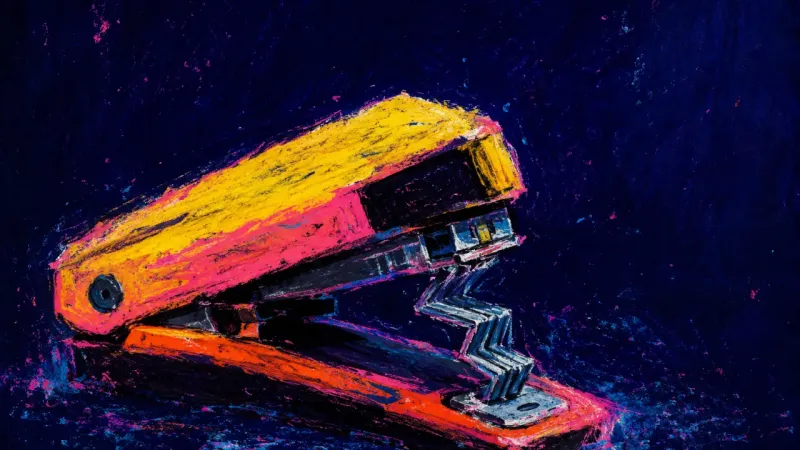
The Golden Cage at 8:47 p.m.
'You are the dependable operations person in a high-cost city, quietly planning a more self-directed life after work, until one look at rent and benefits turns career pivot anxiety into another evening of risk research,' I said to Casey (name changed for privacy). I am Hilary Cromwell, and after a lifetime at Cambridge and on archaeological digs, I have learned to listen for the difference between a damaged structure and a doomed one.
Before coming to me, Casey had described the Tuesday night that kept repeating. At 8:47 p.m., they sat at the narrow kitchen counter in their Toronto condo with a blue-lit note called 'The Life I Picture' open beside their banking app. The HVAC hummed, the laptop felt warm beneath their wrists, and street noise pressed faintly through the glass. They added 'more ownership of my time,' checked rent, benefits, and savings, then built an exit-risk list until their shoulders hardened and their chest felt pinched.
'I keep calling it gratitude when I am really afraid to move,' Casey told me. 'I can describe the life I want more easily than I can take the first step. The current arrangement works well enough to stay, but not well enough for me to feel fully present in it.'
Ambivalence sat in their body like a suitcase packed for two cities: too heavy to carry, too carefully arranged to unpack. I did not hear ingratitude or laziness. I heard longing meeting a safety system that had become so efficient it could turn every possibility into another spreadsheet. 'We do not need to decide your whole life tonight,' I said. 'We can use the cards as an objective map of the pattern, then look for one piece of evidence you can choose to gather. Our Journey to Clarity begins by giving this fog a shape.'

Choosing a Compass for the Career Crossroads
I asked Casey to put their phone face down, feel both feet on the floor, and take three unhurried breaths. Then I shuffled slowly, not to summon a fixed future, but to create a clean psychological boundary between rehearsing the problem and examining it. The small ritual gave their attention somewhere to land.
I chose The Shadow Spread: Context Edition. When people ask how tarot works in a reading like this, I explain that the cards can function as a structured reflection tool: each image gives a different angle on the same lived question, so intuition and practical reasoning can meet without either one pretending to be certainty.
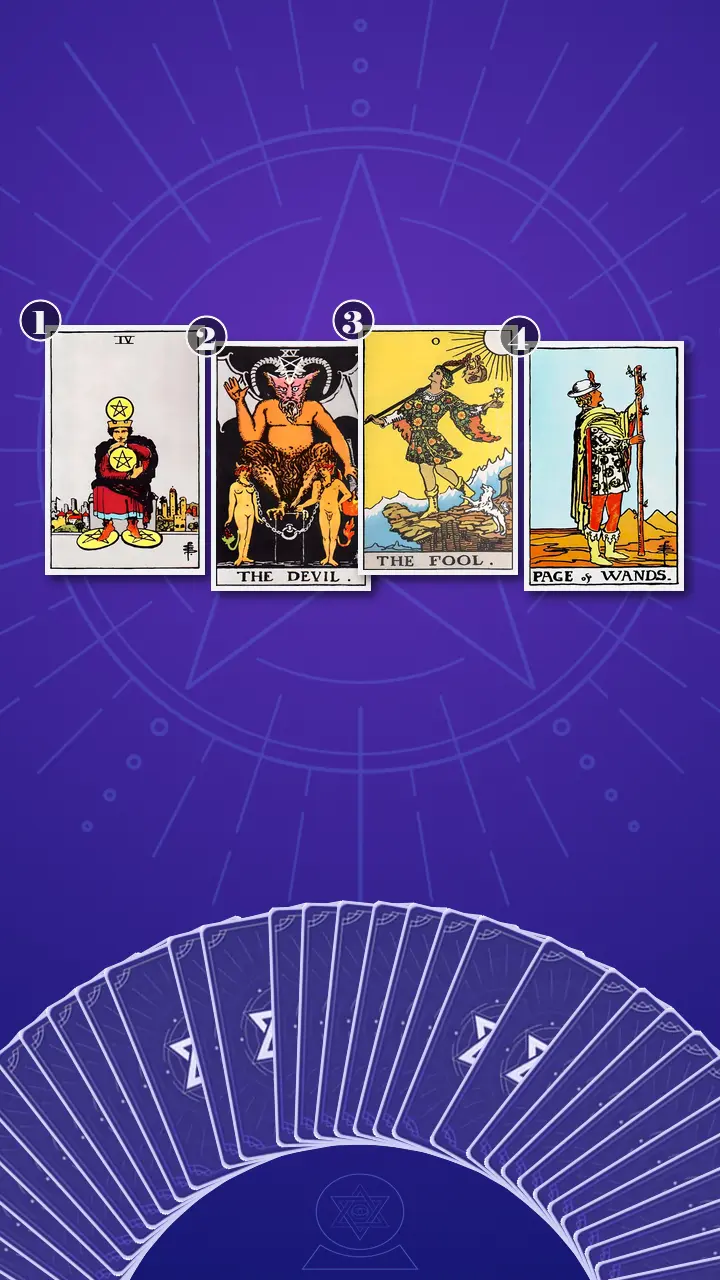
This compact four-card spread suited Casey because the question was about an inner attachment and a repeating protective script, not a prediction about an employer, a market, or a guaranteed outcome. A broad Celtic Cross could have opened too many external doors. This linear tarot spread followed one precise chain instead: visible restraint, hidden attachment, conscious transformation, and grounded integration.
I placed the cards in a horizontal line, leaving a little more space around the third position. The first card would show the surface symptom: the observable pattern of imagining a different life, listing reasons to stay, and postponing a concrete move. The second would expose the underlying fear and attachment beneath that pattern. The third would identify the conscious quality capable of loosening the demand for total certainty. The fourth would turn that insight into a bounded, one-week action. I told Casey that the line might look like a corridor whose closed end became a threshold, but the cards would not decide whether they walked through it.
Reading the Corridor Behind the Habit
The Surface Pattern: The Hand That Holds Too Tightly
'Now I am turning over the card representing the surface symptom: the observable pattern of picturing a different life, listing reasons to stay, and postponing a concrete move.'
The card was the Four of Pentacles, upright.
In the RWS image, the seated figure presses one pentacle against the chest, wears another like a crown, and pins two beneath the feet. Nothing is being dropped. Nothing is being exchanged. Security has become a posture that protects by preventing movement. I saw Casey's Tuesday night in that image immediately: the desired life was held close enough to admire but kept outside the reach of real uncertainty.
At 8:47 p.m., the note called 'The Life I Picture' sat beside the savings tab. Casey could have scheduled a free exploratory call or written a rough paragraph about self-directed work. Instead, they rechecked rent, benefits, emergency savings, and worst-case expenses until the original desire disappeared under conditions. Their internal sentence, as they repeated it to me, was: 'I want this, but first I need to make sure...' The list kept expanding until no first step could survive it.
The energy here was Excess: earth held too tightly. Financial care was real and deserved respect; the card was not telling Casey to ignore rent, healthcare, accessibility, privacy, or practical obligations. It showed the point where protection had spread so far that even a zero-cost conversation felt like a threat. I offered the modern image of a phone kept in Low Power Mode at 100 percent: perfectly protected from depletion, but prevented from doing much of what it was charged to do.
'Research can reduce risk,' I said, 'but it can also keep desire permanently theoretical. Which part of your caution is a verified constraint, and which part is control that permits no movement?'
Casey gave a short, bitter laugh instead of nodding. 'That is uncomfortably specific. I do call it being responsible, and I do feel relieved the second I decide to wait.' I watched their shoulders draw inward and their thumb rub the edge of the card. I told them that relief was information, not evidence of failure: postponement reduced uncertainty for an hour, while the same decision left another week unchanged. The first card was asking for recognition without shame.
The Hidden Rule: The Loose Chain of a Safety Story
'Now I am turning over the card representing the underlying fear and attachment: the belief that leaving the golden cage would compromise safety or prove that you cannot trust your own judgment.'
The card was The Devil, upright.
The RWS figures stand beneath a horned presence with loose chains around their necks. The inverted torch and the animal-like tails evoke instinct, appetite, and attachment, but I did not read this as evil, punishment, or fixed fate. I read the gap between the necks and the chains. The restraint was serious because it had become familiar, not because it was magically unbreakable.
When an exploratory project had appeared in Casey's office inbox, their mind had leapt from one conversation to lost income, disappointed colleagues, misjudged timing, and a verdict about their competence. They had opened Glassdoor, searched Toronto freelance tax rules, calculated the cost of lost benefits, and left the reply in drafts. The hidden sentence was: 'If I leave and it goes badly, that will mean I was never as capable or as safe as everyone thought.'
The Devil showed a Blockage: a protective preference for stability had hardened into a binding rule. The actual job arrangement, salary, and obligations could be reviewed. The rule that any exploration proved irresponsibility was less fixed than it felt. 'The cage feels safest when every exit is required to come with a guarantee,' I said. 'The question is not whether every concern is imaginary. The question is whether every concern has been promoted to an absolute law.'
Casey stopped halfway through a breath. Their fingers tightened around the mug, and their eyes fixed on the small chain in the illustration. Then their gaze went unfocused, as if an old list of feared outcomes were replaying behind the card. A moment later, their hand opened again. 'I keep calling it gratitude when I am really afraid to move,' they said more quietly.
I separated the real obligations from the feared verdict with Casey: rent was real; a benefits review might be necessary; a conversation was not the same as a resignation; an imperfect experiment was not proof of a defective judgment. Casey did not need to deny the chain in order to examine where it was loose. Their breathing steadied, though their expression held the sadness of realizing that the familiar arrangement had offered genuine protection and had also become a way to avoid direct evidence.
When The Fool Opened the Road
With the first two cards on the table, the room became unusually still. Rain tapped once against the window and stopped. I placed my hand near the third card, the visual hinge of the spread, and reminded Casey that an opening was not the same thing as an order.
The Bridge: A White Rose at the Edge
'Now I am turning over the card representing the key transformation: the conscious quality that can challenge the demand for total certainty and allow the life you picture to be explored.'
The card was The Fool, upright.
The RWS figure holds a white rose openly, carries a small bundle, and stands beside an attentive dog at an uncertain edge beneath a bright sky. The image contains innocence, alertness, and real unknowns at the same time. I did not see a reckless leap. I saw a beginner's mind with enough awareness to take one deliberate step and learn from the ground beneath it.
The Fool's energy was Balance through openness: a usable tolerance for incomplete certainty. Casey's deficiency was not a lack of intelligence or planning. It was a lack of direct experience that could tell them what one small part of the pictured life actually felt like. The imagined future had been protected from disappointment so thoroughly that it had also been protected from becoming evidence.
This was where I used my signature lens, Historical Crossroad Matching. On archaeological digs, I have seen how a structure can remain impressive long after the conditions that made its original arrangement useful have changed. I was not comparing Casey to a fallen civilization, and I was not declaring their current life obsolete. I was widening the view: a turning point does not require certainty about the next century. It requires noticing which old supports are still carrying weight and which ones have quietly become walls.
At 8:47 p.m., the note called 'The Life I Picture' was open beside the savings tab. Casey had added one bright possibility, calculated three ways it could fail, closed the laptop relieved, and felt strangely bereft. They were trying to turn an unfinished road into a guarantee before allowing their feet to move.
The golden cage is not proof that stillness is safety; choose a small, conscious step into the unknown, and let The Fool's open road teach you through experience.
I let the sentence remain between us until it stopped sounding like a command and started sounding like a different question. Then I gave Casey the principle beneath it in plain language: You do not build self-trust by predicting the whole road correctly. You build it by taking one bounded step and learning that you can respond to what it reveals.
For one beat, Casey froze. I saw their breath stop halfway in and their fingers suspended above the edge of the table. Then their gaze lost focus and moved past the card; I recognized the quiet replay of every unopened tab and unsent draft. Their eyes returned to The Fool, taking in the dog, the drop, the small bundle, and the white rose. The sentence had reached the place where certainty had been doing the work of trust. Casey's jaw tightened. 'But doesn't that mean I was wrong before?' The question carried a flash of anger, then a softer fear underneath. I answered, 'No. It means the old strategy gave you relief, and now you are allowed to update it. A choice can have protected you once without owning every future choice.' Casey looked down, exhaled through their nose, and loosened one hand they had been gripping against the other. Their shoulders dropped, not dramatically, but enough for the room to feel larger. A small, unsteady laugh escaped. 'So I am not proving I can predict it,' they said. 'I am learning how I respond.'
I asked, 'Now, use this new perspective to remember last week. Was there a moment when this insight might have let you feel differently?' Casey thought of the unsent message and the spreadsheet column labelled exit scenarios. The answer did not erase the fear. It gave the fear a smaller job.
I named the emotional crossing clearly: this was the first movement from contracted vigilance and safety-driven postponement toward steadier self-trust through bounded curiosity and direct experience. Clarity had not arrived as a finished answer. It had arrived as permission to gather information without making the information decide their identity.
The Grounded Form: The Flowering Wand at Eye Level
'Now I am turning over the card representing grounded integration: the conscious practice that translates this shift into one bounded, one-week action without requiring a decision about the entire future.'
The card was the Page of Wands, upright.
The Page studies a flowering wand at eye level, with an open, arid landscape behind them. They are not sprinting toward a polished destiny. They are paying close attention to one living possibility. The wand is small enough to examine and alive enough to answer back.
Here the energy moved into a measured Balance of fire: curiosity with a container. The Page of Wands did not cancel the Four of Pentacles. It gave protected resources a more useful assignment. Instead of preserving every condition of the current life, Casey could let time, a free library room, an existing skill, or one trusted contact support a low-stakes test.
'The smallest version I could actually do is one twenty-minute conversation,' Casey said. I watched them open their calendar and create a private block rather than another research page. 'I am not choosing my entire future; I am finding out whether this one part feels alive in practice.' They considered an exploratory message to someone already doing one concrete part of the self-directed work they pictured. The message did not need to be perfect, and the recipient could decline.
I asked Casey to imagine the Page holding that flowering wand at eye level: not a finished brand, not a resignation letter, not a public announcement, just one prototype close enough to inspect. Their shoulders lifted slightly this time. The life they wanted was still uncertain, but it was no longer entirely theoretical. Curiosity had acquired a time, a place, a limit, and an exit.
A One-Page Path from Insight to Action
When I read the four cards together, I did not hear a prediction. I heard a coherent explanation. The older pattern of protecting familiar stability became the Four of Pentacles: resources held so tightly that movement stopped. The Devil revealed the hidden rule beneath it: if Casey explored and struggled, the struggle would become a verdict on their ability to keep themselves safe. The Fool opened a different relationship with uncertainty, and the Page of Wands gave that opening a small, observable form.
That was why the golden cage kept winning. It offered immediate relief, and relief looked like proof. The research tabs, comparison sheets, LinkedIn pivot posts, and savings checks all made Casey feel briefly more prepared while quietly preventing reality from answering the question. The blind spot was not simply fear of change. It was mistaking preparation for movement and mistaking a temporary reduction in discomfort for a reliable definition of safety.
The transformation direction was equally specific: treat safety as something that can support exploration, not as a reason to keep the pictured life imaginary. I used my Enduring Value Assessment with Casey and asked which next choice would still look useful after the emotional rush faded. The answer was not automatically leaving or staying. It was a next step that protected essential needs, generated honest information, and preserved the ability to revise. A stable life can be a resource without becoming a permanent address.
I also guided Casey through my Time Stratigraphy Exercise, a mental time-travel protocol viewed strictly from the perspective of their ten-year future self. I asked them to imagine looking back at this week, not to predict what would happen, but to notice which parts of the current worry were durable and which were short-term noise. What would that future self want to know about this possibility? Which boundary would make exploration responsible? What tiny experiment could gather evidence without asking today's Casey to become a different person overnight?
I wrote the answers with Casey and kept the exercise practical. The future self was not an oracle and did not get to overrule present-day limits. It was simply a wider vantage point from which a twenty-minute conversation could remain a twenty-minute conversation instead of becoming a referendum on the next decade.
- The 10-Minute Pictured-Life TestOn one weekday evening, open the note called 'The Life I Picture' and choose one sentence. In a fresh note, rewrite it as a testable question beginning with 'Do I feel more engaged when I...?' Set a ten-minute timer, then reserve one thirty-minute calendar block this week for a zero-spend or pre-set-spend experiment. Write down what you will do, when it starts and ends, the maximum you will spend, and what would make you pause.Define success as obtaining one piece of information, not feeling fearless or producing a polished result. If thirty minutes feels too large, use the ten-minute draft version. You can stop, shrink, revise, or decline the experiment.
- The Three-Sentence DoorwayDuring that calendar block, send one exploratory message to a person already doing one concrete part of the life you picture. Ask for a fifteen-minute call or one specific answer, using three sentences: brief context, one clear question, and an easy opt-out. Write or send it from home, a cafe, or a Toronto Public Library branch within twenty-five minutes.Keep the request narrow and let the other person decline without follow-up. This is information gathering, not an application, unpaid labour, a public announcement, or a promise. If needed, send a draft to a lower-stakes contact first.
- The Time-Stratigraphy Safety FloorSet aside twenty minutes to view the dilemma through your ten-year future self, then record three figures only: essential monthly costs, money available for this experiment, and the maximum amount you are willing to risk this month. Add one existing resource, such as paid time off, a free library workspace, an existing skill, or a trusted contact, and write one exit line such as 'I pause if this exceeds the budget or interferes with a non-negotiable obligation.'Use rounded estimates and stop after one screen or one sheet. The exercise is meant to create a safety floor, not another months-long spreadsheet. Protect your privacy, health, finances, and essential obligations before you begin.
I reminded Casey that the point of a bounded experiment was learning, not compliance. They did not owe the cards a resignation, a reinvention, or a dramatic leap. If their body moved from ordinary discomfort into feeling overwhelmed, they could shorten the test, postpone it, or decide it was not right. Staying, modifying one part of the current arrangement, or discovering that the imagined option did not fit were all legitimate evidence. The choice remained Casey's.

A Week Later, the Door Stayed Reviewable
Four days later, Casey sent me a message: 'I sent the three-sentence note and booked twenty minutes at the library to draft one small sample.' The conversation did not produce a job offer, and it did not need to. The next morning, Casey still woke with the thought, 'What if I am wrong?' They made coffee alone, smiled at the question, and started the timer anyway. It was a clear but fragile change: the fear remained, but it no longer held the calendar.
I kept that small proof close. Casey had not solved an entire career crossroads or proven that a self-directed life would be safe. They had allowed reality to contribute one piece of information. The relief afterward was quieter than the relief of closing a browser, but it did not turn into the same dull disappointment by evening.
For me, that was the heart of this Journey to Clarity. The cards did not grant Casey permission to change. They helped Casey distinguish a verified constraint from a feared verdict, then return the decision to the person who would actually live with its consequences. The movement was from contracted vigilance to curiosity, and from curiosity toward steadier self-trust: not knowing the outcome, but knowing they could respond and revise.
When the life you want starts looking like a real choice, your chest may tighten and your mind may begin building another case for staying. That reaction is not a verdict on your courage. It is the old safety story becoming visible, and visibility is already a change.
If you did not have to prove the whole road was safe, what tiny, reversible experiment would you be curious to place on this week's calendar, perhaps holding The Fool's white rose in mind while you leave yourself a clear way to pause?