Want In, Yet Need Control?

Explore this daily push-pull, the tarot cards that mirror it, and reading insights from others who brought it to a session.

Control-participation Split
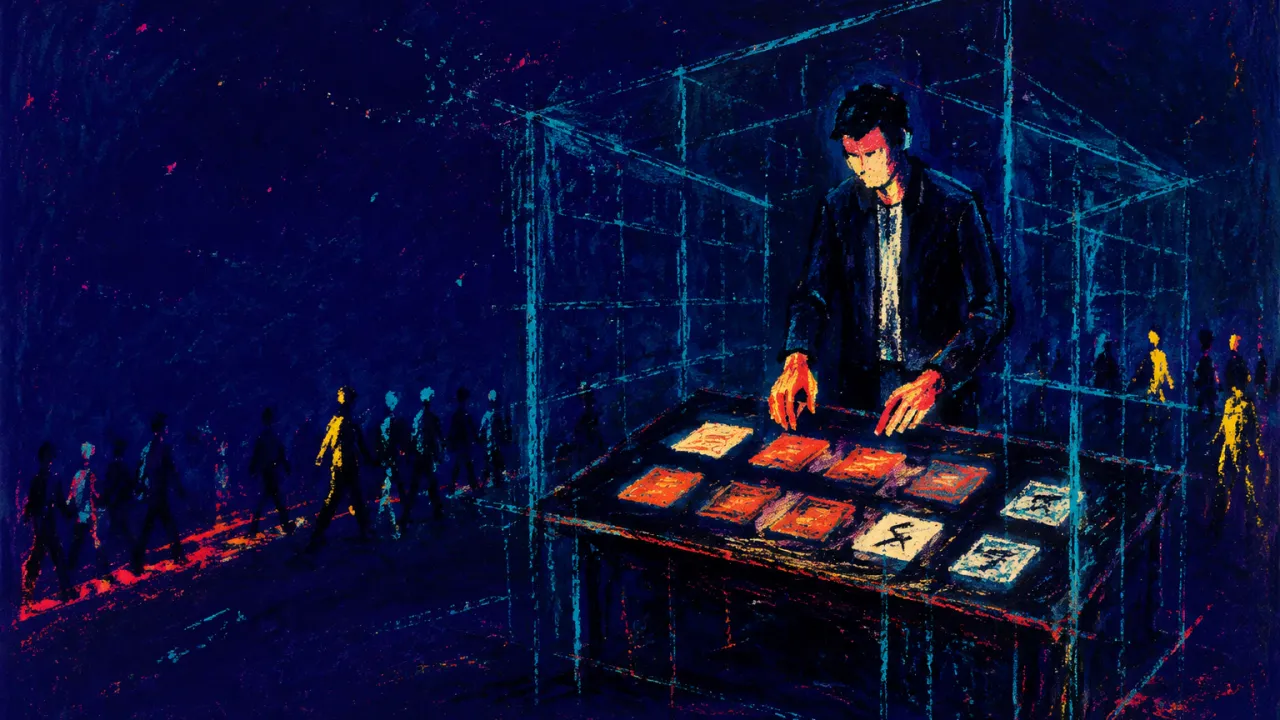
A figure enclosed by transparent grids beside a shared table, hands above coral agenda cards against rigid cyan shadows.

What does this feel like?

Control-Participation Split: you want to be inside what is happening, but the moment you cannot shape its pace, rules, or ending, part of you moves to the edge. It can happen while you are staring at a group chat that has already chosen the place: your thumb hovers over Sounds good, your jaw sets, and you start checking menus, transit times, and backup options as though one more detail might make joining possible. You are not indifferent; you may care so much that you rehearse your contribution, map everyone's likely response, and wait for the cleanest opening. In meetings, you can hear yourself asking for one more clarification while the conversation moves on. With someone close, a spontaneous suggestion to see where the night goes can make your shoulders lift before you have decided what you think. The sentence running underneath it all is quiet and practical: I can enter once I know what I am entering. Yet entry keeps changing the thing you planned for, because other people bring their timing, preferences, and surprises, and being part of the moment means allowing it to affect you too. So you hover near the center without fully landing there, useful, observant, prepared, and strangely absent from the experience you worked so hard to make manageable. The cost is not simply a missed invitation or a stalled project; it is the distance of watching life keep moving beyond a carefully held perimeter, close enough to track but never quite available to alter you, much like the figure on the Two of Wands, holding a small world in one hand while remaining behind the parapet.

What's pulling at you?

You want the contact and momentum that come from joining in, while also wanting enough control to keep the moment from becoming inefficient, unpredictable, or unlike what you had in mind. Participation lets other people change the pace, the terms, and even your own position; the more tightly you manage those variables, the more you end up monitoring instead of taking part. You are caught between entering something while it is still unfolding and preserving the option to remain untouched by where it goes.

How It Shows Up?

  • At 11:47 p.m., the group chat lands on a bar you did not choose, and three people react with check marks before you reply. You open the menu, zoom in on the seating photos, check the last train, type a better plan, and delete it; your thumb stays pressed to the side of the phone, your jaw feels fixed, and a small heat gathers behind your eyes. The invitation is still there, but joining now feels like surrendering the steering wheel. The reply can wait on the screen for a few minutes; nothing has to be settled in this exact moment.
  • In a project meeting, a teammate drags one of your color-coded agenda cards into a new column on the shared planning board. Before they finish explaining, you lean toward the laptop and begin listing dependencies; your shoulders rise, your breath becomes shallow, and your palm settles firmly over the mouse even though no one is taking it from you. The room keeps contributing while you focus on restoring the sequence, like trying to hold a small world still from behind a wall. A shared draft is allowed to remain visibly unfinished while more than one person is shaping it.
  • Someone close to you suggests keeping Saturday open and seeing what you both feel like doing. You answer with questions about timing, transport, food, weather, and the backup plan, hearing your own voice become brisk while the original warmth of the idea fades into logistics. Your chest feels tight, your fingers tap the table in an even rhythm, and you are caught wanting the day together while trying to decide it before it arrives. One unfinished Saturday can remain unfinished tonight; the whole day does not need an answer from this conversation.
  • At a party, a conversation turns toward a topic you know well, but the opening is messy: people overlap, someone changes the subject, and nobody pauses where you expected. You rehearse one precise sentence and wait for the right gap; by the time it comes, the circle has moved on. Your smile stays in place, the cup grows cold between both hands, and your stomach drops as you realize you were beside the exchange without entering it. That quiet beat is allowed to remain exactly that; it does not require a perfect contribution.
  • On Sunday afternoon, you open your calendar to make space for something you have been looking forward to, then build comparison tabs for dates, prices, routes, cancellation windows, and weather. An hour later, the light has shifted across the desk and you have not booked or begun anything; your eyes ache, your shoulders are rigid, and both hands hover over the keyboard as if the right arrangement could remove every unknown. The open tabs can stay unresolved while your hands leave the keys; a pause is permitted before certainty arrives.

Control-participation Split in Tarot Cards

The Control-Participation Split lives in the gap between wanting to enter an unfolding moment and needing to keep its terms within reach. You may notice it when your shoulders rise over a shared planning board or your hands remain fixed above the keyboard as the moment moves on. From an existential perspective, its structural framework shows how preserving control can turn participation into observation. The Tarot Cards below make that outline visible without settling it for you.

The Fool
Reversed
A traveler approaches a cliff with his face lifted, carrying only a small bundle while a dog reacts at his heels. The landscape gives him no complete map of the next step, and the light baggage leaves limited control over what follows. You meet this threshold whenever growth requires entering a practice, identity, or experience before you can predict how it will reorganize you. Reversed, the open threshold becomes a site of repeated non-entry. Preparation can expand around the edge while the developmental encounter itself remains postponed, because beginning would allow surprise to participate in shaping who you become. The card witnesses a growth system that seeks transformation without consenting to the uncontrollable contact through which transformation occurs.
The Emperor
Reversed
An armored authority occupies a rigid stone throne, holding the emblems of rule against a landscape of bare mountains. His position establishes order by remaining difficult to move or influence. You can inherit or reproduce this arrangement in a family where participation is safest only for the person who controls schedules, rituals, resources, or the final decision. Reversed, authority no longer contains the family system; it narrows the routes through which members can affect it. You may take over planning, interrogate changes, or withdraw when your role does not include command, while others continue around the rigidity. The card witnesses the split between belonging to the family and protecting yourself from the mutual influence that family participation inevitably carries.
Wheel of Fortune
Reversed
A vast wheel turns among rising and descending figures while four winged witnesses remain in the corners with their books. No single figure occupies the steering position, and each place on the rim is temporary. You meet this structure when an opening, deadline, or group rhythm asks you to enter a cycle whose pace was not designed around your readiness. Reversed, resistance to the turning becomes a timing lock rather than a pause with a clear endpoint. You may keep monitoring for a moment that offers participation without exposure to change, yet the wheel makes that condition structurally unavailable. The card witnesses the cost of trying to control the cycle from outside: the moment moves, but your relationship to it remains fixed.
The Hanged Man
Reversed
A suspended figure sees the world from an inverted position, one ankle secured while his halo signals a perspective emerging from the experience itself. He cannot obtain that perspective while preserving his usual physical orientation. You face the same developmental tension when cognitive growth requires letting practice, uncertainty, or other people reorganize a framework you would prefer to revise from a position of control. Reversed, the old framework remains active even while you recognize that it no longer moves you forward. Insight may accumulate around the problem, but participation in a genuinely disorienting learning process stays withheld. The card locates the growth gap between understanding that change is necessary and allowing the conditions of change to alter your internal authority.
Four of Cups
Upright
A solitary figure sits within reach of three cups while a fourth is offered directly from a cloud, yet his folded limbs keep the exchange incomplete. The image holds invitation and non-entry together without reducing either one. You may recognize it when friends choose a place, pace, or tone you did not help shape and your response stalls even though the relationship matters. Upright, staying near the offer preserves the possibility of connection while postponing the vulnerability of joining on imperfect terms. You can check details, rehearse a reply, or wait for a cleaner opening until the shared moment has passed. The card witnesses friendship maintained as availability in principle but not inhabited as a live, mutually shaped experience.
Two of Pentacles
Reversed
A figure keeps two pentacles moving inside an infinity loop while ships rise and fall on waves behind him. His body must continually adjust to conditions that cannot be flattened into a fixed schedule. You meet the same friction when ordinary life contains several moving demands and participation feels permissible only after all of them have been stabilized. Reversed, the juggling structure does not simply become disorganized; it becomes a closed management loop. More checking, rearranging, and contingency planning produce less contact with the day itself. The ships make the boundary visible: real life continues through variable conditions, while your hands remain captured by the effort to make variability disappear before you board.
Three of Pentacles
Reversed
A learner-craftsperson, a monk, and an architect gather around plans inside an unfinished structure. Knowledge is being made visible through exchange, correction, and work that is not yet complete. You meet the card's friction when a group assignment, seminar, or research discussion asks you to expose an unfinished idea to people who may change its direction. Reversed, the learning triangle stops functioning as a place of mutual revision. You may overprepare, defend your method, or retreat into solo work so that competence stays under your control, but the protective move also blocks the participatory feedback through which knowledge develops. The card witnesses a study problem in which managing how you are received displaces entering the shared learning process.
Four of Pentacles
Upright
A figure locks one pentacle over his heart, anchors two beneath his feet, and keeps the fourth above his head, with the wider city separated behind him. The body turns holding into a total system: thought, feeling, and movement are all recruited to preserve the arrangement. You may occupy a similar family role when maintaining routines, money, access, or traditions becomes the only way to remain involved without feeling overrun. Upright, the guarded position can keep the family structure stable while making reciprocal participation increasingly narrow. Your care may be real and materially visible, yet others can experience only the rules of access rather than your presence inside the relationship. The card locates the family cost in the occupied limbs: control keeps the system from shifting, but it leaves no free point of contact through which the family can move you.
Two of Swords
Upright
A blindfolded figure holds two swords across her chest as a barrier, seated between solid ground and a tidal sea. The blades maintain cognitive symmetry while the water of felt experience stays behind her. You may create the same inner arrangement by keeping competing interpretations equally armed so that no emotion, desire, or implication can enter deeply enough to change your position. Upright, the defense remains deliberate and energetically expensive. You can preserve composure by requiring more certainty before participating in what you feel, but the blindfold also blocks the evidence that comes from emotional contact. The card witnesses introspection becoming a controlled stalemate: the mind keeps watching the threshold while the inner life continues beyond it.
Two of Wands
Upright
A figure surveys the wider world from a fortified wall, holding a globe while one wand is fixed beside him. The social field is visible as territory he can anticipate, but the parapet separates observation from contact. You may reproduce this distance when a group has already chosen the venue, pace, or conversational direction and joining would mean entering terms you did not set. Upright, interest remains active: the figure is oriented toward the world rather than turning away from it. That makes the absence more precise, because you can care deeply, track every variable, and prepare your contribution while still remaining outside the group's live rhythm. The card witnesses participation converted into oversight, with social belonging kept close enough to monitor but not close enough to affect you.

Control-participation Split in Tarot Card Reading Insights

When wanting to join collides with needing to steer what happens, others have brought that stand-at-the-edge experience into readings. The Tarot Reading Insights below show what surfaced when the Control-Participation Split entered a session.
Psychological Struggles Related to Control-participation Split