What Did Hope Edit Out?

A grounded audit of hopeful forecasting, with tarot cards that mirror the pattern and reading insights that trace it.

Optimism Bias
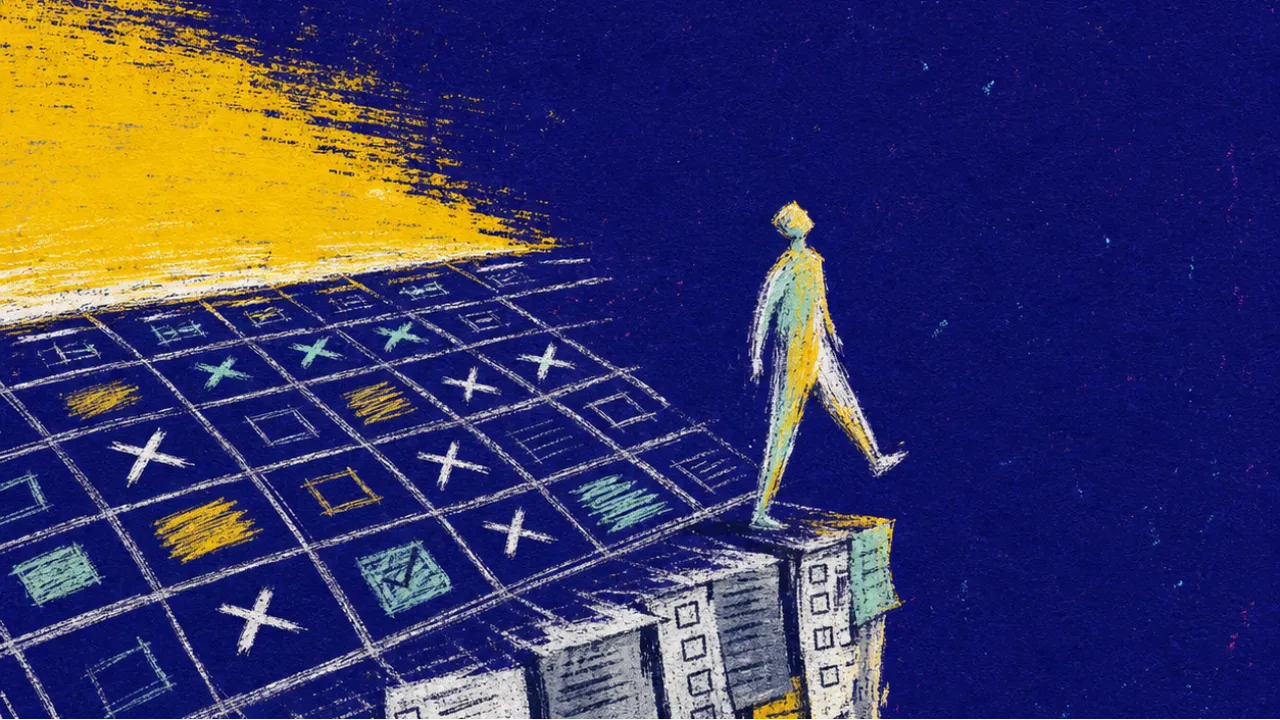
A figure steps toward a paper cliff of unchecked tasks, chin lifted over a crowded calendar in sun-yellow and graphite blue

What is this really?

You treat the future like it will have more focus, time, patience, or emotional bandwidth than the present can prove. When a plan feels bright, you let the best-case version become the default forecast: the late night will be fine, the backlog will clear, the connection will settle, the new role will make sense once you are in it. This is not naive positivity; it is a cognitive bias that helps you stay close to possibility when too much friction would make you freeze, yet the same brightness can edit out the ground under your next step until your body meets the drop your mind had softened, much like The Fool with his open chest, lifted face, tiny bundle, and cliff directly underfoot.

Why did it happen?

Earlier on, looking toward the possible may have kept you moving when too much checking would have made every next step feel blocked. Your body learned to keep the sky in view, so one bright signal could create enough room to try, ask, apply, reply, or begin. In the present, that inner pattern can become a subconscious loop: excitement arrives first, the ground check goes quiet, and the ordinary weight of time, repair, and follow-through lands later as mental fatigue or emotional overdraft.

How does it feel?

  • You slide unfinished tasks into tomorrow's calendar block, add a clean label, and shut the laptop before checking how long the same task took last time. In that pause, there may be a small lift in your chest, followed by a drop in your stomach when the empty block starts to feel crowded; it is enough to notice the two sensations without forcing a verdict.
  • You skim the assignment brief, underline the deadline, and leave the document blank because the opening sentence feels like something future-you will find. Later, when the cursor blinks at night, your jaw may set and your breathing may get shallow; not knowing how it will come together can be allowed to exist for a minute.
  • When a friend suggests one more plan, your thumb hovers for half a second before you send a quick yes and tuck the calendar app away. Right after, your shoulders may feel light and your chest may buzz, then a dull pressure gathers behind your eyes as the week takes shape; that mixed signal can be held without turning it into a self-attack.
  • You reread the warmest line in a message, tilt the screen closer, and let the delayed replies or vague plans slide to the edge of the frame. Your ribs may soften for a moment, then your throat tightens when the next gap appears; the warmth and the tightness can both be present.
  • In a meeting or interview, you hear phrases like growth, flexibility, or we will figure it out, and your pen draws a star before you ask about ramp time, support, or workload. The spark behind your eyes may arrive faster than the heaviness in your shoulders; you can slow down around that spark without having to cancel it.

Optimism Bias in Tarot Cards

The habit of borrowing from tomorrow shows up in the body before it becomes a plan: that small lift in your chest, followed by the drop in your stomach. From a Jungian archetypal theory lens, this pattern can be understood through images of bright beginnings that pull attention upward before the ground is checked. The cards below reflect the unconscious dynamics behind that upward pull, the quieted ground check, and the forecast that edits out friction: Tarot Cards for Optimism Bias.

The Fool Upright
The lifted chin, easy smile, and open hand holding the white rose create a body that feels lighter than the ground beneath it. The cliff is visible, but it is not being emotionally weighted with equal force. Possibility receives the full charge of attention, while constraint is treated like background texture. In personal growth, You can feel this when inspiration gets mistaken for durability. The pattern overtrusts inner momentum, so the strategy gets built around how expansive you feel now rather than how you will function when the work turns slow, repetitive, and less flattering. It is not a lack of intelligence; it is a mispricing of friction.
The Magician Upright
Infinity above the head, four complete tools on the table, and a fertile garden at the figure's feet create an atmosphere where potential seems endless and resources seem sufficient. The card does not show scarcity first; it shows readiness, abundance, and the fantasy that capacity can keep expanding to meet the moment. That abundance can tip into a decision bias where possibility looks brighter than cost. You may assume skill, willpower, or clever execution can make either option work, which quietly discounts friction, switching costs, and the parts of reality that do not negotiate. In choice work, this pattern keeps hidden tradeoffs underpriced because potential feels more convincing than consequence.
The Empress Upright
The Empress is framed by harvest, evergreen growth, and a constant flow of water, all of which suggest that life keeps producing when the conditions are fertile enough. Her posture carries no visible urgency, so abundance is presented less as a task and more as something the environment itself will continue to generate. In personal growth, that can become a subtle optimism trap where obvious potential starts to feel like future completion. You may trust the talent, the intuition, or the richness of the idea so much that systems, repetition, and corrective feedback begin to feel secondary. The card speaks to Optimism Bias because it shows genuine fertility, then reveals how easily the presence of possibility can be mistaken for proof of follow-through.
The Star Upright
The brightest star saturates the night sky, and the oasis below gives the whole card a feeling of breathable future space. The eye is naturally pulled toward promise first: light, water, greenery, and a clear horizon all make renewal feel visually available before any cost has been examined. Optimism Bias forms when that hope becomes evidence. In a choice reading, You may experience one option as obviously right because it relieves fear, restores identity, or looks like the path where life finally opens. The card's serenity reveals the mechanism clearly: the brighter future can become so emotionally convincing that the hidden maintenance costs fall out of the frame.
Reversed
The central star dominates the sky with a brightness that naturally pulls the eye upward. Around it, the calm landscape and clear water make the future feel ordered, readable, and benign. In a reversed career reading, that visual calm can become selective attention. You may treat a positive review, a friendly manager comment, or a vague promise of growth as proof that the system is moving in your favor, while budget limits, politics, and replaceability pressures remain underweighted. Optimism Bias fits The Star because hope is the card's native light, but the pattern appears when light becomes over-certainty. The issue is not believing in a future; it is letting one bright signal outvote the full field of evidence.
The Sun Upright
The naked child on the white horse moves through an almost obstructionless field of sunlight, with arms open and no reins in sight. The scene makes clarity feel bodily immediate: the light is direct, the horse advances, and the red flag announces energy before any visible test of control appears. That visual confidence maps cleanly onto the way Optimism Bias works in academic life. A bright internal state starts to feel like proof that the material is already handled, so the mind discounts friction that has not arrived yet: timed practice, weak recall, feedback, or the gap between recognizing an idea and reproducing it under pressure. The Sun does not make this pattern wrong; it shows why it feels so convincing. You may be reading illumination as integration, when the real audit is whether the knowledge can still hold once the first burst of clarity becomes work, repetition, and measurable output.
Reversed
The card's movement is so clean that the horse, child, flag, and sunlight seem to agree on a single forward direction. In reversal, that coherence can become too convincing, as if brightness itself has solved the difficulty of sustained change. Optimism Bias forms when the nervous system treats a clear moment as proof of a stable future. The red flag declares momentum, but a declaration is not yet a system; the card shows how easily inspiration can overestimate its own durability. In personal growth, this pattern appears after a breakthrough, new plan, retreat, reading, or identity shift when everything feels obvious for a day. The audit is whether You are building conditions that survive lower-energy states, or whether the sunny state is quietly making friction invisible.
Seven of Cups Upright
The cups shine from within the clouds as if the visions have already proven themselves. Their emotional intensity arrives before any grounded evidence of sequence, capacity, or consequence. Optimism Bias forms when the mind overweights the promise of a future window and underweights the friction required to enter it. The vision feels so alive that readiness gets inferred from excitement. In timing questions, this can make the next phase look easier than the current one simply because it has not yet been tested. The card invites a cleaner distinction between inspiration that opens a path and projection that edits out the resistance.
Nine of Cups Upright
The nine cups are arranged like a completed promise above the seated man, shining as if the desired outcome has already been secured. The clear yellow background and centered composition make the scene feel clean, confident, and emotionally resolved. That polished arrangement can create a cognitive shortcut: visible reward starts to feel like proof that the path will work. The card's satisfaction is real, but its display can pull attention toward the best-case image and away from maintenance, tradeoff, and long-term fit. In a choice reading, this pattern names the bias toward the option that looks emotionally successful before it has been stress-tested. You may be reading the glow of the desired outcome as evidence, while the decision still needs a grounded audit of what happens after the wish is granted.
Ten of Cups Reversed
The rainbow is bright, clean, and emotionally persuasive, with no visible storm remaining in the landscape. The scene can make hope feel like evidence, especially when the eye moves to the cups before it checks the actual terrain. Optimism Bias appears when a promising signal gets treated as full confirmation. For you, the timing risk is not hope itself; it is letting the emotional brightness of a moment override the slower audit of resources, resistance, and cycle readiness.
Two of Pentacles Reversed
The figure's high hat, bright costume, and dancing posture can make the balancing act look easier than it is. Behind that display, the sea is restless, the ships are small, and the body has to keep compensating to prevent the loop from breaking. Optimism Bias appears when the mind discounts the future cost of a choice because the present moment still feels manageable. In a decision spread, this can make two demanding paths look sustainable simply because nothing has collapsed yet. You may tell yourself you will handle the complexity later, once the choice is made or the pressure increases. The card shows the hidden flaw in that forecast: the current balance is already consuming energy, so the future cost should be counted before the loop becomes heavier.
Page of Wands Upright
The Page stands in an empty desert with his face lifted above the wand, as if the first spark of direction has already started to organize the whole scene. The wand is vertical, bright, and centered in his hands, so attention rises toward possibility before it settles into the practical conditions under his feet. That visual structure mirrors Optimism Bias because the psyche is not refusing reality outright; it is giving the exciting future more weight than the unglamorous audit. In a choice reading, this pattern can make one option feel self-evidently alive while its hidden costs, exit barriers, and resource demands remain under-lit. You are not being shown a lack of intelligence. The card reveals a decision system that is being pulled upward by promise, novelty, and identity charge, and the audit begins by asking what the bright option needs you to ignore in order to keep feeling bright.
Queen of Wands Reversed
The sunflower faces forward with concentrated brightness, and the Queen's body carries that brightness as if the outcome has already been energized. Against the dry desert, the most radiant symbol becomes even more persuasive. In the reversed texture, that radiance can become a cognitive shortcut. The mind over-weights the upside because the option feels alive, magnetic, or identity-expanding, while the maintenance cost remains under-examined. For you, Optimism Bias names the decision pattern where wanting something starts to feel like proof that it will work. The card helps reveal whether the excitement belongs to genuine life force or to a projection that has skipped over risk, timing, and emotional cost.

Optimism Bias in Tarot Card Reading Insights

For anyone who borrows from tomorrow because future-you feels more resourced, others have brought that same upward pull into readings. The shift from cards to readings simply shows how this pattern can appear when someone sits with a spread. Below are Tarot Reading Insights that speak to Optimism Bias.

Psychological patterns related to Optimism Bias