Everyone Unloads On You

Name the workplace spillover, see related tarot cards, and browse tarot reading insights from people bringing this pattern into readings.

Workplace Emotional Dumping
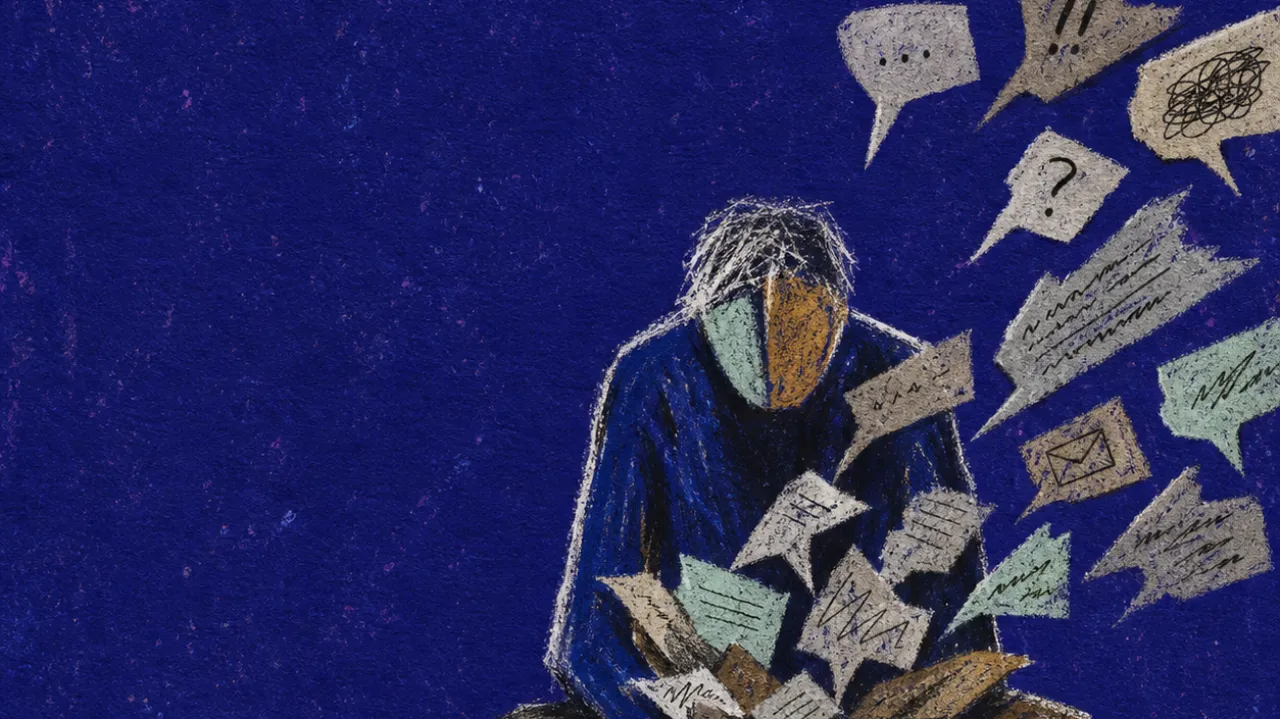
A solitary figure with shoulders drawn inward as message bubbles pour crumpled notes into an open lap in deep indigo space

What is this situation?

Workplace Emotional Dumping — you come into work expecting meetings, deadlines, and the normal back-and-forth of a team, but someone keeps turning ordinary access to you into a place to unload. It starts with a "Can I vent for a second?" at your desk, a long Slack thread before you have even opened your own tasks, or a manager pacing beside your chair while telling you everything that is falling apart above them. The conversation is framed as quick, informal, and harmless, but it does not stay small: break rooms become confession booths, one-on-ones slide into personal pressure, and every pause in your day becomes an opening for someone else's stress. Because it is happening at work, the power is not clean; saying "I need to get back to this" can make you seem cold, unavailable, or not enough of a team player, especially when the person unloading has influence over your schedule, reputation, or workload. You still have your own deadlines, inbox, and performance expectations, but now you are also tracking someone else's mood, choosing your replies carefully, and looking for the first polite exit. By late afternoon your shoulders have climbed, your lunch has gone cold, and the work you were hired to do has been pushed into the edges of the day. The cost is not one dramatic blowup; it is the repeated transfer of emotional weight into your time and body, much like the figure on the Ten of Wands, bent forward under a bundle that blocks the path ahead.

Why it's not you?

The problem is not that you are too sensitive or bad at boundaries; the problem is that workplace access is being used as an open-ended outlet. When venting repeatedly interrupts your tasks, lunch, and private time, it stops being a casual conversation and becomes a demand on your attention. That demand belongs to the situation, not to you.

Workplace Emotional Dumping in Tarot Cards

When Workplace Emotional Dumping turns every pause in your day into an opening for someone else's stress, the tight shoulders and cold lunch are part of the pattern, not a personal flaw. It is an environmental pressure, a structural feature of workplace access, and a dynamic shaped by influence over your schedule, reputation, or workload. The cards below do not tell you how to respond; they reflect the outline of what is being placed on you. These are the Tarot Cards that tend to mirror this kind of workday.

The Emperor
Reversed
The armoured ruler occupies a rigid stone throne above a barren landscape, with symbols of authority built into the seat itself. Reversed, institutional power hardens into access without meaningful consent: the person who controls the work environment also treats your attention as available for their private pressure. The blocked structure explains why a simple request to return to work may not feel simple. You are calculating tone, reputation, future assignments, and the manager's reaction while trying to end the conversation, so formal authority converts an apparently casual vent into a career constraint.
Temperance
Reversed
The angel pours a continuous stream between two cups while one foot rests on land and the other in water, with a path leading toward a distant crown. Reversed, the transfer loses a regulating centre: another person's pressure crosses into your work rhythm and then passes over the threshold into lunch, the commute, or the evening. The cups make the mechanism concrete rather than moral. You are not simply hearing difficult information; repeated access is turning your daily life into the channel through which uncontained workplace stress keeps moving, while the route back to your own pace and recovery remains obstructed.
Queen of Cups
Reversed
The queen sits at the water's edge, holding a sealed, ornate cup close to her gaze while the shoreline reaches her feet. Reversed, that concentrated receptivity becomes an inward loop: emotional material is taken in, studied, and retained without a workable route back out of the listener's attention. After repeated workplace unloading, you may replay someone else's complaints after the conversation or keep checking whether your neutral reply seemed cold. The blocked container clarifies the hidden cache: your attention is still processing an exchange that the other person was able to leave behind.
King of Cups
Reversed
The crowned figure sits on a stone throne surrounded by rough water, with a ship and a leaping fish moving through the turbulence behind him. Reversed, the throne no longer provides usable emotional containment; pressure that should be processed at the level of authority is routed through access to someone with less power. When a manager turns supervision into repeated unloading, you become an unofficial sounding board while they retain control over workload, scheduling, and evaluation. The reversed king clarifies that the central career friction is not ordinary openness but a leadership role using downward access to manage pressure it has not contained elsewhere.
Two of Pentacles
Reversed
The two pentacles hang inside an infinity loop while ships pitch on steep waves behind the moving figure. Reversed, the loop no longer reads as a sustainable rhythm: another person's vent enters the rotation, but no deadline, meeting, or personal need leaves to make room for it. The rough water shows why a workday can look superficially manageable while its underlying coordination is failing. You are forced to switch between producing work, listening carefully, monitoring tone, and planning an exit, so the physical schedule loses the stable centre it needs to keep ordinary tasks moving.
Six of Pentacles
Reversed
The standing figure controls both the scales and the distribution of coins while two people remain below him in dependent postures. Reversed, the visible language of generosity masks a relationship in which the more powerful party also defines what the other person is expected to provide in return. A manager can frame emotional unloading as trust, honesty, or special access while still controlling your reviews, schedule, opportunities, or workload. You are therefore asked to provide care inside an exchange whose terms you cannot negotiate cleanly, making the career cost of withdrawal much greater than the casual wording of the vent suggests.
Seven of Wands
Upright
A single figure holds one wand across his body while six others press upward from outside the frame. The uneven footing and mismatched shoes capture the abruptness of a work interruption: you can be pulled from your actual task and made to defend access to your attention before you have had time to prepare. The upright high ground preserves a viable professional position, but holding it requires visible effort. You are not defending against one dramatic incident; you are repeatedly distinguishing collegial communication from emotional demands that consume the focus, time, and role clarity needed to do your job.
Nine of Wands
Upright
The bandaged figure grips one wand and looks over his shoulder while the other eight stand behind him like a fence. His body records repetition: the next approach is being assessed before it has even arrived because previous encounters have taught him that ordinary access can become another demand. Upright, he is tired but still standing, so awareness remains available rather than fully blocked. You may carry the prior vent into the next Slack notification or one-on-one, spending attention on bracing, reply editing, and exit planning before any work conversation has started; the image locates that load in a repeated external pattern rather than a flaw in your temperament.
Ten of Wands
Upright
The figure carries ten wands alone, with the bundle bending his body and blocking a clear view of the destination. The image directly mirrors a role in which your contracted work remains in your arms while a coworker's or manager's emotional pressure is added as if it were another ordinary deliverable. The upright path still reaches the town, so capability is not the issue; the problem is how much load has been assigned to one route. You may still complete the work, but only by moving concentration, lunch, or personal time to the margins, allowing successful output to hide the organisation's dependence on your unpaid emotional carrying capacity.

Workplace Emotional Dumping in Tarot Card Reading Insights

Workplace Emotional Dumping also shows up when people bring the same desk-side venting, long message threads, and taken-over work time into readings. The shift here is from the card list to how this situation appears once someone sits with the spread. Browse Tarot Reading Insights from readings shaped by this workplace pattern.

Psychological Contexts Related to Workplace Emotional Dumping