When Work Feels Political

Map the pressure, scan related tarot cards, and browse reading insights from sessions shaped by toxic workplace dynamics.

Toxic Workplace Dynamics
What is this situation?

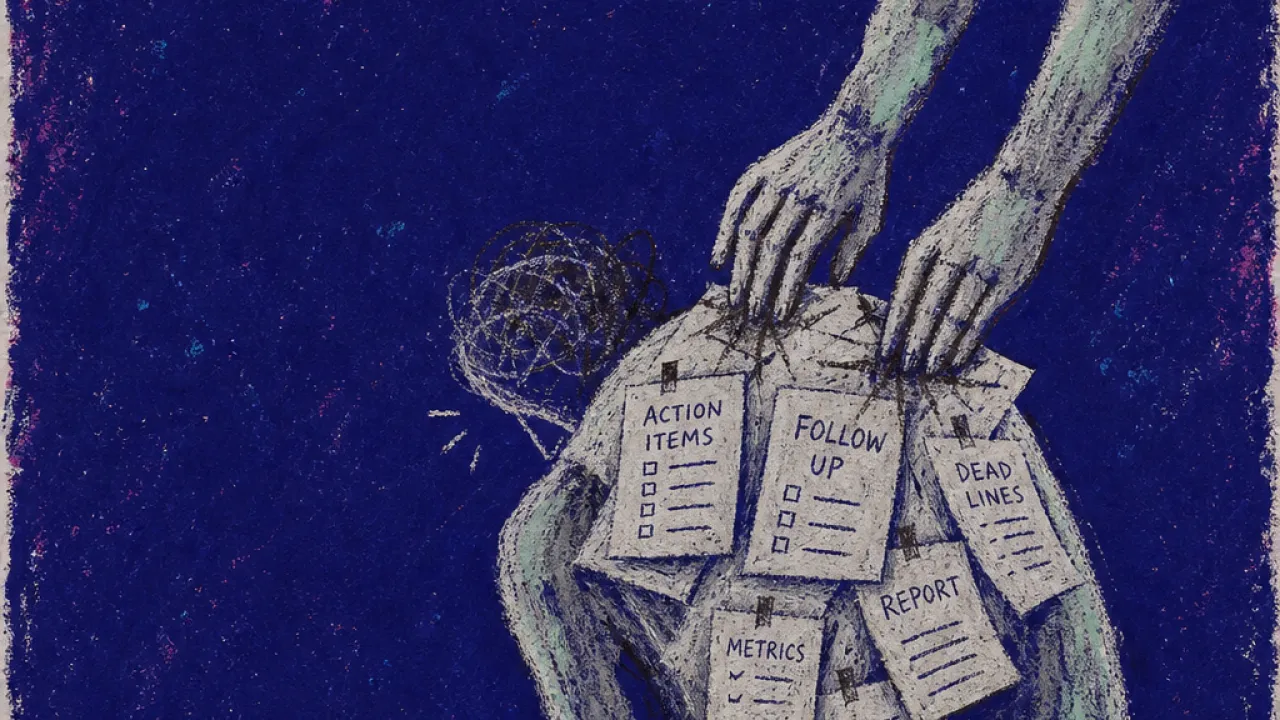
Toxic Workplace Dynamics — you open your laptop and the room is already moving before you've had a chance to settle: a late-night Slack message from a manager, a calendar invite with no context, a thread where your name appears after decisions were made without you. At first it can look like a demanding job with busy people, but the pattern sharpens over time: expectations change after you meet them, feedback lands in public while clarity arrives in private fragments, and the safest answer in meetings is whatever protects the person with the most leverage. You learn that ordinary tasks come with hidden tests — who you copy on an email, how quickly you respond, whether you praise the right idea, whether you stay calm when someone recasts your work as their own. People lower their voices when certain names appear, a joke in one channel becomes a warning in another, and every meeting leaves small blades behind in the inbox: comments, follow-ups, omissions, screenshots, a line that can be used later. Your shoulders lift before the first call, your jaw locks during one-on-ones, and after work you are not tired from the spreadsheet or the brief but from scanning the room all day. The job description may still sound normal from the outside, yet inside it has become a controlled social field where status, access, and pressure decide what is safe to say, much like The Devil's dark enclosure, with a raised figure, exposed people, and metal collars making the control visible.

Why it's not you?

The problem isn't that you're too sensitive or bad at office politics; the problem is a workplace that turns unclear rules, public pressure, and selective access into daily conditions. When people have to watch tone, alliances, and timing just to do ordinary work, the environment is doing the damage. That shape has a name: power being managed through uncertainty.

Toxic Workplace Dynamics in Tarot Cards

In Toxic Workplace Dynamics, the pressure shows up before the first call: your shoulders lift, your jaw locks, and the inbox already feels loaded. This is an environmental and structural dynamic, not a question of whether you are good at your job; the room is organized around unclear rules, public pressure, and selective access. The cards below do not turn the workplace into a lesson or a verdict. They map the visible contours of the situation, so here are the Tarot Cards that often mirror this kind of pressure.

The Devil Reversed
The dark enclosure, hard cube, metal collars, and elevated figure create a social field where power is not subtle. The lower figures are exposed in front of an authority that controls the symbolic space, the physical attachment point, and the direction of heat. In a workplace reading, this points to an environment where control becomes normal through power games, loyalty tests, public pressure, shifting rules, or strategic withholding. The damage is structural: people learn to scan the room, manage the authority figure, and treat ordinary work as a political survival task. The Devil gives the context a precise shape because it shows how the system can keep people participating even when the cost is visible. You are being asked to map the control mechanisms clearly, not to explain them away as personality friction.
Three of Swords Reversed
The heart in this card is pinned rather than merely wounded. Three hard edges enter the same vital center, turning the whole image into a system of repeated impact rather than a single bad exchange. In career terms, that structure belongs to a workplace where the pressure is not coming from one difficult person alone. Management style, team norms, unclear expectations, and public critique can all strike the same vulnerable point until ordinary work starts carrying a cost that no job description names. The gray rain gives the scene its social atmosphere. It suggests an environment where the sharpness is normalized, where You may still be expected to perform calmly while the conditions around the role keep reproducing the same injury.
Five of Swords Reversed
The foreground figure stands with three swords while two others walk away from the scene, leaving blades on the ground behind them. The image does not show clean success; it shows a worksite after conflict, where one person has gained the visible tools while the social field around them has been damaged. In a career context, that structure maps to a workplace where status is won through pressure, exclusion, or tactical humiliation. The scattered swords become the emails, comments, meeting-room moves, and private decisions that keep cutting after the argument is technically over. You are not looking at ordinary competition here. The card exposes a system where victory and trust cannot occupy the same space for long, which is why the real career question is not only who wins, but what kind of environment keeps rewarding this way of winning.
Nine of Swords Reversed
The figure sits under a row of swords that do not function as tools, protection, or strategy. They hang as repeated pressure points over the head, throat, and heart, while the dark room gives the scene no social witness and no visible exit. That visual structure fits a workplace where the air itself has become adversarial. Criticism, hierarchy, gossip, surveillance, or shifting power plays can turn ordinary tasks into a constant calculation of what might be used against you next. The card’s power is in separating the work from the atmosphere around the work. It shows that the drain may not come from the job description alone, but from the social architecture that makes every mistake, silence, and status move feel loaded.
Knight of Swords Reversed
Metal, wind, and blade dominate the scene, while the rider's sealed armor turns contact into impact. The surrounding terrain offers no protective container, so every movement carries the possibility of collision. In a workplace, that visual field mirrors a culture where ordinary communication becomes positioning. You are dealing with a system that rewards sharpness, speed, and defensive certainty, making collaboration costly before the actual work even begins.

Toxic Workplace Dynamics in Tarot Card Reading Insights

People bring Toxic Workplace Dynamics into readings when the inbox, meeting room, and manager access all start to feel loaded. The sessions below move from the card list into what surfaced when this workplace pressure was placed on the table. Browse Tarot Reading Insights from related readings.
Psychological contexts related to Toxic Workplace Dynamics