Outside the Second Venue, Leaving Felt Risky—Then a Boundary Held

The 12:20 a.m. Reminder Outside the Second Venue
I met Alex (name changed for privacy) after one of those Thursdays that had seemed perfectly manageable at 6:14 p.m. They had been under the cool office lights of a media agency near Old Street, closing a portfolio tab while the office dishwasher clattered behind them. Their WhatsApp group chat lit up with a casual "just one drink?" and, before Friday's calendar had even opened, they had replied that they were in.
By the time Alex described the second venue, I could almost hear it: bass pressing through a Shoreditch brick wall, rain-and-chips smell rising from the pavement, a warm phone in a cold hand. It was 12:20 a.m. Their leaving reminder was glowing. Friends were already laughing toward the next door. Alex's chest had tightened, their legs had begun to follow, and their thumb had dismissed the reminder before the decision had caught up.
"I always assume tomorrow me will absorb the cost," Alex told me. "Then I wake up, cancel the workout or the portfolio block, and make some massive reset plan. I keep making plans for a version of me I exhaust the night before."
I did not hear someone who disliked their friends or lacked ambition. I heard someone caught between protecting tomorrow's energy and reaching for the immediate relief of being fully inside the night. The feeling had the texture of a phone battery at 8 percent with every background app still running: active, bright, impossible to ignore, and quietly draining. I told Alex that we were not here to make nightlife into a character flaw. I wanted to help them draw a map of the exact point where a good evening became an automatic withdrawal from their own morning.
Choosing a Tarot Map for Party Burnout
I asked Alex to take one slow breath, hold the question in plain language, and shuffle while thinking about the moment they usually renegotiated their exit. The shuffle was not a test of intuition or a mysterious performance. I use it as a small transition: a way to move from the noisy story in someone's head to a set of images we can examine together.
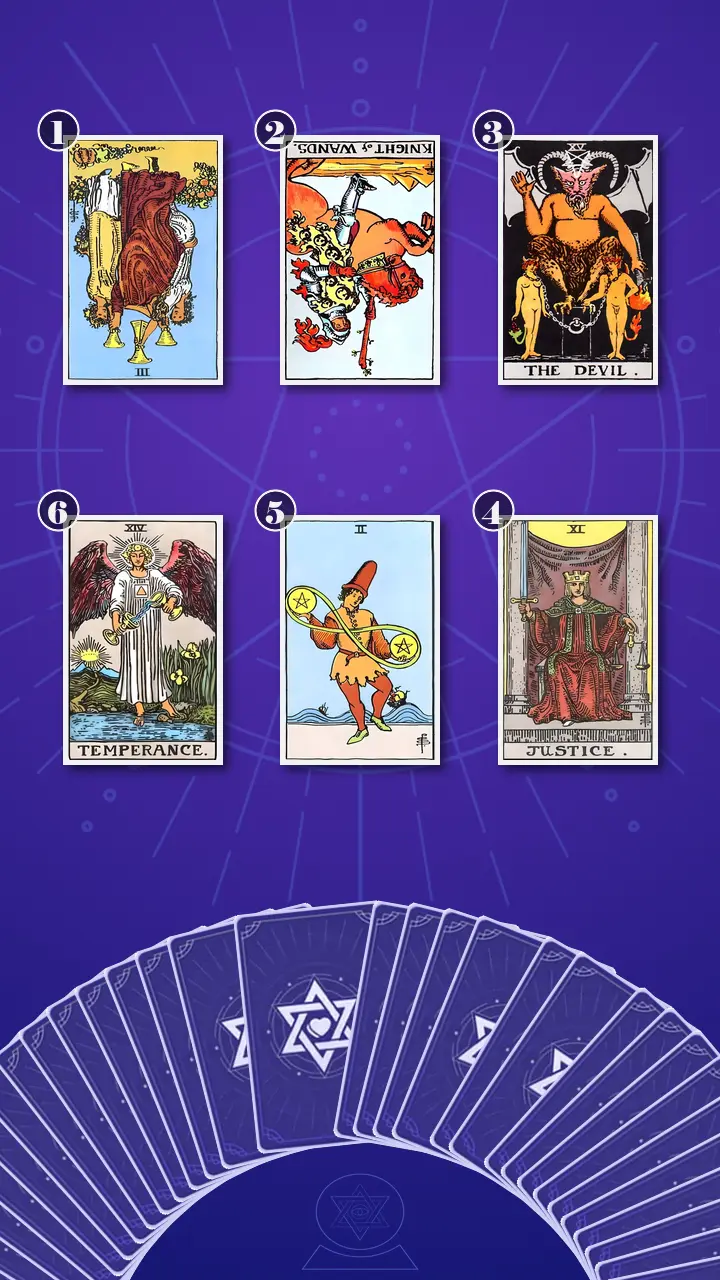
I chose the Transformation Path Grid · Context Edition, a six-card tarot spread for party burnout and sustainable nightlife boundaries. I chose it because Alex was not facing one isolated bad decision. They were describing a recurring loop: an invitation brought immediate social reward, the night extended, tomorrow's capacity disappeared, and the resulting disappointment made the next quick yes feel even more tempting. A simple past-present-future reading would not separate the payoff, the impulse, the deeper belonging fear, and the practical leverage point clearly enough.
I laid the cards in a two-row grid. The upper row would trace the old pattern: the visible social overflow, the blockage that turns a suggestion into movement, and the root bargain underneath. The lower row would lead us back through the response: the key trigger that changes the decision, the practical action pathway, and the sustainable rhythm Alex could build. I explained that the fourth card mattered most because it would show what could interrupt the cycle before the bass was loud and the group was moving.
Where the Plan Starts Moving Without You
The Celebration That Spilled: Three of Cups Reversed
I turned the first card for the current-state position, the place that shows the visible behaviour in which a quiet evening becomes an extended night and leaves a depleted morning behind. It was the Three of Cups, reversed.
I pointed to the three raised cups and the dancers' circle. Upright, this card honours friendship, celebration, and the kind of laughter that makes an ordinary week feel human. Reversed, I read the same water energy as overflowing its useful container. The connection is real, but the container has tipped. In Alex's life, it looked exactly like one warm pint after work, coats piled by the door, someone offering another round, and an 11:15 p.m. reminder disappearing under a thumb after the conversation that mattered had already happened.
"I am having fun," I said, putting language to the pivot, "so why does leaving suddenly feel like failing the group?" I told Alex that they were not bad at mornings; they kept asking mornings to pay for decisions made after midnight. The reversed card did not say their friends were the problem. It showed social pleasure becoming excess when staying was no longer an active choice.
Alex let out one short laugh that carried more sting than amusement. "That is so accurate it is a bit brutal," they said, then looked down at the card. "There is always a point when I am not even having a better time. I am just there because everyone else is still there."
The Uber Already Waiting: Knight of Wands Reversed
I turned the second card for the primary blockage: the force that interrupts Alex's stated intention and turns a leaving time into another negotiation. It was the Knight of Wands, reversed.
The Knight's horse rears with fire and forward drive, but reversed, that fire has become poorly directed. I saw the familiar London sequence Alex had described: wet pavement near Shoreditch, a friend already ordering an Uber, the hot screen of a phone in a cold palm, and a body leaning forward before the mind has reached the end of a sentence. The next venue is vivid, five minutes away, full of people and momentum. A 9:00 a.m. workout is quiet, abstract, and waiting somewhere behind closed blinds.
"I can leave after this. It is only nearby. I will make up the morning," I said, letting the fragments land one after another. This was not a lack of wanting a better morning. It was an energy blockage: excitement and group momentum were taking over the decision before Alex's actual capacity could enter it. The second venue is where a plan becomes a negotiation.
I told Alex that the pattern reminded me of streaming autoplay. The next episode starts loading before the viewer has consciously chosen it, and a quick yes can train a personal algorithm to keep serving the same immediate-reward option. Alex pressed their lips together and nodded, one hand briefly covering the tightness beneath their collarbone. "The second-venue suggestion gets me every time," they said. "Once everybody is moving, I feel ridiculous being the one who stops."
The Loose Chain in the Group Chat: The Devil
I turned the third card for the underlying root: the belief and learned attachment sustaining the blockage beneath the visible party pattern. It was The Devil, upright.
I slowed down here. I never read this card as a verdict, a curse, or proof that someone cannot choose differently. In the image, the two figures are chained, but the chains are loose enough to remove. That detail matters. For Alex, the chain was not nightlife itself. It was the learned bargain that said a late invitation had to be accepted quickly, that physical attendance was proof of closeness, and that an early exit might turn them into the person who was never there.
I described the chain as a group chat: reactions stacking, location pins dropping, thirty messages arriving while a decision is still forming. It is not that Alex believed they had no choice; it was that saying no briefly felt like disappearing. The immediate payoff was stimulation and reassurance. The delayed cost was the cancelled workout, the moved portfolio hour, the foggy morning, and another blow to self-trust. Repetition had made the bargain feel compulsory, even though it remained a habit loop rather than an identity.
"Leaving early is not the opposite of belonging," I said. "Your warm friendships do not disappear because you take one Night Tube home while the group goes on." I asked what Alex feared an early exit would say about their place in the group. Their fingers stopped worrying the cardboard edge of the card. After a longer pause, they said, "It would feel like I was choosing myself over them, even though I know they would probably just say, 'See you soon.'"
When Justice Put Tomorrow on the Scales
The Future Self Gets a Seat: Justice Upright
Before I turned the fourth card, I let the table become quiet. Outside the window, rain ticked steadily against the glass, a small counter-rhythm to the imagined bass outside the second venue. I could see Alex's 12:20 a.m. loop already forming in the space between us: a leaving alarm lights up, the group chat buzzes, another doorway opens, and tomorrow's portfolio hour has no sensory force against the warm pavement and the promise of one more place.
I turned the card for the key transformational trigger, the moment that makes the exchange between tonight's reward and tomorrow's energy visible before social momentum peaks. It was Justice, upright. Its level scales held the consultation question in a single image. One side was another hour out. The other was the exact morning commitment that hour would displace. The raised sword was not punishment. It was the clarity of a stated departure time.
After twenty years of listening to people sort through everyday clutter over coffee, I have learned to distinguish shame from useful accounting. I call this an Energy Extraction Audit. I do not audit whether someone has been good. I trace the small habits over-extracting their baseline energy: saying yes before opening the calendar, treating a reminder as the start of a debate, and letting the next venue select the decision-maker. Justice showed Alex that the cost had been real all along; it had simply been billed to a future self who never got a vote.
The pattern is not proof that you have no self-control; give tomorrow's energy equal weight, and let Justice's scales turn a vague intention into a clear boundary.
Your future self is not the price of a good night; they are one of the people included in the plan.
Alex did not exhale at first. Their breath stopped halfway in, one finger suspended over the edge of their phone, while the muscles at the back of their jaw held tight. Then their gaze moved past the cards to the rain-striped window as if a clip had started replaying: the 11:15 reminder, the waiting Uber, the workout cancellation. Their face pinched with something close to anger. "But does that mean I have been doing it wrong?" they asked. I told them it meant they had been making a difficult decision at the least helpful time, not failing a character test. The fight went out of their shoulders in stages. Their hand opened on their knee, their eyes brightened, and a shaky breath left them. Relief came with a brief vertigo: a clearer route also meant they would have to choose it. I asked, "With this perspective, can you think of a moment last week when this could have felt different?"
Alex named a Saturday evening immediately. They had already known that Sunday held the only portfolio hour available that week, but they had treated it as an optional blank space while the next bar had felt urgent. I told them this was the first movement from FOMO-driven social urgency and frustrated exhaustion toward consequence-aware self-trust. Justice was not asking Alex to become less spontaneous. It was asking them to include the morning they genuinely cared about in the same decision as the night.
A Route Home and a Morning Still Intact
The Practical Container: Two of Pentacles Upright
I turned the fifth card for the action pathway, the practical response that could give Alex's insight a workable form when fatigue and social momentum arrived later. It was the Two of Pentacles, upright.
I showed Alex the infinity-shaped ribbon connecting the two pentacles and the ships riding high waves behind the figure. This was not an image of perfect balance or rigid self-control. It was a picture of active capacity management in a moving world. The earth energy in this card asks for logistics: a calendar that holds the night out and the next-day block together, a Citymapper route saved before the first drink, and a leaving time shared with one trusted friend.
"A boundary works best before the bass is loud and the group is moving," I said. Alex did not need to ban every invitation or disappear from their flatmates for a month. A total reset would only make the next exciting invitation feel heavier. For one outing, a 90-minute connection window could be enough. The point was to stop asking tired Alex to invent a boundary at midnight.
The Measured Pour: Temperance Upright
I turned the sixth card for integration, the sustainable state that could emerge when insight and action were practiced together. It was Temperance, upright.
In this card, water passes steadily between two cups while one foot rests on land and the other touches water. I read it as a different relationship with the same needs: connection, pleasure, recovery, and follow-through allowed to share one week. The goal was not to become someone who never went out. It was to stop funding every good night with a bad morning.
I described the kind of rhythm I could see for Alex: one birthday or launch where they chose to stay late because the next day was genuinely clear; one midweek drink where they left at 11:15 and kept a quiet portfolio hour; one morning where the protected plan was only a walk, laundry, or coffee without a phone. Temperance did not promise a flawless routine. It offered a pace where enjoyment could remain satisfying without routinely consuming tomorrow's capacity.
The Fair-Trade Check for a Real London Week
I gathered the spread into one story. The reversed Three of Cups showed social energy spilling past the point of nourishment. The reversed Knight of Wands showed why the extension happened so fast: stimulation became movement before reflection could catch up. The Devil named the belonging bargain underneath, where leaving early briefly felt like losing social relevance. Justice restored a fair decision, the Two of Pentacles supplied a practical container, and Temperance gave the whole pattern a sustainable direction.
Alex's cognitive blind spot was not that they cared too little about their mornings. It was that they treated every extra hour as a separate, consequence-free choice while tomorrow's energy sat off-screen as an invisible backup fund. The transformation was to make the cost visible while their head was clear, then create enough physical and logistical support for that earlier decision to survive the second-venue moment. Tarot had not told Alex what kind of social life to want. It had made the existing trade easier to see, so Alex could choose it differently.
I offered three small experiments, designed as options rather than rules. Each one could be revised before leaving home if capacity genuinely changed. None needed to become a performance of discipline.
- The Future-Self Calendar HoldFor one outing this week, I asked Alex to create a calendar event before leaving the flat: Leave at 11:15 to protect Saturday's 10:00 portfolio hour. Beneath it, they would write a two-line phone note: Another hour gives me: ___. It costs tomorrow: ___. They would set one discreet 11:15 alarm with the portfolio hour as its label.Keep the experiment to a 90-minute window if a full evening feels loaded. The leaving time is information about capacity, not an announcement that anyone else must leave.
- The Saved-Route BoundaryBefore the next drinks near Shoreditch or Soho, I asked Alex to save a Citymapper Night Tube or bus route for the planned departure time, charge their phone, and text one trusted friend: I am heading at 11:15 to keep my morning, but I am excited to come until then.The route is an option, not a trap. Update the time once before going out if needed, but avoid reopening the negotiation at the loudest point of the night.
- The 15-Minute Physical Anchor ExperimentWithin the next 48 hours, I asked Alex to spend fifteen minutes resetting one small physical corner: the bedside table, the chair where clothes collect, or the patch of desk beside the portfolio laptop. They would place water, gym clothes, or the portfolio brief there for the protected morning.I use Daily Clutter Deconstruction as a way to reduce psychological noise, not to demand a perfect flat. Stop at fifteen minutes; the visible corner is meant to make tomorrow's plan easier to meet, not create another task to fail.
A Week Later: The Quiet Proof
Five days later, I received a message from Alex. They had gone to a friend's birthday, added the 11:15 leaving time to Google Calendar, saved the route home, and told one friend in advance. When the group moved on, FOMO still flickered. Alex left anyway. They did not report a cinematic victory; they wrote, "I felt a bit weird for ten minutes, then I got home and realised I had not abandoned myself."
At 10:03 the next morning, Alex sat alone in a cafe with coffee and their portfolio open. Their first thought was, "Did I leave too soon?" Then they made one edit, listened to the quiet, and let the night remain a good night rather than evidence against the morning.
I did not credit the cards with making Alex leave. The cards gave us a clear map, but Alex made the earlier choice, sent the text, followed the saved route, and kept one promise to themself. That was the real Journey to Clarity: not certainty, not restriction, but a small proof that connection and self-respect could occupy the same plan.
When I picture a group moving and a phone buzzing, I remember how an early exit can tighten the chest as if one boundary might erase a place with people someone genuinely cares about, even while tomorrow is already slipping away. Seeing that tension clearly is not a failure of spontaneity; it is the moment Justice's scales become available.
If you let one future plan sit beside tonight's invitation for a moment, what small boundary could still leave room for both connection and your own morning?