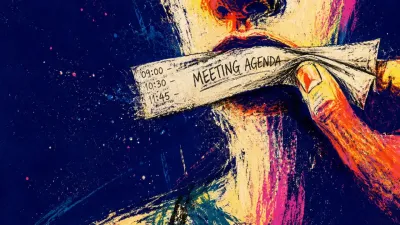
Polishing the Dashboard, Then Making One Contribution Visible

The 9:47 p.m. Dashboard Spiral
At 29, working in product operations in Toronto, Jordan could leave a Monday planning call with three more maintenance tasks and still not say the one contribution they actually wanted to test. I met Jordan at 9:47 p.m. on a Tuesday, in a condo near Union Station, where they were nudging the columns of a weekly dashboard into perfect alignment. Streetcar brakes hissed below the window, blue-white monitor light warmed one side of their face, and the phone beside the laptop felt hot from Slack notifications.
The tab titled "Work I Want to Do" sat unopened beside the report. Jordan looked at it, then back at the dashboard, and told me, "I am good at my job, but I feel underused. Why do I keep staying where my role barely uses what matters to me?" They wanted work that made complicated systems easier for people to understand, yet they kept perfecting familiar operational duties instead of making that value visible enough to test.
I could see the frustration in the way their shoulders climbed toward their ears. It had the texture of a low battery that refused to die: enough charge to keep every maintenance tab open, never enough reserve to step onto an untested path. I told Jordan, "Being good at the work is not the same as being met by it. This is not a permanent fate, and we do not need to turn it into a dramatic resignation story tonight. Let us sit with the pattern, draw a map through the fog, and see what evidence your next move can create."

Choosing a Compass at the Career Crossroads
I asked Jordan to put both feet on the floor, take one slower breath, and hold the question in its simplest form: not "What must I do with my whole career?" but "Why do I keep staying?" I shuffled slowly while they listened to the cards moving against one another. The small ritual was a change of attention, a way to leave the Slack feed and enter a more deliberate conversation with the problem.
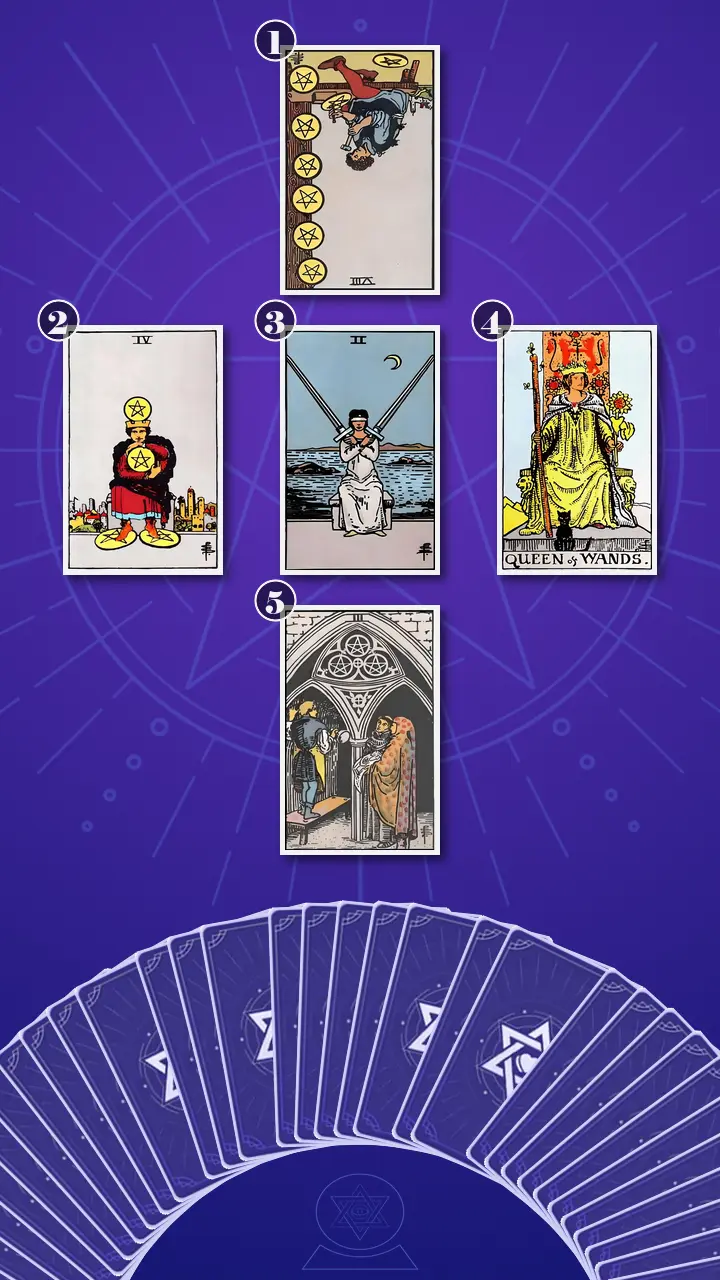
I explained how tarot works in this reading. I would use a five-card cross called The Shadow Spread, not as a prediction engine or a verdict, but as an objective pattern-recognition tool. This spread is suited to an Inner Excavation question because it follows a recurring behavior below the surface: what is visible, what belief feeds it, what the pattern protects, what strength is hidden inside it, and what practical action can integrate it.
The upper card would show the diagnosis in observable daily behavior. The card to its left would trace the root belief, while the center would reveal the protective function of the stalemate. The card to the right would uncover the resource inside Jordan's frustration, and the lower card would turn that resource into a small, collaborative experiment. For anyone searching for card meanings in context, the value of this spread is its sequence: symptom, root, protection, resource, action.
Reading the Map of the Competence Trap
Position 1: The Work That Keeps Getting Polished
"Now I am turning over the card for the diagnosis in observable form," I said. "This is where the shadow appears in Jordan's everyday work: familiar, low-fit duties receive careful attention while a meaningful contribution remains untested."
The card was the Eight of Pentacles, in reversed position. I began with the image: a craftsperson hammering another pentacle, a neat row of completed pieces, and a distant town beyond the workbench. I asked Jordan to picture the repeated tapping as the "just one more cleanup" loop. It was the weekly dashboard refined beyond the agreed standard because the task had a clear finish line and proved dependability, while the document about improving confusing internal and customer-facing workflows remained untouched in the next browser tab.
Reversed, the card showed blocked or misdirected Earth energy. The skill was real, but the effort had become repetitive rather than developmental. Jordan's craftsmanship was not absent; it was being spent where it created immediate safety instead of where it could reveal fit. The row of pentacles looked like excellent recurring reports that did not widen their role, and the distant town looked like the wider field of contribution their attention kept avoiding.
"Competence can be real and still be a hiding place," I said. "You are not doing nothing. You are doing the work that lets you avoid being evaluated for the work that matters." Jordan did not nod. They gave a short, humorless laugh and rubbed their thumb along the edge of the card. "That is accurate," they said. "It is also a little cruel."
"Then we will not use it as an accusation," I replied. "We will use it as information. The reversed Eight of Pentacles does not ask you to lower your standards everywhere. It asks you to notice when polish is buying reassurance instead of building a future capability."
Position 2: The Paycheque Held Against the Chest
"Now I am turning over the card for the root belief and core fear that make staying feel protective," I said. "This position asks what security is doing for you, and what it is costing you."
The card was the Four of Pentacles, in upright position. Its figure clutched one pentacle to the chest, pinned two beneath both feet, and balanced another on the crown while the city sat at a distance. I brought Jordan into a scene they had described from a recent one-to-one: at 10:12 a.m., they had opened the benefits portal, checked their rent payment in a banking app, reread the calendar reminder for the next planning cycle, and taken a sip of coffee that had gone metallic and cold.
I asked what they had said when their manager asked about growth. Jordan looked at their hands and answered, "I need the stability. I should not be ungrateful. I cannot afford to be wrong." The Four of Pentacles was not telling me that the paycheque, benefits, or Toronto rent were imaginary concerns. Upright, it showed security as a legitimate resource. But its energy had become constricted: every current advantage had been placed under glass, so there was no free hand for a small experiment.
"The problem is not that you value stability," I said. "The problem is treating stability as something that can only be protected by keeping every part of your role unchanged. A steady income can support a bounded test. It does not have to become a reason to remain professionally invisible."
Jordan's jaw tightened first. Their fingers paused above the phone, as if a reply had been interrupted mid-typing. Then their gaze moved away from the benefits portal and settled on the blank space beside the card, replaying the answer they had not given their manager. Finally, they released a long breath and let one shoulder drop. The relief was small, but it came with a trace of shame, the recognition that something genuinely valuable had also become a full-body grip.
Position 3: The Spreadsheet That Keeps the Door Closed
"Now I am turning over the card for the protective function," I said. "This is what the pattern keeps you from having to feel or risk by preserving the question in suspension."
The card was the Two of Swords, in upright position. A blindfolded figure held two evenly crossed swords while water and rocky islands remained behind them. I returned to the rainy Sunday evening Jordan had described: a crowded Queen Street West cafe, six job tabs open beside a Notion career matrix, an unfinished LinkedIn Easy Apply form, the espresso grinder screaming behind the counter, and cold coffee leaving a bitter film on their tongue.
Jordan said, "If I apply, I could be disappointed. If I stay, I can keep preparing." The crossed swords were the equally detailed arguments for applying, staying, waiting for the next review cycle, or looking for an internal move. The blindfold was not ignorance. It was the deliberate choice to keep felt preference off the decision table until certainty arrived. The water behind the figure showed that longing and frustration were present, but relegated to the background.
I told Jordan that decision fatigue could make delay look like care. Their comparison table was like an algorithm trained only on past clicks: it kept recommending familiar work because it had never been given evidence of what Jordan wanted next. A perfect table could protect them from a manager's response, a recruiter's silence, or an imperfect first attempt, but it could not answer whether their values could contribute usefully until someone saw the contribution.
Jordan went very still. Their eyes remained on the six browser tabs, though I could see they were no longer reading the job requirements. After a moment, they closed the Notion matrix instead of adding another column. "I have been calling it research," they said. "But I have also been waiting for the right move to arrive without asking anyone to react to it."
When the Queen of Wands Held the Sunflower
The room grew quieter before I touched the fourth card. Outside, a streetcar bell sounded once and faded, leaving the silence unusually clean. I told Jordan, "This is the catalyst, but not because it promises an instant answer. It shows the strength that becomes available when the protective pattern is seen clearly."
Position 4: The Preference That Can Be Seen
"Now I am turning over the card for the concealed resource inside the frustration," I said. "This position asks what you can name, trust, and make visible without explaining your entire future."
The card was the Queen of Wands, in upright position. She held a sunflower in one hand and an upright living wand in the other, while a black cat sat alert at her feet. I connected the image to a real meeting moment: a product manager describing a confusing onboarding handoff, Jordan's fingers pausing above Slack, and the sentence they could have offered without a complete career plan: "I care about making complex systems easier to use. Could I sketch a small version of this process and test it with the team for two weeks?"
Here the energy shifted from suspended Air into active Fire. The Queen's confidence was not loudness, certainty, or a demand to be rescued by a perfect role. It was the willingness to let a genuine preference become observable and to allow another person's response to become data rather than permission or rejection. The sunflower represented the work that brought vitality. The wand gave that preference a direction. The attentive cat kept the instinct grounded in the actual opening in front of Jordan.
My signature lens in moments like this is Historical Crossroad Matching. At Cambridge and on archaeological digs, I learned not to call a cracked structure a failed civilization or a permanent fate. I ask what the old arrangement no longer carries, what pressure has exposed the fracture, and what capacity is trying to be built beside it. Jordan's role was not a ruined life. It had simply become too narrow for one durable skill: making complex systems legible.
I added my Enduring Value Assessment. "Let us separate the short-term impulse from what may survive the test of time," I said. "The immediate relief of another perfect dashboard is real. So is the longer value of learning whether your ability to clarify systems can help real people. We do not need to choose a whole career today. We can compare which next action gives you durable evidence."
The Sentence Before the Shift
At 9:47 p.m., Jordan was still nudging dashboard columns into place while streetcar brakes hissed below and the screen warmed their face. The unopened work document waited beside it. They were trying to solve an entire future before risking one honest sentence in the present.
Stop treating competence in low-fit work as proof that you should stay quiet; name one contribution you want to test, and hold it as openly as the Queen of Wands holds her sunflower.
Jordan's fingers froze above the notebook. First, their breath stopped and their pupils widened slightly, as if the sentence had interrupted a familiar internal script. Then their eyes lost focus; I watched them replay the Monday planning call, the extra status task, and the idea they had swallowed before it reached their mouth. Finally, a quiet "Ah" came from the centre of their chest. Their clenched hands opened one finger at a time, their shoulders lowered, and their voice arrived on a trembling exhale.
"I do not need to defend my entire future," Jordan said. "I can name one thing I want to try." The release was not pure relief. For a few seconds, the clearer path created a new blankness, almost a light dizziness, because an answer that returned agency also returned responsibility. I did not fill that space with certainty. I gave it a boundary: within ten minutes, Jordan could open a blank note and finish, "I would like to test contributing [specific strength] to [specific problem] because it could make [person or process] easier." Three lines, not a pitch deck. The draft could remain private, go to one trusted collaborator, or end the session. The point was one visible preference, not a final career decision.
"Now, use this new lens to revisit last week," I said. "Was there a moment when this insight could have made you feel differently?"
Jordan looked back at the sunflower. This was the first movement from productive self-protection and career paralysis toward values-led self-trust supported by practical evidence. The frustration had not disappeared, and the risk had not been erased. But the question had changed from "Should I stay or leave?" to "What can I test before I ask myself for a final answer?"
The Workbench Opens to Collaboration
Position 5: A Useful Skill in the Open
"Now I am turning over the final card, the integration path," I said. "This position translates the Queen's visible preference into a real conversation or shared project, where usefulness can be observed instead of imagined alone."
The card was the Three of Pentacles, in upright position. A craftsperson stood above two collaborators, all three attending to an architectural plan and the pentacles built into the structure. I described a rough workflow sketch on a meeting-room table, a product manager asking clarifying questions, and a two-week test of an onboarding handoff with one agreed measure: whether it reduced confusion for the team.
The Three of Pentacles grounded the reading in collaborative Earth. Jordan did not need to quit, remain silent, or privately evaluate every possible professional future. They needed to place one value-linked ability inside a shared setting, show a sample, agree on what usefulness would look like, and let the work be discussed. This was the practical career meaning of collaboration and growth: not applause, but a structure in which a contribution could be built, reviewed, and refined.
Jordan picked up a pen and drew three uneven boxes connected by arrows. The sketch was rough enough to make them wince, then good enough to discuss. "I could show this to the product manager," they said. "I do not have to wait until it looks like a finished strategy." I saw their thumb move toward the send button on their phone, then stop. The hesitation remained, but it now had a smaller shape.
"Exactly," I said. "Career fit is evidence you gather, not a verdict you wait for. Feedback can rate the experiment without rating your worth."
From Private Doubt to Practical Evidence
I read the five cards back to Jordan as one connected story. The reversed Eight of Pentacles showed effort trapped in repetitive polish. The Four of Pentacles explained why: income, benefits, reliability, and a familiar professional identity had become resources Jordan felt obliged to hold without movement. The Two of Swords showed the protective pause that kept exposure away. Then the Queen of Wands returned preference and visibility, and the Three of Pentacles gave that preference a collaborative place to become useful.
The deeper blind spot was not a lack of ambition or information. Jordan had been assuming that a valued contribution needed to be fully justified before it could be requested, and that the current role's failure to notice it proved that it might not count as useful work. In truth, the role could not notice the contribution Jordan had never let it see. Jordan had been polishing a key that never touched the lock, then treating the unused key as evidence that it was badly made.
The direction of change was precise: move from privately evaluating the entire role to naming one valued contribution and testing it through one bounded conversation or project this week. The aim was not to replace material caution with recklessness. It was to let practical caution support evidence-gathering rather than prevent it.
The Ten-Year Lens
Before we chose the next steps, I guided Jordan through my Time Stratigraphy Exercise, a mental time-travel protocol I use when short-term career fears have filled every available layer of attention. I asked them to imagine a future self ten years from now looking back at this ordinary Tuesday. Not a future self delivering a perfect life verdict, but a person asking which detail from this week became part of their enduring value.
We let the rent, benefits, manager's reaction, and fear of looking self-indulgent remain real. Then I asked which of those details would still matter if Jordan had gathered a little evidence instead of only preparing to gather it. The exercise did not make the decision for them. It separated the temporary sting of being evaluated from the lasting value of practicing a contribution they cared about.
I offered Jordan these actionable next steps:
- Make one valued contribution visibleBefore Wednesday's planning meeting, write one sentence: "I would like to test helping with [specific project] by making [specific user or teammate experience] easier to understand." Choose one person with decision-making proximity, such as a manager, product manager, or design partner, and ask for a fifteen-minute conversation. Bring one rough workflow sketch, a rewritten handoff, or three observations from a process you already support.Treat the note as a conversation opener, not a pitch deck. Fifteen minutes is enough. Drafting without sending still counts as evidence that the preference exists, and you can revise or pause without committing to a role change.
- Trade extra polish for a contribution testChoose one recurring dashboard, status update, or process document this week. Define its agreed quality threshold before starting, stop when that threshold is met, and block the saved thirty minutes on the calendar as "Contribution test." Use the block to draft a one-paragraph proposal for a two-week experiment, including what you would contribute, who would collaborate, and one observable sign of usefulness.Use an existing definition of done or checklist if stopping feels careless. If thirty minutes feels impossible, save ten. The aim is not lower standards everywhere; it is choosing where your effort goes.
- Run a two-week feedback loopAsk one collaborator, "Would you be open to letting me try [specific contribution] on [specific project] for two weeks, then review what helped and what did not?" Choose one feedback question, such as "Did this reduce confusion for the team?" At the end, record three facts: what you did, what response occurred, and what you would adjust next time.Ask for feedback on the contribution, not on your worth. A lukewarm response may describe timing, scope, or the draft itself. Give the collaborator an easy exit, and keep your own choice to continue, revise, or stop after seeing actual evidence.

A Week Later, the Quiet Proof
Four days later, I received a message from Jordan: "I asked for the fifteen minutes. It was not a new role, but the product manager said yes to a two-week test. I am mapping one onboarding handoff with a designer, and we agreed to look at whether the team asks fewer clarification questions."
That evening, Jordan stopped the dashboard at the agreed quality threshold and shut the laptop before the cosmetic pass. They sat alone in a Queen Street cafe, relieved and a little bereft, watching cold coffee gather a dark ring while the blank contribution note stayed open.
That was enough for the first proof. The company had not suddenly become a perfect fit, the financial realities had not vanished, and a two-week experiment could still produce a disappointing answer. But Jordan had moved from private comparison to visible contribution. The card had not made the choice. Jordan had made one small part of the choice observable.
For me, that is the heart of a Journey to Clarity. The Shadow Spread did not tell Jordan what their destiny was, and it did not ask them to sacrifice security for an idealized version of purpose. It helped separate competence from fit, protection from paralysis, and feedback from worth. Grounded self-trust began with a sentence that could be tested in the real world.
When your own shoulders rise toward your ears over a weekly task list, it can be hard to admit that the deepest fear may not be change itself, but hearing that the part of you that cares most has no place at work. Naming that fear does not solve the whole career, but it means the hidden layer is no longer hidden.
If you let one small contribution be visible this week, what might feel useful to test before deciding what your whole career has to mean?