Keeping the Grainy Opening: From Approval-Seeking to a Steadier Voice

The 8:47 P.M. Loop of Approval-Driven Self-Editing
I knew the pattern before Casey (name changed for privacy) finished describing it: they were not short on ideas; they were exhausted from calculating which version of themself would create the least awkwardness after they pressed Post.
At 8:47 p.m. on a Tuesday, Casey sat at the narrow kitchen counter in their Toronto apartment with the original draft open in one browser tab and the safer version in another. The files might as well have been called final_v3 and final_v3_safe. The radiator clicked beside them, cold coffee left a bitter film on their tongue, and their phone felt warm from reopening the same chat. Their shoulders lifted as they changed the hook for the fourth time.
“I can tell when an idea is mine until I show it to them,” Casey told me. “Then I start fixing it. By the end, I can't tell whether we're collaborating or whether I'm asking for permission. Why do I keep changing my creative vision to protect a friendship?”
I watched their restless hand hover above the trackpad. The anxiety seemed to work like a seat belt tightening across their chest every time the group chat lit up, while guilt kept whispering that loosening it might hurt someone they loved. Underneath both sat a thin, persistent resentment: the work was becoming safer, but Casey was disappearing from it.
“You can tell when the idea is yours until their reaction enters the room,” I said. “That doesn't mean you lack taste or conviction. It means one creative choice has started carrying the emotional weight of the whole friendship.”
I have spent twenty years listening to people sort through complicated lives over the aroma of coffee. I did not want to give Casey a grand theory or turn their friend into a villain. I wanted to help them see the practical machinery of Creative Approval Seeking: the message, the physical contraction, the edit, the brief relief, and the loss of ownership that followed.
“Let's make a map of the fog,” I said. “The cards won't decide whether the friendship is safe or tell us what your friend secretly thinks. We'll use them to separate what you know, what you're assuming, and what remains yours to choose.”

Choosing a Map Shaped Like a Conversation Table
I asked Casey to put both feet on the floor, take one slower breath, and hold the question in plain language while I shuffled. The pause was not a mystical performance. It was a psychological threshold between refreshing the chat and examining the pattern.
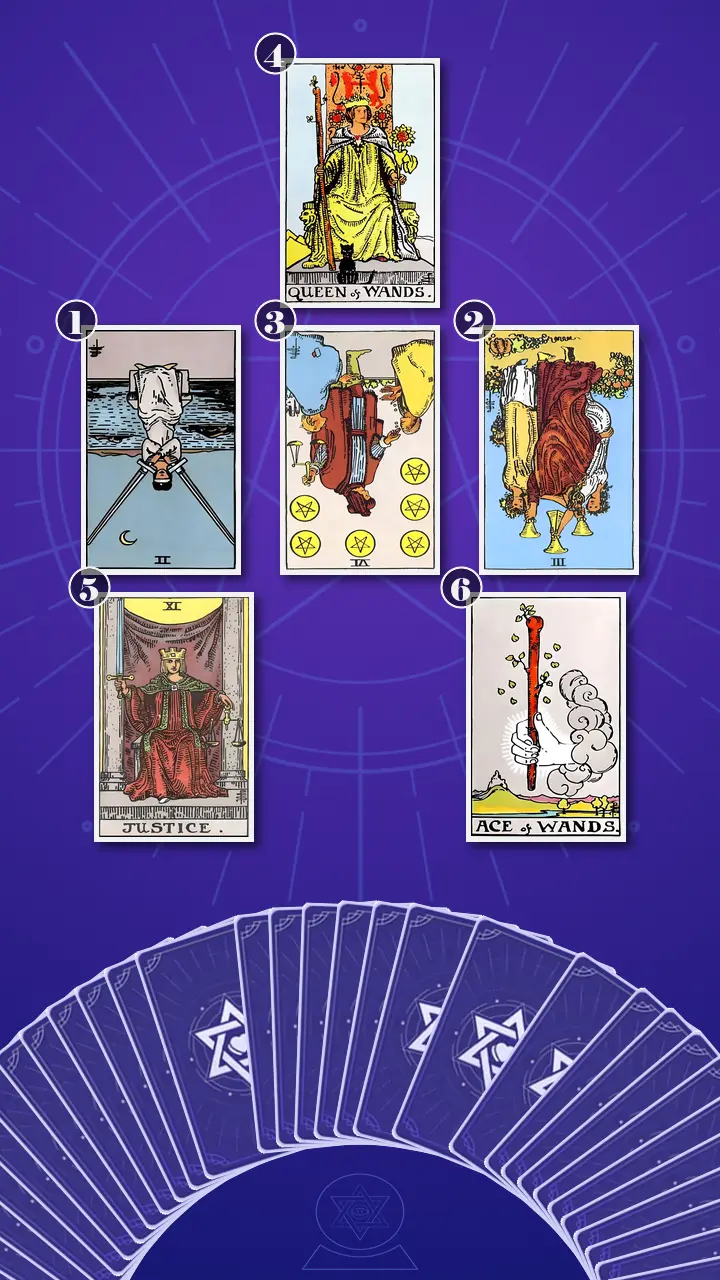
I chose the Relationship Spread · Context Edition, a six-card relationship tarot spread adapted for creative friendship boundaries. Its purpose was not to predict whether the friendship would last. It was to examine Casey's stance, the social atmosphere as Casey experienced it, the exchange of approval and authorship, the available support, the boundary requiring attention, and one practical next step.
For anyone wondering how tarot works in a situation like this, the value lies in structure. A ten-card Celtic Cross could have supplied broader life context, but Casey's question was precise. This contextual friendship spread let me keep the card meanings in context and focus on the actual feedback loop without wandering into unrelated territory.
The first position would reveal what Casey began doing to their work when they anticipated the friend's reaction. The third, placed at the centre, would show where feedback had become tangled with belonging. The fifth would name the boundary between creative ownership, requested feedback, and friendship care. The final card would turn that distinction into one small experiment.
I arranged the cards as an open cross. The first two faced each other across the central third card, while the remaining cards moved from support to boundary to action. The layout looked less like a verdict and more like a conversation table with one shared centre and two honest exits.
The Editing Timeline That Would Not Move Forward
Position 1: The Choice Casey Kept Suspending
I turned over the card representing Casey's current stance in the friendship, especially what they did to a hook, caption, or visual direction after imagining their friend's response. It was the Two of Swords, in reversed position.
I pointed to the blindfolded figure, the moonlit water, and the crossed swords held tightly over the chest. Upright, the card often shows suspended judgment. Reversed here, its Air energy was blocked and overworked. Casey was not calmly gathering information; they were trying to think their way out of a relational fear that could not be solved by another hook revision.
“You have two versions open,” I said. “The original meets your creative intention. The softened version is designed to prevent a cool reaction. But instead of choosing between them with a stated creative criterion, you reread the messages, adjust the hook again, and postpone posting. The indecision isn't a lack of taste. It's self-protection turning one creative decision into a referendum on the friendship.”
I asked which choice they had altered first after the last ambiguous reply. Casey looked toward the original draft and said, “The opening image. It was strange, but it was the whole reason I wanted to make the post.”
They let out a short laugh with a bitter edge. Their fingers tightened around the cold mug, then loosened. “That's so accurate it feels a little brutal.”
“Then let's make it useful, not punitive,” I replied. “This card is not accusing you of weakness. It is showing us the moment protection takes control of the edit. Once we can locate that moment, you gain choices you didn't have while it was happening automatically.”
Position 2: When the Creative Circle Becomes a Pressure Loop
I turned over the card representing how the friend's role and feedback were currently experienced by Casey. I was careful with the distinction: the spread could illuminate Casey's interpretation of the social atmosphere, but it could not claim access to the friend's private motives. The card was the Three of Cups, in reversed position.
The three raised cups still held the possibility of genuine companionship, shared jokes, voice notes, and the excitement of building ideas beside someone who understood creator life. Reversed, however, that Water energy had become socially overcharged. Casey experienced a difference in taste as a disturbance in the whole circle.
I described the familiar sequence. A brainstorm began as real connection. Then a short message such as “hmm, interesting direction” arrived. Casey compared feeds, noticed the friend's Reel performing well, mirrored the friend's format, and restored surface agreement before asking what the feedback actually meant. One ambiguous reply changed the emotional meaning of the entire evening.
“The friendship may be real and supportive,” I said. “The blockage appears when belonging starts to feel conditional on stylistic sameness. You are responding not only to what was said, but to the story your nervous system attaches to it.”
I asked what Casey had assumed after the last short reply. They rubbed a thumb along the mug's rim and looked away from the cards. “That they thought I was becoming pretentious. And maybe that we weren't aligned anymore.”
“Did they say either of those things?” I asked.
“No.”
I let the answer stay uncomplicated. An assumption did not need to be shamed before it could be tested.
Position 3: The Invisible Price of Reassurance
I turned over the card at the centre, representing the recurring Vision-Connection Split and the practical exchange of feedback, approval, and belonging. It was the Six of Pentacles, in reversed position.
I traced the central figure holding scales while distributing coins to people positioned below. Reversed, the Earth energy of exchange, support, and reciprocity had become imbalanced. In Casey's experience, encouragement had started functioning like currency, while authorship had become something they surrendered in order to receive it.
“One softened concept might purchase a warmer reply,” I said. “A familiar format might secure encouragement. Another surrendered decision might keep the friendship calm. After every edit, you refresh an invisible friendship dashboard and wait for the warmth metric to rise.”
I could hear the inner bargain in the pattern Casey had described: If I give up this part, maybe we'll feel normal again. When the compromise earned brief relief, Casey treated the relief as proof that the trade had been necessary. When the finished work felt anonymous, the resentment arrived quietly, often after the conversation was already over.
“Feedback is information; it is not a membership fee,” I said. “The painful imbalance is not simply that your friend has preferences. It is that you feel required to give away authorship before you are entitled to reassurance, even though that trade has never been openly negotiated.”
Casey's breathing paused. Their gaze went slightly unfocused, as though they were replaying a series of edits in reverse. Then their shoulders dropped by a fraction and they said, “I keep getting annoyed with them for bargains they don't even know I'm making.”
“That is an important distinction,” I said. “This card does not prove your friend is manipulative, and it does not ask you to keep score. It shows how the exchange currently operates inside your experience. The question is where feedback stopped being useful input and started feeling like the price of continued belonging.”
The Queen Who Kept Her Own Lens
Position 4: Warmth Without Self-Erasure
I turned over the card representing the personal and relational resource available to Casey. It was the Queen of Wands, upright.
The Queen met us with a direct gaze. She held a flowering wand beside a sunflower, while the black cat at her feet suggested an instinct she did not have to over-explain. Her Fire energy was balanced: visible without being aggressive, warm without becoming compliant, and self-possessed without withdrawing from connection.
“This isn't advice to stop sharing drafts or become cold,” I said. “The Queen can listen generously and still remain the author. In your next post, she might look like keeping one unmistakably personal element: the odd opening image, the dry line, or the hand-held visual texture that made the first version feel alive. You can discuss that choice as its creator instead of submitting it like an application for acceptance.”
I asked which element in the open draft still felt recognizably theirs. Casey answered immediately. “The grainy opening shot. It's not polished, but it feels like the actual memory.”
The speed of the answer mattered. I had not supplied a creative direction; I had simply asked a question that allowed Casey's existing judgment to become audible again.
“The Queen of Wands doesn't need everyone to make the same choice,” I said. “Her confidence is not domination. It is the ability to keep her own lens while staying in the room with someone else's.”
When Justice Separated the Draft from the Friendship
Position 5: The Boundary Hidden Inside the Feedback Request
I turned over the card representing the conscious boundary Casey needed to examine: what creative authorship belonged to them, what feedback they were actually requesting, and where care had been turning into compliance. The room seemed to quiet around the Justice card, upright. Even the radiator, which had clicked through most of the reading, fell still.
I brought Casey back to a Queen West coffee shop at 4:18 in the afternoon: the caption they had loved that morning, the friend's ambiguous reply above the keyboard, milk steaming behind the counter, and their hand pressing Undo until a clear idea became socially safer but creatively unrecognizable.
Justice held balanced scales in one hand and an upright sword in the other. I read that as balanced discernment rather than punishment. Her sword separated three things Casey's anxiety had been blending together: the choices that belonged to Casey, the craft questions on which they genuinely wanted input, and the relationship concerns that deserved direct language rather than another visual edit.
This was where I used a method I call Analysis Paralysis Deconstruction. I stripped away the abstract what-ifs: What if they hate it? What if this proves we've grown apart? What if keeping the shot makes me difficult? None of those predictions was a present constraint. The immediate realities were simpler: Casey had an intended tone, the opening shot carried that tone, and they wanted to know whether the middle section was clear.
I then used Complexity Reduction to turn the clutter into a practical binary test: Does this edit serve the stated creative brief, or does it mainly reduce anticipated relational discomfort? The question did not invalidate Casey's feelings. It stopped an imagined future from impersonating a craft requirement.
Stop treating creative difference as evidence that belonging is at risk, and use Justice's balanced scales and upright sword to name one fair boundary while keeping the conversation open.
I let the sentence sit between us. Then I made its practical meaning explicit.
Your work does not have to become less yours to prove the friendship matters. Name what belongs to you, ask for the feedback you actually want, and let creative difference remain different.
I watched Casey go completely still. Their thumb stopped halfway along the edge of the phone, and their breath seemed to catch high in the chest. For several seconds, their eyes lost focus, as if every softened caption and apologetic voice note were replaying behind them. Their pupils widened; colour rose along their cheeks; the corners of their mouth tightened before their eyes became wet. Then came resistance. “But doesn't that mean I've been doing this wrong the whole time?” they asked, their voice low and briefly sharp. Their shoulders sank, but the release was not simple relief. Their hand opened on the counter, and they gave a trembling exhale that sounded almost like “oh.” I could see the slight disorientation that sometimes follows clarity: the old burden had shifted, but now Casey could feel the responsibility of making a choice without hiding behind another revision.
“It means you found a strategy that reduced uncertainty for a few minutes,” I said. “It protected something important until the cost became too high. We don't need to prosecute the past. Justice asks for clearer terms now.”
“Creative difference is not evidence that belonging is at risk,” I continued. “A different visual choice is not evidence that the connection is failing. The goal is not to stop caring what they think; it is to stop making their response the author.”
I invited Casey to test the insight against real life. “Now, with this new perspective, think back to last week. Was there a moment when this distinction could have made the experience feel different?”
Casey looked at the two open drafts. “Thursday. I wanted to ask whether the pacing dragged, but I sent the whole concept with 'be honest, is this bad?' When they said they weren't sure, I changed the concept. I never actually asked about pacing.”
I asked them to open that draft and type three labels above it: Mine to decide, Open to craft feedback, and Relationship concern. Under the first, Casey placed the grainy opening shot. Under the second, they placed the middle-section pacing. Under the third, they wrote: I am afraid a different style means we are becoming less close.
“You can stop here if it feels like enough,” I said. “The purpose is distinction, not forcing yourself to publish or have a confrontation tonight.”
I named the transition I could see beginning: from anticipatory guilt, comparison, and creative compliance to clear boundaries, reciprocal feedback, and steadier creative self-trust. This was not instant confidence. It was the first movement from treating discomfort as an emergency toward trusting it as information Casey could survive and examine.
Casey drafted one sentence: “I value your eye, and I'm keeping this visual direction because it carries the tone I want. Could you tell me whether the middle section reads clearly?” Their chest still looked tight, but they did not add the usual apologetic paragraph. The first clean breath came not from knowing how the friend would respond, but from no longer making the draft carry the entire friendship.
The Small Flame That Did Not Need to Prove Everything
Position 6: One Honest Piece, Not a Friendship Referendum
I turned over the final card, representing one small, respectful creative action Casey could try during the coming week. It was the Ace of Wands, upright.
A hand emerged from a cloud holding a living wand, new leaves sprouting from it while a distant castle remained on the horizon. I read its upright Fire as available initiative: not a complete rebrand, not a dramatic break from the friendship, and not a demand for permanent certainty. It was one idea moving from private spark into chosen action.
“Write a one-sentence brief, choose one small piece, and keep its central idea intact through publication,” I said. “Use the result as information about your voice, not as proof that the friendship is safe or that your style will always perform commercially.”
I also named the overcorrection risk. After a long period of self-editing, Casey might feel tempted to publish something intentionally provocative and call the reaction independence. The Ace did not need a rebellion. It needed sincerity and movement.
“One honest piece can be an experiment, not a referendum on the friendship,” I said. “Think of it as shipping a small beta of your own voice. You are not asking one post to prove the entire product.”
Casey looked at the original tab rather than final_v3_safe. “The short version could be done tomorrow,” they said. “The grainy opening, the dry caption, and no full-concept approval request.”
I nodded. A boundary could protect the conversation without editing Casey out of the work. The Ace of Wands did not promise an outcome; it returned initiative to the person sitting in front of me.
Filtering the Noise Without Throwing Away the Friendship
I gathered the six cards into one practical story. The old influence was Casey's belief that relational safety depended on alignment. In the present, the reversed Two of Swords showed that belief freezing creative judgment; the reversed Three of Cups showed social warmth becoming pressure to match; and the reversed Six of Pentacles showed approval being treated as currency. The Queen of Wands restored visible authorship. Justice gave that authorship fair language. The Ace of Wands made the language useful through one small act.
The spread answered the original question without blaming the friend: Casey kept changing the vision because each difference activated a larger fear about belonging. Editing toward the friend's style produced short-term relief, and Casey's mind mistook that relief for evidence that compliance had protected the relationship. The quieter blind spot was confusing the end of immediate discomfort with the presence of genuine security.
I returned to the image beneath the whole reading. Casey had been holding the camera toward their friend for approval before allowing themself into the frame. The transformation was not to turn the camera away from the friendship. It was to let two creators work side by side while each kept their own lens.
“Your direction is clear,” I said. “Separate friendship care from creative compliance. Name what remains yours, invite feedback on a specific craft question, and test the distinction with one low-stakes piece. You do not need to solve the entire relationship before you can make one honest creative choice.”
The Next 24 Hours: Three Grounded Experiments
I gave Casey three pieces of actionable advice. Each was deliberately small enough to reveal information without turning the week into a test of courage or loyalty.
- The Coffee Bean Filter Protocol Tonight at the kitchen counter, spend ten minutes writing each decision variable for one post on a separate scrap of paper. Physically sort the scraps beside two cups labelled “Absolute Must-Haves” and “Emotional Noise.” A must-have serves the brief, deadline, accessibility, or Casey's chosen creative intention. Emotional noise includes unverified predictions such as “They may think I'm difficult.” Leave the piles overnight and review them once after 24 hours. Tip: “Noise” does not mean the feeling is foolish or the friendship is unimportant. It means the prediction is not yet a creative requirement. If ten minutes feels like too much, sort only the first three scraps.
- The Specific Feedback Ask Before messaging the creator friend, rehearse one two-sentence note in the Notes app for five minutes: name one owned choice and ask one bounded craft question. For example, “I'm keeping the grainy opening because it carries the memory. Does the middle section read clearly?” Send it only when Casey chooses to invite feedback. Tip: Remove apologies that do not repair an actual harm. Casey can keep the note private as rehearsal; sending it is an option, not an obligation.
- The One-Piece Authorship Test Choose a Story, short caption, or other small piece that can be finished this week. Write a one-sentence intention, keep one central concept intact, and publish before requesting reassurance about the concept. Afterward, record three observations about what sounded like Casey's voice without checking engagement numbers or the friend's response first. Tip: Choose a sincere piece rather than an unusually bold one. Casey can pause before publication. The experiment still provides useful information if all they complete is the self-directed draft.
Casey frowned at the first exercise. “But what if I don't have 24 hours? Sometimes a client deadline is tomorrow morning.”
“Then use the five-minute version,” I said. “Make only two notes: what the brief requires, and what reaction you are trying to prevent. Choose according to the brief for now. The 24-hour pause is for personal work when time allows; it is not another rule you can fail.”
That adaptation mattered. A useful tarot reading should reduce dependence, not create a new ritual Casey feels compelled to perform perfectly. The cards had organised the problem, but they had no vote in the final decision. Casey retained the authority to publish, revise, ask, wait, or decide that a conversation was not right yet.

A Week Later, the Original Opening Was Still There
Six days later, I received a message from Casey: “Kept the grainy opening. Asked only about pacing. Posted at 6:10. I hated the first ten minutes, then made dinner instead of opening Insights.”
They told me the friend had offered one pacing note and a different aesthetic preference. Casey used the pacing note, kept the visual direction, and resisted translating the preference into a verdict about the friendship. Nothing dramatic had been settled. That ordinary outcome was part of the evidence.
Casey slept through the night after posting. Their first morning thought was still, What if I got it wrong? Then they smiled, made coffee, and left the post alone.
I recognised the quiet proof of our Journey to Clarity. Casey had not stopped caring, comparing, or occasionally wanting reassurance. They had made one clean distinction, spoken one bounded request, and allowed one piece of work to retain a recognisable voice.
The Relationship Spread · Context Edition had functioned as a mirror and sorting surface, not an oracle. Justice did not create Casey's boundary, and the Ace of Wands did not supply their creative voice. The cards helped Casey see where their authority had been going. Casey was the one who reclaimed it.
If your chest tightens over the Post button and you start editing toward someone else's comfort, I know the hardest part may be recognising that you are trying to keep a friendship close while watching yourself disappear from the frame. Simply noticing which edit serves the work and which edit is trying to purchase safety means you are no longer standing at the beginning of the pattern.
If creative difference did not have to mean relational distance, which small part of your original vision would you place on Justice's “Mine to decide” side and let remain visible this time?