At 10:45 p.m., One More Revision Gave Way to a Promotion Question

The Invisible Merit Trap at 10:45 p.m.
I often meet the reliable early-career operations person in a London team whose responsibilities expand faster than the job description. I recognized that pattern in Jordan before they had finished taking off their coat. The invisible merit trap had already followed them into my reading room.
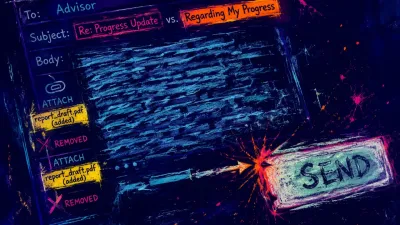
At 10:45 p.m. on a Tuesday, Jordan had been sitting at the kitchen table of a Zone 2 flat, revising a project update that had been ready an hour earlier. The laptop fan whined beneath the blue glow, cold tea reflected the screen in a chipped mug, and their shoulders had climbed almost to their ears. In the next browser tab, a message asking what promotion actually required remained unsent. Adding one more example felt safer than discovering whether the criteria existed at all.
“Why do I keep trusting hard work when the promotion rules stay vague?” Jordan asked. They described the extra assignments, the late nights, the careful deliverables, and the warm reviews that never became measurable expectations. I could hear the contradiction clearly: they were trying to earn recognition through dependable effort while the organisation kept the standard for recognition out of focus.
The feeling Jordan called frustration was not abstract to me. It was like receiving a project brief with the acceptance criteria left blank, then adding more features until the document became too heavy to lift, hoping one of them would match the hidden requirement. Hope kept Jordan at the desk; resentment tightened the chest; self-doubt kept whispering that perhaps another polished piece of work would finally make the case impossible to overlook.
I placed my hands flat beside the cards. “Your effort is real,” I said. “We do not need to talk you out of caring about your work. We can look at whether the exchange around that work is clear. Let us make a map of the fog, then decide which part belongs to you and which part requires an answer from the workplace.”
A Staircase for an Unclear Career Ladder
I invited Jordan to take three slow breaths and name the question they wanted the cards to examine. I shuffled gradually, using the movement to shift attention away from the open laptop, the Slack green dot, and the imagined performance review happening in their head. For me, this is part of how tarot works as an objective reflection tool: the ritual creates a pause in which a pattern can be inspected rather than obeyed.
I used the Four-Layer Insight Ladder · Context Edition, a four-card career tarot spread designed for a self-reinforcing loop rather than a single yes-or-no decision. A Celtic Cross would offer a broad landscape, but ten positions could scatter attention across family, timing, personality, and future possibilities. A two-path spread would suggest that Jordan had arrived to choose between two options, when the more immediate issue was that the terms of advancement had never been made speakable.
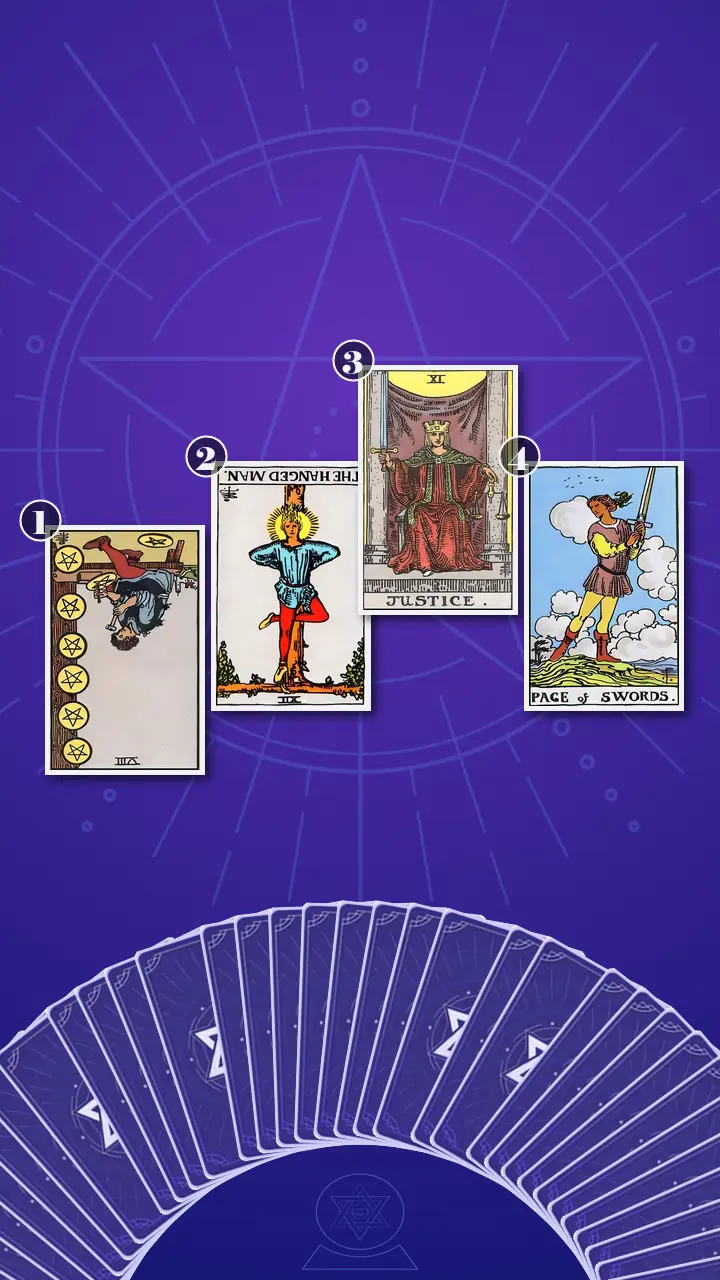
The four cards would move like a gentle staircase from the workbench toward a conversation. The first would show the visible pattern: extra work, late nights, and polishing used as a substitute for promotion criteria. The second would reveal the hidden waiting strategy that kept the pattern alive. The third, placed highest in the centre, would introduce the standards-based transformation. The fourth would carry that insight into one precise, low-pressure question.
I laid the cards from lower left to upper centre and then down toward the right. The arrangement mattered because it showed causality without pretending to predict an outcome: one behaviour fed one belief, one truth interrupted the loop, and one question could change the next move.
Reading the Map: When More Work Becomes Proof-Work
Position 1: The Row of Finished Pentacles
Now, the card I turned over for the presenting problem and visible symptom was the Eight of Pentacles, in reversed position. This position shows the behaviour Jordan had already described: taking on extra work, staying late, rereading finished deliverables, and hoping output will substitute for a clear discussion about advancement.
In everyday life, this was Jordan at 10:45 p.m., checking minor wording in a project update and adding a low-visibility example while the promotion question remained open in another tab. The craftsman in the card had a bench, a hammer, and a neat row of completed pentacles. Jordan had a Notion brag document, a private list of shipped projects, and a record of compliments. Both showed real labour. Neither contained a shared rubric explaining which piece counted toward the next level.
Reversed, the Eight of Pentacles showed diligence becoming blocked through repetition. The energy was not a lack of skill. It was an excess of polishing and a deficiency of agreed measurement. Every extra hour gave Jordan a brief rush of control, but the work remained difficult to compare against promotion criteria that nobody had named.
I returned to the kitchen table scene. I could almost hear the fan and see the cold tea. Jordan's inner sentence was, “If I make this one detail undeniable, maybe I will not have to ask.” That sentence held both the sincerity of their work and the quiet bargain beneath it. Dependable effort was being asked to carry the whole conversation about value.
Jordan gave a short, bitter laugh instead of nodding. “That is too accurate,” they said. “Almost cruel.” Their fingers pressed against the edge of the chair, then released. I told them I was not reading the card as a criticism. “The work is not the problem,” I said. “The problem is asking the work to answer a question it was never given the information to answer.”
Position 2: The Meeting That Never Quite Begins
Now, the card I turned over for the psychological root and blind spot was The Hanged Man, in reversed position. This position reveals the fear and waiting strategy beneath the visible overwork, especially the belief that a direct question might expose an answer Jordan would rather postpone.
I brought us to a glass meeting room near Old Street. At 3:56 p.m., a manager had said, “You are doing brilliantly. Just keep building momentum,” while beginning to close the laptop. The HVAC hummed. The last coffee tasted bitter. Jordan's jaw tightened around the promotion question they had rehearsed all morning. They asked about the next assignment instead.
The reversed Hanged Man showed suspended agency. Jordan had mistaken remaining inside the same frame for patience: “I am being patient. I am being professional. I will ask after the next win.” The pause had once protected hope, but it had become a holding pattern. Waiting felt safer than testing whether the organisation could name its standards, even though waiting supplied no new information.
Jordan went quiet. I watched their breath become shallow, saw one hand close around the other, and waited rather than filling the silence. “I thought waiting was the mature thing,” they said at last. I answered carefully: “It may have been a protective choice. It does not make you passive or foolish. It tells us what the waiting has been protecting you from: the possibility that the answer will remain vague even after you ask.”
I placed the first two cards side by side. “Your work can be excellent and the deal can still be unclear,” I said. The sentence did not erase Jordan's responsibility to communicate, and it did not excuse an organisation from explaining its own progression system. It separated personal worth from workplace opacity.
When Justice Made the Exchange Visible
Position 3: Justice on the Highest Step
The room became quieter when I turned over the card in the transformation and cognitive pivot position. It was Justice, upright, the bridge between suspended waiting and direct fact-finding. Its invoked energy was clear standards, proportional exchange, accountability, honest assessment, and self-respecting discernment.
Justice did not promise Jordan a promotion. The balanced scales asked for something more immediate and more honest: contribution on one side, stated criteria on the other. The upright sword made an invisible judgment process discussable. In modern terms, this was the question: “Which two or three outcomes and behaviours distinguish my current level from the next, and what evidence would demonstrate them?”
This is where I used my signature diagnostic lens, Career Cycle Phase Identification. I wanted Jordan to distinguish a personal skill gap from an industry-wide or organisation-wide contraction before treating every delay as a verdict on their ability. I asked three practical questions: Have the next-level criteria been stated? Has the manager provided a concrete example? Are those standards being applied consistently to people whose roles and results are comparable? If the criteria are absent, inconsistent, or constantly moving, another late night cannot manufacture the missing structure.
I also noticed the elemental movement in the spread. The Eight of Pentacles began with blocked Earth, real work trapped in repetition. Justice introduced the clear Air of standards and evidence. The Page of Swords would carry that Air into speech. The message was not to abandon dependable work. It was to add language and measurement before adding more labour.
At that point, Jordan was still caught inside the familiar scene from the previous week. The project update was already good, the tea was cold, and the promotion question sat unsent in another tab. One more polished example felt easier than finding out whether the workplace could name what progression actually required.
Hard work alone is not a fair contract; name the standards, weigh the evidence, and let Justice's scales make the exchange visible.
For a moment, Jordan's breath stopped halfway in. Their face went still, and the fingers that had been tapping against the chair hovered in the air. Then their eyes moved between the two imaginary columns I had drawn on the table: contribution and criterion. I saw an old memory replay in the unfocused look, every late-night revision being weighed against a blank space. Their mouth tightened. “But if I ask now, does that mean I have been doing it wrong this whole time?” The question carried anger before it carried relief. I let it remain. Then their shoulders dropped a fraction, as if the body had finally been told it could stop carrying an invisible scale. A longer breath left their chest. The radiator clicked off, and the sudden quiet made the empty criteria column feel almost physical. “My work can be real and valuable, and the exchange can still be unclear,” Jordan said, first cautiously, then with a steadier voice. Now, using this new view, can you think back to a moment last week when this insight might have made you feel differently?
I wrote the shorter sentence beneath the two columns: Effort is evidence, not a silent contract. I explained that evidence becomes useful only when it can be connected to a stated standard. That was the first movement from contracted overwork and resentful waiting toward grounded self-trust and evidence-based self-advocacy. It was not certainty. It was a fairer place from which to gather information.
Position 4: The Page Who Asks Before Running
Now, the card I turned over for integration and the practical next step was the Page of Swords, upright. The Page represented curiosity, alertness, direct communication, and information-gathering before action. Its raised sword was not an ultimatum. It was one clean question.
I pictured Jordan's cursor hovering over Send. The right sentence did not need to be perfect, and the conversation did not need to force an immediate decision to stay or leave. The Page asked Jordan to gather facts: “I would like to understand how progression is assessed in this role. Which outcomes and behaviours would you need to see consistently for the next level?”
Jordan's shoulders loosened. They opened the Notes app and typed the question without adding a paragraph of explanation. “I do not need the perfect script or a guaranteed outcome,” they said. “I need one question that can produce information.” That was the Page of Swords in real life: certainty giving way to inquiry, confrontation giving way to fact-finding, and a moving cursor becoming a small act of self-advocacy.
The Criteria-Before-Extra-Work Check
The four cards told one coherent story. Jordan's past and present were not empty of effort; they were crowded with it. The Eight of Pentacles reversed showed repeated proof-work. The Hanged Man reversed showed why the proof-work continued: waiting preserved hope and postponed the risk of hearing an unwelcome answer. Justice interrupted the loop by asking whether the exchange had terms. The Page of Swords turned that question into a sentence Jordan could bring to a one-to-one.
The blind spot was not that Jordan cared too much or had failed to advocate perfectly. It was treating an opaque organisational process as a personal skills test. When the thought more effort will make my value undeniable appeared, Jordan accepted another task, stayed late, and polished the deliverable. Productivity brought temporary relief, but it could not define the missing criterion. That was the invisible merit trap: increasing effort when the rules of recognition remained unclear.
My second career lens, Promotion Window Calibration, helped us look at timing without turning timing into fate. I asked Jordan to map organisational shifts against observable signals: whether responsibilities were expanding, whether managers could describe next-level outcomes, whether comparable colleagues were being assessed by the same standards, and whether the team had a realistic path for advancement. The goal was not to predict a promotion. It was to locate the path of least resistance for a useful conversation and notice whether the workplace was capable of reciprocal clarity.
Before adding extra work, I asked Jordan to add a question. These were the small next steps we agreed on:
- Put the criteria question on the agendaBefore the next one-to-one, add this sentence to the shared agenda or private notes: “Which two or three outcomes or behaviours distinguish my current level from the next one?” During the conversation, ask for one recent example of work that met the next-level standard, write down its observable features, and send a short recap within 24 hours.Frame the conversation as prioritisation and development, not a demand for a guaranteed promotion. Two or three distinctions are enough. The first draft can stay private until Jordan decides the setting feels professionally safe.
- Build a ten-minute effort-to-evidence ledgerIn Notes, Notion, or an approved work document, create four columns: agreed criterion, outcome, evidence, and date. Choose one recent deliverable and describe its result in observable terms, such as time saved, an error reduced, a deadline met, or a stakeholder decision enabled. Label the task linked, unlinked, or unknown according to whether it connects to a stated progression criterion.Set a ten-minute limit and begin with one task. This is for clarity, not for proving that every hour was justified. The minimum version is one outcome and the word “unknown” under criterion. Keep confidential workplace details out of personal notes.
- Ask once, then observe the orbitBring the two-sentence promotion question to one scheduled one-to-one, ask it, and pause instead of rescuing the silence. Record the response under measurable, partly defined, and still vague. For the following 30 days, use my Micro-Orbit Observation: spend ten minutes each Friday noting changes in scope, clarity, feedback, and organisational direction. Mark a clear opportunity as a blueshift, unresolved ambiguity as neutral, and repeated narrowing or risk as a redshift.The Micro-Orbit Observation is a tracking strategy, not a layoff prediction or a command to leave. It helps separate a changing career cycle from a personal verdict. You do not have to decide today; you only have to notice what the workplace actually shows.

A Week Later, the Question Had a Shape
A week later, Jordan sent me a message after a one-to-one. Their manager had named two observable outcomes, admitted that a third expectation was still being defined, and agreed to revisit the conversation in a month. The answer was not perfectly clean, but it was no longer a cloud of praise. Jordan wrote the criteria down, asked what a new reporting task would replace, and declined one low-visibility addition until the priority was clear.
The bittersweet part was quiet. Jordan slept a full night after adding the question to the agenda. In the morning, the first thought was still, “What if the answer is disappointing?” This time, they smiled, opened the note, and did not add another task before breakfast.
I told Jordan that our Journey to Clarity had not produced a prophecy or a guaranteed title. It had produced a better relationship with evidence. Their work could remain careful and ambitious without being asked to prove their worth in silence. The next phase was still unfolding, but Jordan had moved from resentful waiting toward a grounded confidence that could ask, listen, document, and choose.
When the rules stay blurry, shoulders can tighten as if one more late night might protect both promotion chances and the feeling of being worth choosing. In this Four-Layer Insight Ladder · Context Edition, the empty criteria column was not a failure. It was information, and information gave Jordan somewhere honest to begin.
If your effort no longer had to carry the whole conversation, what is one small question you might let speak for it?