Already bracing for disappointment?

A clear audit of lowered expectations, the tarot cards that mirror it, and reading insights where the pattern appears.

Defensive Pessimism
What is this really?

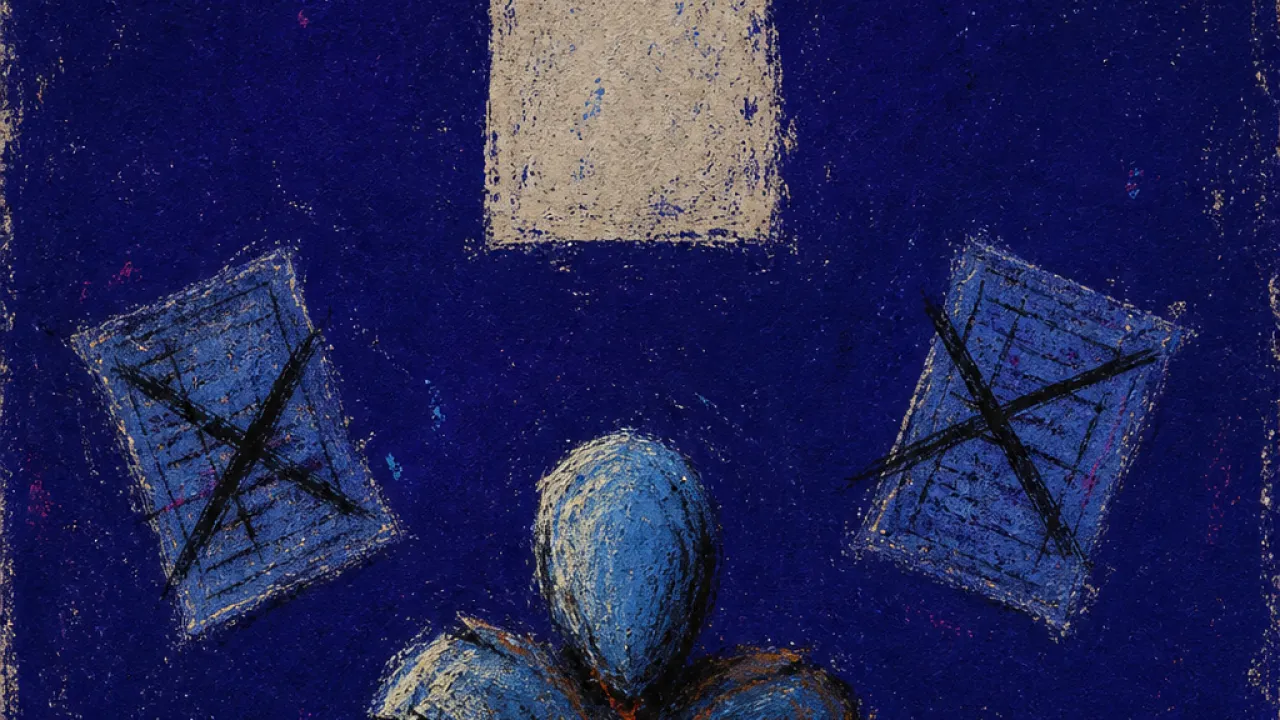
You scan a new option for failure points before you let yourself want it: the job will disappoint, the text will go cold, the class will be a mess, the plan will probably fall apart. You do this to lower the drop, turning negative forecasting into a cognitive defense that makes uncertainty feel less exposed and gives your body a sense of being ready. Yet the more you rehearse the letdown in advance, the more caution and desire stop sharing the same room; possibility arrives already pre-dismissed, much like the Four of Cups figure sitting before upright cups with closed eyes and folded limbs while the offered cup waits outside his attention.

Why did it happen?

At some point, expecting less may have helped you stay steady when wanting something openly made the drop feel sharper. Your body learned to dim the emotional volume first, so a no, a weak reply, or a missed chance could not hit as suddenly. Now the same subconscious loop can run before the facts arrive: your shoulders brace, your mind pre-writes the disappointing version, and you can feel mentally spent before the moment has had enough contact with reality.

How does it feel?

  • When a manager mentions a role, pitch, or project, you nod once, keep your pen moving, and write the downside in the margin before anyone finishes describing the next step... in that pause, your breath may go shallow and the pen keeps tapping against the page. You can let the caution be present without making it responsible for the whole room.
  • A friend sends an invite, and you half-smile at the screen, type 'maybe, but it might be a lot,' then delete the last word twice... as you do it, your jaw sets and your chest feels slightly dull, like the answer is trying to shrink. Letting the first reaction sit there for a moment is allowed.
  • After a warm date or a calm conversation, you place the phone face down, then flip it back over to check whether the tone has changed... that night, your shoulders climb toward your ears and your stomach tightens each time the screen lights up. Uncertainty can stay uncertain for a little while.
  • Before submitting a draft, application, or presentation, you rename the file one more time, skim the weakest paragraph, and hover over the send button without pressing it... your temples feel pressed from the inside, your fingertips go cool, and your eyes keep returning to the part that could be criticized. The bracing can be noticed without turning it into an order.
  • With a course page, apartment listing, or travel plan open, you squint at the fine print, open a calculator, and close the tab before saving anything... afterward, there may be a heavy feeling behind your eyes and a stiff line through your neck. Letting that pause exist is enough for now.

Defensive Pessimism in Tarot Cards

The reflex to lower the drop before anything has happened is the pattern these cards are tracking. When your breath goes shallow and the pen keeps tapping against the page, the body has already started treating possibility like something to manage. From a Jungian archetypal theory lens, this guarded forecast can be understood as protection narrowing attention before contact. The Tarot Cards below reflect the unconscious dynamics of that narrowing; here are the cards that mirror this pattern.

Four of Cups Upright
The fourth cup is offered from the cloud before the young man has even opened his eyes to inspect it, while the three cups before him carry the residue of earlier emotional experience. The scene shows an offer being judged from inside a closed field of reference, before direct contact can challenge the expectation of disappointment. Defensive Pessimism uses that early judgment as protection. It lets you feel prepared for letdown by treating every new inner prompt, practice, or emotional opening as probably empty, but the cost is that your nervous system never gets fresh evidence that something different can actually nourish you.
Reversed
The youth sits within reach of a fresh cup, yet his face and folded body carry no expectancy toward it. The visual field suggests an offer arriving into a system that has already reduced its emotional forecast before the cup can be tested. In friendship, Defensive Pessimism can pre-reject invitations, apologies, or new closeness by assuming they will disappoint you anyway. You protect yourself from hoping, but the same forecast makes every friend look like another empty cup before the relationship has a chance to show current evidence.
Five of Cups Reversed
The figure’s bowed posture can become more than mourning when read through the reversed field; it can harden into a stance that expects the next movement to hurt. The bridge is still visible, but the body does not orient toward it, as if preparing for disappointment has become safer than testing the path. That is Defensive Pessimism in career strategy. The mind rehearses rejection from a manager, recruiter, panel, or new industry before the attempt begins, using low expectations as a shield against another professional bruise. The Five of Cups shows why this defense is costly. By predicting the loss in advance, the pattern feels prepared, but it also makes the two standing cups harder to use. You may be calling it realism when the card is showing a protective forecast that has started to replace movement.
Knight of Pentacles Upright
The Knight faces a wide field, but his movement is suspended while he evaluates the pentacle and the road ahead. The black horse has power, the armor is prepared, and the horizon is open, yet the whole scene is organized around anticipation before action. That pause reflects a protective strategy where the mind rehearses risk before permitting inner movement. Instead of meeting an emotion directly, the system scans for what might go wrong, using caution as a way to feel less exposed. In introspection, Defensive Pessimism turns self-understanding into preemptive threat modeling. You may believe you are being realistic, but the pattern reveals how often the psyche treats growth, vulnerability, and emotional honesty as events that must be survived in advance.
Ace of Swords Reversed
The sword rises against a cold, sparse background, with distant mountains suggesting difficulty before any path is taken. Reversed, the blade's focus can become a threat scanner, pointing the mind toward everything that could fail. Defensive Pessimism uses negative forecasting as a way to feel prepared. It can look responsible from the outside, but inside the decision field it often turns every option into a risk audit that never reaches a balanced read of desire, capacity, and upside. In a choice reading, this pattern reveals where You may be calling fear-based rehearsal realism. The card does not ask the mind to ignore risk; it asks whether risk has become the only data allowed to speak.
Three of Swords Upright
The three swords are evenly spaced, creating a painful symmetry across the heart rather than a chaotic attack. The wound is severe, but the image is strangely ordered, as if the psyche has organized distress into a structure it can monitor. That order is what makes Defensive Pessimism so persuasive. The mind rehearses disappointment in advance because expecting pain feels safer than being caught unprepared, especially when You are trying to choose a long-range path under uncertain conditions. In a direction reading, the grey rain shows the cost of that protection: the future gets pre-soaked in loss before any real evidence arrives. The pattern can help You brace, but it can also drain the very energy needed to test the route that might still be alive.
Page of Swords Upright
The Page stands on uneven ground with the sword already raised, as if the future has to be met by rehearsing danger in advance. The thick clouds and rugged path make preparation feel rational, even necessary. That visual chain maps onto Defensive Pessimism because the mind manages uncertainty by preloading failure scenarios. You may call it being realistic, but in personal growth the rehearsal can become a private ritual that drains energy before the first real attempt. The pattern protects against shock by trying to feel disappointed early. The Page's readiness shows why that defense can feel intelligent: it gives the body a sense of control while quietly teaching it to expect defeat.
Nine of Wands Upright
The figure's eyes are not relaxed into the landscape; they are angled toward the side where the next impact might arrive. The bandage on his head keeps earlier difficulty visible, while the row of wands turns the scene into a prepared defensive corridor. That is the visual logic of Defensive Pessimism: the mind rehearses the worst-case outcome so the body can feel ready. In personal growth, this can create discipline and useful pre-planning, but it also makes progress feel like a setup for the next blow. The pattern is not simple negativity. It is a protective forecast system that tries to prevent surprise by making failure mentally arrive early. The cost appears when every new goal has to pass through a threat simulation before You allow Yourself to move.
Reversed
The figure's grip on the staff looks less like relaxed readiness and more like a rehearsed brace. The fence behind him narrows the social field into a line of possible attack, while his eyes keep tracking the place where trouble might appear. In reversed form, this becomes a prediction system that prepares for disappointment as a way to feel less exposed. Before entering a group, You may mentally rehearse being ignored, judged, or replaced, then call the rehearsal realism because optimism feels too vulnerable. Defensive Pessimism fits the Nine of Wands because the card shows a wounded system trying to stay ahead of impact. The strategy can reduce surprise, but it also trains the mind to meet social connection through a forecast of loss rather than through what is actually unfolding.

Defensive Pessimism in Tarot Card Reading Insights

For anyone who lowers expectations before the facts arrive, others have brought the same guarded forecast into readings. The shift from cards to readings shows how this pattern can appear when someone sits with a spread, without turning it into an answer. Below are Tarot Reading Insights that speak to this pattern.
Psychological patterns related to Defensive Pessimism