When the Degree Stops Adding Up

Track the tuition-versus-career squeeze, explore related tarot cards, and browse tarot reading insights from similar readings.

Grad School Roi Reckoning

A hunched figure at a desk, tilted scales of bills and job posts pressing into the upper back

What is this situation?

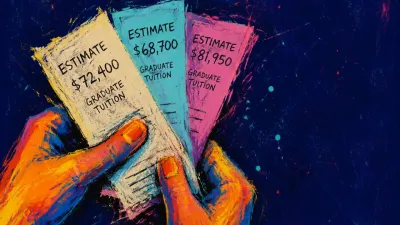
Grad School ROI Reckoning — you step into the program because it was presented as the next serious move: a credential that could open better work, higher pay, more stability, or at least a clearer lane than the one you were in. At first, the structure makes sense on paper: orientation slides, faculty bios, career outcome pages, a funding letter, a loan portal, a calendar full of seminars and deadlines. Then the daily math starts to change shape. Tuition fees show up beside rent, transport, software, books, conference costs, and the hours you cannot spend earning money because the program keeps taking prime parts of your week. Professors talk about passion and rigor while job boards ask for years of experience, internships, publications, portfolios, or networking access that the degree does not automatically provide. Career services gives polished salary ranges, but your own inbox fills with vague postings, unpaid opportunities, short-term contracts, and entry-level pay that does not match the price of getting here. You keep refreshing spreadsheets, comparing stipend payments to grocery receipts, measuring every assignment against the question no one can answer cleanly: will this actually come back to me in a form I can use? The pressure is not only academic; it is the institution, the labor market, the debt schedule, and the shrinking timeline all pressing on the same desk while you try to keep producing work. By the time you open another billing notice or skim another job listing that treats your degree as a nice extra rather than a lever, the whole path can look less like a ladder and more like a field you have been tending for months with no visible harvest, much like the figure on the Seven of Pentacles, leaning on a tool and staring at what has grown while still waiting to see whether the effort will pay back.

Why it's not you?

The problem is not that you misread your own ambition or failed to work hard enough. This situation is created by rising program costs, unclear career outcomes, limited funding, and a hiring market that often benefits from advanced credentials without pricing them fairly. That pressure belongs to the system around the degree, not to your personal worth.

Grad School Roi Reckoning in Tarot Cards

That tight pressure that shows up when the tuition bill, loan portal, and low-paying job post sit on the same screen is part of the Grad School ROI Reckoning. This is an environmental, structural dynamic shaped by program costs, hiring filters, stipend limits, and the way employers price the degree after you have already paid for it. The cards below do not decide whether the degree was worth it; they reflect the pressures, waiting, sunk effort, and unclear payoff built into the situation. These are the Tarot Cards that tend to mirror this kind of reckoning.

The Hierophant
Reversed
The Hierophant's ceremonial clothing, raised hand, institutional pillars, and waiting students stage legitimacy as something granted from above. Reversed, the external authority remains powerful while its promise becomes harder to trust, mirroring the moment when a degree still feels like proof of seriousness even though its labor-market return has become doubtful. You are revising an inherited success rule, not erasing the work you have done. The scene makes it possible to separate knowledge, status, employability, and self-worth into distinct categories, so the institution's weakening economic promise does not get converted into a verdict about your capability.
Justice
Reversed
Justice holds scales in one hand and an upright sword in the other between rigid pillars, presenting a system that claims to measure obligations consistently. Reversed, the same formal apparatus highlights an asymmetry: your fees, deadlines, and performance standards are precise, while the program's employment claims may remain selective, averaged, or difficult to verify. You are evaluating the fairness and transparency of an institutional exchange rather than demanding a guaranteed personal outcome. The misaligned scales direct attention toward which costs were disclosed, which career claims shaped enrollment, whose results appear in the published data, and which risks were transferred entirely to students.
The Hanged Man
Upright
The figure suspended from living wood hangs in a fixed position while a halo marks the possibility of seeing the situation differently. Graduate school can create a comparable interval in which full-time earnings, career seniority, and geographic flexibility are exchanged for training whose eventual market value remains uncertain. You can acknowledge both sides of that suspension without romanticising sacrifice. The pause offers a vantage point from which to inspect the credential, but its cost remains concrete, and the relevant timing signal is whether the period is producing clearer access, stronger evidence, or a defined next threshold rather than indefinite deferral.
The Devil
Upright
The chained figures stand beneath a raised authority, but the collars around their necks are visibly loose enough to show that constraint and total impossibility are not the same thing. Debt, completed credits, prestige, family expectations, and fear of an unfinished credential can similarly make staying feel mandatory even when the formal decision remains open. You are dealing with a choice architecture shaped by material leverage, not a simple test of willpower. The image makes the binding mechanisms inspectable, allowing loan obligations, visa or funding conditions, career evidence, status pressure, and sunk-cost emotion to be separated instead of merging into one command to continue.
Two of Pentacles
Upright
The two pentacles remain connected even as the figure shifts their weight, while the ships behind him rise and fall with conditions he does not control. Academic workload and financial survival are similarly linked: a heavier course period can reduce earning capacity, while an extra work shift can threaten attendance, preparation, or research progress. You may have genuine skill in keeping both systems moving, but successful juggling does not prove that the arrangement is sustainable or fairly designed. The card makes the dependency visible, showing how program structure, funding levels, and labor-market conditions determine the academic bandwidth available to you.
Five of Pentacles
Upright
Two figures move through snow beneath a bright stained-glass window containing five pentacles, placing material hardship directly beside an institution associated with shelter and resources. That contrast mirrors a graduate student stretching a stipend or loans across rent, food, transport, software, and academic fees while the university continues to require full participation. You are encountering an access gap, not failing a private test of resilience. The lit window makes institutional resources part of the picture while the cold foreground shows the difference between support that exists in principle and funding, fee relief, paid work, or practical assistance that can actually be reached.
Six of Pentacles
Reversed
A standing figure controls both the scales and the coins while two people receive resources from below, making the power to measure need inseparable from the power to distribute support. Reversed, that arrangement resembles funding packages that look adequate in an offer letter but leave rent, fees, research costs, and required professional activities uncovered. You are operating inside a resource hierarchy where the institution can define compensation while also setting the conditions of participation. The unequal scene exposes how assistantship labor, unpaid placements, conference expectations, and scholarship rules can transfer the program's operating costs onto students while preserving the language of opportunity.
Seven of Pentacles
Upright
The figure leaning on a hoe beside seven pentacles has already completed substantial work, yet the crop is not ready to convert into something usable. The accumulated coins resemble credits, papers, research hours, and tuition payments: visible proof of investment without equally visible evidence that employers will price the resulting degree fairly. You are being asked to evaluate the production system around your education, not to prove your dedication by producing indefinitely. The pause separates academic accumulation from practical return, making room to identify which parts of the program create demonstrable skills, references, portfolio evidence, or access and which parts continue to consume resources without changing your position.
Eight of Pentacles
Upright
The craftsperson at the bench carves one pentacle while completed pieces are displayed in a visible sequence and the town remains at a distance. The scene distinguishes disciplined production from external use: graduate work can be rigorous and still fail to travel if assignments remain trapped inside course portals, narrow assessment criteria, or inaccessible academic formats. You have a concrete basis for examining what the program is helping you make, not only what it is asking you to complete. The available pathway lies in the visible outputs themselves, because skills, publications, prototypes, portfolio pieces, and credible demonstrations can show whether academic effort is becoming portable beyond the university.

Grad School Roi Reckoning in Tarot Card Reading Insights

When people bring Grad School ROI Reckoning into readings, the question is often less about ambition and more about what the degree is costing against what the market is offering back. The readings below show how others have sat with the tuition-versus-career squeeze through the cards. Tarot Reading Insights from related readings.

Psychological Contexts Related to Grad School Roi Reckoning