When Clothes Start Arguing Back

A grounded look at wardrobe pressure, body-neutral reset moments, related tarot cards, and tarot reading insights from similar sessions.

Body-neutral Wardrobe Reset
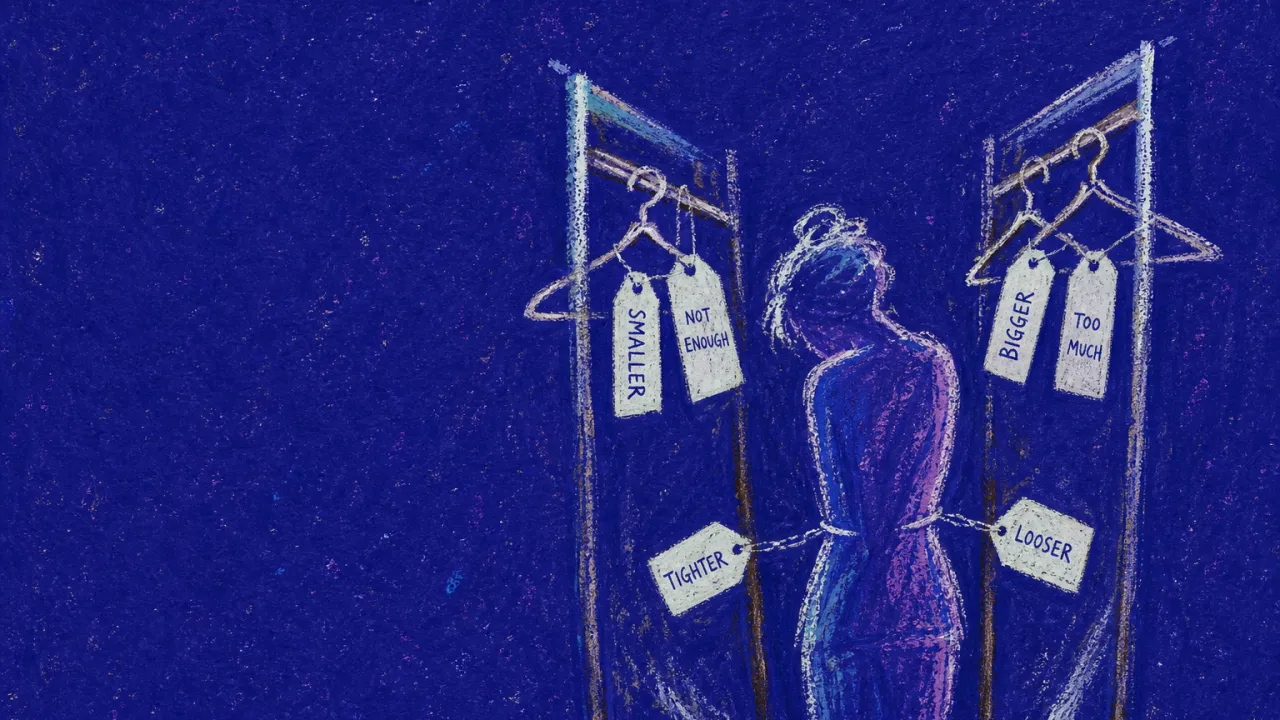
A solitary figure before an open closet, surrounded by inward-pointing hangers, size tags, and mirror edges

What is this situation?

Body-Neutral Wardrobe Reset — you open your closet and realize it has stopped being a simple place to get dressed. There are jeans you keep because they used to fit, shirts bought for a version of yourself you were trying to become, outfits that only work if you stand a certain way, and pieces you avoid because one comment, one photo, or one dressing-room mirror got attached to them. The reset begins in a normal room, maybe on a Sunday afternoon with laundry on the floor and hangers scraping against the rail, but it quickly turns into a negotiation with size tags, trend cycles, old screenshots, return windows, social feeds, and the quiet pressure to make your body match the clothes instead of letting the clothes serve your body. You try things on and notice how quickly the room changes: the mirror becomes a judge, the waistband becomes a deadline, the label becomes a score, and even comfortable clothes can feel like evidence in a trial you never agreed to enter. You make piles for keep, donate, tailor, maybe later, and every pile carries a different kind of external pressure: money already spent, comments from other people, the fear of looking like you have stopped trying, the pull of an aesthetic that was never built around your daily life. By the end, the goal is not to love every reflection or turn getting dressed into a personal improvement project; it is to remove the objects that keep forcing your body into an argument before you have even left the house, much like the figure on the Eight of Swords, surrounded by sharp boundaries that make an open space feel impossible to move through.

Why it's not you?

The problem is not that your body is failing the clothes; it is that clothes, sizing systems, mirrors, algorithms, and old comments often turn getting dressed into a daily comparison loop. A wardrobe can become crowded with outside expectations that were never neutral to begin with. Naming the reset as external pressure gives the situation a clear shape: the closet needs editing because the environment has been asking your body to answer for too much.

Body-neutral Wardrobe Reset in Tarot Cards

In a Body-Neutral Wardrobe Reset, the closet is not just storage; it is the place where old sizes, trend pressure, and borrowed comments keep meeting your body before the day even starts. The moment your shoulders tighten before opening the doors is a physical record of an environmental, structural dynamic built from sizing systems, mirrors, tags, and social comparison. The cards below do not judge your body or your choices; they reflect the shape of the pressure around you. Here are the Tarot Cards that tend to mirror this kind of wardrobe reset.

Wheel of Fortune
Upright
The wheel turns between rising and falling figures, while four steady figures remain at its corners. Fashion cycles, sale clocks, return windows, and social-feed microtrends can work in the same way: they create movement and urgency around the closet while daily needs remain more stable. Upright, the wheel makes timing visible without granting the cycle final authority. You can identify which pressure comes from a commercial or social clock and which requirement belongs to the actual season, routine, budget, and comfort conditions of your life.
Justice
Reversed
The sword, balanced scales, and rigid framed seat are all inverted in the reversed card, turning an apparatus of judgement visibly unstable. Size charts, mirrors, and public styling norms can create the same false appearance of neutral measurement, even though brands, lighting, trend cycles, and social expectations are inconsistent. Reversed, the card does not ask you to submit to a distorted scorecard. It names the structural mismatch between an external classification system and a lived body, allowing the wardrobe reset to restore clothing's practical role instead of treating labels as rulings.
Death
Upright
The black banner passes through a scene of ended authority, while the bright sun and open gate establish a horizon beyond it. Clothes bought for an older role or an imagined future version of yourself can become material markers of a direction that no longer fits the life in front of you. Upright, the path is not blank; it has light and forward movement. You can recognise that changing a wardrobe's organising principle is part of a broader identity transition, where present-day function becomes more reliable than preserving a costume for a closed chapter.
The Devil
Upright
The two figures are chained beneath a shared symbol, making their constraint visibly social rather than solitary. Trend cycles, friends' remarks, photos, and algorithmic style content can create a similar group-level rulebook, where clothes become evidence of whether someone belongs, is desirable, or is trying hard enough. Upright, the image exposes the arrangement instead of naturalising it. You can see the audience embedded in a garment's emotional charge, which makes it possible to distinguish a real social preference from an external script that has entered the closet uninvited.
Seven of Cups
Reversed
Seven glowing cups present jewels, a laurel wreath, a castle, a figure under a veil, and other projected rewards to a person seen from behind. A crowded closet can offer the same kind of visual field, where each purchase carries an aesthetic promise, a social-feed reference, or a version of life it was supposed to unlock. Reversed, the card brings the abundance problem down to selection. You can see how an idealised option set obscures what is already functional, allowing the reset to separate wearable pieces from the accumulated projections around them.
Two of Pentacles
Upright
Two pentacles move between the juggler's hands while the infinity-shaped ribbon connects them, and the background waves refuse a perfectly stable rhythm. Keep, tailor, donate, and replace are similarly connected choices: spending, space, fit, and the actual week ahead all move together. The upright card gives the choice structure without insisting that one permanent answer solve every future scenario. You can treat a garment as part of a living resource system, where present usability has weight alongside cost and where changing conditions do not automatically signal personal inconsistency.
Four of Pentacles
Upright
The seated figure clamps one pentacle to the chest, balances another on the head, and pins two beneath the feet. That physical grip mirrors a closet where money spent, an old size, and a desired aesthetic are all being guarded at once, even when the garments no longer participate in daily life. Upright, the card makes the retained resource visible rather than pretending it is meaningless. You can account for the purchase and the story attached to it while also seeing the operational cost: a wardrobe cannot become easier to use when every unworn item must remain protected from circulation.
Reversed
The figure's pentacles are held against the body, beneath the feet, and above the head; in reversal, that rigid arrangement visibly loses stability. A pair of expensive jeans that no longer works can produce the same decision trap, because its price and former role obstruct a clear assessment of its current function. The reversed image does not make release effortless. It reveals that the old holding pattern has already limited access to both closet space and choice. You can name the sunk-cost pressure without allowing it to decide whether a garment remains part of your present physical life.
Queen of Pentacles
Upright
The queen holds a pentacle on her lap amid a cultivated garden, a solid throne, and a small rabbit moving through the foreground. The scene grounds material care in an inhabited environment, which closely fits a closet rebuilt around laundry, comfort, storage limits, and the body moving through an ordinary week. Upright, the material resource is available and tended rather than used as a status display. You can frame the reset around garments that make daily life more workable, allowing the wardrobe to support rest, movement, and self-direction without requiring every item to carry an aspirational identity.
Eight of Swords
Upright
The figure stands inside a carefully marked perimeter, with a path behind the swords that has not disappeared. Clothes saved for a hypothetical future self can make the closet work the same way, keeping an external improvement script physically present in every daily decision. The upright card makes the gap structurally important. You can see the difference between a garment as an object and a garment as a standing demand that your body change; that distinction gives the reset a clear cognitive purpose without requiring the mirror to become a source of approval.

Body-neutral Wardrobe Reset in Tarot Card Reading Insights

A Body-Neutral Wardrobe Reset is the kind of everyday situation people bring into readings when getting dressed has become a negotiation with tags, mirrors, and old versions of themselves. The readings below show how this situation can appear when someone asks for clarity around what to keep, release, or stop measuring themselves against. Tarot Reading Insights from sessions with this theme.


Psychological Contexts Related to Body-neutral Wardrobe Reset