Why Does Paying Feel Watched?

Explore the public pressure of checkout tipping, related tarot cards, and reading insights from similar payment moments.

Tip Screen Pressure
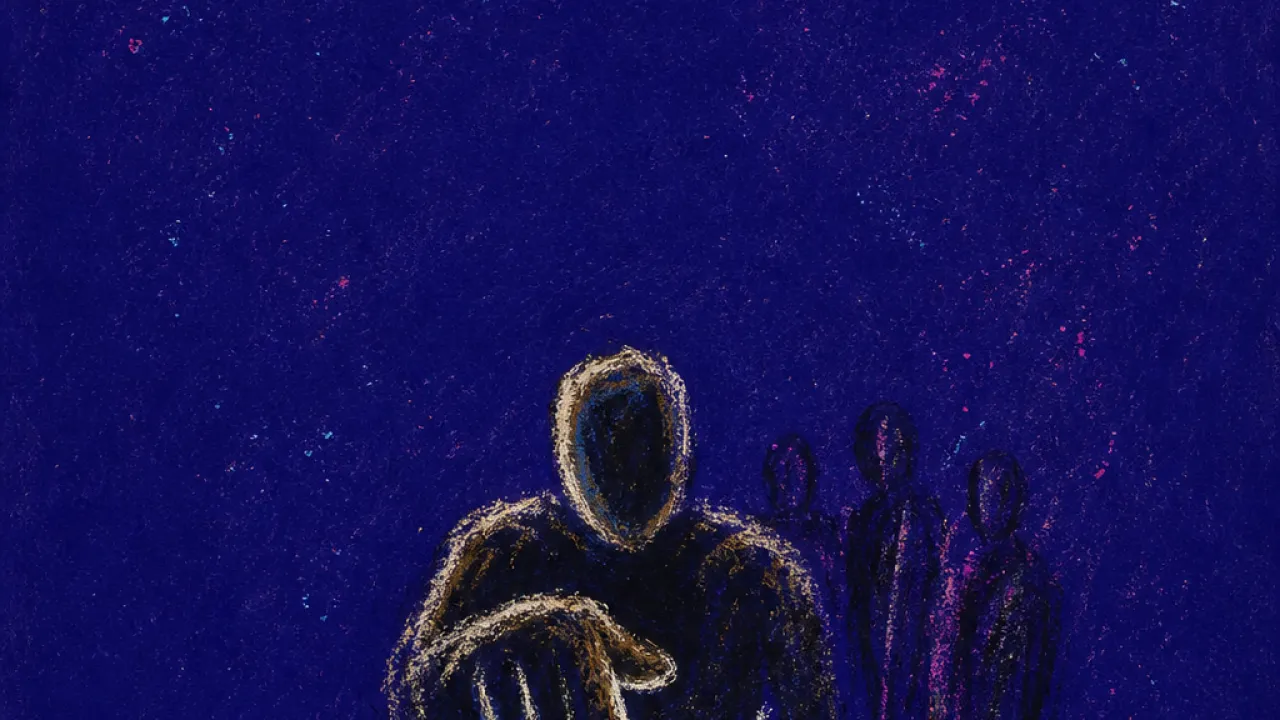
A solitary figure holding a card near a glowing tip screen, with bright percentages rising as silhouettes wait behind

What is this situation?

Tip Screen Pressure — you step up to pay for a coffee, takeout order, haircut, rideshare, or delivery pickup, and the transaction suddenly stops being private. The worker turns the tablet toward you, the preset tip buttons fill the screen, and the smallest option still looks larger than what you expected to spend. You can feel the person behind the counter waiting, the queue behind you shifting, the card reader frozen until you choose, and the tiny “custom” or “no tip” option sitting somewhere less obvious than the bright percentages. Maybe the service was fine, maybe it was self-serve, maybe you already paid a fee, but the screen has compressed all of that into one public decision that has to be made fast. Your thumb hovers, your shoulders tighten, and you start doing silent math while also calculating how your choice might look to the person watching the terminal. What should have been a simple payment becomes a small social performance where the interface, the worker’s presence, and the people behind you all press on the same second, much like the Six of Pentacles, where coins are handed out under visible scales while other figures wait in full view.

Why it's not you?

The problem is not that you are selfish, awkward, or bad with money — the pressure is built into the checkout setup itself. Suggested percentages, public screens, waiting staff, and a line behind you turn a spending choice into a visible social test. That pressure belongs to the system around the payment, not to your character.

Tip Screen Pressure in Tarot Cards

Tip Screen Pressure is the moment a private spending decision gets pushed into the open, with the screen turned toward you and a line forming behind. Your thumb hovers over the percentages while your shoulders tighten, because the choice is being framed where other people can see it. This is an environmental and structural dynamic built into the checkout flow, not a measure of your generosity or character. These Tarot Cards reflect the shape of that pressure as it appears at the counter.

The Hierophant
Upright
Two kneeling followers face a robed authority while crossed keys lie between them. The arrangement resembles a checkout ritual governed by an inherited social code: bright tip presets present the approved response, while the worker and queue become witnesses to whether that response is followed. The upright structure shows why a small payment prompt can carry the weight of a manners test. You are not only evaluating service; you are being positioned as someone whose consideration and social belonging may be inferred from one visible button press. The keys keep that code in view and therefore available for inspection, separating a platform-mediated convention from any verdict about your character.
Justice
Reversed
A raised sword sits beside a visible set of scales, placing decisive action next to proportional judgment. On a tip screen, those functions are split unevenly: the interface demands an immediate verdict while preset percentages establish the scale before you have decided which service, fees, labour, or budget factors should count. The reversed quality emerges from a process that looks neutral while weighting the available answers. You are asked to produce a fair amount inside a choice architecture that has already anchored the calculation and made lower-cost alternatives harder to locate. Because the scales remain visible, the structural question can still be audited: the pressure concerns who defined the measuring system, not whether you possess enough fairness.
Seven of Cups
Upright
Seven cups hover in front of a single figure, each presenting a vivid but unevenly legible possibility. The array resembles a tip screen whose bright percentages arrive as ready-made answers while the practical distinctions behind them, including service type, fees, and the less prominent no-tip route, remain obscured. The upright field provides options without providing equal clarity, so visibility is mistaken for informed choice. You may appear free to select any button while simultaneously managing price anchors, symbolic judgments, and a queue-imposed deadline. The cup array makes the interface’s work easier to name: it is not simply offering amounts but attaching different social meanings to each visible option.
Two of Pentacles
Reversed
Two pentacles move inside a looping band while ships rise and fall on a turbulent sea behind them. Reversed, the loop no longer absorbs one more unexpected variable cleanly: a routine purchase acquires an extra public cost just as you are trying to reconcile the base price, taxes, delivery or service fees, and the rest of the day’s budget. The instability belongs to the payment environment as much as to the arithmetic. You are expected to rebalance the transaction instantly while the terminal and queue hold the routine open, leaving little room to check what has already been charged. The two coins make the practical conflict visible: completing an ordinary errand and preserving a workable spending rhythm are being forced into the same pressured gesture.
Four of Pentacles
Upright
A pentacle is held against the chest, another crowns the head, and two remain firmly underfoot. The closed posture captures the exposed moment of retaining control over money when a tip screen and its observers frame that retention as socially meaningful rather than financially ordinary. The upright structure keeps the resources physically in your possession, making boundary ownership visible even though the posture carries tension. You may be protecting a spending limit while simultaneously anticipating that the worker or queue will read the choice as stinginess. The card separates those layers: holding the money is a concrete allocation decision, while the negative character judgment is a social interpretation attached to it.
Six of Pentacles
Reversed
A coin distribution takes place before multiple figures, with scales turning generosity into something visibly measured. Reversed, the public exchange becomes a status-sensitive performance: the person paying appears to hold the resource, yet the worker, queue, and platform-defined percentages collectively shape what will count as an acceptable display. The scene explains why your selection may change when another person can see the terminal. You are managing the possibility that a low or zero tip will be read as disrespect, even when the service was limited or an additional fee already applies. The inverted hierarchy relocates the pressure from personality to social design: the checkout makes reputation feel temporarily contingent on a spending choice.
Seven of Swords
Upright
Five swords are carried toward the foreground while two remain behind, and the moving figure looks back toward the camp. The divided arrangement mirrors an interface that directs attention toward prominent preset tips while leaving custom or no-tip routes outside the main visual path. The upright scene makes strategic attention itself the available resource. You are navigating a transaction in which formal options exist but are not presented with equal visibility, so the decisive issue is how the screen routes your eye before the queue shortens your review time. The imagery locates that strategy in the architecture of the choice, without requiring an assumption that the worker personally designed or endorses it.

Tip Screen Pressure in Tarot Card Reading Insights

Tip Screen Pressure shows up when the checkout screen makes money, visibility, and social expectation collide in one quick tap. Other people bring this same counter-pressure into readings when they want to see what the moment is asking of them. Tarot Reading Insights from sessions with this kind of situation.
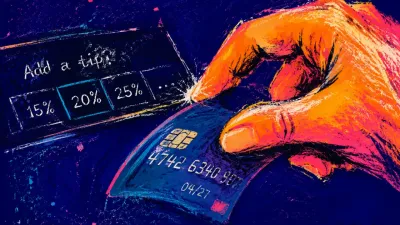
Psychological contexts related to Tip Screen Pressure