Where Did My Money Go?

A grounded look at creeping renewals, related tarot cards, and reading insights from people sorting through recurring charges.

Subscription Creep
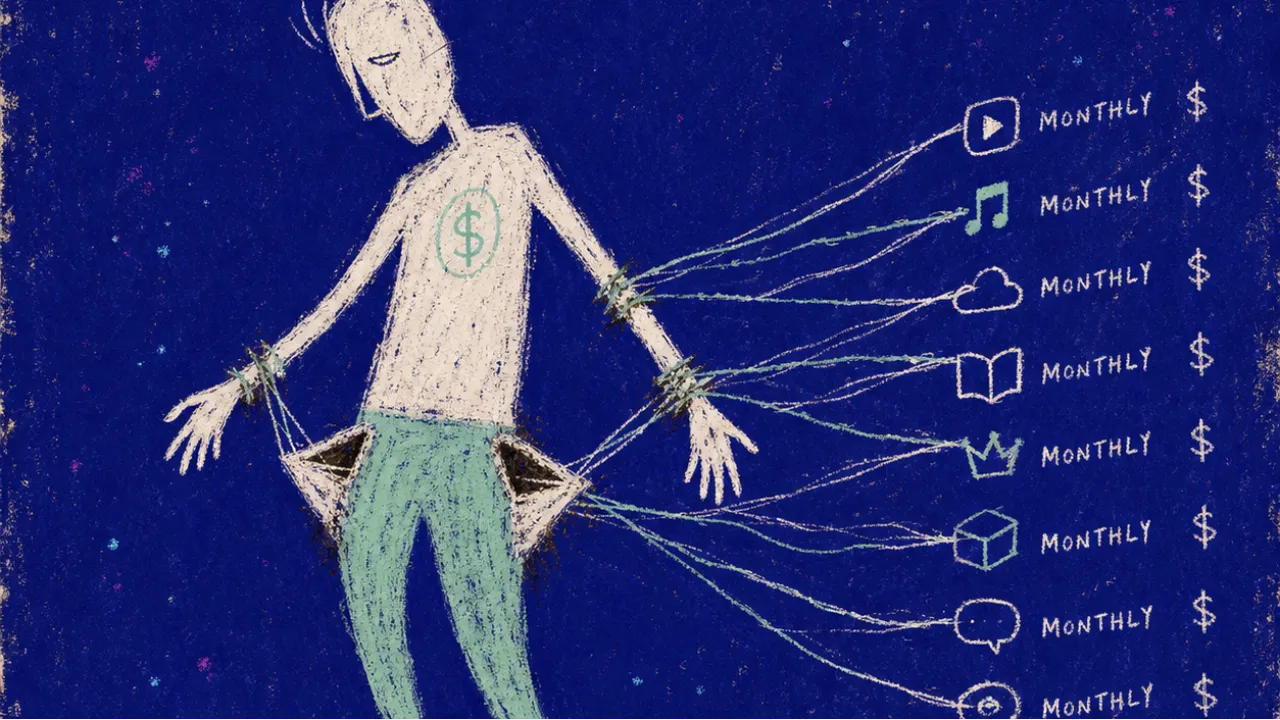
A solitary figure with pockets pulled outward by thin billing threads, pale lines tugging from wrists into deep indigo space

What is this situation?

Subscription Creep — it starts with one free trial you meant to cancel after a week, then a streaming add-on, cloud storage because your phone stopped backing up, a gym app you used in January, a newsletter, a dating app upgrade, a delivery pass that promised to save you money. The charges do not arrive like one big bill; they show up as small taps across the month, £4.99 here, $9.99 there, a yearly renewal landing on a Tuesday morning before you have even checked your calendar. Your inbox fills with polite receipts and vague “your plan has renewed” emails, each from a different company, each assuming it can stay quietly attached to your card. When you open your bank app, your thumb hovers over the transaction list and your chest tightens because the money has already been pulled, but the service is scattered across logins you barely remember. Cancelling is never one clean button: it is password resets, app store settings, chatbot loops, pause offers, hidden downgrade links, and a final screen asking whether you are sure. By the time rent, groceries, transport, and plans with friends enter the picture, the problem is not one reckless purchase; it is a background network of small permissions that keeps renewing itself. Subscription Creep turns your month into a slow leak, much like the figure on the Ten of Wands, moving forward under a bundle of separate sticks that only become heavy once they are all carried together.

Why it's not you?

The issue is not that you are careless with money; the setup is built so small recurring charges stay easy to ignore until they stack. Free trials, auto-renewal defaults, scattered billing dates, hidden cancellation paths, and quiet price hikes give Subscription Creep its shape. It is a billing environment that keeps pulling in fragments, not a personal failure.

Subscription Creep in Tarot Cards

Subscription Creep is the situation where the charge has already landed before you've even found the login that controls it. That chest-tightening moment when your thumb hovers over the bank app belongs to an environmental and structural dynamic: scattered services, auto-renewals, and cancellation friction keep small pulls moving in the background. The cards below do not decide what stays or goes; they reflect the outline of what has been attaching itself to your month. Here are the Tarot Cards that map this kind of recurring-pressure situation.

Wheel of Fortune
Reversed
The great wheel, its rim crowded with figures moving through different positions, loses any stable point when inverted. That unstable rotation mirrors subscriptions renewing on separate monthly and annual schedules: each charge belongs to its own cycle, so the total expense never arrives at one clear review point. You experience the timing problem when a renewal lands before payday, after a forgotten trial, or outside the week when you normally check your finances. The reversed wheel frames this as competing billing cycles rather than random personal lapses; until those cycles become visible together, the practical window for informed consent keeps passing after the payment has already turned.
Justice
Reversed
The scales, upright sword, and rigid pillars of Justice lose their reliable alignment when the card is inverted. That visual imbalance reflects a subscription decision made on uneven terms: enrolment may take one tap, while exit requires password recovery, buried settings, retention screens, or contact with a chatbot. You still technically have a choice, but the company controls when renewal information appears and how much effort cancellation demands. Reversed Justice identifies the resulting consent gap: the contract continues to extract payment through default settings even when your current use no longer provides equivalent value, making the choice environment procedurally unequal.
The Devil
Upright
The raised hand, lowered torch, central pedestal, and loose chains create an image of attention being directed while attachment is normalised. Subscription Creep uses a similar cognitive frame: each plan is introduced as temporary, cheap, or convenient, while automatic renewal quietly converts that momentary decision into an ongoing rule. You may continue interpreting each charge through the promise that originally justified it, even after your routines and priorities have changed. The Devil makes the underlying script visible without turning it into a character flaw: the growth edge lies in recognising how commercial defaults preserve an old version of value after present-day use has disappeared.
Seven of Cups
Upright
The seven cloud-borne cups present different rewards at the same time, while one offering is partly concealed and others mix attraction with risk. That visual field matches the choice overload created by a crowded subscription list: each plan carries a different price, renewal date, promised use, cancellation path, and imagined future benefit. You are not choosing between equivalent objects on a clean comparison table. You are weighing current use against future intentions, sunk payments, premium features, pause offers, and fear of losing access, so the number of options blurs the criteria that would separate a useful service from a dormant one.
Two of Pentacles
Reversed
The infinity loop around the two pentacles depicts repetition, while the wave-tossed ships show changing conditions behind the act of balancing. In reversal, those cycles stop cooperating: monthly plans, annual renewals, trial expiries, paydays, and essential bills continue moving, but they no longer form a workable shared rhythm. You experience the timing failure when a forgotten annual charge lands during an already expensive week or several small renewals cluster before income arrives. The reversed card locates the bottleneck in asynchronous schedules, showing why attention applied on one day cannot easily control a subscription system distributed across the entire calendar.
Four of Pentacles
Reversed
The crowned figure braces pentacles beneath both feet, against the chest, and above the head, attempting to keep every unit of value fixed in place. In reversal, that arrangement cannot hold: money remains notionally allocated, but recurring permissions pull pieces away before the rest of the month can use them. You may open the bank app expecting a stable amount and find that several minor renewals have already reduced it. The distant city reinforces the lifestyle cost, because money absorbed by passive digital access is no longer available for the material world beyond the account, including housing, transport, food, and plans with other people.
Eight of Swords
Upright
The blindfolded figure stands loosely bound inside a partial enclosure of swords, with open ground existing but difficult to perceive. That arrangement closely resembles cancellation architecture: the exit technically exists, yet buried settings, forgotten passwords, chatbot loops, and platform-specific rules prevent the route from appearing as one clear choice. You may interpret another renewal as proof that you are stuck, even though the stronger structural fact is that information and effort have been arranged against timely exit. The loose bindings and gaps between the swords preserve agency without minimising the obstruction; they show how a path can remain available in principle while being costly to locate and use in practice.
Nine of Swords
Upright
The seated figure covers their face in bed while nine swords line the wall behind them, turning separate sharp objects into a repeated mental backdrop. Subscription receipts and small bank debits can occupy the same kind of psychological cache: each transaction is minor, but the unresolved sequence remains present whenever you consider opening the banking app. You may postpone looking because the statement represents both lost money and a queue of tedious account tasks. The swords do not physically touch the figure, which keeps the image grounded in anticipation rather than immediate catastrophe; the pressure comes from recorded obligations and unfinished decisions repeatedly occupying attention.
Ten of Wands
Upright
The figure bends beneath ten separate wands while still moving toward the town ahead. No single stick explains the posture; the burden becomes visible only because every piece has been gathered into one bundle, directly mirroring the way small subscriptions turn into a significant monthly cost when seen together. You may still be functioning, paying essential bills, and moving through ordinary routines, but the background load consumes money and administrative attention that could support the rest of your life. The visible town keeps the path from becoming hopeless: the card locates the pressure in the bundled system, making clear that the weight comes from aggregation rather than from one uniquely disastrous purchase.

Subscription Creep in Tarot Card Reading Insights

For people dealing with Subscription Creep, the bank-app check, the forgotten renewal, and the cancellation loop often become the reason they bring this situation into a reading. The pieces below move from the card list into sessions where others sat with the same recurring-pressure pattern. Tarot Reading Insights from related readings.
Psychological Contexts Related to Subscription Creep