Perfectionism-Driven Capstone Procrastination: One Section at a Time

The 8:47 p.m. Capstone Procrastination Loop
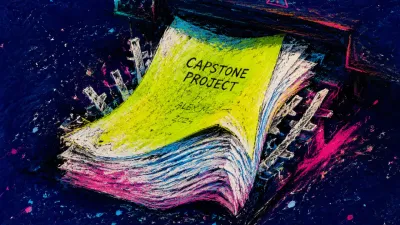
I know the scene: a final-year student in Toronto stares at the last page of a capstone while classmates post graduation photos and entry-level job updates. The research is there. The deadline is real. Yet capstone procrastination takes the shape of citation spacing, renamed headings, and one more source that promises to make the conclusion feel safer.
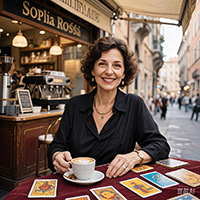
Jordan, a 23-year-old non-binary student, brought that exact moment to my table. Rain ticked against the window beside us, and the coffee between my hands had stopped steaming by the time they described Tuesday at 8:47 p.m. on the fourth floor of Robarts Library. Their phone was warm from scrolling, their coffee was cold, and the fluorescent lights buzzed above a Google Doc open to the unfinished conclusion.
“I changed Heading 2 to Heading 3, fixed the APA spacing, and reopened a paragraph my supervisor had already approved,” they told me. “I am close enough to finish that every sentence feels like evidence.”
I watched their shoulders climb as they spoke. Their restless fingers kept folding and unfolding the edge of a paper napkin. The apprehension seemed to sit behind their sternum like a blinking cursor that grew heavier each time the final argument appeared on screen: not quite pain, not quite panic, but a physical command to leave the desk before the work could become visible and judgeable.
“You want to finish,” I said, “but when the finish line appears, you reach for the safest detail in the room. That does not make you lazy. It suggests that staying unfinished is doing something protective, even if the protection is now costing you time and sleep.”
I told Jordan that I would not use tarot to predict their grade or declare what they should do after graduation. I wanted us to use the cards as a structured mirror, separating the actual writing task from everything submission had come to represent. “Let us give this fog a shape,” I said. “Then we can look for clarity without asking one paragraph to explain your entire future.”

Choosing the Compass: A Five-Card Shadow Spread
I invited Jordan to place both feet on the floor and take one unforced breath while holding a single question: “Why do I keep stalling as the finish line gets closer?” I shuffled slowly, using the motion as a transition from replaying the problem to observing it. Nothing supernatural was required of the moment; the point was focused attention.
I chose the five-card Shadow Spread because Jordan was not deciding between two external options. The conflict lived inside one project: wanting completion while keeping completion just out of reach. A broader Celtic Cross would have added life areas we did not need. This spread was narrow enough to examine the mechanism without turning an ordinary academic struggle into a grand prophecy.
For anyone wondering how tarot works in a question like this, the value lies in the fixed positions and the card meanings in context. Each position holds one part of the pattern still long enough for us to inspect it. The cards do not diagnose Jordan or overrule academic feedback. They help externalize a loop that otherwise feels like one solid block of shame.
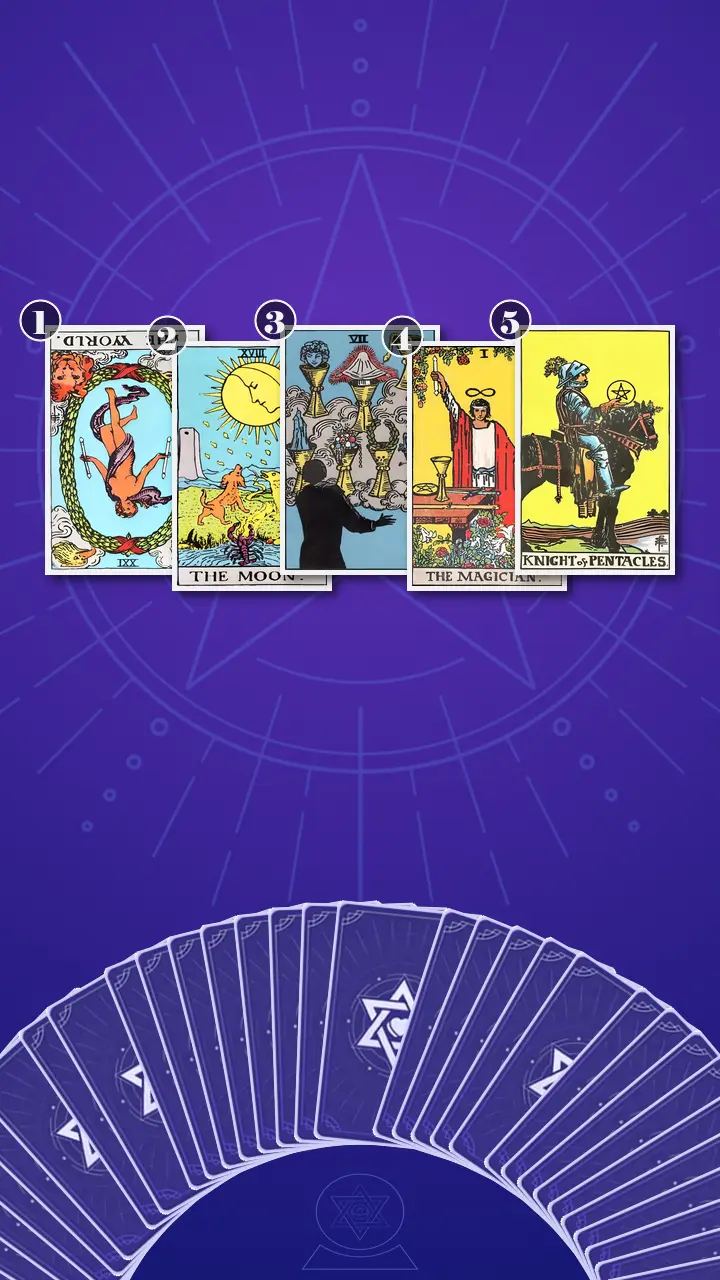
I marked three main landmarks in the horizontal line. The first position would show the visible stall. The central third position would reveal the strategy that made staying unfinished feel temporarily safer. The fourth and fifth positions would form the hinge from understanding into focused agency and a repeatable next step. In that structure, the five-card Shadow tarot spread could move from “Why am I doing this?” to “What can I test today?”
Inside the Circle: The Fog and the Open Tabs
Position One: The Circle Kept Technically Open
I turned over the card representing the presenting shadow pattern: the concrete stall that appeared whenever the capstone approached closure. It was The World, reversed.
I pointed to the wreath surrounding the suspended central figure. Upright, The World often carries the balanced energy of completion, integration, and a learning cycle brought to a meaningful close. Reversed here, that completion energy was blocked. I did not read the reversal as a deficiency in Jordan's ability. I read it as difficulty permitting a cycle to become complete enough to leave.
“At the library, the final page is visible,” I said, “but you reopen a settled section, rename headings, and adjust citation spacing so the document stays in progress. The wreath becomes the browser window and the submission checklist. The circle looks complete, but keeping it open postpones the moment when the work can be evaluated.”
The temporary benefit was clear: another edit moved judgment ten minutes farther away. The cost was that an ordinary quality check became an endless one. Each reopened paragraph compressed the remaining time, which made the project feel even more dangerous the next time Jordan opened it.
I asked, “When you change a heading or revisit an approved paragraph, what exact action are you postponing: writing the claim, showing the draft, or submitting it?”
Jordan gave a short laugh that carried no amusement. Their fingers tightened around the napkin before dropping it. “That is so accurate it is almost cruel,” they said. “Usually I am postponing the claim. If I never make the final claim, no one can say it is the wrong one.”
I let the sentence settle before answering. “Then let us remove the cruelty from the accuracy. This card is describing a behavior, not convicting you of it. It does not say you cannot finish. It says closure has become emotionally overloaded, and a stopping point is part of the work.”
Position Two: The Fog Beyond Graduation
I turned over the card representing the hidden root: the fear beneath the procrastination, including what an imperfect submission might seem to expose. It was The Moon, upright.
The Moon's path winds between two towers without revealing the whole route. In Jordan's reading, its water energy was running in excess, while practical discernment was temporarily blocked. Feelings about an unknown future were spilling into a concrete assignment. The capstone brief was still readable, but the question of what came after graduation made every instruction seem less certain.
“Your conclusion is mostly supported,” I said, “yet you search for another interpretation, reread your supervisor's feedback, and wonder whether the real problem is the paper or life after university. The two towers can be read as the known degree and the unknown next step. Keeping the project open lets you remain between them.”
As I spoke, a sheet of rain blurred the office buildings beyond the window. Their straight edges disappeared for a moment, echoing the card's two distant towers. I thought of how often, over twenty years of conversations across coffee, I had seen a manageable deadline become the container for a much larger fear. A document can quietly inherit every question its author cannot yet answer.
I asked Jordan to separate the signals. “Which fear belongs to the assignment itself, and which belongs to the fog after it? Is your evidence actually missing, or does finishing make the next direction harder to postpone?”
Their breathing paused. Their thumb went still against the cup sleeve, their eyes shifted toward the rain-blurred glass, and then a long breath left their chest. “My supervisor already said the direction works,” they said. “I think I keep asking the paper to tell me whether I will be okay after it is done.”
“Direction does not have to arrive before the draft ends,” I said. “The Moon does not demand that you see the whole road. It asks you to distinguish the next visible step from the shapes your fear is projecting into the distance.”
Position Three: Seven Tabs That Look Like Progress
I turned over the card representing the protective strategy: the research, formatting, new outlines, and digital task-switching that produced a temporary feeling of progress while preserving the unfinished state. It was Seven of Cups, upright.
The card shows a solitary figure facing seven cups suspended in a cloud, each holding a different promise or threat. In this position, possibility energy was in excess. Direction was deficient because attention had been distributed across too many imagined routes, while the concrete act of choosing one route remained blocked.
I translated the image into Jordan's Sunday afternoon: one paragraph had become seven browser tabs, three conclusion outlines, a redesigned Notion board, and a mental list of possible supervisor critiques. Every argument remained alive. Every source looked potentially essential. Like the figure facing the cloud-borne cups, Jordan could call the activity preparation while no single version reached the final page.
“The inner monologue sounds reasonable,” I said. “I am doing work, so why does nothing reach the conclusion? The answer is that options and direction are not the same thing. One more source can be research, or it can be a hiding place.”
I did not shame the strategy. Opening a new tab lowered the pressure for a few minutes, and that relief explained why the habit repeated. But the relief expired. Jordan then returned to the same paragraph with less time, more open material, and a louder belief that they should not finish until they felt completely ready.
I asked, “The last time a sentence required a decisive claim, what did you do, and what relief did it give you?”
Jordan's chest lifted sharply. They looked down at the three cards as if recognizing a browser history laid out in paper. Then their hand opened flat on the table. “I found two new articles and rebuilt the outline,” they said. “For about an hour, I did not have to decide what I believed. Afterward I hated myself for wasting the block.”
“You did not waste the block because you are incapable,” I said. “You used a protective move whose short-term effect no longer matches your goal. Naming that gives you a choice the shame never could.”
When The Magician Turned Research Into a Decision
Position Four: The Tools Already on the Table
When I reached the integrating counter-energy, the rain softened and the room became unexpectedly quiet. Even the small click of the cooling coffee machine seemed distinct. I turned over The Magician, upright, the card positioned as the antidote to Jordan's cycle of uncertainty and option overload.
I showed Jordan the raised wand, the grounded hand, and the table holding the symbols of all four suits. The Magician does not wait for another tool to arrive. Fire supplies initiative, air gives the task language, water preserves meaningful engagement, and earth gives the work a practical boundary. In this position, those energies were moving toward balance through focused use.
The library desk became a modern version of the Magician's table: existing notes, the draft, the rubric, a pen, and a timer were already present. The research browser did not need to remain open. The conclusion did not need to settle Jordan's career. It needed one clearly defined job.
I asked Jordan to picture Tuesday at 8:47 p.m. in Robarts. The conclusion was open, fluorescent lights buzzed, and their hand renamed a heading. The file sat one paragraph from done, while another browser tab offered relief from letting the work become visible.
I said, “You do not need to feel completely ready or know your next direction before finishing. The Magician asks you to use the evidence, skills, and time already on the table to make one bounded decision and complete it.”
I put the message more plainly:
Stop treating an unfinished capstone as protection from judgment; choose one task and turn existing research into a finished section, like the Magician bringing every tool on the table into deliberate use.
I left a full beat of silence after the sentence.
I watched Jordan's inhale stop halfway. Their fingers, which had been worrying the cardboard sleeve of their cup, froze above it. For a few seconds their eyes lost focus, and I could almost see the Robarts scene replaying: fluorescent light, open conclusion, a hand reaching for Heading 3. Then their eyebrows drew together. “But doesn't that mean I have been doing this wrong for weeks?” they asked, sharper than before. “Like I chose the trap?” I shook my head. “No. The strategy gave you a few minutes of relief when judgment felt too close. Protection is not guilt. We are only deciding whether that strategy still earns its place.” Their jaw worked once. Their fist loosened, and the paper sleeve crackled softly beneath their palm. Their shoulders dropped, but the relief did not arrive cleanly. Their eyes shone, and after the first long exhale they looked almost dizzy with the responsibility of having a real choice. “Now, using this new perspective, think back to last week. Was there a moment when this insight could have made the experience feel different?” I asked. “After my supervisor said the evidence was enough,” they replied quietly. “I could have believed them for one paragraph.”
This was the reading's central crossing: not from apprehension to perfect confidence, but from evaluation-driven stalling and option overload toward focused agency, practical self-trust, and one deliberate move. The proof was small. Jordan's fingers were no longer searching for something else to rearrange.
I reached for a framework I call Syllabus Deconstruction. Whenever a massive deadline starts behaving like a verdict on identity, I strip it back to mechanical requirements that do not get to comment on anyone's worth. I remembered the deadline sheets I had deconstructed across years of student readings, each one frightening while it remained fused with the question “Am I good enough?” and far more workable once translated into visible verbs.
“Your capstone currently says, Prove that I deserve to be taken seriously and know what comes next,” I told Jordan. “The syllabus says something much smaller. The conclusion must state the claim, connect the evidence already selected, and answer the prompt within the required limits. Those are tasks. They are not a character reference.”
I offered a ten-minute experiment, not a command. Jordan could write a one-sentence definition of done, use existing notes only, and draft five rough bullets. They would not have to submit or share anything that day. If ten minutes made their chest tighten too sharply, they could stop, switch to a neutral task, or try two minutes and two bullets. The choice to continue would remain theirs.
Position Five: The Ordinary Pace of Completion
I turned over the card representing the grounded next step: a repeatable practice for defining one section, working within a set block, and honoring the planned stopping point. It was Knight of Pentacles, upright.
I drew Jordan's attention to the motionless horse, the pentacle held carefully in both hands, and the cultivated field. This was earth energy in balance, correcting the spread's earlier drift through water, clouds, and proliferating possibilities. The Knight did not offer a motivational breakthrough. The card offered dependable follow-through.
“In daily life, this looks like booking one protected twenty-five-minute block, or even a ten-minute start,” I said. “Name one section. Check it against one criterion. Record the next visible step. Then close the file when your definition of done is met. Progress is allowed to be ordinary, visible, and repeatable.”
Jordan rubbed their palms once against their jeans. “But some days I cannot even find a clean twenty-five minutes between class, commuting, and everything else.”
“Then twenty-five minutes is not the sacred number,” I replied. “Use five. If a class interruption or exhausted TTC ride breaks the plan, reschedule once instead of declaring the week failed. The Knight's consistency is not an ideal schedule. It is a promise sized for the week you actually have.”
They looked from the Knight back to The World reversed. Their mouth tightened briefly at the remaining work, then eased. “So closing the file on time is part of finishing, not proof that I did not care enough.”
“Exactly,” I said. “A stopping point is part of the work.”
A Stopping Point Is Part of the Work
I gathered the five cards into one continuous story. The World reversed showed Jordan repainting a doorway instead of walking through it. The Moon revealed why the doorway felt charged: beyond it stood evaluation, closure, and a future that had not yet supplied a clear signpost. Seven of Cups showed the protection mechanism, where research, formatting, and planning multiplied into productive-looking task-switching. The Magician gathered the scattered material into one bounded act. The Knight of Pentacles turned that act into a routine sturdy enough to repeat.
The old equation beneath the pattern was visible now: if the finished work contained an imperfect sentence, that imperfection might prove Jordan was less capable than other people believed. Capstone procrastination briefly protected them from testing that equation, but it also kept the project and the fear alive together.
I named the cognitive blind spot carefully. Jordan had been assuming that certainty must arrive before closure and that uncertainty about life after graduation meant the capstone itself was not ready. Three different questions had fused into one document: Is this claim supported? Am I competent? What happens next? Only the first belonged to the rubric.
The transformation direction was therefore practical, not grand. Finishing was not a verdict; it was a boundary around what Jordan had learned. Submission could become a bounded act of practice, completed one imperfect section at a time with existing resources and a chosen stopping point. Direction could remain partly foggy without invalidating the next ten minutes.
Before we ended, I used Study Environment Auditing to look at the physical and digital field around Jordan's writing. Their desk had been holding too many silent decisions at once: old coffee, loose articles, messages, Zotero, three draft versions, the rubric, and a Notion board. Each object was small, but together they consumed the same limited attention the conclusion needed. I shaped our actionable advice into two experiments.
- The 15-Minute Desktop Reset Ritual At the next Robarts session, spend exactly fifteen minutes clearing spare papers, cups, unrelated files, and nonessential browser tabs. Leave only the current draft, rubric, existing notes, a pen, and a visible timer. Then set ten minutes, write a one-sentence definition of done for the conclusion, and draft five rough bullets using existing sources only. Use a hard stop at fifteen minutes so cleaning does not become the new avoidance loop. Put every tempting source or alternative argument in a note called Later, Not Now. If ten writing minutes feels too large, begin with two minutes and two bullets.
- The One-Section Stopping Point Choose one realistic block this week in the library or a quiet campus room. Work only on the named final section, make one planned revision, and check it against one rubric criterion. Before closing the file, write one line beginning, The next visible step is... Then leave the desk or change locations for five minutes. Size the block for the week you actually have: twenty-five minutes, ten minutes, or five. If interrupted, reschedule once. When the agreed criterion is met, honor the stop instead of reopening the whole project for reassurance.

Six Days Later, One Email Left the Outbox
Six days later, a message from Jordan appeared beside my morning coffee. “I did the desktop reset and almost turned it into a full cleaning project,” they wrote. “The fifteen-minute alarm caught me. I put two article ideas in Later, Not Now, wrote the five bullets, and finished a rough conclusion from the notes I already had.”
They had checked the section against one rubric item, written the next visible step, and emailed the draft to their supervisor at 4:06 p.m. before reopening Zotero. Afterward, they closed the laptop and walked through Queen's Park. They had not solved their career direction. They had completed one exposed, imperfect act.
Jordan told me they slept through the night. Their first thought the next morning was still, “What if it is average?” This time, they noticed the thought, smiled once, and made coffee.
I did not see that email as evidence that tarot had finished the capstone. The cards had supplied a sequence and a vocabulary; Jordan had supplied the boundary, the ten minutes, and the decision to send the work. That was their Journey to Clarity: not certainty descending all at once, but a small transfer of authority from fear back into their own hands.
When the last paragraph makes your shoulders climb and your hand reach for another tab, keeping the project unfinished can feel safer than letting one imperfect submission seem to decide whether you deserve to be taken seriously. If you can notice that pull without obeying or condemning it, you are already standing somewhere different from where the loop began.
So, when your hand next moves toward one more source, what one-sentence stopping point could you place beside the draft for the next ten minutes, using only what is already on your Magician's table?