The Draft Application and the Eight Minutes That Started a Return
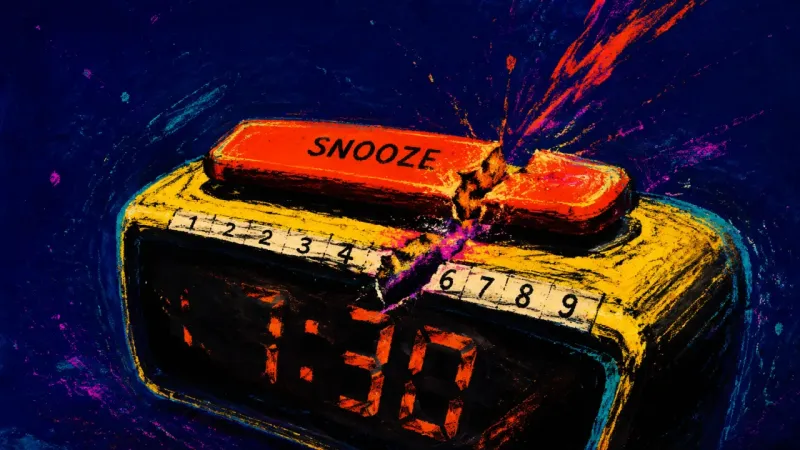
The Meaningful Tab Behind Everything Else
“You’re competent at the work already in front of you, but the tab that could change your direction has been open for three weeks,” I said to Jordan (name changed for privacy), a 28-year-old marketing coordinator calling me from her rented flat in Zone 2.
It was 9:18 on a Sunday night. Blue light from her laptop washed one side of her face while the radiator clicked behind her. A mug of tea had gone cold beside the trackpad. On the screen she shared with me, a creative-role application sat behind a colour-coded Notion board, three course-comparison tabs, and a paused Netflix episode already counting down to autoplay.
Jordan rubbed the heel of one hand across her jaw. “I keep saying I want my life to move. Then the second moving requires sustained effort, or there’s a chance someone might actually judge the result, I do something easier. I clear Slack. I rename files. I compare courses. Sometimes I apply for another coordination role because I know I can do it.”
She glanced toward the application in Drafts. “I keep calling it a practical choice, but it is mostly the choice that lets me feel nothing for another day.”
I could hear the frustration in the small pause after that sentence. It did not feel like a dramatic breakdown. It felt more like a browser redirect buried inside her day: every meaningful destination quietly sent her back to the familiar homepage. Her body braced before effort, loosened when she chose the easier task, and grew heavy again when the unfinished work returned to mind.
Jordan wanted movement, so she made a plan. The plan reached the uncomfortable step, so she chose something easier. The relief arrived first; the stuckness sent the bill later.
“I will start when I can do it properly,” she said. “But apparently properly never arrives.”
“I don’t hear laziness in that,” I told her. “I hear a protective pattern. The easy choice lowers the pressure before you have to discover what trying might mean. That protection deserves to be understood, but it does not have to keep making the decision.”
I also made one boundary clear. London rent was real. Available time, health, workload, access, and financial risk were real. I was not going to use tarot to romanticise struggle or suggest that the hardest option was automatically the wisest one.
“We’re not asking the cards to choose your career,” I said. “We’re going to use them as an objective cognitive map. We’ll look at the moment the loop begins, what ease gives you, what you fear effort could reveal, and what a manageable next step might look like. That is our journey to clarity tonight.”

Choosing a Staircase Through the Fog
I invited Jordan to place both feet on the floor and take one ordinary, unforced breath. I shuffled slowly while she held one question in mind: “Why do I keep choosing what’s easiest when it leaves my life stuck?” The pause was not a mystical performance. It was a psychological threshold between reacting to the pattern and examining it.
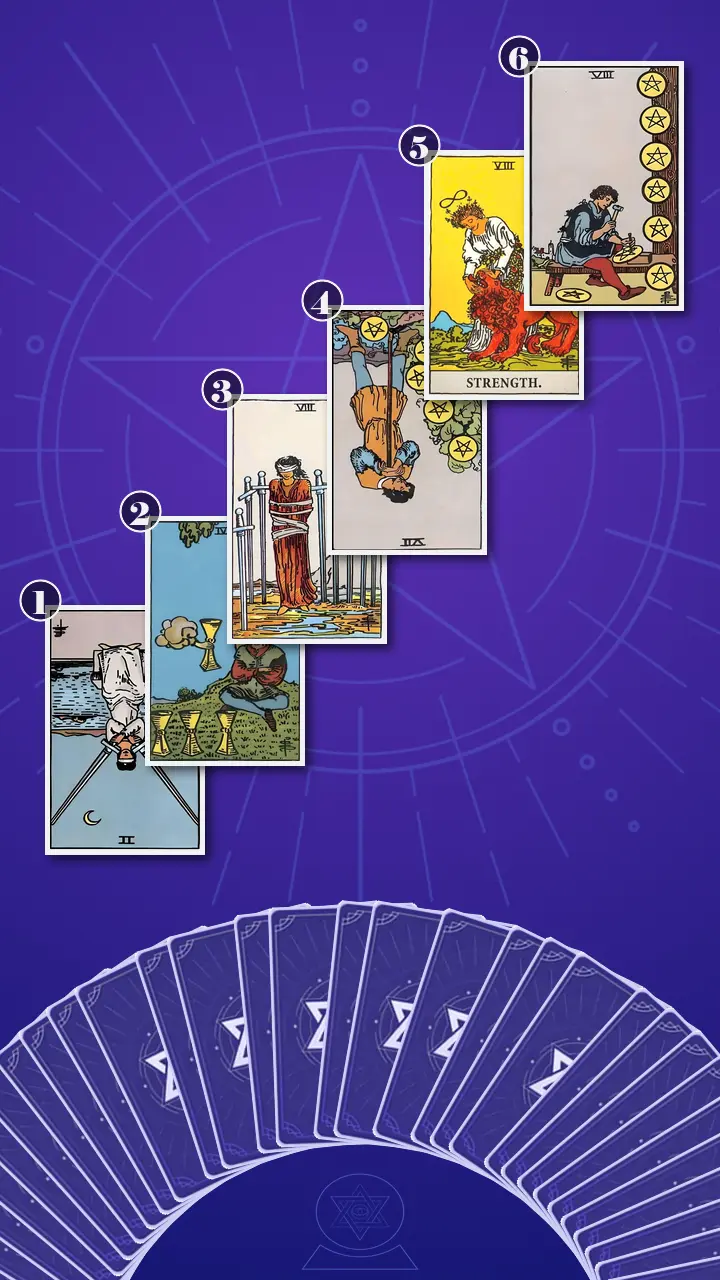
I chose the Four-Layer Insight Ladder · Context Edition, a custom six-card tarot spread for deconstructing a recurring avoidance loop. I explained that this was not really one isolated decision between two jobs. It was a self-reinforcing system: effort activated fear, ease offered relief, and the lack of progress later strengthened the belief that effort was unsafe.
A Celtic Cross would have given us more context than we needed, while a Decision Cross could have reduced the issue to one external choice. The six-card ladder was the smallest map that could show the whole mechanism without pretending to predict an outcome.
I arranged the cards as a staircase rising from the lower left to the upper right. The first position would reveal Jordan’s present loop. The second would show the short-term reward that maintained it. The third would expose the root fear, and the fourth would make the hidden long-term cost visible. Strength would occupy the fifth position as the transformative hinge. The final card would translate insight into a grounded experiment.
That is how tarot works in my practice: the spread supplies a structure, but card meanings only become useful in context. The cards do not outrank material reality, personal values, or informed choice. They help me place the pieces where Jordan can see the pattern she is already living.
Where Postponement Casts the First Vote
Position 1: The Two Costs Behind the Blindfold
I began with the position representing Jordan’s present loop: the observable moment when she selected the easiest option and returned to the same stuck place. I turned over the Two of Swords, reversed.
The card showed blocked Air. Judgment was available, but attention had narrowed around immediate relief. The blindfold did not mean Jordan lacked intelligence or information. It showed how she stopped looking directly at the trade-off when the decision became emotionally exposing. The crossed swords represented two costs she had not been placing side by side.
I returned to a Thursday evening she had described. At 5:56, she had opened the creative-role application at work. The first portfolio question lifted her shoulders toward her ears. She told herself, “I’ll just clear my inbox first, then I can focus properly.” Six low-stakes emails later, she closed the laptop and decided it was probably more practical to wait.
“The inbox task wasn’t fake,” I said. “It was useful. But it also allowed low-demand activity to make a high-value decision. Postponement is still a decision, just one made without looking directly at the trade-off.”
Jordan did not nod. She gave one short laugh, sharp at the edges, and covered her mouth. “That’s so accurate it’s almost brutal.”
“Accurate does not have to mean condemning,” I replied. “We’re describing ten seconds of behaviour, not defining your character. What decision were you making by refusing to look directly at both costs?”
She looked away from the screen before answering. “I was choosing not to be evaluated. And I was choosing another week of feeling behind.”
The reversed card also carried an overcorrection risk. Jordan could become so frustrated with indecision that she made a sudden, low-information choice merely to escape the discomfort. I did not advise her to force the creative path. I asked her to make the trade-off visible before either fear or impatience took control.
Position 2: The Four of Cups on the Sofa
I moved to the position representing the short-term reward: what choosing ease protected or provided immediately. The card was the Four of Cups, upright.
Its Water energy had become stagnant through withdrawal. In Jordan’s life, it looked like sinking into the sofa while the meaningful tab remained open behind streaming, messages, and small administrative tasks. The seated figure’s folded arms and lowered gaze mirrored the way her body closed around familiar input. The offered fourth cup was not hidden; it was simply easier not to engage with it.
“Let’s remove the moral judgment,” I said. “For the next hour, what does choosing another episode give you?”
“Nothing is required of me,” Jordan said. “Nobody can tell me I’m not good enough at resting.”
“And by next week, what does that particular hour cost?”
Her shoulders lowered as she exhaled, but her fingers tightened around the cold mug. “The task stays mentally open. I don’t even feel properly rested. I just feel further away from it.”
I distinguished rest from withdrawal carefully. Genuine rest reconnects us with capacity. It is necessary and does not need to be earned. This Four of Cups pause, however, was keeping the meaningful possibility emotionally out of view. The easy option lowered the volume for an hour while leaving the unfinished decision running in the background.
“The question is not whether you deserve comfort,” I said. “You do. The question is whether the pause restores you, or whether it protects you from being seen while quietly consuming tomorrow’s attention.”
Jordan turned off Netflix autoplay while we spoke. I noticed the room become quieter without making a ceremony of it.
The Ring of Swords Around One Blinking Cursor
Position 3: When Failure Becomes an Identity Claim
The third position represented the root fear: the belief that made demanding effort feel personally dangerous. I turned over the Eight of Swords, upright.
Here, Air was in excess and enclosure. Jordan’s mind could generate every failure scenario at full brightness while making the available movement almost invisible. The blindfold became selective attention. The ring of swords became a risk register in which imagined rejection had already been entered as a confirmed outcome. The bindings were real enough to restrict her posture, but loose enough to show that some movement remained.
I asked her to picture the portfolio question again. The cursor blinked beneath a request for an original campaign concept. In the story her mind produced, a recruiter saw the work, found it amateur, and confirmed what she had feared privately for years.
“Rent, time, entry requirements, and competition are actual constraints,” I said. “They belong in the decision. But ‘If one recruiter rejects this, I will know I was never good enough’ is not a constraint. It is an untested conclusion.”
Jordan’s breath stopped. Her hand remained suspended above the mug as if she had forgotten what she meant to do with it. Then her gaze lost focus, and I watched her replay some earlier moment beyond the screen. When she finally spoke, her voice was lower.
“If I try the harder path and it still doesn’t work, I won’t have an excuse left.”
After twenty years of listening to difficult truths arrive beside cooling coffee, I knew not to fill that kind of silence too quickly. I let the radiator click once more before I answered.
“You are not afraid of effort alone; you are afraid of what an imperfect result might be allowed to say about you.”
Her fingers slowly closed around the mug, then released. A long breath left her chest.
“The Eight of Swords is not telling me that you are secretly free of every limit,” I continued. “It is asking us to separate the limits that need respect from the conclusions that need testing. You might not be able to complete the application tonight. You might still be able to draft three lines, answer one question, or ask a trusted colleague which idea is clearest.”
The card preserved her agency without denying reality. Movement was constrained, but it had not been erased.
The Harvest Judged Before It Had a Season
Position 4: The Seven of Pentacles in Reverse
The fourth position represented the hidden cost and blind spot: how repeated easy choices sustained long-term stagnation and impatience. I turned over the Seven of Pentacles, reversed.
Earth was blocked here by premature evaluation. Jordan did not only postpone beginnings. When she did begin, she often checked for life-changing evidence before practice had time to accumulate.
She told me about a Saturday morning in a crowded Hackney café. After 27 minutes on her first rough campaign concept, she compared it with polished agency work on Instagram. The coffee grinder shrieked, the table vibrated, and heat rose into her face. “If I had real talent, this would already look better,” she decided. Then she closed the file and returned to comparing courses.
“That creates a circular test,” I said. “You leave before repetition can produce evidence, then treat the missing evidence as proof that leaving was sensible.”
Jordan winced and nodded once. “I keep refreshing the analytics on work I haven’t actually published.”
“Exactly. Your personal algorithm is optimised for immediate feedback. When the reward is delayed, it redirects you toward a new plan, a new course, or a cleaner dashboard. Activity continues, but cultivation stops.”
The reversed card also warned against the opposite extreme. I was not asking Jordan to give every project endless persistence. Some directions do become poor fits. The problem was timing the evaluation before enough contact existed to make it fair.
“Give one meaningful experiment three repetitions before you ask it for a verdict,” I suggested. “The first draft is evidence of contact, not evidence of worth.”
Her mouth tightened into a small, bittersweet smile. “I think I’ve been asking version one to justify my entire career.”
When Strength Put a Hand on the Lion
Position 5: The Hinge Between Ease and Agency
The fifth position represented the key shift: the quality that could interrupt the loop and move Jordan from immediate ease toward steady, values-linked effort. The room seemed to settle as I turned over the reading’s catalyst card: Strength, upright.
This was balanced energy, not force. The woman on the card did not attack the lion, pretend it was harmless, or allow it to determine the route. Her hands stayed in gentle contact with its mouth. The infinity symbol above her suggested a resource that could be practised repeatedly, rather than a single heroic burst of motivation.
In Jordan’s life, Strength looked like leaving the application open, placing both feet on the floor, naming apprehension without debating it, and staying for one bounded timer block. The harder option was not automatically correct. The shift was that immediate relief would no longer cast the deciding vote by itself.
I used what I call an Energy Extraction Audit to make that shift more precise. I asked Jordan to list the small habits that appeared to save energy: clearing Slack, renaming files, reopening course comparisons, checking messages, rebuilding the Notion board, and privately criticising herself afterward.
Each habit seemed cheap in isolation. Together they over-extracted her baseline energy. Every switch required her to suppress the meaningful task again, keep it mentally open, and face its return later. The easiest option was not always the lowest-energy option; sometimes it simply delayed when the energy bill arrived.
At 9:18 on Sunday night, the application was still open behind a colour-coded plan. Netflix had been ready to roll into the next episode, and Jordan’s tea had gone cold. Her shoulders had dropped when she considered escape, then tightened when tomorrow became responsible for her life again.
You do not need to make ease your compass; practice patient courage by staying with one meaningful step, like the woman who gently opens the lion's mouth.
Discomfort is not a verdict on your worth. Sometimes it is simply the part of meaningful effort you have not stayed with long enough to learn from yet.
For one beat, Jordan stopped breathing. Her pupils widened, and her fingertips hovered over the rim of the mug. Then her gaze shifted past me toward the shared screen, as though she were replaying every moment she had closed a difficult tab and called the relief wisdom. Her eyebrows drew together. The first feeling to surface was not peace but anger.
“But doesn’t that mean I’ve been wrong this whole time?” she asked. Her voice sharpened, then caught. Her eyes reddened before she blinked the moisture back. One shoulder dropped, then the other, and the hand that had been curled against her chest slowly opened on the desk. A breath left her with a faint tremor. The release was visible, but so was the brief dizziness of realising that a familiar protection might no longer be required.
“No,” I said. “It means the strategy had a function. It protected you from letting one result define you. We don’t have to shame the version of you who learned it. We only have to notice that the protection now has a long-term cost, and that you can revise the rule.”
I placed the contradiction directly in front of her. She wanted a life with movement, yet she had been using ease as evidence that a choice was correct. The feeling said, “This task could expose you.” The evidence only said, “This matters enough to activate you.”
“I do not have to silence this feeling,” Jordan said slowly. “I only have to stop letting it make the whole decision.”
“Now, using this new perspective, think back to last week,” I said. “Was there a moment when this insight could have made the experience feel different?”
She returned to Thursday evening and the unanswered portfolio question. “I could have admitted that my chest was tight because I cared. I could have written an ugly first answer for eight minutes. I didn’t need to submit it.”
That was the crossing I had been waiting for. It was not certainty, and it did not guarantee a successful career pivot. It was the first step from using immediate ease as a safety signal toward grounded self-trust: patient courage, values-linked effort, and a willingness to let one small attempt provide information without measuring personal worth.
Eight Pentacles, One Workbench
Position 6: Repetition Instead of a Life Verdict
The final position represented the grounded experiment: the repeatable action that could turn insight into evidence. I turned over the Eight of Pentacles, upright.
Earth returned in balance. The craftsperson worked on one pentacle while the completed pieces formed a visible row nearby. I translated that image into three short calendar blocks, one defined task, and saved versions labelled v1, v2, and v3. Jordan would not evaluate the direction until the third repetition was complete.
The repeated number eight mattered. In the Eight of Swords, sustained attention had been used to rehearse every obstacle. In the Eight of Pentacles, the same capacity could be redirected toward craft. One eight enclosed the mind; the other organised effort into visible practice.
“This card is not promising that three sessions will reveal your perfect career,” I said. “It is offering something more reliable: evidence that you can return to one meaningful task, learn from contact, and follow through at a scale your actual life can hold.”
Jordan looked from Strength to the Eight of Pentacles. “That feels almost suspiciously ordinary.”
“Most durable self-trust is,” I said. “Be firm about the next step and kind about the learning process.”
A Small Staircase Out of the Loop
I read the six cards back to Jordan as one coherent story. Repeated exposure to uncertain, visible work had taught her to brace before effort. The reversed Two of Swords showed the moment she stopped examining the trade-off. The Four of Cups showed why: withdrawal offered legitimate short-term relief. The Eight of Swords revealed the deeper fear that failure could become a verdict on worth. The reversed Seven of Pentacles showed the material consequence: she evaluated growth so early that practice could not produce evidence.
Strength and the Eight of Pentacles did not demand a personality transplant. They offered a narrow staircase out of the loop: stay in compassionate contact with manageable discomfort, then repeat one bounded action long enough to learn from it.
Jordan’s cognitive blind spot was not simply avoidance. It was the belief that the quickest reduction in tension indicated the wisest choice. She had also been using self-criticism as a substitute for behavioural change, as though feeling bad enough afterward might count as follow-through.
“The transformation is not from easy choices to hard choices,” I told her. “It is from automatic relief to deliberate evaluation. Rest can still be right. Stability can still be right. Declining a risky opportunity can still be right. But your values, material constraints, and a small real-world test deserve a vote alongside apprehension.”
The Next 48 Hours: Three Bounded Experiments
I gave Jordan three pieces of actionable advice. Each one had a clear stopping point because the goal was to build evidence, not another productivity system to perfect.
- Create a physical anchor, then stay for eight minutes.Within the next 48 hours, spend 15 minutes reorganising one minimal corner of the desk where the creative work will happen. Remove unrelated mugs, notes, and devices; place both feet on the floor; name the body reaction in plain language; then open the meaningful tab and complete only the next visible action for eight minutes.Treat this 15-Minute Physical Anchor Experiment as a reclaiming of attention, not a full-room makeover. If eight minutes is too activating, use the two-minute version. Stop for genuine exhaustion, panic, safety concerns, or material limits.
- Write down the trade-off already being made.For one live decision this week, open a phone note titled “The trade-off I am already making.” List the familiar option and the meaningful option. Write what each gives you in the next hour and what each may cost over the next month. Then run a reversible 20-minute test of the meaningful option, such as answering one application question or sketching one rough concept.Use only two lines per option. If 20 minutes feels too large, use ten. The test gathers information; it is not a contract to choose the harder path.
- Collect repetitions before requesting a verdict.Schedule three 25-minute blocks in the calendar for one creative skill, application, or portfolio piece. Give each event a concrete verb, such as “draft three campaign lines.” Save the results in one folder called “Repetitions, not verdicts” as v1, v2, and v3. After the third block, ask one trusted person which part is clearest.Keep a five-minute minimum version and only one project in the experiment. A missed session creates no debt. Move or drop it according to current capacity, then continue with the next available repetition.
The first action came from my Daily Clutter Deconstruction lens. I do not treat physical disorder as a moral failure or assume that a clean desk solves a life. I use a small physical corner to map what is competing for attention. Jordan’s cold mug, second phone, course notes, and open entertainment tab showed how many exits were available at the first hint of exposure. Clearing one work-sized space would give her body a concrete experience of choosing what remained in view.
“None of this requires you to prove you’re brave,” I said. “The experiment succeeds when you remain present long enough to observe something true: what felt difficult, what became clearer, and whether the task still matters enough to test again.”

A Week Later: Three Files and an Unfinished Application
Six days later, I received a message from Jordan. She sent me a photograph of one cleared corner of her desk. The rest of the room was still recognisably lived-in, but the laptop sat beside a single sticky note: “Firm about the next step; kind about the learning process.”
She had completed the eight-minute experiment on Monday, then stayed for eleven minutes because the first answer had begun to take shape. She scheduled three practice blocks and saved three uneven campaign concepts as v1, v2, and v3. The application was not finished, and she had not made a dramatic announcement on LinkedIn.
Her message read: “I still woke up thinking, ‘What if this is the wrong direction?’ But I didn’t treat the thought like breaking news. I made coffee and opened v3.”
I smiled at the photograph. The proof was quiet: one clear corner, three imperfect files, and a woman returning to work that mattered before confidence had arrived. I had not handed Jordan a destiny. The cards had helped us organise her reality, but she had created the movement by choosing, testing, observing, and returning.
That was the real Journey to Clarity. Jordan had not become fearless or solved her whole career. She had begun moving from frustrated stagnation toward grounded self-trust, one tolerable encounter at a time.
If your own meaningful tab is still open behind easier work, I know how quickly your shoulders can brace when trying feels like a verdict on your worth. Closing the tab may bring a moment of relief, but noticing the bargain already means you are no longer fully inside it. Clarity can begin when the fog thins just enough for you to see the next pentacle on the workbench, rather than demanding a view of the entire staircase.
If discomfort could be information rather than a verdict, which small piece of meaningful work would you be curious enough to meet for eight minutes, with both feet on the floor and your inner lion allowed to breathe?