Finding Clarity in the “Split the Bill?” Glow
If you’ve ever typed three versions of “sure, we can split!” so you sound chill, then felt your stomach drop the second you hit send—I see you. I serve espresso for a living, but I’ve learned there’s a very specific kind of caffeine buzz that isn’t caffeine at all. It’s resentment: sharp, fizzy, and quietly exhausting.
Jordan came into my little Italian café on a Thursday night when the street outside was slick with winter rain and the windows kept fogging at the edges. They slid into the corner table like someone trying not to take up too much space, phone face-down at first, then face-up again, like it was magnetized to their palm.
“It’s stupid,” they said, voice low, like the sentence itself might trigger another notification. “I got the text—‘Split the bill?’—and I said yes right away. Like, instantly. And then… I hate that I’m mad about it later.”
I watched their hands hover over the phone without touching it. Their jaw was tight in that way you don’t notice until you try to swallow. Resentment isn’t loud. It’s the feeling of chewing something too dry, over and over, because you don’t want to ask for water.
Under the words, the contradiction was clean: wanting financial reciprocity and self-respect, while fearing that naming a preference will make you look petty or unlovable. I nodded once, slow. “We’re not here to make you ‘more chill,’” I said. “We’re here to help you find clarity—so you can stop paying twice: once with money, and again with your peace.”

Choosing the Compass: The Decision Cross · Context Edition
I didn’t light candles or make it mystical. I did what I always do before a hard conversation: I invited Jordan to take one breath in through the nose, and on the exhale, to let their shoulders drop an inch. “We’re just giving your nervous system a doorway,” I told them. “A tiny pause before the automatic ‘sure!’ kicks in.”
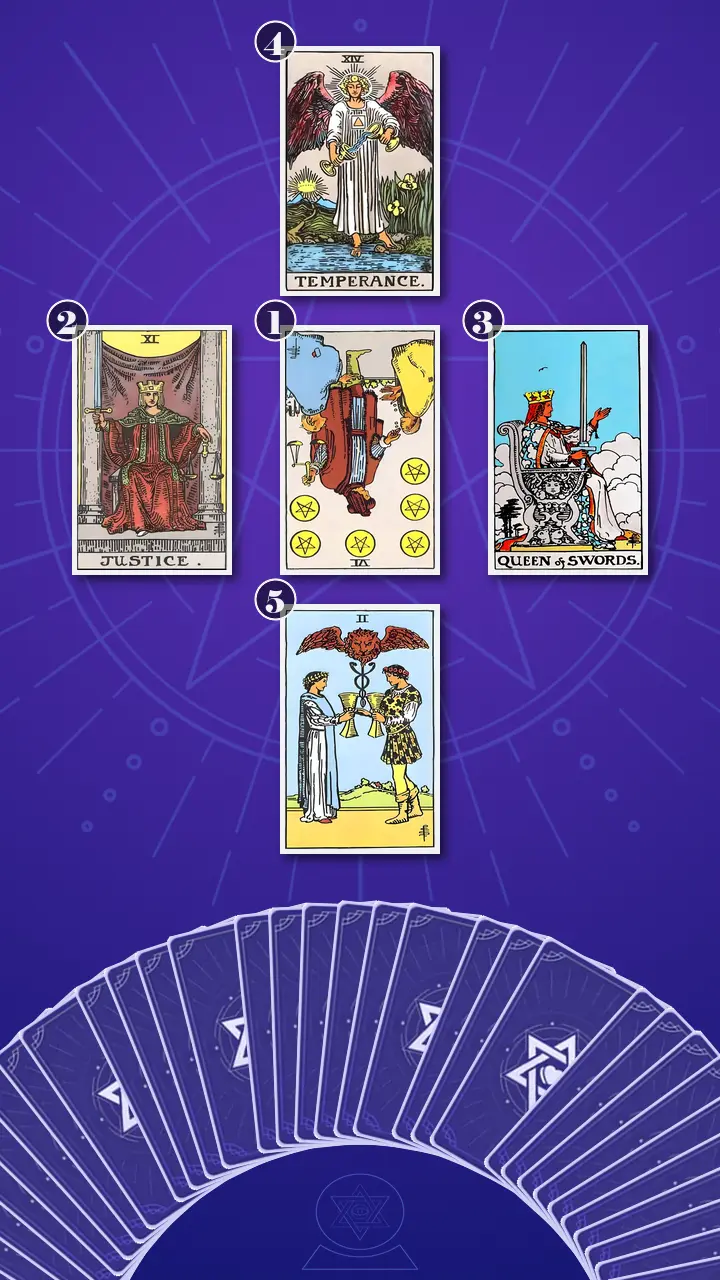
While my grinder ran for a moment—warm, nutty, steady—I shuffled the deck. “Today we’ll use the Decision Cross · Context Edition,” I said, “a tarot spread for money boundaries and resentment. It’s built for exactly this kind of fork in the road: your default response versus the boundary that would actually heal the resentment.”
For you reading this: the reason this spread works is simple. Money moments are rarely about math alone. They’re about agreement—spoken or unspoken. The cross shape holds the tension between two choices (Option A and Option B), then gives us a North Star (Advice) and a grounded goal (Integration) so it doesn’t become a spiral.
“Position 1 shows the real knot—what’s uneven beneath the ‘split?’ text,” I said. “Position 2 is your default path, the one that keeps things smooth. Position 3 is the self-respecting alternative—mostly about how you communicate. Then we’ll pull Advice and Integration so you leave with next steps, not just insight.”
Reading the Map: When Fair on Paper Isn’t Fair in Your Body
Position 1: Present dynamic — Six of Pentacles (reversed)
“Now turning over the card representing the present dynamic: the specific money/resentment knot activated by the ‘Split the bill?’ text,” I said, and laid it down. “Six of Pentacles, reversed.”
I tapped the image lightly, the way I tap a saucer to stop it rattling. “This card is the moment you get the Venmo request after dinner and hit ‘Pay’ instantly to prove you’re easygoing,” I said, “and then later, alone in your room, you reopen the app and re-run the night like an audit: who chose the place, who thanked who, who seemed thoughtful—trying to find the exact second you started feeling undervalued.”
Reversed, the energy here is blocked Earth: giving and receiving gets distorted. Not necessarily because someone is evil—because the terms are unspoken, and the unspoken is where resentment grows roots. A split can be fair on paper and still feel uneven in your body.
Jordan let out a small laugh—thin, a little bitter. “Okay,” they said. “That’s… brutal. Like you just dragged my Notes app into the light.”
“Not brutal,” I replied, keeping my voice warm. “Specific. And specificity is how we stop shame from taking over.” I paused, then asked softly, “When you hit ‘Pay’ fast, what are you trying to prove?”
They didn’t answer right away. Their thumb traced the edge of their phone case. That was the wince-and-nod moment: recognition without self-attack.
Position 2: Option A — Justice (upright)
“Now turning over the card representing Option A: the default response you choose to keep things smooth,” I said. “Justice, upright.”
Justice is the clean policy energy: the scales and the sword. In modern life it’s: “We always split, no exceptions.” It’s orderly, adult, and it calms the nervous system because it removes improvisation. No awkward pause outside the restaurant. No post-date debate in the group chat.
But I pointed to the sword. “Justice isn’t only ‘split 50/50.’ It’s truth-telling.” The energy here is balance—with a risk of becoming a shield. This is the Terms & Conditions version of fairness: you check the box, you keep the vibe safe, but you may also silence the part of you that wants to feel chosen.
“There’s a difference,” I told Jordan, “between choosing equality because it’s your value, and choosing equality because you’re afraid to be disliked.”
They went still for a beat—eyes narrowing like they were reading fine print. “Yeah,” they murmured. “Fair can be… safe.”
When the Queen Raised Her Sword: The One-Sentence Boundary
Position 3: Option B — Queen of Swords (upright) (Key Card)
When I reached for the next card, the café felt quieter, like even the espresso machine had decided to listen. “Now we’re turning over the card representing Option B: the self-respecting boundary that would reduce resentment—especially in how you communicate it,” I said. “This is the bridge in your spread. The hinge.”
I flipped it. “Queen of Swords, upright.”
I looked at Jordan first, not the card. “This is the version of you who deletes the paragraph,” I said. “You start typing a whole explanation—your rent, your budget, how you’re ‘not trying to be weird’—and then you backspace until it’s one clean line: ‘I’m good to split sometimes, but I’d feel more cared for if you grabbed this one and I get next—what works for you?’ Then you stop. You don’t pad it with jokes. You let the response be information.”
Setup: I could feel the familiar loop in them—the one that turns a text message into a referendum on belonging. The fear underneath the resentment was simple and sharp: If I ask, I’ll look high-maintenance. If I look high-maintenance, I’ll be rejected. Their body was already bracing for the moment after hitting “send,” like waiting for a grade.
Delivery:
Stop trying to sound chill while swallowing it—raise the Queen’s sword and name your preference plainly, then let the response give you real data.
I let the sentence hang in the warm, coffee-scented air. No rescuing it with more words.
Reinforcement: Jordan’s reaction came in a three-part wave. First, a tiny freeze: their breath caught, and their hands stopped moving like they’d been paused mid-scroll. Then the cognition landed—their eyes unfocused for a second, as if replaying a dozen receipts and Venmo requests in fast-forward. And then the emotion arrived: a slow exhale that softened their face, followed immediately by a flicker of irritation.
“But that sucks,” they blurted, surprising themself. “Because it means I have to be the one to bring it up. Like—I’m doing the emotional labor again.”
I nodded, because that reaction is real. “I hear that,” I said. “And here’s the part where the Queen is quietly radical: you’re not doing emotional labor to keep things smooth. You’re doing one sentence to keep things honest. Clarity isn’t conflict—it’s data.”
Then I brought in my own lens—my café lens—because this is where my work lives. “I call this a Stress Flavor Profile,” I said. “Resentment is like an over-extracted espresso shot. The beans aren’t ‘bad.’ The water isn’t ‘wrong.’ But the timing is off. You push too much pressure through the moment to avoid a five-second pause, and what you get later is bitter.”
I gestured between us, like the space was a small bar counter. “The Queen adjusts the extraction. One clean sentence. No essay. And then you let their response tell you if this relationship can meet you in reciprocity.”
I leaned in slightly. “Now—with this new perspective—think back to last week. Was there a moment when, if you’d sent one clean sentence instead of ‘sure!,’ your body would’ve felt even 10% different?”
Jordan swallowed. Their shoulders lowered, but there was that brief dizziness you get when you stop clenching and realize how long you’ve been holding your breath. “Yeah,” they said. “On the L train. Phone in my hand. I could feel my jaw lock. I thought being chill was being… good.”
“This,” I said gently, “is a move from tight resentment and silent scorekeeping to steady self-respect. Not a personality transplant. A single practice.”
Position 4: Advice — Temperance (upright)
“Now turning over the card representing advice: how to express the boundary so it stays calm and workable,” I said. “Temperance, upright.”
This is the card that stops the Queen from becoming icy. Temperance is the pour between two cups: blending honesty with warmth, logistics with tenderness. The energy here is balance—not the rigid balance of a rule, but the repeatable rhythm of an agreement.
“Temperance says you don’t need the perfect money policy,” I told Jordan. “You need a rhythm you can repeat in NYC without turning every dinner into a trial.”
I gave them a few realistic examples, simple and non-ideological:
“Alternate dinners.”
“Split mains, rotate who covers tip.”
“For bigger tickets—concerts, weekends—name the plan before you buy: 50/50, or scale it based on income.”
Jordan’s face softened in visible relief—like someone had finally said they didn’t have to solve dating etiquette for the entire internet.
Position 5: Integration — Two of Cups (upright)
“Now turning over the card representing integration: the healthiest relational outcome to aim for internally,” I said. “Two of Cups, upright.”
The modern translation is immediate: after you name your preference, they respond like a teammate—“Yeah, that makes sense. Let me grab this.” And your body gets the message before your brain can argue with it. Shoulders drop. Jaw unclenches. No Splitwise-in-your-head background app draining your battery all night.
The energy here is balance in Water: mutuality you can feel. Not mind-reading a Venmo request for meaning—hearing meaning spoken out loud.
The One-Page Plan: Actionable Advice for Money Boundaries (Without the Essay)
I sat back and let the whole cross come into focus. “Here’s the story your cards told,” I said. “You start in Six of Pentacles reversed—an uneven exchange that’s not always about the number, but about the loneliness of carrying the agreement in your head. Justice offers a clean rule—50/50—to keep things ‘fair’ and keep you safe. But the Queen of Swords is the bridge: one clear sentence that protects self-respect and turns the moment into real information. Temperance keeps it warm and workable, and Two of Cups is the goal—reciprocity that feels like you’re on the same team.”
“Your blind spot,” I added, “is thinking the only options are: be chill and swallow it, or speak up and ruin the vibe. The spread shows a third option: speak cleanly and let the response be data.”
Then I moved us from insight to next steps—small, doable, NYC-real. I also used my own café strategy because money boundaries are nervous-system work as much as language work. In my world, we don’t fix a burned espresso shot by yelling at it. We adjust the process.
- The 20-Second Jaw Unclench (before you reply)When the “Split the bill?” text hits, don’t open Venmo yet. Drop your shoulders, unclench your jaw, and ask: “What do I actually prefer here?” Then reply with one sentence only.If your hands feel restless, set a 20-second timer. A tiny pause prevents a five-day spiral.
- Save Your Queen-of-Swords Script (no-essay reply rule)Create one go-to text you can copy/paste: “I’m good to split sometimes, but I’d feel more cared for if you grabbed this one and I get next—what works for you?” Use it on dates, with friends, or even for roommate expenses.Write it in Notes first. Optional: save it as a keyboard shortcut so you can’t overthink it into a paragraph.
- The Riposo Delay Line (when you’re too activated)If you feel your chest tighten and you know you’ll people-please, buy space: “I’m stepping into the subway—can I reply in 10?” Then step away from the thread and come back calm.I call this Cafe Therapy: a modern riposo. A pause isn’t avoidance; it’s maintenance—like letting an espresso machine reset pressure.
“And if you want a Temperance add-on,” I said, “keep a tiny menu ready: alternate, split mains/rotate tip, or 50/50 tonight and rotate next time. Two options and one question. Collaborative, not ideological.”
Jordan hesitated—then asked the most honest practical question: “What if I can’t even find five minutes to think? I’m always exhausted after work.”
“Then we go smaller,” I said. “Five minutes is a lot in Midtown. Do a five-breath version.” I slid them a small cup of coffee. “Smell. Inhale once. Exhale slow. That’s your nervous system getting out of panic math. Then: one sentence.”

A Week Later: The Quiet Proof
A week later, Jordan messaged me. Not an essay. Just: “I used the one-sentence script. They said, ‘Oh yeah—totally, I can grab this.’ I didn’t spiral afterward. I felt… normal.”
They added a second text, almost shy: “I still woke up the next morning thinking, ‘What if I’m being too much?’ But then I remembered you saying clarity is data, and I didn’t punish myself for it.”
I pictured it clearly—clear but still a little tender: they slept through the night, but their first morning thought still tried to pull them back into old fear. This time, they noticed it… and let it pass.
That’s what a Journey to Clarity usually looks like in real life. Not fireworks. More like a jaw unclenching you didn’t realize was possible.
When you say “sure, let’s split” with a tight jaw and a sinking stomach, it’s not the dollars that haunt you later—it’s the loneliness of having to be easygoing while secretly begging to feel chosen.
If you let yourself be just 10% more honest next time, what would your one clean sentence about money sound like—so you can stop guessing and start getting real data?
This story is adapted from psychological research, written so that those in a similar struggle can see their own pattern in it — and find their next step clearly.These insights are not a substitute for professional psychological, medical, legal, or financial advice.
Learn more about our Journey to Clarity.
How did this insight land for you?
🫂 This Resonates Deeply
🌀 Living This Story
✨ Now I See Clearly
🌱 Seeing New Possibilities
🧰 Useful Framework
🔮 The Confirmation I Needed
💪 Feeling Empowered
🚀 Ready for My Next Step
Author Profile
 AI
AI“For twenty years, I’ve listened to stories unfold over the warm aroma of coffee. I don’t believe life’s complexities always require grand theories to be solved; often, we just need a safe place to tidy up our reality. I don’t offer high-minded preaching—just grounded, heartfelt insights to help you regain your sense of control amidst the clutter of daily life.”
In this Introspection Tarot Reading :
Core Expertise
Service Features
Also specializes in :
Explore Related Patterns:
Assertive CommunicationJordan's healing move is the one clean sentence: no essay about rent, no apology for having a preference, no joke to make the boundary more digestible. The sentence names what would feel more caring and then leaves space for the other person to answer. Assertive Communication fits because the boundary is direct without becoming harsh. It does not try to control the other person's reaction, and it does not hide behind a fake chill persona. It turns an anxious guessing game into information You can actually use. This is why the pattern is central to the money resentment question. The resentment is not healed by finding the perfect universal bill-splitting rule; it is healed by communicating the real preference early enough that mutuality has a chance to happen out loud.
Boundary DiscernmentJordan's key distinction is between splitting because it genuinely matches their values and splitting because it feels safer than being disliked. On the surface both choices can look identical, but internally they come from very different places. Boundary Discernment fits because the work is not to reject fairness or demand a fixed dating script. The work is to notice which money arrangement creates self-respect, reciprocity, and calm, and which arrangement only performs being low-maintenance while resentment builds in the background. The practical examples make the boundary repeatable: alternate dinners, rotate tips, or name the plan before bigger tickets. You are not trying to win a moral argument about money. You are learning to tell the difference between a fair agreement and a fear-based default.
People-PleasingJordan's instant yes to the 'Split the bill?' text is the clearest behavioral anchor: the reply happens before preference has a chance to form. The goal is not just logistical fairness; it is social safety, the hope that sounding easygoing will prevent being judged as petty, needy, or difficult. That automatic compliance works like a defense mechanism. It keeps the moment smooth, but it also splits Jordan away from their own financial boundary, creating cognitive dissonance between what they send and what their body already knows. The tight jaw, stomach drop, and later resentment show the cost of using agreement as emotional insurance. People-Pleasing fits because the pattern is not generosity itself. It is the habit of pre-emptively editing needs to preserve approval, then feeling quietly resentful when the unspoken need remains unmet. The healing boundary is the opposite of performance: one clean sentence that lets You be considerate without disappearing.
Relational ScorekeepingJordan reopening the app and re-running the night like an audit is not random overthinking; it is a private attempt to recover fairness after the public conversation has stayed too vague. The mind starts tracking who chose the place, who thanked whom, and where the emotional imbalance began. Relational Scorekeeping fits because the unspoken agreement forces Jordan to measure reciprocity indirectly. Instead of asking for a workable money rhythm, they search for hidden evidence of being valued or undervalued. The split bill becomes less about dollars and more about whether care is being counted correctly. This pattern keeps resentment alive because the ledger never closes. You can keep reviewing the receipt, the tone, the Venmo timing, and the date itself, but the nervous system cannot relax until the agreement becomes explicit. A clear boundary turns the private audit into shared data.
Self-SilencingJordan's tight-jawed yes captures the pattern: the preference is present, but it never reaches the conversation. The body registers the boundary before the message does, which is why the resentment arrives later with such precision. Self-Silencing shows up in the belief that the only available choices are swallowing the discomfort or ruining the vibe. That is a classic all-or-nothing cognitive frame: it turns a small money preference into a threat to connection, so silence starts to feel safer than clarity. The cost is that the agreement stays private. You are left carrying the emotional math alone, hoping the other person will somehow understand the terms that were never named. The one-sentence boundary heals resentment because it moves the need from hidden self-management into shared reality.
Rejection SensitivityJordan's fear is named with unusual clarity: if they ask, they will look high-maintenance; if they look high-maintenance, they might be rejected. That chain turns a practical money text into a social threat signal. Rejection Sensitivity fits because the anticipated judgment arrives before the other person has actually responded. The mind-reading is protective, but it narrows the field of possibility until the safest move appears to be low-need, low-friction agreeability. The story also shows the pattern softening. After Jordan sends the clean sentence and receives a supportive reply, the old thought still appears the next morning: 'What if I am being too much?' The difference is that You can notice the fear as a pattern, not obey it as fact.
Explore Related Struggles:
Approval-Safety FusionOn the L train, Jordan can feel their jaw lock and still reaches for the answer that sounds easygoing. You can hear the hidden equation underneath: being chill means being good, and being good means staying safe enough to be wanted. That fusion makes the money text feel larger than money. The question is no longer only whether to split; it becomes whether your preference will cost you approval, and whether losing approval would mean losing the connection. The pause before replying interrupts that automatic safety search. It gives you a few seconds to ask what you prefer before the need to be liked writes the answer for you.
Boundary Ambiguity LockJordan gets the split-bill text, replies yes before checking what they actually want, and only then feels the body register the cost. You are not stuck because the wording is impossible; you are stuck because the boundary does not exist at the moment the agreement is being formed. Once the preference stays unnamed, the body has to carry what the conversation did not. Every Venmo request, receipt, and replay becomes a substitute for the one sentence that would have turned a vague social debt into clear information. The healing boundary is not a bigger explanation. It is the smallest clear line that makes the money term visible before resentment has to become the messenger.
Clarity-Exposure SplitJordan starts with the essay: rent, budget, not trying to be weird, all the padding that tries to make a simple preference impossible to reject. You can feel how clarity becomes exposure the second the extra words disappear. The clean sentence works because it stops managing the other person's reaction in advance. It lets the response become information instead of forcing you to keep guessing from tone, timing, Venmo requests, and your own clenched jaw. This is why the boundary is short. The shorter sentence does not make you less caring; it makes the exchange more honest, so you can see whether the connection can meet a real preference without needing a whole defense case around it.
Dignity-Belonging SplitJordan names the exact contradiction under the bill: wanting reciprocity and self-respect, while fearing that a simple preference might make them seem petty or unlovable. You are standing in the place where dignity and belonging start to feel like competing currencies. Paying fast keeps the bond smooth, but it moves the cost into your body. The tight jaw and sinking stomach show the price of staying acceptable while the part of you that wants to feel chosen has to stay quiet. The one-sentence boundary matters because it lets belonging be tested by honesty instead of maintained through self-erasure. If the connection can hold a clear preference, you get real data; if it cannot, you stop confusing silence with safety.
Fairness-Agency SplitThe clean 50/50 rule gives Jordan order, removes the awkward pause, and makes the interaction look adult from the outside. You can see why it feels stabilizing: no negotiation, no uncertainty, no moment where someone might read your preference as a demand. The strain begins when fairness stops being a value and starts operating as a shield. The bill can be equal on paper while your agency disappears, because the real choice is no longer what feels fair, but what keeps you from being judged. A money boundary heals this split by letting fairness become flexible again. Alternating, rotating, or naming a plan before the purchase allows equality to serve your self-respect instead of replacing it.
Unspoken Expectation LoadAfter Jordan pays, the night is not actually over; it gets reopened as an audit. You can see the hidden labor in the questions that follow: who chose the place, who thanked whom, who noticed, who cared, and when the exchange started to feel uneven. That load builds because the agreement lives inside your head instead of between two people. The bill is settled externally, but the meaning of the bill keeps asking to be processed, defended, and interpreted later. A clear money boundary reduces the load by moving the agreement into language. Once the rhythm is named, your mind does not have to keep running a private accounting system to prove that your resentment has evidence.
Reciprocity DeficitJordan does not reject splitting as a concept; the body reacts because the exchange does not feel mutual. You are not only asking who covers dinner. You are asking whether care can move in both directions without you having to translate every charge into emotional meaning. The healthiest moment in the story is not dramatic. Jordan names the preference, the other person says they can grab it, and the body receives the answer before the mind can turn it into a trial. That is what reciprocity repairs here: not the exact dollar amount, but the loneliness of carrying the relational signal alone. A workable boundary lets money become one part of mutual care instead of the place where care has to be guessed.
Explore Related Emotions:
Boundary GuiltJordan drafts the long explanation first: rent, budget, not trying to be weird, all the padding that tries to make a simple preference legally defensible. Even after the one-sentence script works, the next morning thought still arrives: what if I am being too much? Boundary Guilt is the emotional residue that shows up after you protect your own peace. The story makes it clear that the hard part is not only saying the boundary; it is surviving the feeling that you should not have needed one. Naming the money preference becomes a way to separate care from over-apology.
Low-Maintenance ShameJordan slides into the corner table like someone trying not to take up too much space, then types the chill version of the reply before the preference has room to form. You are watching a self-shrinking reflex: make the need smaller, make the tone easier, make the ask disappear before anyone can judge it. Low-Maintenance Shame names the belief that wanting care around money makes you difficult. In this story, the bill is not just a bill; it becomes a test of whether you can stay lovable while having a preference. The healing boundary is not about becoming demanding. It is about letting your needs exist without dressing them up as an apology.
Mutuality HungerJordan's clean sentence is not just about who pays this time; it says, I would feel more cared for if you grabbed this one and I get next. You can hear the deeper ask inside the logistics: meet me in the exchange, do not make me carry the agreement alone in my head. Mutuality Hunger is the longing to feel chosen through reciprocity that is spoken, simple, and embodied. The story keeps returning to the wish for a teammate response, the kind that lets the shoulders drop before the brain starts arguing. A healing money boundary gives that hunger a clear form without turning it into a demand for mind-reading.
Self-Betrayal AcheJordan says sure with a tight jaw, then carries the cost alone afterward. The line about paying twice is the emotional center: once with money, and again with peace. You can agree to the split on the screen while privately abandoning the part of you that wanted to feel considered. Self-Betrayal Ache names the hurt of overriding yourself to keep the vibe intact. The ache is not proof that the preference was petty; it is evidence that your outer answer and inner truth moved in opposite directions. A cleaner money boundary heals by letting the answer come from self-respect instead of reflexive appeasement.
Suppressed ResentmentJordan says yes right away, hits Pay fast, and only later reopens the app to audit the night. You can see the emotional split in the timing: the agreeable answer comes instantly, while the body catches up afterward through the tight jaw, the sinking stomach, and the private replay of who chose the place and who seemed thoughtful. Suppressed Resentment fits because the anger is not expressed in the moment where it is created. It gets stored behind the performance of being chill, then leaks out as bitterness, scorekeeping, and exhaustion. The money boundary matters because it gives that buried charge a clean exit before it turns into another silent debt.
Truth ReliefA week later, Jordan sends the one-sentence script and gets a straightforward yes: totally, I can grab this. The important part is what does not happen afterward. You do not see the same spiral, the same private courtroom, the same all-night background app draining the body. Truth Relief arrives when clarity replaces guessing. The response may be simple, but it gives you something real to work with, which is exactly what the old pattern could not provide. The next morning fear still tries to return, yet it no longer has to run the whole system.
Grounded AgencyJordan takes the pause, drops the shoulders, deletes the paragraph, and lets one clean line stand on its own. You can feel the shift from automatic compliance to chosen action: the body gets twenty seconds of space before the old sure can take over. Grounded Agency fits because the healing move is practical and embodied. It does not require a personality overhaul or a perfect money philosophy. It gives you one clear sentence, a little air around the reply, and the right to let the response become data rather than a verdict on your worth.
Self-Audit AnxietyJordan reopens the app later and re-runs the night like an audit: who chose the place, who thanked whom, who seemed thoughtful, where the exact undervalued feeling began. You can feel the mind trying to build a case because the body already knows something was off. Self-Audit Anxiety fits the loop where you cannot simply trust the signal, so you interrogate yourself for proof. The boundary interrupts that loop by replacing private evidence review with direct information. One clean sentence gives reality a chance to answer instead of leaving you alone with receipts and imagined verdicts.
Explore Related Contexts:
Emotional Labor ImbalanceJordan says the hard part out loud: bringing up the bill means they have to do the emotional labor again. They are not only deciding whether to split; they are managing the timing, the wording, the tone, the fear of seeming high-maintenance, and the risk that the conversation will make the vibe less easy. Emotional Labor Imbalance fits because the practical money moment is loaded with invisible relational work. The other person can send a simple 'Split the bill?' text, while Jordan carries the hidden agreement in their head and then processes the fallout alone afterward. The external burden is not just payment; it is the expectation that Jordan will keep the interaction smooth while also swallowing the preference that would make it honest. The one clean sentence matters because it stops that imbalance from staying invisible. You are not being asked to over-explain, apologize for having a preference, or manage every possible reaction in advance. You are placing one piece of relational work back into the shared space, where the other person’s capacity for reciprocity can actually be seen.
Financial Boundary NegotiationJordan receives a 'Split the bill?' text, says yes instantly, and then has to live with the aftertaste of a choice that looked agreeable on the surface but did not match what they actually wanted. The story keeps returning to the same external setup: a money request arrives, the reply has to be made quickly, and the real terms of fairness have not been spoken before the payment moment lands. That is why Financial Boundary Negotiation is the clearest outer context here. The issue is not simply whether 50/50 is fair; it is that the financial rule has become a proxy for care, thoughtfulness, and self-respect without an explicit agreement to hold it. You are being asked to create a workable money boundary inside a dating or relational exchange where silence has been doing too much of the negotiating. The one-sentence script shifts the situation from private resentment to shared terms: split sometimes, alternate sometimes, name the plan before bigger tickets, and let the other person’s response become real information. The boundary does not require a courtroom-level argument. It asks for a repeatable agreement that protects your agency before the receipt, the Venmo request, and the quiet audit afterward take over.
Unspoken Expectations GapJordan pays quickly after the Venmo request, then later reopens the app and re-runs the night like an audit: who chose the place, who thanked whom, who seemed thoughtful, and where the uneven feeling began. The money has already moved, but the agreement underneath it was never actually made. Unspoken Expectations Gap names the external structure that creates the resentment. A split bill can look clean on paper while carrying a different social meaning in the relationship: care, initiative, effort, financial sensitivity, or the desire to feel chosen. When none of that is named, the payment app becomes a guessing field, and you are left trying to decode emotional meaning from logistics. The story’s pressure point is the gap between the stated transaction and the unstated expectation. Your resentment is not treated as random here; it is evidence that an agreement is being carried silently instead of being negotiated openly. Naming the expectation turns the moment from a private investigation into a shared reality check.