When a Chipped Mug Became an Identity Test, Tenderness Took the Lead
The Sunday-Night Archive That Became an Identity Test
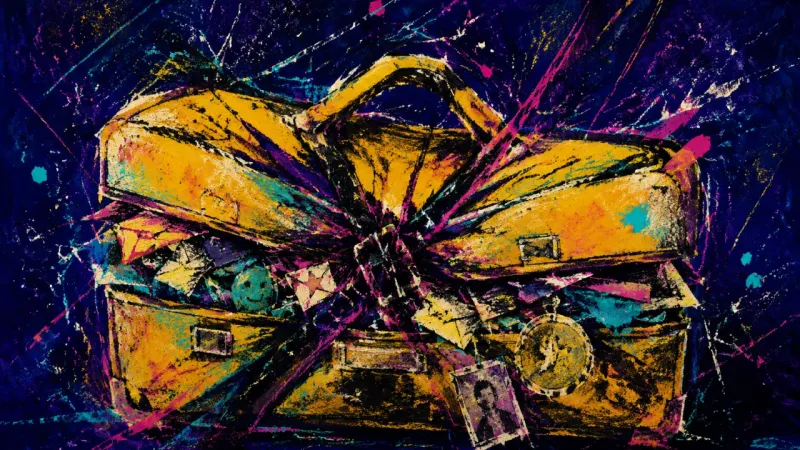
When I met Casey (name changed for privacy), they were 29, working as a junior communications coordinator and renting a compact Toronto apartment that could not hold all their history. A family iMessage saying their childhood home had another viewing had done more than trigger childhood home sale grief; it had made their current identity feel suddenly unverified. Casey described the previous Sunday at 10:48 PM: two half-filled plastic bins on the floor, a Google Photos album labelled with the old street name, the radiator clicking behind them, and the phone screen warming their palm. With their free hand, they kept moving a school badge between the keep and undecided piles.
“The person in those photos looks like they belonged somewhere,” Casey told me. Their thumb rubbed the badge's frayed edge while their other hand rested against the base of their throat. “If I let go of the house, what exactly is left of me? I want to honour who I was there, but I think I'm also asking the house to tell me who I am now.”
The feeling was not vague. I could see it moving through them like someone trying to unlock a familiar door after discovering that the key still exists but the door no longer does: throat tight, chest weighted, hands searching for one more task. Grief and nostalgia were there, but beneath them sat a quieter fear that the sale might expose an empty space where a stable adult identity should have been.
“You are not only losing access to rooms,” I said. “You are losing a place that used to answer who you were without being asked. That deserves more care than telling yourself it is just property. But the sale is not a verdict on whether you belong, and the cards will not issue one either. Let us use them to draw a map through the fog: what the house gave you, what you are still asking it to prove, and what you can consciously carry forward.”
Choosing a Map Through the Empty House
I invited Casey to place both feet on the floor and take one unforced breath while holding the consultation question in mind. I shuffled slowly, not to perform mystery, but to mark a psychological transition from replaying the problem to observing it.
I chose a five-card Shadow Spread for childhood home sale grief and identity change. The sale itself was already moving through its practical process; Casey was not asking me to predict whether it would happen. They were asking what old identity had become attached to the building and why releasing that identity felt so dangerous. The Shadow Spread was the smallest structure capable of following that pattern from visible attachment to hidden need, present-day stuckness, integration, and a grounded next step.
For anyone wondering how tarot works in my practice, I treat a spread as a structured cognitive tool rather than an authority over fate. A card externalises a pattern so that I can examine it with the querent. Its meaning becomes useful only when symbols, position, behaviour, and lived context agree. The aim is not to make Casey dependent on my interpretation. It is to help them see their own choices with enough clarity to act.
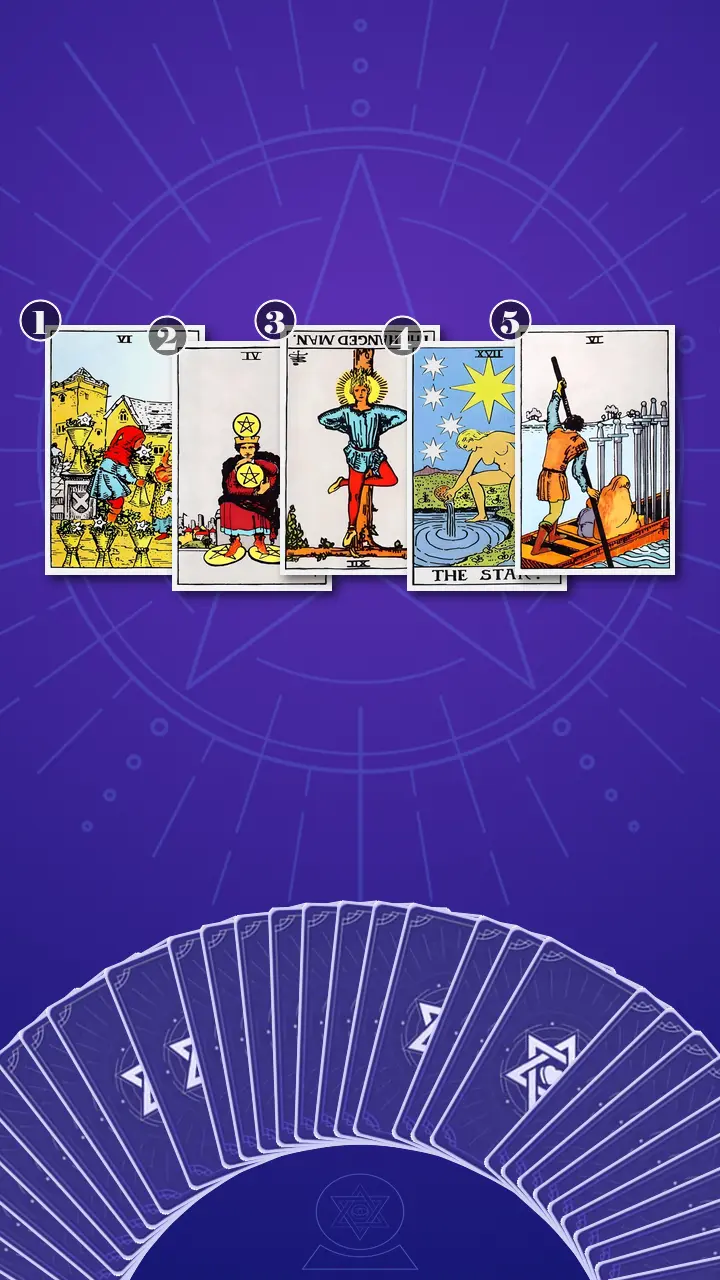
The first position would show the old identity Casey consciously encountered in the rooms and photographs. The second would reveal the emotional need beneath the attachment. The central card would show how the pattern operated during an ordinary week. The fourth, our main bridge, would describe the integrating self beyond the old role. The fifth would offer a practical form for that emerging identity. Laid from left to right, the cards would resemble a walk through an emptied house towards an open doorway.
The Old Address Still Answering for Them
Position One: Six of Cups and the Sharper Outline of the Past
I turned the card representing the old identity Casey was consciously encountering: the Six of Cups, upright.
In the image, one child offers another a cup filled with flowers inside a familiar walled village. The Six of Cups carries childhood memory, emotional return, and the gifts received from an earlier life. Its energy was essentially balanced, but Casey had recruited that memory energy for an excessive job. Their Google Photos archive had become the verified version of their identity, while their present self felt like an unsaved draft.
I returned to the late-night scene Casey had described. The person in the old kitchen seemed sharply outlined: the creative kid, the quiet observer, the one who knew the family rhythms and could recognise home by the sound of a cupboard closing. Casey's current apartment, job, friendships, and emerging ambitions felt less visually complete, so the childhood rooms appeared to certify the old labels.
“The old identity is not simply the child who lived there,” I said. “It is the person whose place felt secure because their role was already known: the creative one, the quiet one, perhaps the keeper of the family story. The question is whether the Six of Cups is giving you an inheritance or demanding that you keep performing the same role.”
I offered Casey a sentence frame: “They knew who they were because... I do not know who I am because...”
Casey looked at the card, then gave a short laugh with a bitter edge. “They knew who they were because the house reflected them back. I don't know who I am because nothing in my current life feels permanent enough to do that. That's so accurate it feels a little brutal.”
Their fingers stopped on the badge. Their gaze drifted towards the window as if an old room had briefly appeared there, then returned to the flowers in the cup. I did not turn that recognition into an accusation. “Accuracy is only useful if it increases choice,” I said. “This pattern helped you maintain continuity during change. We are simply checking whether it is still the right tool. Like the former selves held so tenderly in Past Lives, an earlier identity can remain emotionally true without becoming the life you must continue living.”
Before I reached for the next card, I gave Casey the distinction that would guide the rest of the reading: “Memory can be a source of identity without becoming its permanent address.”
Position Two: Four of Pentacles and the Cost of Making Belonging Tangible
I turned the card representing the emotional need beneath the attachment: the Four of Pentacles, upright.
The figure clutches one coin against the chest, balances another on the crown, and pins two beneath the feet. In this position, earth energy appeared in excess. Preservation had expanded from a reasonable wish to protect memories into an attempt to control belonging through physical evidence. Feeling, thought, and movement were all occupied by the grip.
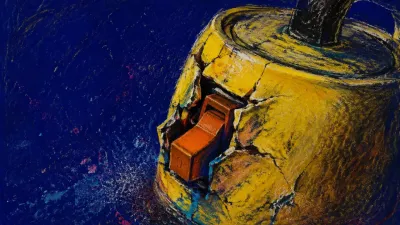
Casey had told me about a chipped mug from the childhood kitchen. During a sorting call, someone had suggested donating it. Casey had pulled the cold ceramic towards their chest before they had consciously decided what they wanted. Their thumb traced the crack while the thought arrived: “I know this is only a thing, but if I let it go, what else becomes negotiable?”
“That mug has been assigned at least three jobs,” I said. “It must prove the house was real, prove your place in the family story, and keep the old identity reachable. No ordinary object can carry that much responsibility without every sorting decision becoming an identity referendum.”
Casey's breath shortened. Their hand moved towards their sternum, paused halfway, and lowered to the table. I watched recognition arrive in stages: first the physical brace, then the unfocused stare of someone replaying several sorting conversations at once, then a long exhale that softened their jaw.
“So keeping everything isn't actually making me feel secure,” they said. “It is making me terrified that I will eventually have to choose.”
“Exactly,” I replied. “The card is not telling you to discard the mug. Keeping it may be entirely right for you. It is asking you to separate the object from the promise you have made it keep. Belonging cannot become less legitimate because one piece of ceramic changes location.”
Position Three: The Hanged Man Reversed and the Pause That Stopped Producing Insight
I turned the central card representing the present-day form of the fixation: The Hanged Man, reversed.
Upright, The Hanged Man can describe an intentional pause that changes perspective. Reversed here, that energy was blocked. Casey's suspension was no longer producing new information; it was protecting them from making a choice without complete certainty.
I described the loop I could already hear in their week: open the Notion page titled “What Comes Next,” check the family chat, reopen the property listing, zoom into the emptied hallway, move an object between piles, return to the plan. The fridge hums. The tea goes cold. Forty minutes pass, and the page still contains only its title.
“You call the first part processing,” I said gently. “And it is processing, up to a point. But underneath it I hear another sentence: ‘I am also waiting for certainty to choose for me.’”
Casey's shoulders rose and stayed there. Their eyes fixed on the reversed figure's bound foot. For a few seconds they did not move at all. Then their fingertips released the edge of the table.
“I keep telling myself I cannot decide anything about work or my apartment until I know how I feel about the house,” they said. “But every week I feel exactly the same.”
“Needing time is not a failure,” I said. “The blockage begins when time is given the job of producing a risk-free identity. The box is not only holding objects; it is holding decisions you do not yet trust yourself to make. This card does not demand a dramatic purge or a sudden reinvention. Either would risk turning movement into another form of self-erasure. It asks for one small choice that creates current information.”
When The Star Poured Into the Present
Position Four: The Integrating Self Beyond the Old Role
The rain that had tapped against the window throughout the reading stopped as I reached for the fourth card. A thin strip of winter light crossed the table and caught the painted water as I turned the card representing Casey's integrating self beyond the old identity: The Star, upright.
The figure in The Star pours from two vessels, one stream returning to the inner pool and the other reaching living earth. One foot rests in water and one on land. Here the energy was balanced and available: grief could remain emotionally real while memory took practical form as a chosen value. Hope did not require Casey to replace the past. Self-renewal began when the past stopped being the only authorised source of identity.
At this point, my mind went to the archaeological trenches and Cambridge collections that have shaped much of my life. On a careful excavation, I never treat the uppermost layer as the whole history of a site. I separate deposits, identify which structures belong to which period, and resist the temptation to force every fragment into one story. Context is what turns a shard into evidence.
I use the same discipline in a method I call Inherited Belief Stratigraphy. With Casey, I separated three layers. At the deepest level were authentic values the home may have cultivated: tenderness, curiosity, humour, steadiness. Above them were childhood roles such as the quiet one, the easy child, the creative one, or the family archivist. Compressed around those roles was a fear-based rule: if I stop performing the familiar identity, I may lose my claim to belonging.
The exercise removed personal blame without inventing a family diagnosis. Nothing in the cards could prove that a specific ancestor created the rule, and I would not pretend otherwise. The useful question was simpler: which layer still expressed Casey's values, and which layer had become an obsolete instruction preserved mainly by fear?
I laid the chipped-mug photograph beside The Star. Casey had moved the same keepsake between piles, reopened the same listing photos, and waited for one of them to explain who they would become after the sale. The ritual briefly restored continuity, but their present life still waited outside the box.
You do not need to preserve the old self to prove your past mattered; choose the values you want to live now, like The Star pouring clear water into both the inner pool and the living earth.
I let the sentence remain in the quiet between us.
Casey's breath stopped first. Their thumb hovered above the mug photograph without touching it. Their gaze lost focus, and I could see them mentally revisiting the kitchen, the bins, the blank Notion page, and the old school award they sometimes opened before writing career goals. Then their jaw tightened. “But doesn't that mean I was wrong to hold on this hard?” they asked, the words sharper than anything they had said so far. “Doesn't it mean I made all of this worse?” I kept my voice level. “No. It means preservation was an intelligent attempt to protect continuity. You are not on trial for using it. You are noticing that it now costs more than it gives.” Their fist slowly opened. Their shoulders descended, then rose once in a shaky breath before settling lower. Their eyes reddened, but the relief was not simple; it carried the slight dizziness of putting down a burden and realising that the next choice would genuinely be theirs. “Oh,” they said softly. “So I don't need a replacement identity. I need to decide what is still alive.”
I leaned forward and asked, “Now, with this new lens, think back to last week. Was there a moment when this insight could have made you feel different?”
Casey chose the chipped mug and completed one sentence without deciding whether to keep it: “This mattered because it held tenderness.” I asked where tenderness already existed in their current life. After a pause, they opened a recent message they had sent to a friend after a difficult breakup. The same attentive humour and care they associated with the old kitchen were already present in a relationship formed years after they had left the house.
“Maybe the home did not only give me things to keep,” Casey said. “Maybe it gave me ways to live.”
That was the first visible step in the deeper transformation: from nostalgic disorientation and suspended self-questioning towards values-based choice and grounded self-authorship. The house had not stopped mattering. Its meaning had begun to change containers.
What the Boat Was Built to Carry
Position Five: Six of Swords and the Selective Passage
I turned the final card representing Casey's next grounded integration: the Six of Swords, upright.
A boat carries passengers and six swords from rougher water towards calmer conditions. The swords are not thrown overboard. In this position, air and water moved in balance: thought could provide direction without denying emotion, and history could travel as selected knowledge without retaining authority over every present decision.
I translated the image into Casey's week. They could create a private two-column note called “Values I Carry” and “Roles I Release.” Under the first, they might write tenderness. Under the second, they might write the family archivist, the person who never leaves, or the creative child who needs old evidence before pursuing a new communications role. Then they could give the carried value one present-tense action in their apartment, work, or relationships.
“Selection is not erasure,” I said. “The boat has a limit, but that does not make everything left on the shore meaningless. Carry the value, question the role, and let the object be a separate choice.”
Casey opened the notes app on their phone. Their hand still trembled slightly, and they did not announce a grand new era. They simply typed the two headings. I watched them look back at The Star before adding one word beneath the first: tenderness.
The Lineage Artifact Review at the Kitchen Table
When I drew the five cards together, their story was coherent. The Six of Cups showed Casey receiving a meaningful inheritance from childhood. The Four of Pentacles showed them gripping that inheritance because belonging felt vulnerable. The Hanged Man reversed revealed how protection became prolonged suspension. The Star changed the central question from “What must I keep?” to “What value will I practise?” The Six of Swords then offered passage without denial.
The cognitive blind spot was not nostalgia itself. It was asking memory, objects, and childhood roles to carry the entire weight of identity and belonging. A changing address was a fracture in a familiar structure, not proof that Casey lacked foundations. The transformation direction was to separate memory, value, object, and role: honour the memory, practise the value, make an autonomous decision about the object, and retire any role that no longer fit.
I did not give Casey a decluttering target or insist on closure. I gave them two bounded forms of actionable advice, each small enough to begin while grief was still present.
- The Seven-Minute Memory-to-Value Translation. On Wednesday evening in their Toronto apartment, Casey would set a seven-minute phone timer, choose one object or photo, and write three words describing what it gave them. They would add the words to “Values I Carry,” circle one value already visible in their current life, and give it one small expression that week, such as sending an honest message, making twenty minutes for creative work, or cooking a familiar meal for themselves. The keep, gift, donate, or postpone decision would remain separate. Tip: Three words do not have to contain an entire home. The minimum version is one word, and Casey can stop immediately if their body signals that the exercise is becoming overwhelming.
- The Lineage Artifact Review. Before the next sorting session, Casey would open a note with the columns “Values I Carry” and “Roles I Release.” They would name one chosen quality and one inherited or childhood role, then decide whether that role should be preserved, reinterpreted, or consciously buried. Finally, they would take one action under ten minutes that belonged to the value rather than the old role: update one portfolio bullet, decline one unwanted obligation, or arrange coffee with someone who knows their present life. Tip: If “I release” feels too absolute, write “I am experimenting with releasing.” No family member needs to see the list, and no object has to leave Casey's possession to prove that growth is real.
These were not commandments from the cards. They were experiments Casey could revise, pause, or reject. Tarot had made the pattern visible; Casey retained full authority over what the house meant, which traditions deserved preservation, and which identity labels no longer had permission to organise their life.
A Week Later, the Quiet Proof
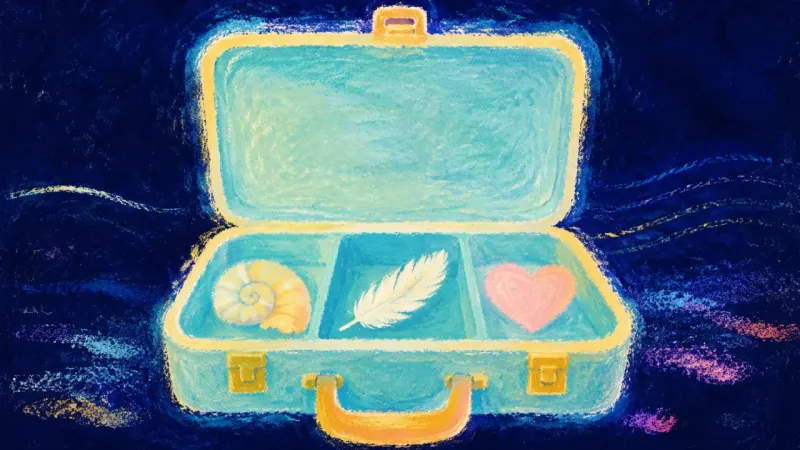
A week later, Casey sent me a screenshot: “Tenderness” under Values I Carry and “family archivist” under Roles I'm Experimenting With Releasing. They had also answered the question about their growth at work with one current goal. The next morning, “What if I'm wrong?” returned, but it felt like a question rather than a verdict.
I did not regard that message as a solved life or a completed grief process. I regarded it as the first honest evidence of movement. The five-card Shadow Spread had not told Casey who to become. It had helped them stop asking an old address to make the decision. Finding clarity meant recognising that the enduring part of home could travel through repeated choices.
You do not have to keep being your old self to prove that your old home mattered. The power in this reading did not belong to The Star, the spread, or me. It belonged to Casey's willingness to notice what was alive beneath the old role and give it a present-tense form.
When familiar rooms begin to empty, I know how easily the throat can tighten and the chest can grow heavy, caught between wanting to grow and fearing that becoming someone new will erase the only version of us who knew exactly where home was. Clarity is sometimes no more dramatic than discovering that the foundation was never only the building; it was also the value you are still capable of living.
If you no longer needed the old identity to prove that you belonged, which living value would you lift from those foundations and pour, like The Star, into the soil of your present week?