From Calling Delays Divine Timing to Sending One Portfolio Link

The 10:47 p.m. Deadline That Became Divine Timing
If you are a contract creative who keeps moving the same portfolio deadline in an expensive city, you may know the exact relief of calling another missed Friday “divine timing” while the submission tab stays open. When reflective language protects every postponement, I call the pattern spiritualized choice paralysis, not as a judgment on spirituality, but as a description of what the label is doing.
Jordan, a 29-year-old contract content designer in Toronto, arrived on my screen from their shared kitchen with a cold mug beside the laptop. Cambridge rain tapped against my own window as I asked them to take me back to the most recent deadline they had moved.
I reconstructed the scene from their account. It was 10:47 p.m. on a Tuesday. The radiator hissed, blue laptop light washed over the table, and the trackpad had grown warm beneath their heavy fingers. A portfolio submission form sat open beside a saved video titled “Trust the Delay.” One sentence in the case study still felt imperfect, so Jordan closed the form, saved the video, and dragged Friday's calendar reminder to the end of the month.
“Every time I set a date, something happens,” they told me. “I am not avoiding it. I am waiting for clarity.”
For a minute after each postponement, the pressure across their chest released. By morning, however, the task returned unchanged. The feeling was like a seat belt pulled one notch too tight across the sternum while both hands seemed packed with damp sand. The delay felt meaningful, yet it had produced no new information.
I said, “I am not going to put your spiritual values on trial, and I am not going to tell you the cards know which career you should choose. I want us to examine what happens between the first moment of friction and the moment you move the deadline. Let us make a map of that loop, then see where your own clarity can enter it.”

Choosing a Transit Map for a Stalled Decision
I invited Jordan to place both feet on the floor, take one unforced breath, and hold a single question in mind: “Why do I call every delay divine timing instead of choosing?” I shuffled slowly. I use that brief ritual as a transition of attention, much as an archaeologist clears a worktable before examining a find. It is preparation, not theatre.
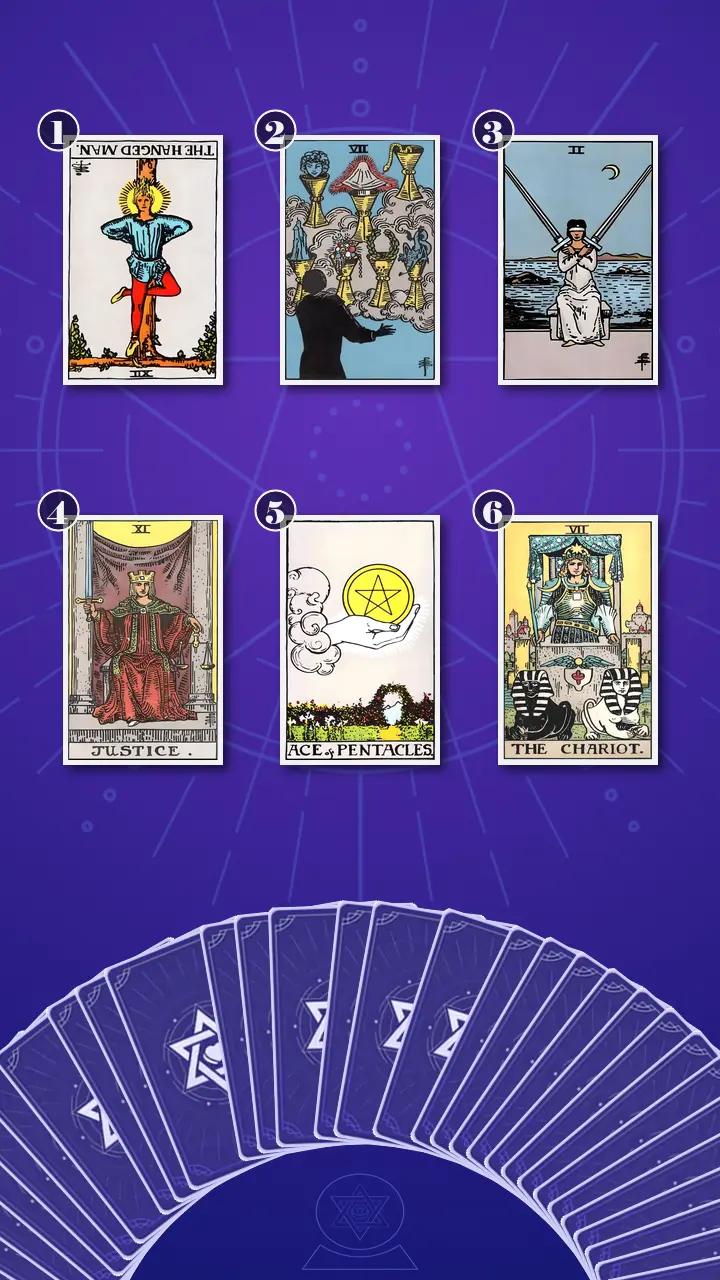
I chose the Transformation Path Grid · Context Edition, a six-card Transformation Path tarot spread for divine timing, decision avoidance, and self-directed choice. For anyone wondering how tarot works in a consultation like this, I do not use the spread to forecast a predetermined outcome. I use its positions to separate parts of a problem that have become emotionally fused. Card meanings in context can make a hidden process visible without taking authority away from the person living it.
This question described a feedback loop rather than a simple choice between two jobs. An ordinary obstacle became a sign to wait; waiting removed the immediate pressure to choose; the absence of action prevented new evidence; and the continuing uncertainty then appeared to validate another delay. A ten-card Celtic Cross would have added predictive and environmental material we did not need. A conventional decision spread would have overemphasized the external options. The six-card grid was the smallest clear map of the mechanism itself.
I arranged three cards across the upper row and three beneath them, like a Toronto transit map with a stalled route above and a transfer point below. The first position would reveal the visible habit. The second would identify the story-making blockage. The third would expose the fear being protected. Beneath those, the fourth position would supply the catalyst, the fifth would turn insight into a reversible test, and the sixth would show how Jordan could direct their life while uncertainty still rode alongside them.
The Upper Route Where the Decision Kept Stalling
Position One: A Pause Without a Review Point
I turned over the card representing the visible behavior through which repeated delays were being relabeled as divine timing. It was The Hanged Man, reversed.
I pointed to the figure's halo and the single bound foot. The halo made the suspension look sacred; the binding showed that a meaningful explanation had not created freedom of movement. Upright, this archetype can describe a deliberate pause that yields a changed perspective. Reversed here, its energy was blocked. Jordan's pause no longer had a purpose, a learning criterion, or a review point.
I returned to 10:47 p.m. The form had been open. The timing video had been waiting beside it. The imperfect sentence had triggered a familiar sequence: close the form, save the reassuring interpretation, move Friday to month-end. The extra time had not altered the opportunity, improved the sentence, or identified the evidence needed before submission. Only the story around the pause had changed.
“A pause is not guidance unless it has a purpose, a criterion, or a review point,” I said. “Rest can be chosen. Reflection can be chosen. Waiting can also be chosen. The difficulty begins when the choice to wait becomes invisible because it is described as something the universe chose for you.”
Jordan gave a short laugh with a bitter edge. Their breath caught first; then their fingers stopped against the mug, and their eyes moved away from me as though replaying four calendar changes in sequence. At last, one shoulder lowered.
“Okay, this is uncomfortably specific,” they said. “I keep moving the same date, and I still cannot say what new information I am waiting for. That is so accurate it feels a little cruel.”
I did not rush to soften the recognition into a positive slogan. “I can understand why it stings,” I said. “The pattern has been giving you real short-term relief. We are not shaming that protection. We are checking whether it still serves you.”
I asked them to complete one sentence without polishing it: “I call this reflection because admitting that I am postponing feels like...”
“Admitting I do not trust myself to handle regret,” Jordan said.
I let the sentence rest between us. The reversed Hanged Man had not accused them of laziness or denied the value of intuition. It had shown that observation had become a permanent identity instead of a temporary stage before choice.
Position Two: Seven Meanings and No Feedback
I turned over the card representing the immediate obstruction, especially the multiplication of reassuring meanings that prevented practical evaluation. It was the Seven of Cups, upright.
Seven visions floated on clouds before a silhouetted figure. I read the card as an excess of imaginative water: rich in possible meanings, poor in contact with the actual opportunity. Jordan was not short of insight. Their attention was flooded with interpretations that had not been ranked by evidence or converted into a test.
I asked what usually happened after one vague client email or scheduling problem. Jordan listed the tabs: several timing videos, a podcast about redirection, an old tarot note, a journal prompt, and a Reddit thread. One delay could mean protection, burnout, misalignment, a better opportunity coming, or a warning not to force anything. By the end of the evening, every explanation felt possible and no factual follow-up had been sent.
“It could mean the role is wrong,” Jordan said, “or that I need rest, or that something better is coming, or maybe that I am forcing it. So I think I should not act until the meanings stop contradicting each other.”
I said, “You are not short on meanings; you are short on feedback.”
I could see their eyes narrow in recognition. Their phone lay face down on the table, but their thumb rubbed along its edge as if it remembered the scrolling for them.
I compared the card to a browser window containing three readings, two podcasts, a Reddit thread, and an unfinished application. Every anxious search teaches the recommendation algorithm to serve another interpretation. The feed can contain something personally meaningful and still be an algorithm responding to engagement, not an oracle with access to Jordan's career path. Their old search pattern was like a familiar app that kept refreshing the same uncertainty while consuming all the available battery.
The distinction mattered. I was not asking Jordan to abandon spirituality. I was asking whether each new meaning could answer a concrete question. If the additional interpretation could not change the next action, define a real constraint, or supply evidence, then it might be emotionally attractive without being decision-relevant.
“After the last setback,” I asked, “how many sources did you consult before asking one person directly involved a factual question?”
Jordan looked at the ceiling, counted silently, and said, “Six sources. Zero people involved.”
The Seven of Cups had synchronized with the mental crowding they knew well: dry eyes, a hot phone, twenty open tabs, and the strange exhaustion of collecting so many possibilities that inaction began to look intellectually responsible.
Position Three: The Regret Hidden Behind the Blindfold
I turned over the card representing the underlying fear that sustained the obstruction: choosing without certainty, regretting it, and experiencing that regret as proof of lost control. It was the Two of Swords, upright.
The blindfold covered the seated figure's eyes. Two swords crossed over the chest, while rocky water remained behind the controlled posture. I read this as blocked air and overcontrolled thought. Preserving both options looked passive, but holding those blades in place required continuous effort.
I brought Jordan back to another familiar scene: the portfolio submission tab open on one side of the screen and the archive folder ready on the other. Submitting preserved the possibility of success but exposed the work to judgment. Withdrawing preserved safety but made the loss of possibility real. Saying “I need more clarity” allowed both imagined futures to survive, while Jordan's shoulders stayed raised above the keyboard.
“What consequence are you trying not to own?” I asked. “Is it losing money, closing another path, disappointing yourself, or having no one else to blame if you regret the choice?”
Jordan did not answer immediately. Their lips pressed together; their gaze slipped out of focus; then their crossed arms slowly opened and settled on the table.
“If I choose and regret it, the regret will be mine,” they said quietly. “If the timing chooses for me, I can tell myself I was being guided.”
I said, “That makes sense as a protection against exposure. It also reveals the cost. Not choosing protects you from one regret while quietly creating another.”
I watched their hand flatten over the center of their chest. The card had named the central contradiction without reducing it to a character flaw. Jordan wanted a personally meaningful direction, yet they also wanted to preserve every possible future until risk disappeared. The blind spot was that non-choice was not neutral. It was already shaping their income, portfolio, confidence, and sense of time.
“I keep thinking I am protecting my freedom,” they said. “But maintaining all the options is taking up the whole day.”
That was the narrowing funnel of the upper row: seven possible meanings had compressed into two defended alternatives. What remained missing was not a more beautiful interpretation. It was one fair point of contact with reality.
When Justice Faced the Screen
Position Four: The Inner Arbiter Removes the Blindfold
The room changed before I turned the fourth card. The rain against my window softened, and a streetcar bell sounded once through Jordan's half-open window. The single note seemed to clear a small space in the conversation.
I turned over the card representing the catalyst that would move Jordan from interpreting every disruption as a sign to separating observable facts, personal fear, and chosen criteria. It was Justice, upright, the key card of the reading.
Justice faced us directly between two pillars. The scales were level; the sword stood upright. This was balanced air rather than the defensive blockage of the Two of Swords. Reflection was still present, but now it served discernment and commitment. Control shifted away from guaranteeing an outcome and toward creating a fair process.
My mind went briefly to the historical transitions I had studied at Cambridge and on archaeological sites. History looks tidy only in retrospect. Nobody living through a changing era receives a notification saying, “The new epoch begins Tuesday at 10:47 p.m.” People make proportionate choices with incomplete records, preserve what matters, and revise when reality returns new evidence.
I used what I call Core Artifact Excavation as the lens for Justice. On a dig, I do not treat every object in every layer as equally foundational. A recent fragment can be vivid without being bedrock. In Jordan's decision, the peer's LinkedIn announcement, the vague email, the saved timing video, and the imperfect sentence were surface finds. They deserved notice, but none automatically carried the authority of an instruction.
Beneath them were genuine structural conditions: Toronto rent, variable contract income, the actual application deadline, the cost of an experiment, and the need to avoid commitments that exceeded Jordan's financial limits. Deeper still were the core artifacts that needed to survive any career transition: creative integrity, enough stability to breathe, autonomy, useful work, and honest contact with other people. The old trajectory itself was not sacred. Those values were.
“Justice does not ask you to become less intuitive,” I said. “It asks you to stop placing a scheduling snag, a fear, a preference, and a contractual fact on the same side of the scale as though they were the same category of information.”
At 10:47 p.m., the portfolio tab had still been open beside the saved timing video. One imperfect sentence became a reason to move Friday's reminder again, and Jordan's chest loosened for a minute while the unfinished choice quietly survived. Their familiar question was still, “How do I make the completely right decision?”
I said, “Calling it divine timing can protect you from owning uncertainty and regret, but you do not need a guaranteed outcome to make a fair choice; you need a fair process that lets reality answer back.”
Waiting for a flawless sign is not discernment; choose a fair, testable criterion and act on it, letting Justice's balanced scales weigh the evidence before its upright sword marks commitment.
I stopped speaking.
Jordan's breath halted halfway in. Their fingers remained suspended above the trackpad, and for several seconds their face went completely still. Then their eyes shifted away from the screen as if they were watching each missed Friday replay on an internal timeline. Their jaw tightened before it released; their pupils widened; a faint flush rose along their cheekbones. When they looked back, their eyes were bright.
“But does that mean I have been wrong this whole time?” they asked, with a sudden flash of anger. “That I made all this meaning out of nothing?”
The anger thinned into a shaky exhale. Their shoulders dropped, their hand opened against the table, and they looked briefly unmoored by the space left behind. Relief had arrived, but so had responsibility. I could see the slight blankness that follows when a familiar burden is set down and the person realizes their own hands are now free.
I said, “No. The relief was real, and some delays may have protected you. Spiritual meaning is not nothing. We are making a narrower observation: this particular loop no longer produces perspective or evidence. Recognizing that does not condemn the choices you made with the tools you had. It gives you another tool now.”
I immediately asked, “With that new view, can you think of a moment last week when this insight might have made the situation feel different?”
Jordan described an ambiguous email from a potential client. They had spent an evening interpreting whether the vagueness meant redirection. From Justice's perspective, the fact was simply that the email lacked a start date. The fear was that asking would expose how much they wanted the work. The preference was to know whether the contract could coexist with a portfolio pivot. One factual reply could have provided more information than an hour of confirmation seeking.
“So the fact is not that the opportunity is misaligned,” they said. “The fact is that I do not know the start date.”
“Exactly,” I said. “Your interpretation may still matter. It simply does not have to impersonate a fact.”
I asked Jordan to start a seven-minute phone note titled Fact / Fear / Preference. Under Fact, they wrote: “The portfolio deadline is self-imposed, and no requirement has changed since the last date.” Under Fear: “If I submit and dislike what follows, I will feel foolish for choosing.” Under Preference: “I want to send one case study and learn how it lands.”
Then I asked them to circle an action that was reversible and could take no more than twenty minutes. They chose to make a private preview link and send it to one former colleague with one precise question. They placed that action into a real calendar slot within the next 48 hours.
I was careful about the boundary. “This is not a rule for irreversible, unsafe, legally significant, or financially high-risk decisions,” I said. “Genuine constraints, consent, contractual obligations, and material costs remain on the scale. If the exercise feels too exposing, stop after one fact. The smallest valid test may be drafting the message without sending it.”
I named the shift I had just witnessed. It was not instant confidence. It was one movement from uneasy suspension and spiritually framed confirmation seeking toward grounded self-trust through a fair, feedback-based choice. Jordan did not need to know the final destination. They needed a process honest enough to let reality answer.
The Single Pentacle Beyond the Garden Gate
Position Five: A Beginning Small Enough to Be Real
I turned over the card representing the practical next step through which the transformation could be tested within 48 hours. It was the Ace of Pentacles, upright.
A hand emerged from a cloud holding one pentacle. Below it, a garden path passed through a flowered arch toward distant mountains. I read the earth energy as available and balanced: one tangible beginning, offered at human scale. Jordan did not have to cross the mountains or settle an entire identity. They only had to enter the gate far enough to gather experience.
In Jordan's life, the pentacle was not an abstract promise of success. It was one already-finished case study uploaded to a private preview link, sent to one former colleague with one feedback question. It could also have been one 20-minute informational conversation or one factual email about an application deadline. The defining quality was a clear scope and exit point.
“Let the next step produce information, not prove your identity,” I said.
Jordan rubbed their palm against the table. “I know it is one link,” they said, “but my brain turns sending it into a referendum on whether I should change my whole career.”
“Then we define the experiment's ceiling before you begin,” I replied. “One recipient. One sample. One question. Twenty minutes. After that, you owe no second step until you review what happened. A bounded test cannot honestly claim to decide your entire life unless you silently give it that job.”
The Ace of Pentacles grounded Justice's discernment. The scales had separated the categories; the pentacle gave one category contact with matter. This was how finding clarity became practical. Clarity would not be demanded as an entry ticket. It would be allowed to develop after evidence arrived.
Position Six: Driving With Hope and Caution in the Same Vehicle
I turned over the final card, representing the integrated capacity for self-directed choice while uncertainty remained present. It was The Chariot, upright.
The charioteer faced forward between a black sphinx and a white one. The opposing pulls had not disappeared. Direction came from coordinating them around a chosen course. I read this as disciplined, balanced movement rather than a burst of certainty.
I also noted what the spread did not contain. There was no Wands card. Jordan's missing ingredient was not another surge of motivation, a perfect morning routine, or a sufficiently powerful sign. The sequence had moved from the watery meanings of the Seven of Cups, through the compressed air of the Two of Swords and Justice, into the earth of the Ace of Pentacles. The Chariot integrated those elements as agency.
In modern terms, I asked Jordan to let the hopeful part and the cautious part share the ride without handing either one automatic control of Google Calendar. They could complete the scheduled experiment, record the response, and review it afterward. A delayed reply could remain a delayed reply instead of being promoted into a cosmic stop sign. An ordinary inconvenience could remain friction unless it met a stop condition defined in advance.
“So I do not have to make the worried part shut up before I move,” Jordan said.
“No,” I replied. “The Chariot is not emotional unanimity. It is self-direction with competing signals still present. You choose, observe, and adjust. Adjustment is not proof that the original choice was a failure. It is evidence that you are driving.”
I watched Jordan take a screenshot of the three-column note. Their mouth tilted into a smile that still carried some sadness. Keeping every possible self alive had once felt like freedom. Choosing one experiment meant allowing the other imagined selves to wait outside the frame for twenty minutes. That small loss was real, but it no longer had to be mistaken for danger.
What Survived the Excavation
I gathered the six cards into one coherent account. Repeated postponement had taught Jordan's body that moving the deadline produced immediate relief. The reversed Hanged Man showed how that relief acquired a sacred-looking explanation even after the pause stopped teaching anything. The Seven of Cups filled the empty space with compelling meanings, and the Two of Swords revealed why those meanings were so useful: they protected Jordan from owning an imperfect choice and possible regret.
Justice did not demolish Jordan's spiritual worldview. It restored proportion. The Ace of Pentacles offered one material experiment, and The Chariot showed that self-trust could be built by choosing, observing, and adjusting while both hope and caution remained present. The spread's movement resembled an excavation through recent surface noise, genuine structural constraints, and enduring core artifacts. Jordan's old career trajectory might change. Their values did not have to disappear with it.
I named the cognitive blind spot plainly: because uncertainty survived every delay, Jordan had treated the uncertainty as evidence that waiting was correct. In reality, the loop had prevented the feedback that might have changed the uncertainty. No test produced no evidence; no evidence then appeared to justify more waiting.
The transformation direction was equally plain. Instead of asking, “Is this delay a sign to wait?” Jordan could make one reversible choice within 48 hours and review what it actually taught. The aim was not speed, productivity for its own sake, or emotional perfection. It was to move control from the fantasy of a guaranteed outcome to the quality of a fair process.
Jordan raised one practical objection. “What if I put a fear in the fact column, or dismiss a real money constraint as me being scared?”
I said, “The labels are provisional, not a courtroom verdict. Facts and feelings can overlap. We are looking for the current best fit, and genuine limits stay visible. That is why the exercise includes a separate layer for rent, safety, consent, contracts, and actual cost.”
I gave Jordan two pieces of actionable advice, both deliberately small:
- The Weekend Stratigraphic Review. Before noon on Saturday, Jordan would sit at the kitchen table and set a 12-minute timer. On one page, they would draw three layers: surface weather, including peer announcements, timing content, embarrassment about missed dates, and one imperfect sentence; structural conditions, including income, rent, deadlines, consent, contracts, and a firm cost ceiling; and bedrock artifacts, including autonomy, craft, stability, contribution, and honest connection. They would then write one sentence each under Observable Fact, Feared Outcome, and Personal Preference, followed by one testable waiting criterion: “I will wait if X information arrives by Y date; otherwise I will complete Z limited step.” Minimum version: use seven minutes and write only one fact. A sentence may touch more than one layer; the point is workable distinction, not perfect classification.
- The 48-Hour One-Pentacle Test. Jordan would create a 20-minute calendar event titled “Run the test, not decide my life,” attach one finished case study, generate a private preview link, and send it to one trusted former colleague with the question, “After reading the opening, what role or strength do you think this case study positions me for?” After the reply, or after 48 hours without one, they would spend ten minutes answering only: “What happened? What did I learn? What remains unknown?” Set the ceiling before starting: one recipient, one sample, one question, and no automatic second step. Stop or seek appropriate advice if safety, consent, legal obligations, or meaningful financial risk enters the decision.
This was my Stratigraphic Review adapted to Jordan's decision loop. On archaeological sites, the newest layer often shouts the loudest because it is closest to the surface. That does not make it the foundation. A former coworker's announcement, a difficult Tuesday, or an algorithmically perfect video could be noticed without being granted the authority to overrule Jordan's core values and observable conditions.
I closed the reading by reminding Jordan that the six-card Transformation Path Grid had not selected a career for them. It had made the architecture of their delay visible. The choice, the boundaries, the experiment, and the review still belonged to Jordan.
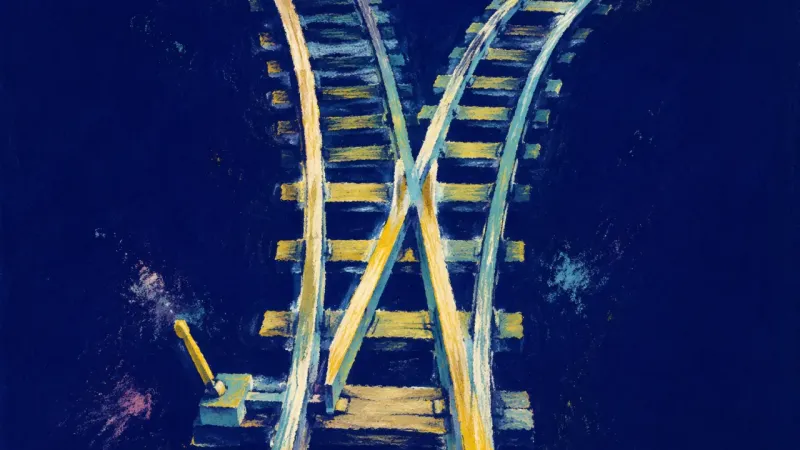
A Week Later, One Link Left the Draft Folder
Six days later, I received a message from Jordan at 4:05 p.m. Attached was a photo from a Toronto Public Library branch: one private preview link on the screen, one sent message beneath it, and winter light falling across the keyboard.
“Snowmelt was squeaking under everyone's boots, and I nearly moved the calendar block,” Jordan wrote. “Then I asked whether anything had actually changed. It had not. I sent the link while I was still unsure.”
The former colleague replied later that evening. They found the case study strong, suggested tightening the first paragraph, and named two content strategy roles Jordan had not considered. The response did not settle Jordan's career. It supplied three pieces of evidence that another month of private interpretation could not have produced.
That night, Jordan slept through. Their first thought in the morning was still, “What if I got it wrong?” They smiled, not because the fear had vanished, but because the experiment was already answering back.
I considered that the quiet proof of the reading. The cards had not sent the link. Jordan had. Tarot had served as a structured mirror, making facts, fear, preference, and consequence easier to distinguish. It had offered a map, not a mandate. The person at the center of the decision remained the author of what happened next.
From where I sat, Jordan's Journey to Clarity was not a leap from uncertainty to perfect confidence. It was a smaller and more durable movement: from protecting every possible future to testing one direction, from confirmation seeking to reviewed self-direction, and from asking the universe to guarantee the outcome to trusting themselves to run a fair process.
If opening your own delayed task tightens your chest because choosing feels like a test of whether you can trust yourself, I hope you remember what I watched Jordan uncover: the newest, loudest layer is not always the bedrock, and one reversible choice does not have to become a verdict on your identity.
I will leave you with the question I left beside Justice's balanced scales: if one small, reversible choice could be information rather than a verdict, which buried preference would you be curious to bring into daylight within the next 48 hours?