Self-Help at Double Speed Raised Pressure; One Step Became Testable

The 11:40 p.m. Self-Help Spiral: When Research Becomes Productivity Procrastination
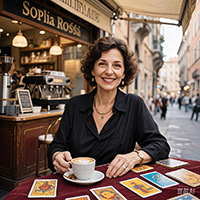
I had just set down a small coffee for Jordan (name changed for privacy) when they turned their phone face down on the cafe table, then turned it over again before I could ask what had brought them in. The screen was full of neatly labelled saved collections: Focus, Morning Reset, Career, Habits. Their saved folder, I noticed, was more organised than tomorrow's calendar.
Jordan was twenty-eight, worked hybrid in content marketing, and lived in the familiar Toronto rhythm of Slack pings, TTC commutes, rising rent, half-used app trials, and the quiet sense that every abandoned system had cost more than money. They told me about 11:40 p.m. on a Wednesday: sitting on the edge of their bed with a fresh notebook open, three productivity videos playing at double speed, the radiator hissing, and blue phone light sharpening the shadows beneath their eyes. Each video promised a cleaner life. Each one made them feel briefly awake with possibility. Then one asked them to choose tomorrow's first task, and their thumb opened another morning-routine comparison.
'I know a lot about change,' Jordan said. 'I just cannot seem to choose what to do tomorrow.'
Their jaw stayed tight as they spoke. Their shoulders hovered close to their ears, as though their body had been asked to hold up every unfinished plan at once. The pressure did not look like a lack of discipline to me. It looked like trying to read a street map inside a snow globe: every route was there, but the shaken-up urgency made none of it legible.
'You want one clear action,' I said, 'but because it has to count, you keep collecting more proof that you are preparing. The content is not the failure. The loop begins when learning has to keep proving that you are still making progress.'
I did not need Jordan to become a different person across my table. I wanted us to make the clutter visible, separate what was useful from what was loud, and find one next step that belonged to them.
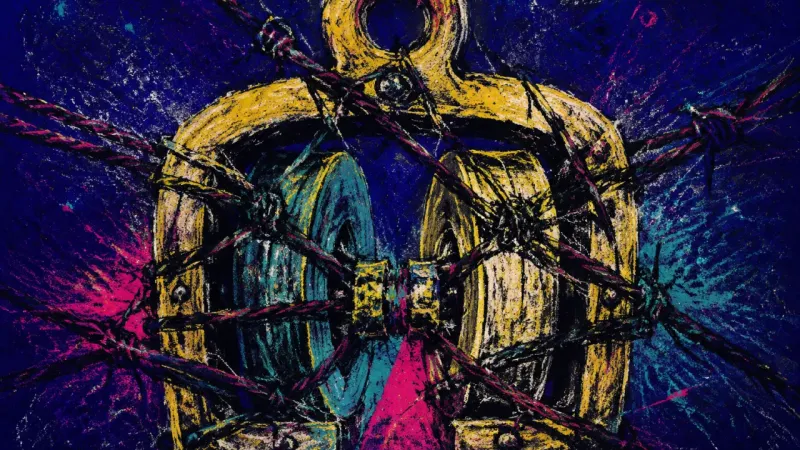
A Switchback Map for Self-Help Overload
I asked Jordan to take one slow breath, not as a mystical test and not as a way to erase the pressure, but as a clean break between the scroll and the conversation. I shuffled while they held the question in mind: why did consuming self-help feel easier than choosing one practical action?
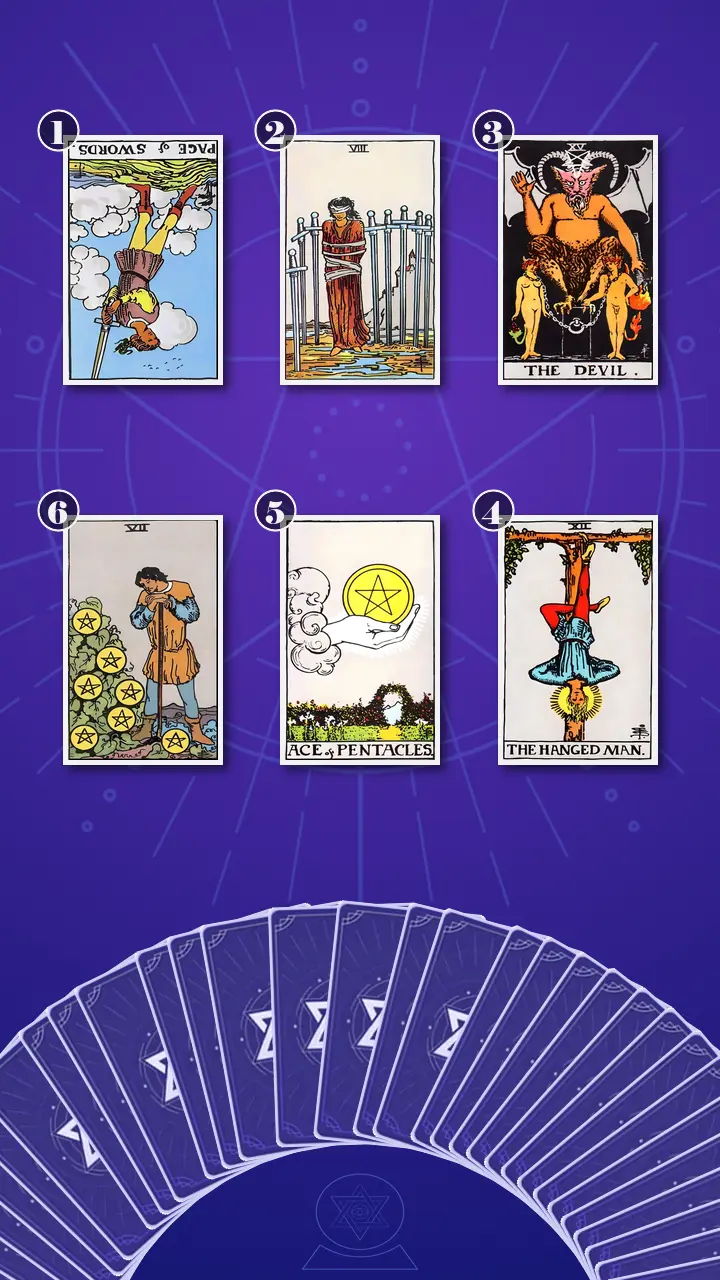
I chose the six-card Transformation Path Grid · Context Edition. The way tarot works in my practice is not through fixed predictions. I use the cards as a structured visual language: card meanings in context can show a behavioural loop, the fear feeding it, and the point where a different response becomes possible.
This spread fit Jordan's question because the problem was not simply a shortage of good advice. It was a self-reinforcing system. More input brought a quick sense of control, but postponed action. Postponed action meant no evidence. The absence of evidence made another source feel necessary. The top row would show the symptom, the immediate blockage, and the underlying driver. The bottom row would give us the interruption, one practical experiment, and a way to review it without turning the result into a judgment of worth.
I laid the six cards in a two-row grid, a switchback path that moved across the problem, dropped into a deliberate pause, and returned on firmer ground. I told Jordan, 'We are not looking for the perfect system. We are looking for the smallest honest point of leverage.'
The Tabs That Pretended to Be a Plan
The Page of Swords Reversed: The Feed That Never Lands
I turned over the card representing the observable self-help consumption behaviour and scattered mental energy that had been substituting for one next step. It was the Page of Swords, reversed.
The Page normally carries curiosity, inquiry, messages, and the alertness of a capable learner. Reversed, that same intelligence can become overextended. The raised sword, wind-tossed clothes, moving clouds, and distant birds all looked like a phone held ready for the next signal. The energy was not absent; it was in excess. Jordan's attention had become so quick to scan that it could not settle long enough to test anything.
I described the card's everyday scene: at 11:40 p.m., a new habit plan is open, three videos are playing at double speed, and tomorrow's calendar is still blank. The moment one video asks for a first task, another comparison appears. The learner keeps learning, because becoming a beginner in practice feels more exposing.
'The problem is not curiosity,' I told Jordan. 'It is giving every new answer equal authority.'
Jordan gave a small, dry laugh and looked down at their phone. 'That is painfully accurate. I already know enough to try something, but what if the next source has the version that finally works?'
I let the question sit without arguing with it. The hope inside that question mattered. New information had been offering Jordan a burst of relief after hard days. But the Page showed that informed identity and committed practice were not the same thing. Their saved folder could look like progress while their calendar remained untouched.
The Eight of Swords: When Optional Advice Becomes Mandatory
Next I turned the card representing how accumulated advice had become restrictive criteria and created the choice paralysis blocking action. The Eight of Swords appeared upright.
The blindfold, loose bindings, and incomplete enclosure of swords mattered more to me than the drama of being trapped. Jordan had options. What they lacked was permission to choose an option that did not satisfy every rule they had collected.
I asked them to picture their Sunday evening at the kitchen table: rain ticking against the apartment window, lukewarm tea beside the laptop, and coloured blocks being dragged around Monday's Notion calendar. One expert said to begin with the hardest task. Another said to protect nervous-system capacity. Another praised a 5 a.m. routine. Jordan had deleted the 9 a.m. block four times because every choice violated somebody's advice.
'It is like eight browser tabs have all become managers,' I said. 'Wake earlier. Protect sleep. Plan everything. Stay flexible. Track habits. Do not overtrack. Push through. Rest. Each one may be reasonable, but together they are asking a two-minute task to pass an entire operating-system audit.'
Upright, the Eight of Swords showed a blockage made from rules that had hardened around Jordan's own judgment. Its energy was constricted, not because there was no route forward, but because each possible route had been labelled insufficient before it began.
Jordan's chest rose, held, and fell. Their fingers pressed briefly into the paper sleeve around their coffee cup. 'I could do any of these things,' they said, 'but none of them feels valid unless it satisfies all of them.'
After twenty years of listening to people talk through impossible-looking decisions over coffee, I have learned that a crowded choice is often not asking for more research. It is asking for fewer criteria. The Eight did not demand that Jordan reject every useful idea. It asked which rule could be removed so that one reversible action became possible.
The Devil: The Bargain Beneath the Scroll
I then turned the card representing the forced-progress belief and worth-based fear that made continued consumption feel necessary and temporarily controlling. The Devil appeared upright.
I kept my voice calm. The Devil is not a punishment card, and I do not use it to frighten anyone. In this reading, it named an attachment: the short-term bargain between another piece of advice and a brief return of control.
I asked Jordan about the moment after a difficult campaign review, when they were squeezed into a crowded Line 1 train at 5:48 p.m. Wet coats smelled of cold rain, the rails shrieked around a bend, and a polished 30-day transformation Reel appeared on their warm phone. Hope flashed first. Then the action request arrived, and their stomach dropped. They pressed play because being guided for another few minutes felt safer than finding out whether an imperfect idea would work slowly.
The loose chains around the figures on the card showed the subtlety of the bind. Jordan had not consciously chosen to hand over their self-trust. But the algorithmic loop had started to work like a free trial that renewed automatically: each new video charged attention in exchange for a small burst of certainty.
'If I keep learning, I am still someone who is trying,' Jordan said quietly. 'If I try one thing and it barely works, what does that say about me?'
The question tightened their mouth before they could soften it. I saw the real cost of the loop then. The issue was not self-help content itself. It was the private fear that slow results might become a verdict on Jordan's worth. The Devil showed how temporary certainty can feel safer than agency, even when it leaves a person more dependent on the next source.
'This card is not saying you are weak or trapped forever,' I said. 'It is showing a bargain we can renegotiate. You do not need to prove your value by being in permanent improvement mode.'
When the Hanged Man Turned the Screen Face Down
The Hanged Man: A Pause That Restores Choice
The cafe grinder stopped with a low click, and for a moment the room seemed to make more space around the table. I turned the card representing the leverage point where a deliberate pause could interrupt compulsory input and create perspective. The Hanged Man appeared upright.
Jordan's usual pattern was painfully familiar by now: a notebook open at 11:40 p.m., three videos at double speed, tomorrow waiting blank beneath the blue screen. As soon as one source asked for a choice, their thumb reached for another. They were caught in the belief that every pause meant falling behind and every imperfect experiment carried too much meaning.
You are not stuck because you need another answer; choose the Hanged Man's deliberate suspension, turn the problem upside down, and let one already-known idea become enough to test.
Jordan went still in three distinct waves. First, their breath stopped halfway in and the hand resting beside the phone tightened, knuckles pale against the tabletop. Then their gaze slipped past me toward the rain-muted street, as if replaying every late-night search that had begun with hope and ended in a fresh set of rules. Finally, their shoulders lowered a fraction. Their eyes shone, not with instant relief, but with the startled vulnerability of someone who can suddenly see a door they might have been allowed to use all along.
'But does that mean I was wrong before?' they asked. There was some anger in it, and some grief.
'No,' I said. 'It means the strategy made sense when you needed relief. It just stopped serving the outcome you wanted. Now, with this new perspective, think back over last week. Was there a moment when choosing relevance instead of urgency could have made you feel different?'
The Hanged Man's calm face and halo reframed stillness as active perspective work. I call the tool I used here Analysis Paralysis Deconstruction: I stripped Jordan's choice down to the immediate reality and the speculative verdict attached to it. The immediate reality was simple: one useful idea already existed in their notes. The speculative verdict was: if this goes slowly, I am incapable. Only the first belonged in tomorrow's calendar.
I added a second layer of my practice, Complexity Reduction. We did not need to solve Jordan's whole personal operating system. We needed a clean binary: relevant for this week, or not deciding today. That was the Hanged Man's inversion. Urgency asks what will fix everything. Relevance asks what Jordan can test next.
I asked Jordan to begin with a five-minute setup, either at the table or later that evening: put the phone on Do Not Disturb, open only the most recent notes they had found useful, and circle one action that could fit into a 15-minute calendar block. I was clear that this was not a ban on useful content. They could shorten the experiment to two minutes, stop it, or adapt it if it created more pressure than clarity. The point was voluntary suspension, not punishment.
This was the hinge in Jordan's journey: from pressured uncertainty and novelty-switching toward grounded curiosity and patient self-trust. A pause did not make them passive. It returned the authority to decide what deserved their attention.
The Ace of Pentacles: One Calendar Block, Not a New Life Dashboard
I turned the card representing the finite, observable next step that could be completed before more content was consumed. The Ace of Pentacles appeared upright.
One hand emerged from a cloud holding a single coin. Not a field of options. Not a lifetime productivity system. One tangible beginning, with a garden path beyond it. The Ace carries grounded potential, but its energy only becomes useful through contact with time, place, and effort.
I translated it into Jordan's actual week: 'Wednesday, 7:30 p.m., kitchen table: draft three rough campaign bullets.' The finish line would be three bullets existing. They did not need to be strategic, brilliant, or proof that Jordan had finally found the perfect method.
'That feels almost too small,' Jordan said.
'That reaction belongs in the experiment,' I replied. 'The Ace is not asking you to choose a lifelong system. It is asking you to receive one workable seed.'
Upright, the card offered an energy of balance between thought and physical reality. Jordan could choose one saved suggestion, rewrite it as a verb such as draft, email, cancel, walk, outline, or prepare, and place it in a real calendar slot. Completing the block would be data, not a character reference.
I watched their expression change when the task became specific. Their forehead loosened. They did not look certain, but they looked able to begin. One attempt, I reminded them, is an event, not a verdict.
The Seven of Pentacles: Letting Evidence Grow
Finally, I turned the card representing patient repetition and scheduled review: the practice that could replace immediate self-judgment and support sustainable self-trust. The Seven of Pentacles appeared upright.
The figure on the card leans on a tool and studies a growing vine. This is a pause after labour, not the earlier freeze created by overthinking. The work has happened. Now there is enough evidence to observe.
As a content marketer, Jordan immediately understood the comparison. No thoughtful person judges a campaign by refreshing analytics after one impression. Yet they had been judging a habit after one attempt and then rebuilding the whole system before a pattern could form.
'Repeat the same 15-minute practice three times,' I said. 'Then make a short note: what happened, and what would I adjust. After that, you can choose to repeat it unchanged, alter one variable, or stop with a reason grounded in what actually occurred.'
The Seven's energy was patient and earthbound. It shifted the reading away from overloaded Air, where each new thought demanded attention, toward evidence that could be seen, dated, and reviewed. Jordan did not need a full harvest at the moment of planting. They needed enough time to stop pulling up the seed every morning to check whether it was growing.
Jordan nodded, slowly this time. 'I think I keep treating slow growth like evidence that I picked wrong.'
'Exactly,' I said. 'Collect evidence before you collect another framework.'
The Coffee Bean Filter and the One-Seed Test
When I looked back across the grid, the story was coherent. The reversed Page of Swords showed a smart, hopeful mind treating every notification as urgent. The Eight of Swords showed how accumulated expert advice had turned into an enclosure of incompatible rules. The Devil exposed the emotional bargain beneath both: consuming more guidance temporarily protected Jordan from the possibility that an imperfect result might say something painful about them.
The Hanged Man interrupted that bargain by making pause a chosen act instead of a sign of failure. The Ace of Pentacles turned perspective into one visible task. The Seven of Pentacles protected that task from instant evaluation. The cards did not tell Jordan what their future would be. They showed why the loop had felt convincing and where Jordan could take their agency back.
The blind spot was not that Jordan lacked effort. It was that they had been treating every expert's optional rule as mandatory, while also asking one small attempt to deliver a final verdict on their ability to manage life. The direction of change was clear: move from collecting frameworks to testing one already-known idea for 15 minutes before consuming new self-help content.
I gave Jordan three practical next steps. None required a detox, a new subscription, or a more elaborate dashboard.
- The Coffee Bean Filter ProtocolI asked Jordan to choose one evening this week, move self-help apps off the home screen, place the phone face down, and write the end time of a 24-hour or one-evening input pause on a sticky note. During the pause, they would sort the decision variables on paper into two columns: Absolute Must-Haves and Emotional Noise. When the urge to search appeared, they would write one line: 'I was about to search for ___ because I wanted to feel ___.'This is a bounded observation window, not a permanent ban. Work instructions, accessibility needs, necessary support, and the right to stop remain available. If 24 hours feels punitive, one commute or ten minutes still counts.
- The One-Seed Calendar BlockI asked Jordan to open only their most recent useful saved item, choose one suggestion, turn it into a physical verb, and schedule it for 15 minutes in a specific place. Their first block was: 'Wednesday, 7:30 p.m., kitchen table: draft three rough campaign bullets.' The finish line was that three bullets existed.Keep the source material and social feed out of reach until the timer ends. The minimum version is two minutes. A small finished action is more useful than an idealised plan.
- The Three-Repetition ReviewI asked Jordan to repeat the same 15-minute action three times before searching for a replacement method. After each attempt, they would add up to three bullets beneath the headings 'What happened' and 'What I would adjust.' On Sunday, they would spend ten minutes choosing only one outcome: repeat unchanged, adjust one variable, or stop with a written reason.Review facts such as time, friction, and what physically exists now. Do not grade discipline, intelligence, or worth. If the week becomes crowded, reschedule rather than declaring the method failed.
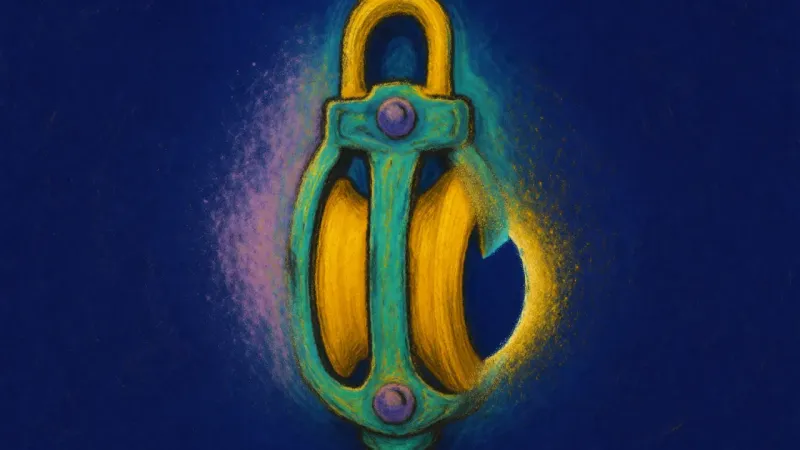
A Week Later, a Different Kind of Proof
Six days later, Jordan texted me a screenshot: three completed 15-minute blocks, one Sunday review. They had slept through the night, though the morning's first thought was still, 'What if I chose wrong?' This time, they made coffee, smiled once, and opened the brief instead of a search tab.
That was enough. Not because three calendar blocks solved every pressure in Jordan's life, but because they had created evidence that they could act without first securing perfect certainty. Their Journey to Clarity was not a dramatic transformation. It was the return of a small, steady authority: the ability to choose, test, notice, and adjust.
When I picture a jaw held tight and a thumb already reaching for one more answer, I remember that an imperfect step can feel less like testing a method than discovering whether you were worth the effort all along. I also remember what the Hanged Man made visible: a pause does not abandon the person holding the phone; it gives them back the choice of where to place it.
So I would ask: if one already-known idea could be a seed rather than a verdict, which idea would you be curious to give fifteen quiet minutes before the next search begins?