Agreeing Before You Know?

Define Groupthink, then see tarot cards and tarot reading insights that mirror agreement before private perception.

Groupthink
What is this really?

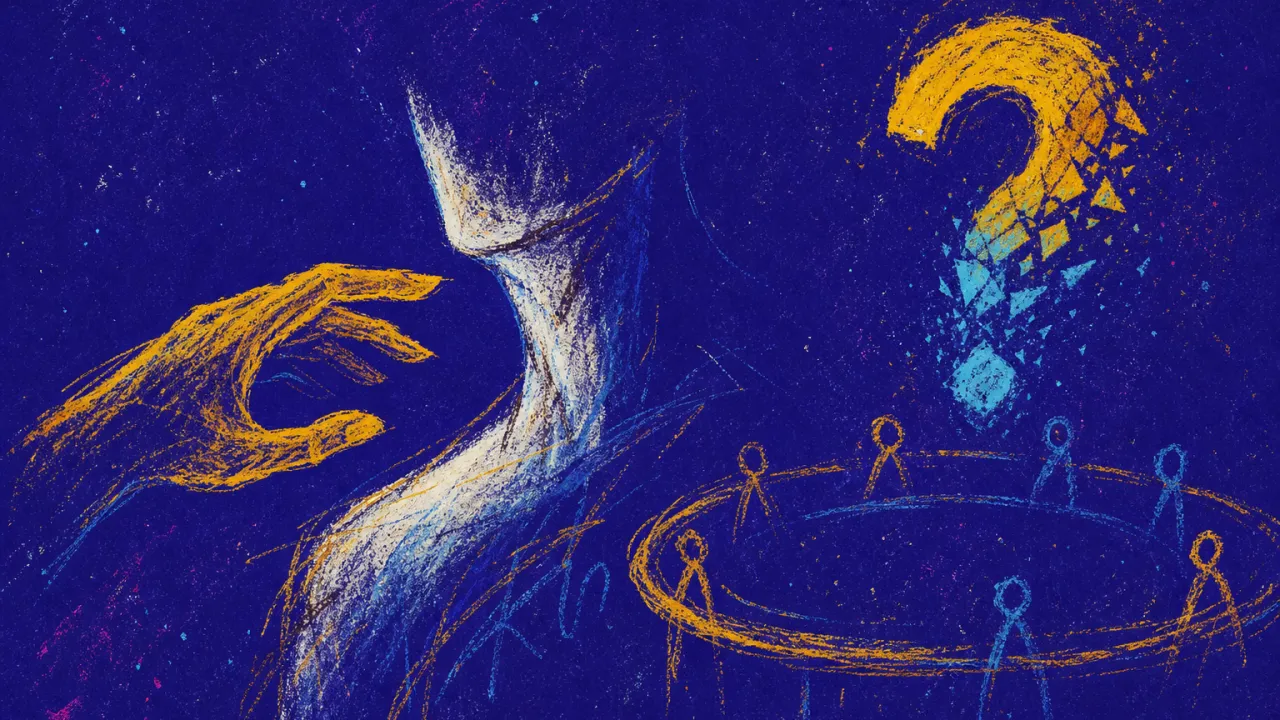
You scan the room, Slack thread, group chat, or meeting table before you let your own read form, then adjust your tone until it matches the dominant vibe. The pattern works like a cognitive shortcut inside a closed feedback loop: it keeps you inside belonging, lowers friction, and helps you avoid the exposed feeling of being the one person who interrupts the flow. Yet the smoother the circle becomes, the more your private signal gets edited out, until consensus feels like evidence and you are left holding a decision no one fully examined, much like the reversed Three of Cups, where every cup and body turns back toward the shared center and no one faces outward.

Why did it happen?

At some point, checking the room before speaking may have made life smoother: fewer awkward silences, fewer raised eyebrows, fewer moments where you had to stand alone with a view others did not share. Over time, your body learned to look for the group's rhythm first, and that inner pattern can still click on before you have finished noticing your own response. Now the subconscious loop can leave you oddly tired after smooth conversations, because part of you keeps translating your perception into language the circle will accept.

How does it feel?

  • In a meeting, you watch three heads nod before your own hand moves; you smooth your mouth into the same half-smile and add, 'yeah, that makes sense,' even though your note app still has a question mark in it. That second, your chest may feel held in place, and your throat can tighten as if the sentence is waiting behind a closed door. You can let the pause be there without forcing yourself to name it immediately.
  • In the group chat, you type a different take, see the laughing reactions stack up under someone else's message, and backspace until your reply becomes one short 'exactly.' After you send it, there may be a small drop in your stomach and a flatness behind the eyes, like your face caught up a beat late. Letting that mismatch exist for a moment is enough.
  • During a study session, you underline the answer everyone picked, tap your pen twice, and stop comparing it with the text once the table moves on. Your shoulders may stay slightly raised, and the page can feel oddly far away, even while you keep nodding. Not being certain yet is an allowed state.
  • When friends recap a night out, you laugh half a second after the others, tilt your cup toward the circle, and repeat the version of events that seems to have landed. Later, when you are alone, your jaw may ache from holding the same expression, and the room can feel too quiet around the thought you did not say. That thought does not need to be judged or rushed.
  • After the call, you open the shared document to check one line, hover over the comment button, then close the tab after seeing the team has already marked it resolved. Your breathing may get shallow, with a buzzing pressure at the temples, as if checking again would make too much noise. You can give the body a second to settle before deciding what comes next.

Groupthink in Tarot Cards

That reflex of checking the room before your own read forms is where Groupthink becomes visible. Your throat can tighten as if the sentence is waiting behind a closed door. From a Jungian archetypal theory perspective, this pattern can be understood through the pull between belonging and the part of you that has not joined the circle. The cards below reflect the unconscious dynamics of that closed feedback loop: Tarot Cards that mirror Groupthink.

Three of Cups Reversed
The same close circle that creates warmth can also become visually sealed; each cup rises into the same social rhythm while the individual exit lines disappear. The figures remain distinct, but the composition pulls attention inward until the group field feels like the whole world. That is where Groupthink takes shape as a defensive shortcut. When personal growth becomes uncertain, collective certainty can feel safer than inner evidence; the mind borrows the group's language, goals, and timing to avoid the discomfort of choosing alone. You may notice this pattern when every new plan starts sounding like the last community, course, or trend you entered. The card's circle shows how belonging can quietly replace discernment, turning self-development into a loop of inherited scripts.
Ten of Cups Upright
The whole scene moves as if everyone has found the same emotional rhythm. The children dance together, the parents raise their arms toward the same symbol, and the landscape offers no visible counterforce to the shared celebration. Groupthink grows from that kind of smooth field when harmony becomes more important than reality testing. In a career context, the pattern appears when team alignment feels so emotionally rewarding that disagreement, risk naming, or strategic dissent starts to feel like a threat to belonging. The Ten of Cups makes the mechanism subtle because the atmosphere is genuinely warm. The problem is not connection itself; it is the moment a team’s emotional coherence starts filtering out information that would protect your judgment, leverage, and long-term growth.
Reversed
The figures all participate in one harmonious atmosphere, and the rainbow gives that atmosphere a single, glowing meaning. The scene does not visually stage debate, difference, or private dissent; its emotional power comes from everyone appearing aligned under the same symbol. Groupthink appears in friendship when belonging depends on staying synchronized with the group's mood, opinion, or preferred version of events. You may stop trusting your own read of a situation because disagreement would make you the disruption inside the picture. The reversed pressure of this card is not loud coercion. It is the soft force of a beautiful group image, where everyone seems happy enough that your private discomfort starts to look like the problem.
Three of Pentacles Reversed
The blueprint, the Gothic geometry, and the central pillar organize the scene around a shared design. In its healthy form, that structure helps three different people coordinate; reversed, the same order can become so dominant that individual perception has nowhere to move. That is the visual logic behind Groupthink. The social mind begins to treat the group's plan as safer than direct perception, so disagreement feels like threatening the structure that grants belonging. You may copy the tone, opinions, tastes, or moral language of a circle before you have checked whether any of it is actually yours. The card's reversed pressure is subtle because the group may look functional from the outside. The trap is not chaos; it is over-coherence, where the shared blueprint becomes a cognitive tunnel and belonging depends on staying inside the accepted lines.
Ten of Pentacles Upright
The figures, dogs, crest, and enclosed estate all point toward one shared system of belonging. Nothing in the scene is isolated; loyalty, household identity, and visible status hold the group together inside a protected social field. In a workplace, Groupthink can use that same need for belonging as a cognitive shortcut. You may align with the room before you have tested your own judgment, because dissent feels less like a professional opinion and more like stepping outside the gate.
Reversed
The archway frames a coherent social world, and everyone inside or near it appears connected to the same household order. In reversal, that coherence can harden into a narrow field where the group story becomes more important than individual perception. Groupthink forms when belonging depends on agreeing with the emotional consensus of the circle. You may notice subtle exclusion, jealousy, or one-sided dynamics, but the shared narrative makes it difficult to name what is happening without feeling like the disruptive one. The card's enclosed social structure gives the pattern its force. A friend group can look stable because everyone knows their place, while the cost is that private truth gets edited to protect the circle's image of itself.
Four of Wands Reversed
The two central figures mirror the upward motion of celebration, while the garland draws the eye into one shared focal point. The field looks harmonious because every visible cue is moving with the same emotional weather. In a friend group, that kind of harmony can become a pressure system. You may start editing disagreement before it reaches your mouth, not because your view is unclear, but because belonging has become tied to staying in rhythm with the group mood.
Six of Wands Upright
The crowd around the horse is present, loud, and supportive, but its individual faces and bodies dissolve behind raised wands. The scene creates one dominant social signal: the group agrees, the group celebrates, the group moves with the parade. Groupthink appears when that shared signal becomes stronger than private perception. In friendship, You may notice a subtle rule that everyone is supposed to like the same person, take the same side, attend the same plans, or treat the crowned friend as untouchable. Doubt becomes hard to voice because disagreement threatens the emotional weather of the circle. The Six of Wands shows the appeal of collective support, but it also exposes how easily group approval can become a pressure field. The issue is not having a loyal friend group; the issue is whether loyalty has started requiring perceptual compliance. A healthy circle can cheer without turning private discernment into betrayal.
Seven of Wands Reversed
The six lower wands point in the same direction while the people holding them remain unseen. Their alignment makes the field feel collective before it feels personal, as if a group position has formed without any one person taking full responsibility for it. Groupthink in friendship appears when belonging depends on moving with the shared line. You may feel pushed to match the group's opinion, grievance, or loyalty test before you have checked your own stance, and the card makes visible the pressure of a crowd that speaks through consensus instead of contact.
Eight of Wands Reversed
All eight wands preserve individual spacing, yet every one of them follows the same angle, speed, and direction. The image contains difference in number, but not difference in movement. That is the social architecture of Groupthink: belonging is protected by matching the collective vector before the self has finished perceiving. You may still feel separate inside, but the pattern pushes your opinion, tone, and timing into parallel formation so the group does not register friction.

Groupthink in Tarot Card Reading Insights

For anyone who agrees before checking their own read, others have brought the same closed-circle feeling into readings. The shift from cards to readings shows how this can look when someone sits with it. Below are Tarot Reading Insights where this Groupthink dynamic shows up.

Psychological patterns related to Groupthink