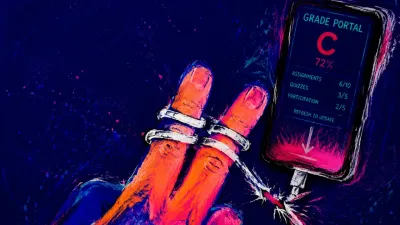
Twelve Tabs at 7:40 p.m.: One Practice Question, Then a Study Receipt

The 7:40 p.m. Tab Spiral: When Delayed-Reward Study Procrastination Makes Progress Feel Invisible
I recognized the pattern before Casey (name changed for privacy) had finished taking off their coat: a final-year student in London who could power through work when a deadline turned red, but who found a six-weeks-away exam strangely weightless. I watched them sit at the small desk in their shared flat, open a lecture deck, and write the date on a fresh Notion page. The kettle clicked off behind them, a flatmate’s video leaked through the wall, the laptop cast a cold blue glow across the room, and Casey’s phone felt warm in their hand as twelve browser tabs began multiplying.
At 7:40 p.m., the folder names suddenly mattered more than the first question. Casey adjusted headings, colour-coded notes, checked WhatsApp, and opened a productivity video while the practice set remained untouched. Their shoulders folded toward the screen, their fingers kept moving, and yet no answer had been tested. When they finally looked up, the planned study period had disappeared.
“The deadline is far enough away that today somehow does not count,” Casey told me. Then they added the question that had brought them to my table: “Why do I keep avoiding studying when the payoff feels so far away? I want the future result, but I resist the effort when today’s work cannot prove that it will matter.”
Frustration sat in their body like wet wool draped over the shoulders, heavy enough to slow the first movement and irritating enough to make every notification feel like an escape hatch. I did not hear a character flaw. I heard a delayed-reward study loop in which present effort was being asked to compete with activities that paid back immediately.
“You are not short of study plans,” I said. “You are short of visible returns from studying. Let’s draw a map of that missing return loop. We can look closely at the pattern without turning it into a verdict about your ability, and we can leave the decisions with you.”
Choosing the Compass: The Five-Position Shadow Spread
I asked Casey to put both feet on the floor, take one slow breath, and name the question again without trying to make it sound impressive. I shuffled slowly while they focused on the difference between opening the work and actually learning from it. The preparation was a psychological threshold, a way to gather attention, not a performance of supernatural certainty.
I chose the five-position Shadow Spread. This is how tarot works in this reading: the images give us an objective cognitive tool for separating behaviour from belief, protection from consequence, and insight from action. The cards could not predict Casey’s grade or decide whether their degree would pay off. They could help us see the internal machinery that was difficult to notice from inside the loop.
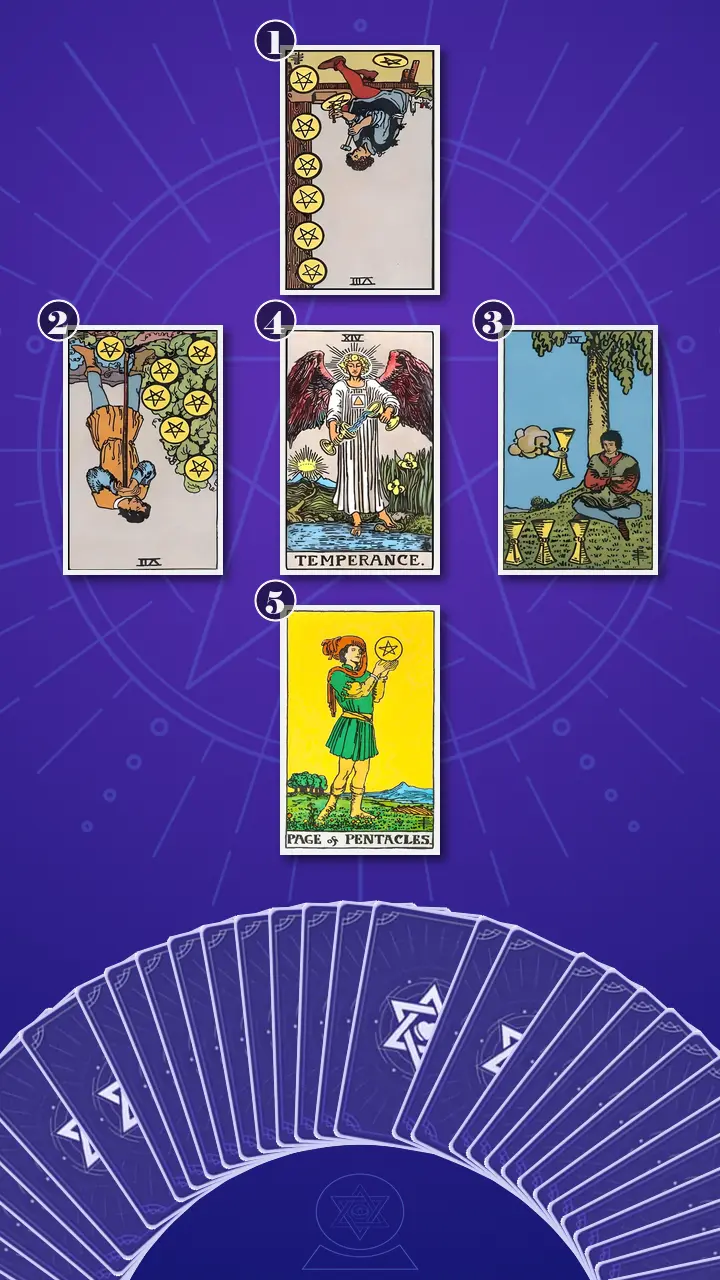
The spread was arranged as a compass cross. Position 4 sat at the exact centre as the transformational focus, with position 1 above it, position 2 to the left, position 3 to the right, and position 5 below. I explained to anyone reading along that this five-position Shadow Spread is deliberately smaller than a Celtic Cross. The question was not about every future trend or outside influence. It was about why effort became difficult when the reward was distant.
“The first card will show the visible study behaviour,” I said. “The second will examine the hidden rule underneath it. The third will ask what disengagement protects you from in the short term. The centre card will offer the balancing truth, and the final card will translate that truth into one practical learning action.”
That structure mattered. It meant I could name the pattern without shaming it, investigate its purpose without excusing its cost, and offer actionable advice without pretending that one session could solve an entire semester.
Card Meanings in Context: The Workbench, the Crop, and the Open Cup
The Workbench with No Finished Rep
Now I turned to the position representing the visible study behaviour from the diagnosis: opening materials but replacing active learning with organisation, tab-switching, and delay. The standard meaning of this position is the conscious pattern asking for attention, the habit that makes the shadow visible in everyday life.
The card was the Eight of Pentacles, reversed. In the RWS image, the craftsperson has the tools and material for the work, while a row of completed pentacles shows what repetition can eventually produce. Reversed, the Earth energy cannot settle into one complete practice cycle. The workbench is available, but the sequence keeps breaking.
I connected it directly to Casey’s 7:40 p.m. scene. They had the lecture deck, notes, timer, and practice set open, but they renamed folders, adjusted headings, watched a study-system video, and closed the laptop without answering one question. Their modern workbench looked organised, yet it had produced no evidence of learning. “I am technically working because I am preparing to work,” I said, using the sentence I suspected had been quietly defending the routine.
“The issue is not that planning is bad,” I continued. “The reversed energy appears when preparation becomes a substitute for one completed repetition. Before opening every course file, choose a finish line such as answering five questions from memory. The goal is to leave the bench with something shaped, even if it is rough.”
Casey gave a short, bitter laugh. “That is accurate in a way that feels slightly rude.” Their hand stopped above the trackpad, and I saw the first defensive reflex loosen without disappearing.
“I understand the sting,” I said. “I am not reading this as laziness. I am reading it as a clever attempt to receive the emotional comfort of productivity without sitting through the uncertain part where current knowledge becomes visible. We can respect the protective intention and still ask whether the strategy is producing the result you actually want.”
The Crop Judged Before Harvest
Now I moved to the position representing the hidden belief maintaining the pattern: effort is treated as worthwhile only when its return can be felt or measured immediately. The standard meaning here is the underlying shadow, fear, or limiting belief beneath the visible behaviour.
The card was the Seven of Pentacles, reversed. The upright image shows a figure pausing beside a growing crop, assessing an investment that needs time. In reversal, reflection turns into premature judgement. The figure stares at the harvest before it has had enough seasons to become a harvest.
I brought in Casey’s Sunday evening. Rain had ticked against the kitchen window while they checked Moodle and saw that the exam was six weeks away. They had calculated how little one thirty-minute block could possibly change the final grade, then closed the practice set. I described the nearby single pentacle as the small result available tonight, the one that could have shown a corrected error or a retrieved concept, while Casey’s attention remained fixed on the full course percentage.
“The hidden question is not simply, ‘Will I pass?’” I said. “It is, ‘Can this one session prove that the whole semester will pay off?’ That is an impossible return to demand from thirty minutes. One session cannot prove the semester, but it can prove that learning happened today.”
Casey’s chest tightened visibly. They paused over the sentence, looked at the unfinished practice set, and then said in a low voice, “I do that.” The admission carried no drama, only the uncomfortable recognition of a rule they had been following automatically.
I let the silence stay useful. “The fear underneath is understandable,” I said. “You are wary of investing sustained effort without enough visible return because that might expose how little control you have over the final outcome. But waiting for certainty before participating keeps the evidence from ever accumulating. The incomplete crop then seems to confirm that planting was pointless.”
The Untouched Fourth Cup
Now I turned to the position representing the short-term protective function of disengagement: avoiding boredom, uncertainty, and the possibility that sustained effort may not feel rewarding. The standard meaning of this position is the hidden benefit or protective purpose served by the shadow pattern.
The card was the Four of Cups, upright. Its seated figure has crossed arms, three cups on the ground, and a fourth cup offered by a clouded hand. The image is not a moral judgement. It shows attention narrowing around dissatisfaction while a workable opportunity remains available.
I placed the image beside Casey’s experience after a café shift on the Northern line. At 6:52 p.m., they had opened a ten-question practice set on their phone when the class WhatsApp chat lit up with a screenshot of someone’s study streak. The carriage brakes screeched, damp coats pressed close, and the phone buzzed against Casey’s palm. The practice set felt flat beside the immediate novelty of TikTok, so they switched screens.
“I am not refusing the goal,” I said, “I am refusing ten minutes that feels boring and inconclusive.” The fourth cup was the practice question already available. It did not resemble the desired result, so Casey’s attention dismissed it before it could offer useful feedback.
That distinction softened the room. Casey uncrossed their arms, though their shoulders stayed slightly raised. I told them that scrolling was doing something real in the short term: it reduced boredom, uncertainty, and the small risk of seeing a gap in their knowledge. But relief was not the same as resolution. “Quick relief closes the tab; useful feedback closes the loop,” I said.
Casey nodded slowly. I could see that the purpose of the withdrawal was becoming visible without becoming an excuse. The card was asking a gentler but more demanding question: not whether the entire subject felt motivating, but what useful offer was present in the next ten minutes.
When Temperance Made the Water Move
The room became unusually quiet when I reached for the central card. Even the flatmate’s video seemed to recede behind the rain and the faint hum of the laptop. I paused before turning it, because the centre of this cross was not a prediction. It was the point where observation had to become direction.
Now I turned to the position representing the key transformation that challenges the fear of wasted effort: linking each small input to immediate evidence of learning rather than waiting for the final payoff. The standard meaning of this central position is the balancing truth, inner resource, or perspective needed to integrate the shadow.
The card was Temperance, upright. Water moved continuously between two cups. One foot stood on land and one in water, while a narrow path led toward a bright horizon. The card did not ask Casey to manufacture intense motivation or force a heroic catch-up session. It showed value being created through measured exchange.
I translated the scene into a closed feedback loop: choose one concept, spend a bounded period recalling it, check the answer, and record one visible result. Effort goes in; evidence comes back; the next session has something real to build on. The distant exam remains distant, but the present session is no longer empty.
This was where I used my old Academic ROI Auditing lens. On Wall Street, I learned to ask what useful information the next unit of effort could produce instead of demanding that a distant investment pay out immediately. I remembered the cold glow of a trading screen and every quiet decision hidden beneath the final number. I did not bring that logic to make Casey’s education feel like a balance sheet. I brought it to protect them from a false calculation: a short study block does not need to change the final grade visibly in order to yield strategic information about what they now understand.
I said, “I am not asking you to pretend that twenty minutes equals a semester. I am asking you to measure the return that twenty minutes can honestly provide: one attempted question, one checked answer, one clearer explanation.”
The Bridge Between Effort and Evidence
At 7:40 p.m., the lecture deck is open, the folder names are suddenly urgent, and your phone is warm in your hand. Forty minutes later, the distant exam is unchanged, no question is answered, and guilt has replaced the brief relief of not starting.
Do not wait for the far-off reward to make today’s work feel real; create a measured feedback loop now, as Temperance makes progress by moving water one cup at a time.
I then gave Casey the plainest version of the insight I could: Motivation does not need to travel back from the final grade. It can come from leaving each session with proof that you know one thing you did not know before.
For a second, Casey’s body froze. Their fingers stopped halfway between the keyboard and the phone, and their breath caught as if the sentence had interrupted an argument already running in the background. Then their gaze lost focus. I could see the 7:40 p.m. desk, the folder names, the untouched question, and the Sunday-night grade calculation replaying behind their eyes. Their mouth tightened, not with resistance now, but with the effort of letting a different explanation enter. Finally, their shoulders dropped a few millimetres. The hand holding the phone loosened, and Casey released a long breath that sounded almost like a laugh. Their voice came out quieter than before. “So I do not have to feel the whole future before I begin.” The relief was real, but it carried a brief dizziness too. A clear path meant Casey could choose the next step without waiting for a crisis to choose it for them. I asked, “Now, using this new perspective, can you remember a moment last week when this insight might have made the experience feel different?”
Casey looked back at the card and read the closed-loop example again. This was the first movement from deadline-dependent frustration, guilt, and self-doubt to process-based motivation and steadier self-trust. Nothing about the final grade had become certain. What changed was the relationship with uncertainty. Instead of demanding proof before participation, Casey could gather proof through participation.
The Page Holding One Question
Now I moved to the position representing the concrete embodiment of the transformation: completing one bounded learning task and recording what changed before evaluating the larger outcome. The standard meaning of this position is the conscious action through which the integrating insight can be practised.
The card was the Page of Pentacles, upright. The Page holds one pentacle at eye level while a green field and distant mountains remain in view. The wider journey has not vanished, but the Page does not require the entire landscape to fit inside one act of attention.
I connected that image to a practical study scene. Before opening the full module list, Casey could choose one practice question, place it full-screen, put the phone behind the laptop, and give that single object ten minutes. The May exam and graduate plans could remain written at the bottom of the page, visible but not in charge. At the end, Casey could complete one sentence: “The clearest thing I understand now is…”
“I do not have to prove the semester tonight,” I invited them to say. “I only have to find out what this question can teach me.”
Casey looked toward the blank answer sheet. Their expression was still tired, and their shoulders did not suddenly straighten into a picture of perfect confidence. But their hand reached for a pen instead of the phone. That was the Page’s upright Earth energy: practical curiosity, one real object, one honest beginning.
From Insight to Action: Making the Session Leave a Receipt
When I laid the five cards together, the story became coherent. The Eight and Seven of Pentacles both reversed showed Earth unable to settle into craft or patience: Casey left the workbench to inspect the harvest, then used the incomplete harvest as evidence that working would not be worth it. The Four of Cups showed the emotional withdrawal that protected Casey from boredom and uncertain return. Temperance restored movement through measured exchange, and the Page of Pentacles gave that movement a concrete object.
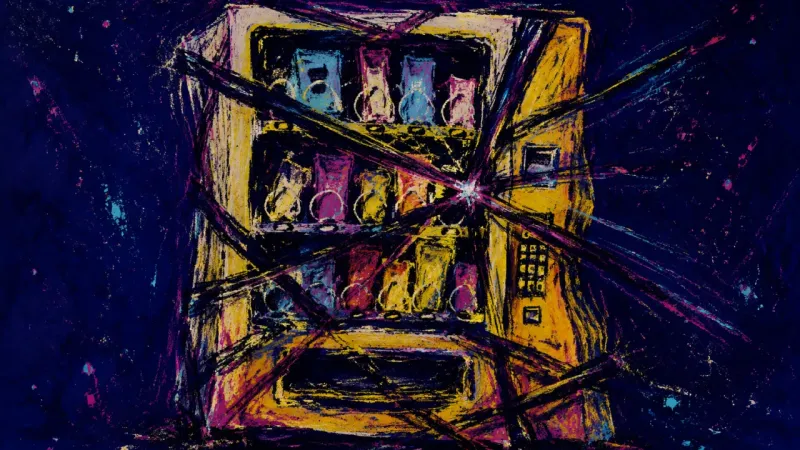
The core metaphor was a vending machine that would not release anything for months. Casey kept checking whether the entire semester had paid out before inserting today’s effort. The reading did not say that the machine was guaranteed to work. It showed a better experiment: stop asking for the final product, choose one small input, and notice what information comes back.
The primary problem was delayed-reward study procrastination caused by progress feeling invisible in the present. The cognitive blind spot was assuming that motivation had to arrive before action, while confusing visible activity, such as redesigning Notion or maintaining a streak, with visible learning. The key shift was from waiting for the distant payoff to create motivation to ending each short study block with one proof that learning occurred.
I gave Casey three small next steps. They were invitations with clear stopping points, not commands and not a new productivity identity to perform.
- The Closed-Loop Study BlockOn Wednesday at the shared-flat desk, before opening every course file, write one finish line on paper: Answer question 3 from memory and check it. Set a ten-minute boundary for six minutes of recall, three minutes of checking, and one minute to add a Date, Task, and Evidence line to a note called Study Receipts.If ten minutes feels too large, use the eight-minute core: five minutes attempting, two minutes checking, and one sentence beginning, I can now explain. Completing the loop matters more than getting the answer right or extending the session.
- One-Object Apprentice FocusChoose one learning object before the session, such as one practice question, one flashcard set, or one concept to explain aloud. At the library or home desk, close unrelated tabs, put the phone behind the laptop, and keep the chosen object full-screen for one short round. Write the distant goal, such as May exam, at the bottom of the page instead of the top.Finish by writing The clearest thing I understand now is… without grading the entire evening. If resistance rises, the minimum version is reading one question and writing what it is asking.
- The No-Catch-Up RestartIf a study block is missed, schedule only the next available ten-minute loop in Google Calendar. Before building a punishing four-hour replacement plan, run my Research Sunk-Cost Audit: write what time cannot be recovered, what one next loop can still produce, and what evidence will guide the following choice. After three independent loops, review only the evidence lines and circle one skill that became easier to retrieve.Do not backfill the log or turn it into a streak test. A photograph of one answered question or one checked fact is enough. Restarting without catch-up is part of the method, not proof that the method failed.
I also added one practical extension from my other strategic lens, Institutional Resource Leverage. If the same concept stayed unclear after two honest practice loops, Casey could send that exact question to a tutor, lecturer, or university study-support service, or take it to office hours. The point was not to outsource responsibility. It was to use an available academic network instead of spending another evening perfecting a system around the gap.
This was the path from insight to action: not a dramatic academic comeback, not a guarantee, and not a demand to become someone who studies for six hours every day. It was a closed feedback loop that made the present legible enough for the next choice.

A Week Later, One Small Proof
Four days later, I received a message from Casey while I was making coffee. It read: “I did the ten-minute version before opening Moodle. One question, one correction, one Study Receipt. I still wanted to scroll, but I knew what counted as finished.”
They had not solved the semester. They had completed one loop at the library, shut the laptop at the planned stopping point, and walked home through light rain. The thought What if this is not enough? still appeared, but this time it met a checked answer instead of an empty evening.
I wrote back that this was a real change, precisely because it was small. The point was not to make every session satisfying or to erase the need for longer study later. The point was to make learning visible often enough that Casey could build steadier self-trust without borrowing urgency from a crisis.
That is what I want a five-position Shadow Spread tarot reading for delayed-reward study procrastination to offer: a way to inspect the loop, name the protection, and return the next decision to the person living the life. Casey remained the author of the study plan, the stopping point, and the next attempt. The cards supplied a map, but Casey chose the direction.
When the payoff is months away, your shoulders can fold toward the desk and your hand can reach for another tab, because beginning without proof can feel less like discipline and more like risking time you may never get back. If one tiny piece of learning could become visible before today ends, what would you be curious to find out rather than prove, and what would you write on your own Study Receipt?