Moving a Gym Class for a Fourth Date—And Letting the Pattern Speak

The 11:48 p.m. Relationship Deadline
If you are a 29-year-old London UX designer who has moved a gym class after one electric date and is checking WhatsApp before opening Figma, this may be dating anxiety disguised as a need for clarity.
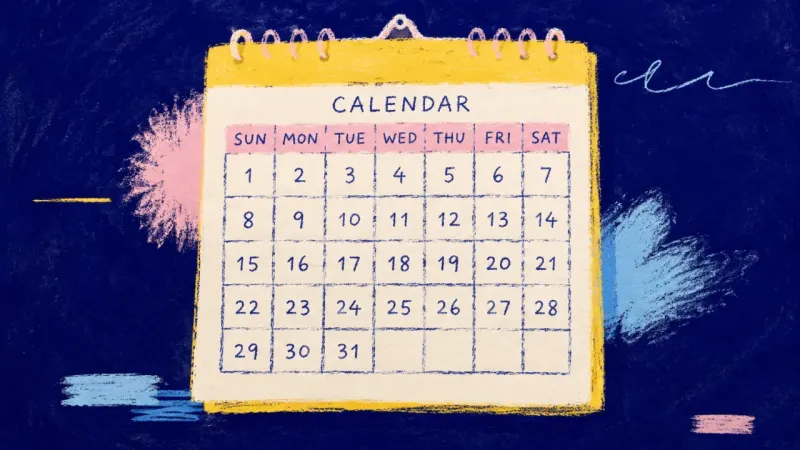
I met Maya at 11:48 p.m. on a Tuesday, sitting on the edge of her bed with her calendar open. I watched her drag Thursday's gym class and dinner with a friend into different spaces to make room for a fourth date; the radiator clicked in the corner, and the blue-white phone screen warmed her fingertips while her shoulders stayed lifted.
"I know it's early, but I don't want to waste time," she told me. "If the chemistry is this strong, why would we keep it casual? I keep asking for clarity when what I really want is certainty."
I could see the contradiction before we named it: Maya wanted commitment to secure a promising connection, while trust needed the very uncertainty she was trying to remove. The urgency moved through her like a bright electrical current, lighting her chest, sending her hands back to the phone, and making it almost impossible to settle after an intense interaction.
"I am not going to ask you to make the spark smaller," I said. "The spark is real; it is just not the whole evidence file. We can look at what it is doing without judging you for wanting something meaningful. Today, we will try to draw a map through the fog, so you can decide from your own clarity rather than from the pressure to secure the feeling before it changes."

Choosing the Shadow Spread When Chemistry Feels Like a Deadline
I invited Maya to take one slow breath and bring the question back to the room. I shuffled gradually, not to create suspense or summon a fixed answer, but to give her nervous system a clear transition from replaying the date to observing the pattern.
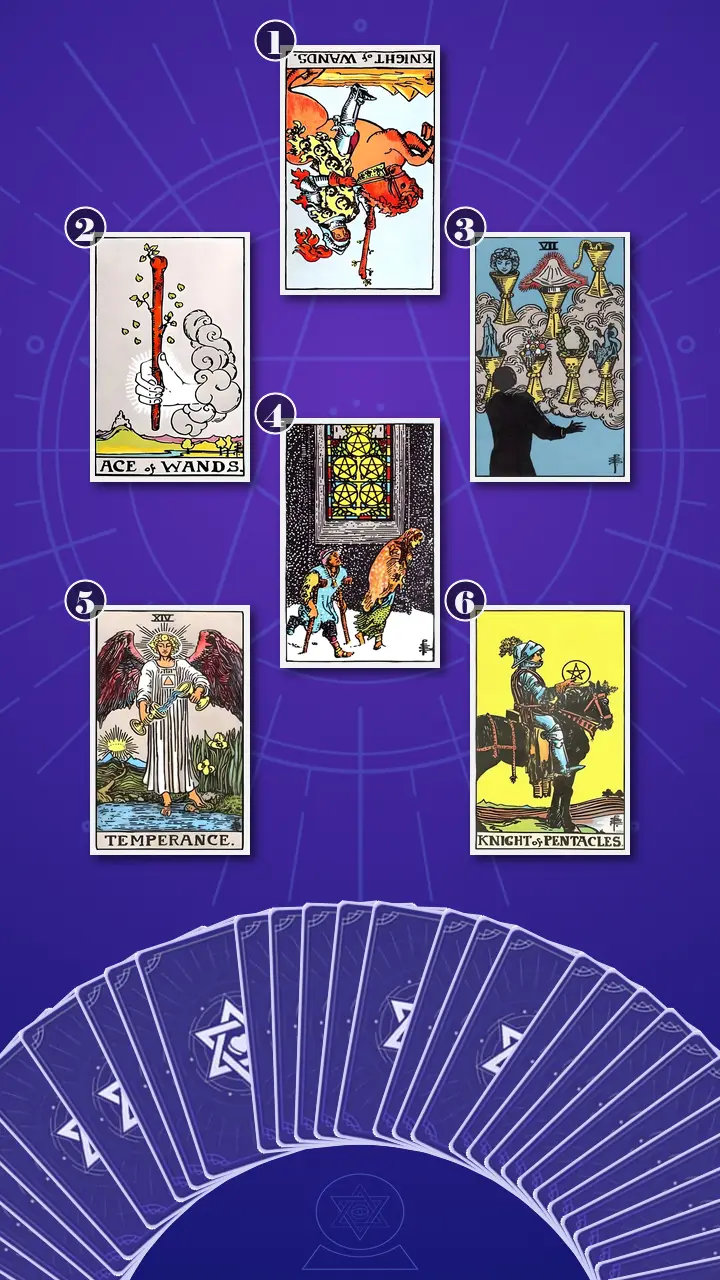
"I am using a six-card layout called The Shadow Spread," I explained. "It is an inner-excavation tool, not a prediction about the other person's private intentions. With a Jungian lens, I use the word shadow to mean a pattern that is operating before we have fully recognized it. The cards give us images precise enough to separate the visible behavior from the fear and hope underneath it."
I also explained this to the reader I imagined sitting beside us: this is how tarot works most responsibly in a question about premature commitment. The images do not manufacture certainty. They organize attention. This spread was chosen because it is the smallest structure that can show the visible acceleration, the genuine spark, the imagined future, the protected belonging fear, the integrating quality, and a practical way to test trust in ordinary life.
"The first card will show the behavior you are ready to recognize," I said. "The next two will separate the real activating chemistry from the future your mind builds around it. The fourth card will bring us to the fear underneath. Then Temperance will show how to hold attraction and incomplete information together, and the final card will turn that insight into observable practice."
The Horse That Tried to Outrun the Spark
The Visible Shadow: The Knight of Wands Reversed
Now I turned the first card, the one representing the visible shadow: the specific behavior through which Maya turns chemistry into commitment before trust has formed. It was The Knight of Wands, in reversed position.
The rearing horse immediately brought me back to the scene Maya had described. I could see her leaving an electric date in Soho, still carrying the rush in her chest as she reached the Tube. Before she had gone underground, she had moved Thursday's gym class, opened a new WhatsApp thread, and drafted, "I really like where this is going. Should we be exclusive?"
The reversed position did not show a lack of desire. It showed an excess of fire and a blockage of patience: forward motion had become pressure, and speed itself had become the blind spot. Maya was not only responding to what had happened; she was trying to protect the possibility from disappearing. "I am not pressuring this; I am protecting it," she had told herself. The intention was tender, but the behavior outran the evidence.
As I described the image, I moved through the scene in quick cuts with her: the gym class sliding across the calendar, the exclusivity draft being edited again, WhatsApp and the calendar opening side by side, the bright rush being treated like a deadline. Maya gave a short, bitter laugh and looked down at her hands. "That is too accurate," she said. "A bit rude, honestly."
"I am not calling you manipulative or too much," I replied. "I am showing you a protective action that becomes expensive. If the urge to escalate appears after a date, the first useful choice is not to argue with the attraction. It is to give the first action one night before allowing it to reorganize your week." Her fingers loosened around the edge of the chair, and recognition began to take the place of self-criticism.
The Spark Itself: The Ace of Wands Upright
Now I turned the card for the activating spark: what genuine chemistry awakens in Maya before the acceleration begins. It was The Ace of Wands, in upright position.
The hand offering one sprouting wand gave us something important to protect: the chemistry was genuine. I pictured Maya and the new person laughing easily over dinner, the conversation moving without effort, physical attraction unmistakable, and both of them leaning forward because the evening felt alive. The Ace did not ask her to deny that experience. It asked her to distinguish a beginning from a finished structure.
Upright fire here was available, creative, and balanced. The problem was not that Maya felt too much. The problem began when she asked one promising beginning to guarantee compatibility, reliability, emotional availability, and commitment before any of those qualities had been tested. In my mind, I made a familiar professional association: a beautiful UX prototype can be worth exploring without an honest researcher calling it a finished product after one impressive demo.
"So the question is not whether the spark is real," I said. "The question is what you are asking the spark to prove. Attraction can open the door. It cannot tell you how someone handles an ordinary promise, a boundary, a delay, or a repair." Maya touched her collarbone, then looked back at the card with a softer expression. For the first time, the distinction seemed to leave room for desire instead of treating desire as the problem.
The Relationship Story in Seven Open Tabs
Now I turned the card for the shadow in motion: how projection and imagined futures convert early attraction into assumed relational meaning. It was The Seven of Cups, in upright position.
The card took me to the Overground from Shoreditch High Street. I could almost hear the carriage rocking beneath Maya's feet and smell wet coats and coffee as she reread a WhatsApp message saying, "I cannot wait to see you again." From one warm message, her mind had opened seven browser tabs: shared holidays, Sunday routines, meeting friends, a spare key, moving in, and the secure relationship she hoped would finally make belonging feel unmistakable.
I placed the actual facts beside the imagined futures. "I know we had three great dates and they said they want to see me again," Maya said. "I am imagining that we would fit into each other's routines, travel well, meet each other's friends, and probably become serious." None of those imagined futures was foolish. They were simply untested cups suspended in clouds.
The Seven of Cups showed water overflowing into projection. The original fire was now being carried into vivid emotional scenes before Earth-based consistency or deliberate language could intervene. That made it the main blockage in the spread: when a possible future feels emotionally real, the present can start to look like evidence it has not yet earned.
I watched Maya's thumb stop above her phone. First her eyes lost focus, as though she were replaying a message from the train; then she looked toward the window, silently comparing what she knew with what she had already rehearsed. Finally, she let out a small breath and said, "I think I have already been living inside the relationship in my head." The admission was quiet, but it returned a little choice to the room.
The Window She Thought Was the Whole Shelter
Now I turned the card for the protected vulnerability: the belonging fear that makes an undefined connection feel intolerable. It was The Five of Pentacles, in upright position.
The snowy figures beneath the illuminated window brought me to Maya's Hackney flat after a warm exchange went quiet for most of a day. I could see her scrolling past an Instagram engagement carousel while rain blurred the window and the radiator clicked. Her thumb hovered over a second message. The missing reply had landed in her body as a hollow drop through the chest, even though the only confirmed fact was that the conversation had paused.
The Five of Pentacles showed Earth experienced as scarcity: belonging looked like a lit room somewhere else, and Maya felt herself standing outside it. Her friendships, work, routines, and own standards had not vanished, but romantic uncertainty temporarily made them feel like background furniture. A label began to resemble emergency shelter, even though a label could not reliably create the consistent behavior that makes shelter feel safe.
This was where I used my Shadow Projection Analysis. I explained that I was not deciding whether the person was good or bad, and I was not assigning a childhood story to Maya as a fixed identity. I was separating the person's actual behavior from the triggered narrative Maya was unconsciously projecting onto the gap. Had they cancelled repeatedly, dismissed a boundary, or avoided every direct question? Or had one ordinary pause activated the sentence, "Maybe I am not important enough for someone to choose"?
"Sometimes "Where is this going?" is a softer way of asking, "Am I safe from being left?"" I said.
Maya looked at the phone, then placed it face down. "If I get the label, I can stop checking," she said. I could hear both the longing and the fatigue in that sentence. I told her that the need for clarity was legitimate, while the job she was giving the label was impossible. A direct question could provide information. It could not promise immunity from disappointment.
When Temperance Turned the Rush into a Bridge
The Two Cups and the Space Between Feeling and Proof
The room grew quieter as I reached for the fifth card. Outside, a bus hissed at the curb and moved on, leaving the rain to make a thinner sound against the glass. I turned the card for the integrating quality: the capacity to hold chemistry, uncertainty, boundaries, and evidence without forcing premature certainty. It was Temperance, in upright position.
The angel's water moving between two cups gave me the clearest answer in the spread. I described Maya receiving an affectionate message on a Wednesday afternoon, leaving her evening plans unchanged, asking one direct question about pace, and then watching whether the answer matched later behavior. One foot remained in the water of feeling; the other stayed on the ground of her actual calendar. She did not have to become detached. She had to keep both realities visible.
Temperance was balanced fire and water, not emotional suppression. It offered paced openness: attraction could stay warm while trust gathered through repeated exchanges, honest communication, boundaries, and time. I have learned through my work across cultures that people rarely need a sharper prophecy when they are caught in a loop. They need a moment of being understood well enough to see the next choice clearly.
At this point I used my Attachment Loop Diagnosis as a map rather than a verdict. I do not label the other person anxious or avoidant from a few dates, and I do not turn a psychological lens into a diagnosis. I map the sequence I can actually observe: the spark triggers fear that the connection will vanish; fear accelerates contact and commitment language; reassurance briefly quiets the body; the speed leaves too little room to observe consistency; the next uncertainty then feels even more dangerous. The intervention is not to become less loving. It is to interrupt the sequence between feeling and action.
Maya was still holding the old bargain: desire said go closer, uncertainty said secure the connection before it disappeared. Her calendar showed the unchanged gym class, while her hand hovered over the phone. She wanted a promise to quiet a question that only time could answer.
Intensity is not intimacy; let trust move like the water between Temperance's cups, built through repeated exchanges rather than one bright rush.
For one beat, Maya stopped breathing. Her fingers hovered above the phone, then curled against her palm. Her eyes moved away from the card and unfocused on the rain-streaked window, as if she were replaying every time a warm message had become a private future. Then she shook her head, a flash of resistance crossing her face. "But doesn't that mean I was wrong to want commitment? I don't want to act cool or pretend I do not care." I told her that wanting commitment was not the mistake; asking it to manufacture safety was the exhausting part. Finally, her jaw loosened. A thin, unsteady exhale left her chest, her shoulders dropped, and her palm opened on her knee. The room seemed to widen with her breath. I could see relief arrive beside a brief, dizzying blankness: clarity gave her a direction, but it also returned responsibility to her. "Now, use this new perspective to revisit last week," I asked. "Was there a moment when you could have let the spark stay real without making it prove the future?"
I named the shift carefully. This was not a magical resolution or a command to tolerate an undefined connection forever. It was the first movement from an exhilarated rush into grounded openness, from urgency-driven premature commitment toward evidence-based discernment and self-trust. Maya could ask for information, keep her standards, and still allow incomplete information to remain incomplete for one more day.
The Horse That Learned to Stand Still
Now I turned the final card for the embodied practice: a realistic way to let trust emerge through consistency while preserving Maya's routines and agency. It was The Knight of Pentacles, in upright position.
The contrast with the first card was immediate. The Knight's horse stood still before cultivated fields, and the pentacle was held steadily rather than carried into a rush. I translated the image into the quiet proof Maya could actually observe: a plan kept, a clear answer given, a boundary respected, mutual effort sustained, and a small misunderstanding repaired without drama.
"This may be less dramatic, but it is more information," I told her. "Trust is not a viral launch. It is software that keeps working after the exciting demo. Keep your Tuesday. Watch what happens next."
Maya wrote the sentence in her Notes app. Her phone was still beside her, but she no longer held it like a device that could deliver a verdict. The Knight of Pentacles did not tell her to wait passively or accept evasiveness. It gave her permission to evaluate a pattern, keep her life visible, and let commitment respond to consistency rather than use commitment as a shortcut to belonging.
The Evidence File: Finding Clarity in Small Next Steps
I gathered the six cards into one story. The Ace of Wands showed a genuine beginning. The reversed Knight of Wands turned that fire into acceleration. The Seven of Cups filled the gaps with a complete relationship narrative, and the Five of Pentacles revealed why an undefined present could feel like standing outside a warm window. Temperance did not extinguish the feeling; it blended desire with boundaries and observation. The Knight of Pentacles gave that blend a daily form.
Maya had struck a match and immediately called it a hearth. Her cognitive blind spot was treating the physical urgency to secure a connection as evidence that the connection was ready for commitment. I offered a different direction: delay escalation long enough to notice repeated reliability, ask one direct question, and keep existing routines intact. Chemistry and compatibility could meet, but they did not have to arrive on the same night.
The spread also contained an intentional absence. There were no Swords, so clear language and fact-checking could not be assumed. I asked Maya to bring those qualities in consciously. Clarity was not the same as certainty, and a direct question was not a demand for a contract. It was a way to stop her mind from doing unpaid investigative work through response times, emojis, and imagined futures.
"These are not tests you have to pass," I said. "They are small ways to give your own judgment better information. You can still decide that a pace is too slow, a boundary is being ignored, or a pattern is not workable. Slowing down does not mean staying in something that feels evasive or disrespectful."
- The Spark-to-Trust PauseAfter the next date that leaves your chest bright and your hands reaching for the phone, put any exclusivity or future-planning draft into Notes with the time. Wait until the following day before deciding whether to send it.Start with thirty minutes if a full night feels impossible. Write three known facts before you act. The pause is not playing games and it is not a promise to remain in uncertainty.
- The Projection Detachment ExerciseAfter a slow reply, vague plan, or warm exchange, open two notes titled "Observed" and "Imagined." Write no more than three concrete behaviors in the first column and three hoped-for outcomes in the second, then spend ten minutes making tea, showering, or putting away laundry before rereading the chat.Use this to separate the other person's actual behavior from your triggered internal narrative, not to prove that they are good or bad. Keep the list short so the exercise does not become another form of hyper-analysis.
- Keep Your Tuesday and Watch the PatternFor the next seven days, keep one existing commitment, such as a gym class or dinner with a friend. At the next in-person conversation, ask, "What kind of pace feels honest for you right now?" Then notice four trust signals: kept plans, clear answers, respected boundaries, and mutual effort.Review the pattern only twice during the week instead of after every message. Let the answer become information rather than an instant reassurance request, and remember that you remain free to choose what pace works for you.
I called this an evidence file because it gave Maya a way to honour her directness without turning every feeling into a demand for immediate definition. She did not need to become less romantic. She needed to stop asking a label to do the work of time.
A Calendar That Stayed Hers
Four days later, I received a WhatsApp message from Maya: "I kept Tuesday. I asked what pace felt honest. The answer was warm but unfinished, and I survived the evening without moving anything around." She had also written three observed facts and three imagined futures, then made tea before checking the chat again.
A week later, Maya kept her gym class and asked the pace question. The answer was encouraging but not definitive; she walked home lighter, then wondered on the bus whether she had done enough. This time, she let the question remain a question.
That was the small proof I had hoped for. The connection had not been solved, and the future had not been guaranteed. Maya had simply allowed attraction to exist without handing it control of her calendar, and she had begun watching whether the other person could bring consistency into her real life.
I told her that this was the beginning of our Journey to Clarity: not a final answer delivered by the cards, but a more trustworthy relationship with her own attention. The six-card Shadow Spread had helped her recognize the pattern; Maya herself chose the pause, the question, the boundary, and the next step.
When a connection goes quiet and your hands reach for the phone, securing the label can feel safer than sitting with the fear that slowing down might mean you are not worth choosing.
If you let the spark stay vivid without asking it to guarantee the future, what small part of your real week would you want to keep open for yourself while you notice what this person consistently brings?