When Preparation Becomes Postponement: One Honest Email to an Advisor
The 11:18 p.m. Advisor Email Loop
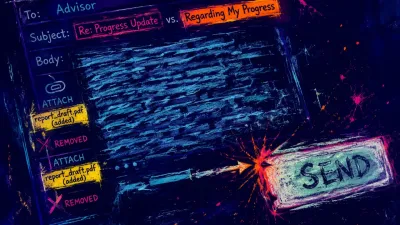
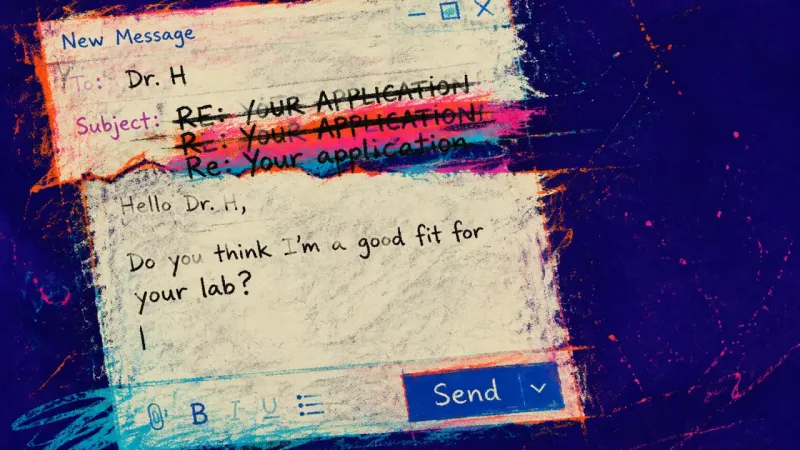
As a Toronto graduate student, Alex realizes their advisor's perspective could clarify the next research step, opens Gmail, rewrites the subject line three times, and searches 'how to email my academic advisor' instead. I recognize the pattern immediately. This is not just a blank email. It is career-direction fear wearing a preparation costume.
At 11:18 p.m., Alex sits at a small kitchen table with two possible subject lines glowing on the laptop. Behind them, the kettle clicks off; the laptop fan hums steadily, and the phone screen feels warm against their palm. I watch them open another academic email template while the draft remains untouched in the next tab.
'I need direction,' Alex tells me, 'but I keep trying to earn the right to ask for it. If I send a vague email, my advisor will see that I have no idea what I am doing.' They describe the same routine from the night before: read another paper, reorganize notes, check LinkedIn, reopen the draft, and move away from the Send button. Their shoulders are tight, their chest feels heavy, and their finger hovers as if the button might ask for proof of competence before it accepts a click.
I hear the contradiction clearly: Alex needs direction from an advisor, yet avoids the email that would request it. Their apprehension has the texture of standing beside a bridge with a map in hand, refusing to cross until every line of the route is perfect. 'I understand why postponing gives you a brief lift,' I say. 'It protects you from being seen before you feel in control. We can look at that protection without shaming it, then draw a smaller bridge toward clarity.'

Choosing a Map for an Unclear Research Direction
I ask Alex to place the phone face down, take one slow breath, and name only the question they brought into the room. I shuffle slowly while they listen to the cards moving against one another. The purpose is not to summon a fixed answer or predict an advisor's response. It is a deliberate change of attention, a way to make the hidden pattern visible enough to examine.
For this reading, I use the Four-Layer Insight Ladder · Context Edition, a focused four-card tarot spread for advisor-email avoidance and research-direction clarity. I chose it because Alex is not weighing two external options and asking the cards to select one. Alex is caught in a self-reinforcing loop: needing perspective, avoiding contact, feeling temporary relief, and then treating the growing uncertainty as evidence that more preparation is required. This is the smallest sufficient structure for that loop.
For anyone wondering how tarot works in a psychological reading, I use each card as an externalized image for observable behavior, assumptions, and choice points. The first card shows the present blockage. The second exposes the root mechanism that keeps private preparation in place of dialogue. The third is the central transformation, where clarity can become communication. The fourth turns that insight into a grounded experiment rather than another abstract plan.
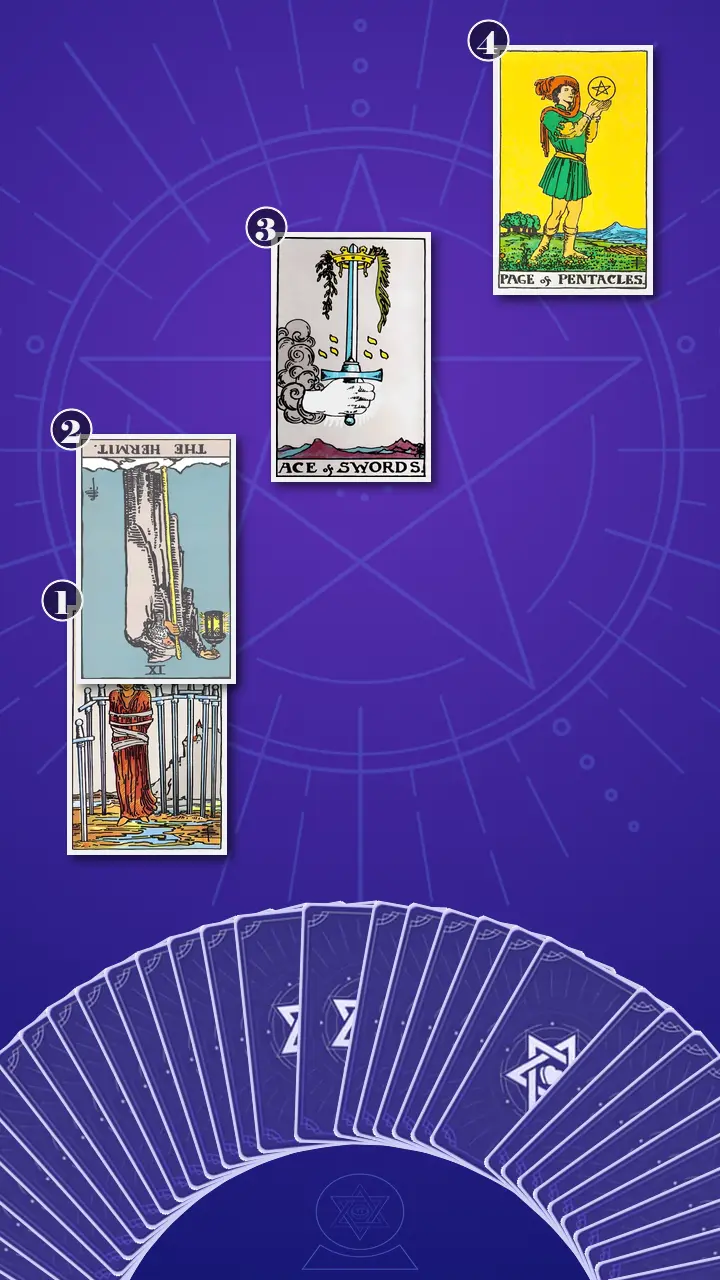
I lay the cards in a stepped line, like a staircase leaving a narrow room. The Eight of Swords will show how the freeze appears in the inbox. The Hermit reversed will reveal why research has become isolation. The Ace of Swords will identify the key shift, and the Page of Pentacles will show the practical next step Alex can choose without making one email carry an entire academic future.
Reading the Map Before the Door Opens
The Ring of Swords Around the Send Button
Now flipped is the card representing the present blockage: the observable avoidance sequence that appears when Alex recognizes that advisor direction is needed, including drafting, deleting, and switching to low-stakes tasks. It is the Eight of Swords, in upright position.
In the Rider-Waite-Smith image, a blindfolded figure stands with crossed arms inside a ring of swords. I translate that scene directly into Alex's Gmail draft. Their wrists are not literally bound, but imagined judgment has made the message feel that way. The blindfold is the assumption that every possible sentence will reveal incompetence. The crossed swords are repeated edits, template searches, citation formatting, and easy academic tasks surrounding the Send button. The loose binding is the small freedom hidden inside an unfinished draft: Alex may not have a complete research direction, but they can still report what is unclear.
Upright, the card's energy is blocked by excess mental monitoring and a felt deficiency of agency. Alex has plenty of thoughts, but every thought is inspected for how it might be received. The mind keeps rehearsing the advisor's imagined evaluation until action seems impossible. I ask, 'When you open the draft and switch tabs, what feeling are you trying not to experience in the first five minutes?'
Alex lets out a short, bitter laugh. 'That is too accurate. A little cruel.' Their breath pauses; their fingers stop moving around the coffee cup; then their eyes drift to the laptop as if a familiar scene is replaying there. After a moment, their shoulders lower by a fraction. I do not turn the card into a verdict. 'This is not laziness,' I say. 'It is a short-term protection strategy. It reduces exposure for a few minutes, but it also keeps the person with useful perspective outside the conversation.'
The Lantern Held Too Close
Now flipped is the card representing the root mechanism: the way procrastination turns private preparation into a substitute for advisor outreach and reinforces direction stagnation. It is The Hermit, in reversed position.
The Hermit's lantern traditionally illuminates a solitary search. Reversed, that inward search has stopped producing useful movement. I bring the Toronto late-night scene into the card: Google Scholar tabs, saved email templates, Zotero folders, Notion pages, and a Gmail draft all remain inside Alex's private system. The lantern is bright, but it is held so close to the body that it never reaches the advisor. The mountain is not a lack of intelligence. It is the distance created by self-containment.
The energy here is blocked reflection. Solitude could gather insight, but it has become a closed feedback loop that returns the same uncertainty to Alex with more weight attached. 'I am still preparing' is partly true, I tell them. 'You are also keeping the conversation away.' Research can become postponement when it keeps the other person out of the loop. The question is not whether Alex should stop thinking independently. The question is where private thinking must have a boundary so that dialogue can begin.
Alex presses their thumb against the edge of the spread. First, their shoulders rise and their breathing becomes shallow. Then their gaze loses focus, moving past the cards toward the browser tabs I have just named. Finally, they exhale and say, 'I have been calling it preparation when I am really postponing contact.' I let the sentence stand without rushing to make it brighter. 'An unfinished question is still a question,' I reply. 'Private research can prepare the ground, but it cannot provide the perspective you have been waiting for your advisor to offer.'
When the Ace of Swords Cut the Future Down to Size
The Blade That Does Not Decide for You
The room grows unusually quiet as I reach for the third card. The kettle has gone silent, and a distant streetcar bell moves through the Toronto evening. Now flipped is the card representing the key transformation: the form of clarity and communication that can loosen Alex's belief that they must already know what to ask. It is the Ace of Swords, in upright position, the bridge in this reading.
The hand emerging from a cloud holds an upright blade crowned by laurel and palm branches. In Alex's life, the blade becomes a clean edit. It cuts a long explanation written to prove competence down to one accurate sentence about the research direction that remains unclear. This is not a sword that chooses a field, predicts an academic outcome, or speaks for the advisor. It separates the useful fact from the fear-driven performance.
Upright, the Ace carries balanced Air: discernment, truthful naming, and decisive communication without aggression. It interrupts the loop at the exact point where preparation becomes delay. The email does not need to demonstrate that clarity already exists. It can be one of the ways clarity gets made.
I use my signature Performance Anxiety Decoupling lens here. I separate Alex's core self-worth from a mentor's evaluation, peer comparisons, and the result of one message. The advisor may reply briefly, ask for more context, suggest a different question, or take time to respond. None of those outcomes can measure whether Alex has earned the right to seek perspective. I also apply my Draft Paralysis Deconstruction lens: the demand for perfect wording is a subconscious defense designed to protect Alex from possible academic criticism. Once I can see the defense as a protective pattern rather than a personal failing, I can help Alex give it a smaller job.
It is 11:18 p.m. in the Toronto apartment. The kettle clicks off while Alex rewrites the advisor's subject line, opens another email template, and leaves the draft beside a dozen research tabs. Their shoulders tighten: they need direction, yet asking for it feels like proof they should already have it.
I place one direct sentence beside the crowded draft: 'I am trying to choose a research direction and would value your perspective on the next question to investigate.' I ask Alex to notice what happens when the email reports uncertainty instead of trying to solve it before contact.
I say, 'You do not need a fully formed direction before making contact. One precise, honest question can be the first act of creating direction.'
You do not need to solve the whole direction problem before acting; let the Ace of Swords cut the uncertainty into one clear question and send that question.
For a second, Alex does not move. Their breath stops halfway in, and their finger stays above the trackpad while the cursor blinks inside the crowded paragraph. Then their eyes lose focus, not with anything mysterious, but with the ordinary shock of recognizing a familiar loop: the subject line, the extra paper, the easy task, the brief relief. Their hand closes around the mug and opens again. 'But does this mean I was wrong all along?' they ask, irritation arriving before tears. 'No,' I say. 'It means a protective strategy has been doing a job that has outgrown its usefulness.' Alex looks at the clean sentence. Their jaw releases first, then their shoulders drop. A shaky breath leaves their chest as their eyes turn glossy. The responsibility of choosing still sits there, briefly weightless and then real. They whisper, 'I could ask before I know.' Now, use this new perspective to remember last week: was there a moment when one honest question could have made the next hour feel different?
I name the crossing clearly for both of us: this is the first movement from apprehensive, certainty-seeking avoidance to grounded self-trust through honest outreach and learning. The path is not solved. Alex has simply stopped demanding that certainty arrive before contact. That small change returns authorship to the person holding the question.
The Page Who Holds One Pentacle
Now flipped is the card representing action and integration: the small, concrete outreach experiment through which Alex can learn without asking one email to resolve the entire future. It is the Page of Pentacles, in upright position.
The Page stands in an open green field, holding one pentacle at eye level with steady attention. I translate the image into a concise advisor email with context, one focused question, and a possible next step such as a short meeting or a suggested paper. The visible path and distant mountain matter here. They show that learning can begin before the whole route is known.
Upright, the energy is grounded and balanced. The Ace of Swords provides clear language; the Page of Pentacles gives that language a modest container. I tell Alex to treat the message like a pilot study: small scope, useful data, no claim that one reply decides an academic identity. The point is not to force an answer. It is to create an intentional exchange and record what becomes clearer.
Alex turns the laptop slightly toward themselves. They do not look suddenly fearless. They look more available to the next piece of information. 'I can let the email carry one question,' they say, 'not my whole future.' I nod. That is the practical wisdom of the Page: agency does not require a finished map. It requires one honest step that remains theirs.
The One-Question Bridge to Finding Clarity
I gather the four cards into one story. The Eight of Swords shows the visible symptom: the draft, the repeated edits, and the low-stakes task that briefly quiets the body. The Hermit reversed shows the mechanism underneath: private research has become a mountain where Alex keeps carrying the lantern alone. The Ace of Swords opens a passage by naming the actual uncertainty. The Page of Pentacles brings that sentence into the world as a small learning experiment.
The cognitive blind spot is easy to miss because it looks responsible. Alex has been treating an unclear question as evidence of inadequate direction, then trying to earn permission to ask through more research. But no amount of private preparation can create a conversation while the advisor remains outside the loop. The transformation direction is from performing certainty to communicating accurately, and from isolated preparation to useful dialogue. Tarot has not chosen Alex's research path. It has made the choice point visible enough for Alex to choose what happens next.
I tell Alex that the primary solution is deliberately modest: send a short advisor email that names the uncertainty and asks one focused direction question before feeling fully prepared. That is actionable advice, not a promise of approval. The next steps should reduce the stakes while preserving autonomy.
A Seven-Minute Route from Insight to Action
I write three options on a clean page. Each one is a bounded experiment, and each one leaves Alex free to pause, revise the timing, or choose a written pointer instead of a meeting. The goal is contact that creates information, not contact performed as a test of competence.
- Mute the performance commentaryBefore opening Gmail during a planned email block, I guide Alex through my Inner-Critic Mute Protocol. Alex writes the sentence the inner critic is saying, records two observable facts, and then says, 'This is performance commentary, not evidence.' Alex sets a seven-minute timer before drafting.If the exercise makes the body more activated, close the draft and choose a later time. The protocol is a boundary around the inner critic, not an order to send.
- Send one honest questionDuring that seven-minute block this week, Alex writes to their advisor using three lines: the research-direction decision they are facing, one focused uncertainty, and one possible next step. A plain subject line such as 'Question about narrowing my research direction' is enough. Alex removes one paragraph whose only purpose is proving they have prepared sufficiently.If seven minutes feels too exposed, write the question in a notes app first, wait ten minutes, and decide whether sending is still Alex's choice.
- Set a research-to-contact boundaryAlex chooses one paper, one search query, or ten minutes of notes in Google Calendar. When the cutoff arrives, Alex writes the question that solo research did not answer and pastes only that sentence into the advisor draft. The choice is then twofold: send it now, or schedule one specific twenty-minute outreach block within the next seven days.Do not create a new research task as a third option. Save the useful information already gathered, and remember that the advisor's response is data, not a verdict.
I ask Alex to keep a note titled 'What this contact is for.' After sending, they can record one useful piece of information, not a complete interpretation of what the reply means for their future. This keeps the Page of Pentacles grounded. A concise request for perspective is enough to begin learning.

A First Message, Not a Finished Future
Four days later, I receive a message from Alex: 'I sent it.' They used the three-line structure, and their advisor replied with a suggested paper and a twenty-minute meeting option. Alex then sat alone in a campus cafe, relieved but tender about how small the first step looked after carrying it like a verdict.
I do not call this a solved life. I call it a quiet proof that the pattern can be interrupted. Alex still has to choose a research direction, still may compare themselves with polished LinkedIn updates, and may still wake up with the thought, 'What if I get it wrong?' The difference is that the thought no longer has exclusive control over the next action.
In this Journey to Clarity, the cards served as a neutral mirror and a structured conversation. The Eight of Swords made the freeze visible. The Hermit reversed showed where preparation had become isolation. The Ace of Swords gave the uncertainty a clean sentence, and the Page of Pentacles helped Alex test that sentence in reality. The reader, not the deck, remains the author of the next move.
The Map Stays in Your Hands
When your shoulders lock over a keyboard while you keep polishing an email, asking before you feel in control can expose the part of you that does not yet know where the route leads. That does not make you incapable. It may simply be the exact place where grounded self-trust is beginning to form.
Clarity is not always the finished map. Sometimes it is the first clean step out of crossed swords, a sentence small enough to carry and honest enough to open a door. If your email only had to open the door to one useful piece of information, what small honest question might you quietly allow yourself to imagine sending?