When Knowing Won’t Point You
Explore this split between clear facts and missing direction through related Tarot Cards and Tarot Reading Insights from sessions.

Truth-compass Split
What does this feel like?
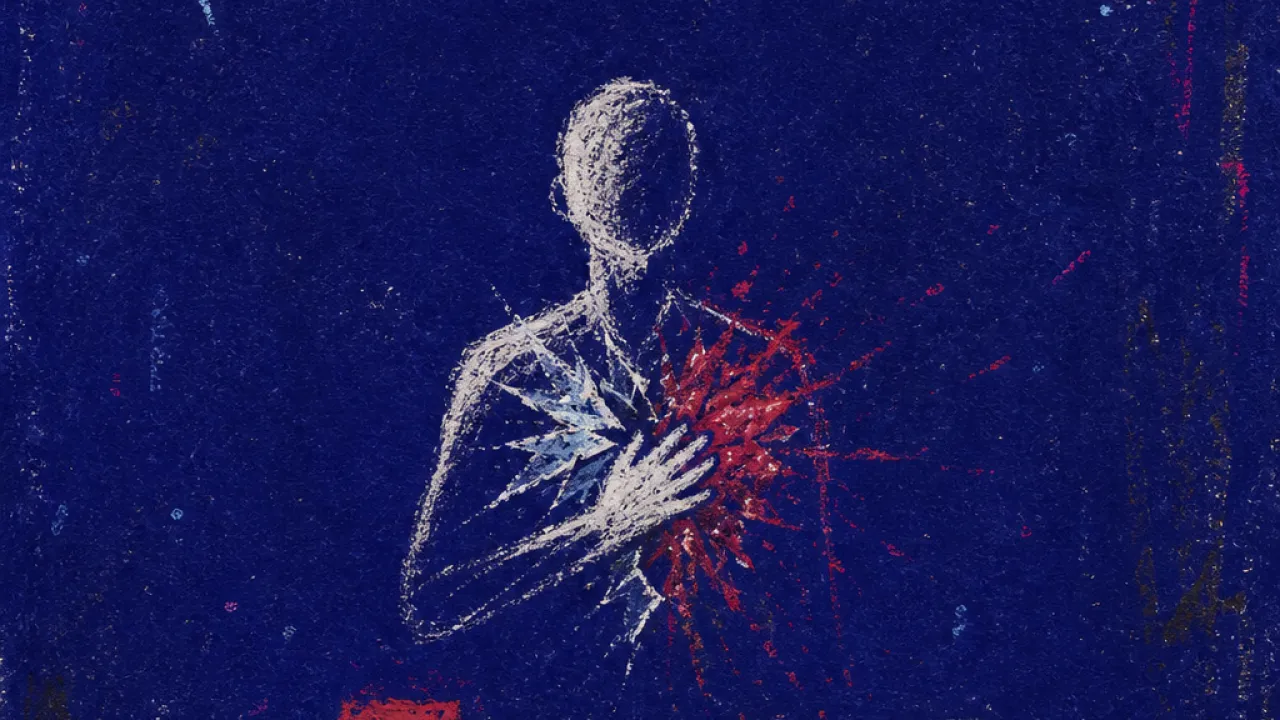
Truth-Compass Split is the moment you already know something, but the knowing does not point you anywhere. You are sitting with your laptop half-open, a cold drink sweating beside it, seven tabs open, a Notes app full of bullet points, and a message draft you keep rewriting because every version sounds accurate and none of them feels usable. Your mind can name the facts with unsettling precision: what changed, what no longer fits, what you cannot unknow, which option looks cleaner on paper. But your body does not move with the same certainty. Your throat gets tight when you imagine saying the sentence out loud. Your chest feels like someone placed a thumb at one exact point and kept pressing. You tell yourself you are being rational, then you wonder if rational is becoming a place to hide. You ask friends for input and hear yourself sounding composed, maybe even sharp, while a quieter part of you stays turned away from your own answer. The strange part is not confusion in the usual sense. You are not blank. You may have too much clarity, too many clean explanations, too many reasons arranged in rows. What is missing is the felt click that says, this is the direction I can live from. So you keep circling the same decision, hoping one more detail will make the compass needle settle, but each new piece of information only adds another blade to the center. The cost is that your future starts to feel like an argument you can win but cannot inhabit, and the longer you stay there, the more you start trusting the sharpness of your thoughts over the quieter signal that tells you where you are actually pointed, much like the Three of Swords, where three blades meet in the exact center of the heart under a grey sky, making clarity and tenderness occupy the same unavoidable point.
What's pulling at you?
I’ll put it simply: one part of you can see what is accurate, defensible, or no longer working, while another part still cannot feel where to go with that knowledge. You are stuck between the sentence your mind can prove and the direction your body has not agreed to follow.
How It Shows Up?
- You open your Notes app to make a decision list, and within ten minutes it has become a courtroom: reasons to stay, reasons to leave, screenshots, dates, quotes, tiny pieces of proof lined up like evidence. Your neck stiffens, your eyes burn from the screen, and your thumb keeps jumping back to edit one word because the sentence still doesn't land inside your body. You may not need a cleaner argument right now; you may just need to notice that the argument is not the same thing as a direction.
- A friend asks, "So what do you actually want?" and your face does that small practiced smile while your brain starts producing fluent answers that sound reasonable enough to pass. Your throat tightens before the first sentence is finished, and somewhere behind your ribs there is a quiet pause, like the Page of Swords holding a sharp blade in unsettled wind. It is allowed for the answer to be articulate and still not fully inhabited.
- At work or school, you can explain the next move perfectly: the sensible option, the efficient route, the one that looks clean in a spreadsheet or application timeline. Your shoulders rise toward your ears as you talk, and your stomach goes flat and guarded, because the more convincing the plan sounds, the less you can tell whether you are choosing it or performing certainty. A defensible path can wait a moment while your body catches up to the words.
- You are at dinner, drinks, or a group hangout, and someone says, "You already know what you need to do," as if knowing should automatically become motion. You nod, laugh lightly, maybe look down at your glass, while your chest feels pinned at one precise point and the room keeps moving around you. The comment may be simple, but your inner route is not obligated to become simple on demand.
- Late at night, you replay the same decision from three angles: what happened, what it means, what the next step should be. Your jaw aches, one hand rests on your sternum without you noticing, and the ceiling feels blank in the way the grey sky of the Three of Swords feels blank: no horizon, no place for the eye to settle. You can let the question sit without forcing it to become an answer before sleep.
Truth-compass Split in Tarot Cards
Truth-Compass Split lives in the gap between seeing what is no longer working and still not feeling pointed toward a livable next step. You can feel it in the tight throat, lifted shoulders, and that precise pressure at the center of the chest when a decision sounds correct but does not settle. From an existential perspective, the structural framework here is about the fracture between clarity and orientation. The Tarot Cards below make that outline visible without turning it into a simple answer.
Truth-compass Split in Tarot Card Reading Insights
When Truth-Compass Split shows up, people often bring the same gap into readings: they can name the facts, but the next direction still will not lock into place. The readings below move from the card list into how this split appears when someone asks for clarity around a choice. Tarot Reading Insights from sessions on this pattern.
A Vulnerable Post Earned Praise; One Private Choice Shifted the Loop
Topic:Social Tarot Reading
Struggle:Vulnerability Without Containment
Context:Personal Brand Performance
From Numb Tab-Switching to Keeping One Feeling and Booking a Chat
Topic:Introspection Tarot Reading
Struggle:Clarity-Exposure Split
Context:Emotional Suppression Culture