Already Whole, But Not Yet?

Explore the felt pressure to look complete, with related tarot cards and tarot reading insights that reflect the inner gap.

Performative Wholeness
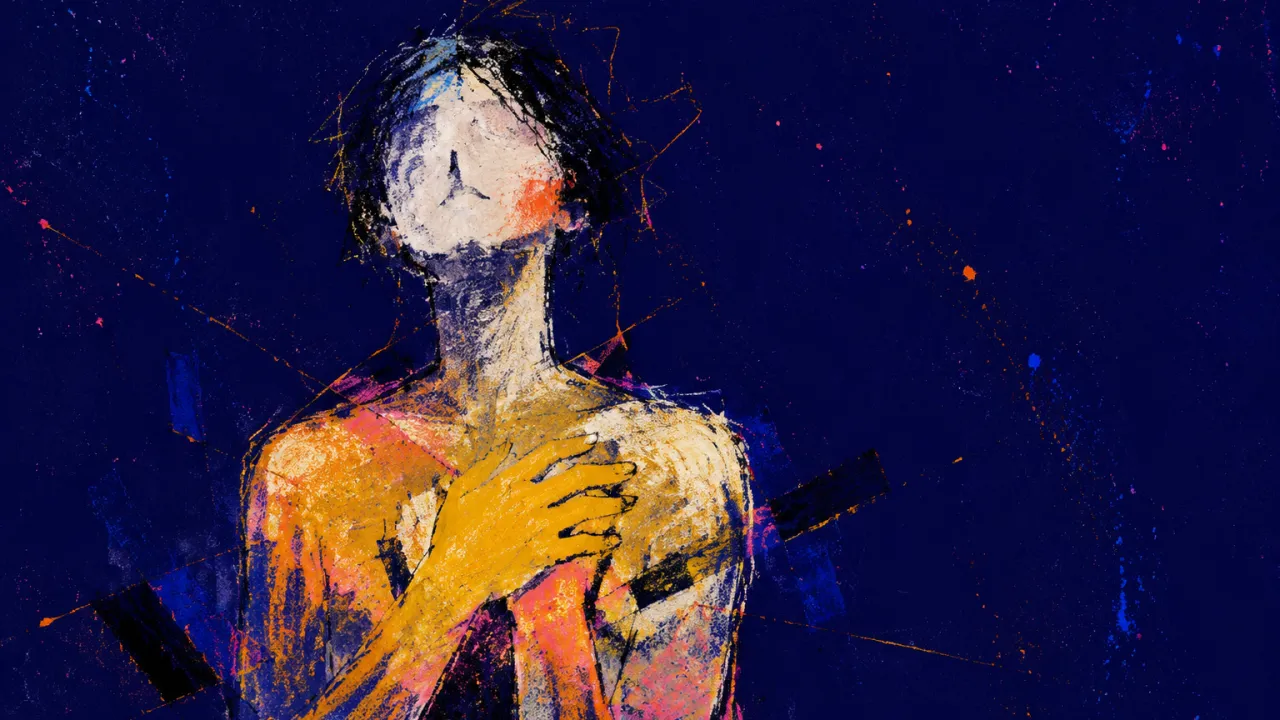
What does this feel like?

Performative Wholeness — it feels like standing in the middle of your own life with the lighting already set, your posture arranged before your body has decided it is ready. Your shoulders know the pose first: relaxed enough to look fine, held enough to keep everything from showing. Your chest can feel sealed, like a door gently pressed shut from the inside, while your face, texts, captions, meetings, dates, and check-ins all keep offering the version of you that seems healed, self-aware, grateful, secure, and completely fine. Nothing looks visibly wrong, which makes the feeling harder to name; the friction lives in the tiny delay between what you present and what you can honestly inhabit. You might answer with calm words while your stomach is tracking every possible crack, laugh at the right moment while part of you waits to be asked a softer question, or explain your growth so clearly that even you start wondering why it still feels unfinished. The inner voice is not dramatic; it is careful, saying, keep it together, don't complicate this, you've already become the person everyone thinks you are. Performative Wholeness is not pretending in some simple way — it is the exhaustion of being seen as complete before your private experience has fully caught up, much like the dancer on The World, centered inside the perfect wreath, graceful beneath the gaze of the four corner figures, while the whole image depends on the body holding its finished pose.

Why you're feeling this?

Performative Wholeness makes sense when some part of you has learned that being seen as composed can feel safer than being seen while still unfinished. You are not wrong for wanting the image to hold. The feeling is simply pointing to the private distance between looking integrated and being allowed to arrive there at your own pace.

Performative Wholeness in Tarot Cards

That polished, complete-looking front you keep holding — Performative Wholeness has a very specific shape, especially when your chest stays guarded and your breath has to remain smooth. It is a universal emotional experience: the gap between what appears integrated and what still feels unfinished inside. Tarot gives that gap a visual language without forcing it into a verdict. Here are the Tarot Cards that tend to mirror Performative Wholeness.

The World Reversed
The polished wreath, formal dance, balanced wands, and watching corner figures create a complete image of wholeness before the viewer can see much of the dancer’s inner expression. The face remains distant while the body carries the whole symbolic performance. Performative Wholeness names the personal growth pressure to look integrated because you know the language of integration. You can appear aligned, healed, and self-aware while privately sensing that the presentation has moved faster than the parts of you still trying to catch up.
Seven of Cups Reversed
The seven cups present a complete-looking inventory of the self: home, wealth, achievement, persona, instinct, threat, and the hidden center. Everything has a symbolic place, and the arrangement looks full enough to resemble integration from a distance. In the reversed texture, that fullness becomes strangely staged. The figure remains outside the display, looking at the organized images rather than inhabiting them, so the card exposes the difference between having a complete set of self-concepts and feeling internally whole. Performative Wholeness names the polished inner arrangement that still leaves a gap at the center. You may have language for every part of yourself, but the card asks whether those parts are actually connected or merely presented in a convincing order.
Nine of Cups Reversed
The Nine of Cups shows a complete row of chalices behind a man whose posture presents composure while his arms seal the chest. The image can look whole at first glance, but its wholeness is staged across surfaces: body, table, cups, and background all held in a deliberate front-facing arrangement. In personal growth, that arrangement captures the pressure to appear integrated before the inner process has finished. The complete cups become an image of arrival, while the protected torso suggests that unfinished material is still being kept out of view. Performative Wholeness is the strain of looking healed, evolved, and self-aware while privately managing what has not yet been digested. The card reveals the difference between being complete as an image and being coherent as an inner experience.
Ten of Cups Reversed
The family beneath the completed cup arc forms an almost too-perfect image of emotional arrival. The raised arms, dancing children, distant home, and overhead cups create a scene where wholeness is highly visible, almost staged for the eye. In personal growth, that visible perfection can become a private pressure to appear healed before the inner work has settled. The card’s complete arc then stops feeling like spacious fulfillment and starts functioning as a standard you must hold up, even when parts of you are still unresolved. Performative Wholeness captures the strain of turning growth into an image. You may be showing the world a coherent version of yourself while quietly monitoring every crack, afraid that unfinished feelings will disqualify the progress you have worked hard to claim.
Nine of Pentacles Reversed
The ornate robe, finished garden, golden pentacles, and trained falcon build an image of flawless composure. Every visible element is arranged, protected, and aesthetically coherent, while the body remains still inside the display. In introspection, this becomes the pressure to appear healed before the inner world has actually integrated. You may know the language of growth, calm, and self-possession, yet still feel a split between the polished surface and the unprocessed material underneath.
Ten of Pentacles Reversed
The family scene is visually complete: generations, property, title, animals, and symbols of continuity all appear in the same frame. At the same time, the figures are arranged in roles, with the child half-hidden, the elder ceremonial, and the couple staged beneath the arch. Performative Wholeness takes shape when the outer image of being fine becomes more legible than the inner truth. You may look integrated, capable, and settled, while private attention is spent keeping every part of the presentation aligned enough to avoid being questioned.

Performative Wholeness in Tarot Card Reading Insights

For anyone who knows the strain of looking whole while some private part is still catching up, Performative Wholeness often enters readings quietly. Others have brought this same polished-but-unfinished feeling to the cards, especially when the outside image looks cleaner than the inside experience. Tarot Reading Insights from sessions with this emotional pressure.
Psychological emtions related to Performative Wholeness