Dating FOMO Turned Tuesday Into a Draft, Until Dinner Stayed Put

When Dating FOMO Turned Tuesday Into a Draft
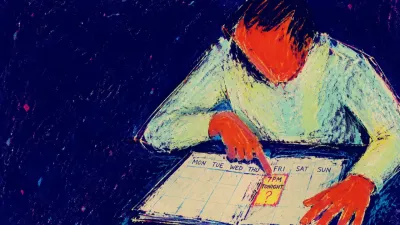
I knew the pattern the moment Jordan (name changed for privacy), a 28-year-old hybrid UX designer in Toronto, told me she had been dressed for a booked class when a Hinge match who had been quiet for days asked, “Free at eight?” That was dating FOMO in calendar form: one message arrived, and the evening she had already chosen began to look negotiable.
She gave me the exact timestamp: 5:20 p.m. One trainer was on, her water bottle sat beside a half-zipped gym bag, and fluorescent light flattened every colour in the downtown changing room. The air smelled of rubber mats and citrus cleaner. Bass pulsed through the wall while her phone, warm in her hand, lit the small space between her face and the mirror.
Within minutes, she had opened Google Calendar, WhatsApp, and Hinge. She dragged the class block, began an apology to the friend she was meeting afterward, and accepted that there might be a late-cancellation fee. The date did not yet have a location. Still, the pressure in her body behaved like a fire alarm wired directly to the notification: her chest tightened, her thumbs accelerated, and the plan she had wanted five minutes earlier became difficult to stay inside.
“I know it is last minute,” Jordan said at my table, watching rain thread down the window behind me. “But what if this is the one time saying yes matters? I can always reschedule my own stuff. Then I feel awful because my calendar stops belonging to me as soon as someone texts.”
She turned her phone face down, although her fingertips stayed close to it. “Why do I keep dropping my plans for last-minute dates?”
“Wanting connection is not the problem,” I told her. “And I am not going to turn spontaneity into a moral failure. I want us to slow down the five minutes between the message and the cancellation. One text should not turn your whole calendar into a draft. Let us use the cards to make a map of that moment and find where your choice disappears from view.”
I also made the purpose of the reading explicit. I was not there to predict whether this match would become a partner, or to prove that one dating choice was cosmically correct. Our Journey to Clarity would use tarot as a structured cognitive mirror: a way to place her intuition, behaviour, and evidence where we could examine them without judgment.

Choosing the Four-Rung Fire Escape
I asked Jordan to place both feet on the floor, take one unforced breath, and hold the question in mind while I shuffled. I treat that small ritual as a change of pace, not a supernatural test. It gives the nervous system a clear transition from reacting to observing.
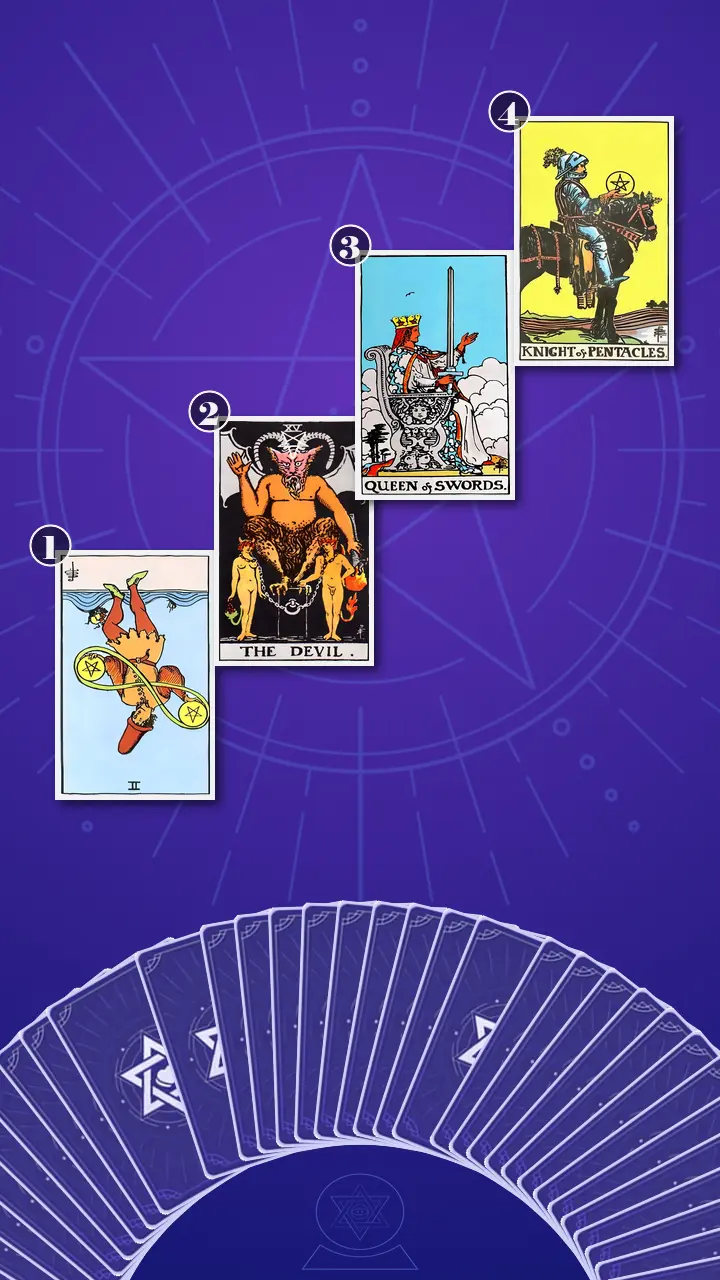
I chose the Four-Layer Insight Ladder · Context Edition, a four-card tarot spread arranged like an ascending staircase. The layout reminded me of a Toronto fire escape: each rung modest and practical, but together capable of creating real distance from the loop below.
I chose this spread because Jordan was not asking about one identifiable partner. She was asking about a pattern repeated across dating-app conversations. A conventional relationship spread could have over-personalized the issue, while a larger predictive spread would have added detail without clarifying the feedback loop. The Four-Layer Insight Ladder was the smallest sufficient tool for the work: visible behaviour, sustaining belief, transformation lever, and repeatable action.
This is how I understand card meanings in context. A card gives me an archetypal hypothesis, not a verdict. I test that hypothesis against the querent's actual life, and the querent decides what is accurate, useful, or incomplete.
I explained the route before turning anything over. The first position would show how reactive calendar reshuffling appeared in daily life. The second would reveal the belief that made immediate availability feel necessary for belonging. The third, our visual hinge, would identify the boundary-based choice that could interrupt the pattern. The final card would turn that insight into a behaviour Jordan could repeat on an ordinary Tuesday.
The Loop and the Loose Chain
Position One: Two of Pentacles Reversed and the Calendar Shuffle
The card I turned over first represented the diagnosis-level behaviour: Jordan repeatedly destabilized existing commitments when a last-minute date entered her calendar. It was the Two of Pentacles, reversed.
The figure on the card normally keeps two pentacles moving inside an infinity-shaped ribbon while ships rise and fall behind him. Reversed, the ribbon no longer looked like graceful flexibility. It looked like the recurring sequence Jordan had described: invitation, cancellation, relief, guilt, and then another invitation. The rough sea gave emotional scale to what was, on paper, a simple scheduling decision.
I brought the image directly into her Tuesday. At 5:20 p.m., she was dressed for a paid workout and due to meet a friend afterward when the invitation arrived. Within minutes she had dragged two Google Calendar blocks, opened three chats, accepted a fee, and sent an apology before the meetup had a location. That was not merely being busy. It was adaptability losing its centre because romantic possibility received automatic priority.
“The energy here is an excess of reactive adaptation and a blockage in stable prioritization,” I said. “You are very good at moving pieces. The problem is that you move them before asking whether the new request deserves the power you have given it. Spontaneity is chosen flexibility. This is repeated disruption wearing spontaneity's name tag.”
I asked her to think of the last same-day invitation before this one. “What exact event did you move, shorten, or cancel in the first five minutes? And was the date confirmed when you changed it?”
Jordan gave one short laugh, but there was no amusement in it. Her fingertips pressed into the edge of the table before releasing. “Dinner on Ossington. I left early, and they still had not picked a place. That is painfully accurate. Almost rude, honestly.”
“The card is not calling you careless,” I said. “It is showing us a sequence clearly enough that you no longer have to confuse it with your personality. A loop can be learned, which means it can also be interrupted.”
Position Two: The Devil and the False Emergency
The next card represented the root mechanism: the belief that immediate availability was necessary to preserve connection and belonging. I turned over The Devil, upright.
I paused before interpreting it because The Devil can provoke unnecessary fear when it is read carelessly. “This card is not telling me that dating is dangerous, that your match is toxic, or that you are trapped by fate,” I said. “It represents compulsion, attachment, and the moment a voluntary response begins to feel like the only possible response.”
The two figures on the card wore chains, but the loops around their necks were loose enough to remove. That detail mattered. The invitation had not told Jordan to cancel anything. No message had said that a reply after class would be too late. Yet a match who had been quiet since Wednesday could send “Free tonight?” and her body would receive it like a push alert falsely marked critical.
The internal logic moved quickly: If I do not answer now, they will ask someone else. If they ask someone else, they will lose interest. If they lose interest, it means I was never important enough to choose. The first sentence concerned a reply time. The final sentence concerned belonging. Urgency can feel like chemistry when you are afraid the window will close.
I used one of my core lenses here, which I call Attachment Loop Diagnosis. I was careful with the term. I was not assigning Jordan an anxious or avoidant label, and I was not diagnosing a disorder from a scheduling habit. I was logically separating the stages of the loop: a notification triggered a feared forecast; the forecast produced instant availability; the quick yes produced temporary reassurance; the abandoned plan later produced guilt and reduced self-trust. Because her own plans then felt less solid, the next invitation gained even more authority.
Through a Jungian lens, The Devil's shadow was not something evil hiding inside her. It was the bargain her conscious self preferred not to name: for a brief feeling of being wanted, she traded away control of an evening she had already chosen. Naming that bargain did not shame the desire. It simply returned the cost to the same frame as the reward.
“The chain is not the invitation; it is the belief that only 'yes, tonight' can keep the door open,” I told her. “The urge is real, but the action is not yet complete. There is a second before you tap Cancel, while the event is still in the calendar and the reply is still unsent. In that second, you can say: 'I feel pressured, but no one has actually asked me to erase tonight.'”
Jordan's breathing stopped high in her chest. Her eyes moved from the loose chains to her face-down phone, then back again. When she finally exhaled, her shoulders remained tense, but her hands had gone still.
“So the pressure is coming from me?” she asked.
“The invitation is real, and your desire is real,” I said. “The invisible deadline is the part we are questioning. That distinction does not make the discomfort disappear. It gives you a decision point inside it.”
When the Queen's Blade Rose Above the Notification Noise
Position Three: The Queen of Swords and the Clear Alternative
The rain softened as I reached the visual hinge of the spread. Somewhere beyond the window, a streetcar bell sounded once, a single clean note under the city's wet background noise. The card I turned over represented the transformation lever: using a clear boundary and an alternative invitation to separate genuine interest from reflexive availability.
It was the Queen of Swords, upright.
Her sword stood in one clean vertical line, while her other hand remained open toward the horizon. I translated the image into two clauses. The sword said, “I already have plans tonight.” The open hand said, “Thursday works for me.” The limit and the interest could occupy the same sentence.
The Queen's Air energy was balanced: discernment without coldness, independence without withdrawal, and direct communication without a wall of apologetic explanation. In Jordan's real chat, that meant leaving the calendar untouched and replying, “I already have plans tonight, but I'd like to meet. Does Thursday at 7 work?” She did not need to invent an excuse, prove that the class was important, or add five lines designed to prevent the other person from feeling anything at all.
As I looked at the sword, I remembered how often, while travelling across cultures, I had heard the same fear dressed in different etiquette: If I state a limit, I will be read as unloving. The wording changed. The knot did not. A clear limit was not the opposite of receptivity; the Queen carried both in her own body.
I also used Shadow Projection Analysis to place a clean line between the evidence and Jordan's triggered narrative. On one side stood the other person's actual behaviour: they had asked whether she was free that night. On the other stood the projected conclusion: if she was unavailable, she would become unwanted and the connection would disappear. Projection did not mean her fear was fake. It meant the fear was being treated as evidence about another person's future decision before that decision existed.
I brought her back to 5:20 p.m.: already dressed for class, chest tight, three chats open. The plan chosen that morning had suddenly felt less real than the possibility on her screen, because her mind insisted there had to be one correct, immediate answer.
Instant availability is not intimacy; a clear alternative is self-trust in action, like the Queen of Swords holding one steady blade above the noise.
I let the sentence remain by itself for a moment. Then I made its practical meaning unmistakable.
You do not prove interest by making your life interruptible; keeping the plan and offering another date is what self-trust looks like in a text.
For a second Jordan did not breathe. Her right hand, which had been curled around her phone, stopped halfway to turning it over. Then her eyes lost focus; I could see her replaying evenings faster than she could name them: the ClassPass fee, her friend's careful “no worries,” the hot screen on Line 1. Her mouth tightened before her shoulders dropped. “But doesn't that mean I've been doing all of this wrong?” she asked, not relieved but briefly angry, her voice thin at the edges. I let the silence hold without turning it into drama. “It means you found a strategy that reduced uncertainty quickly,” I said. “It also had a cost. Seeing that cost now doesn't make your earlier self foolish; it gives your present self another option.” Her fingers opened, her eyes shone, and a long breath left her chest with something between grief and relief.
“Now, with this new perspective, think back to last week,” I invited her. “Was there a moment when this insight could have made the evening feel different?”
Jordan remembered the dinner she had left early. On Line 1, the carriage had been warm and the rails had shrieked around a bend while she refreshed an unconfirmed chat. “I kept thinking, 'I cancelled for this,'” she said. “If I had offered Friday, I could have stayed. I would still have been interested. I just would not have been stranded between two plans.”
That recognition marked the central movement of the reading: from relational urgency and fear of losing connection to self-trusting boundaries and steady openness to dating. It did not remove uncertainty about whether a particular match would respond. It changed whose life had to disappear while that uncertainty existed.
I asked her to open her calendar without editing anything. We took less than ten minutes. She named the class already there, chose one genuine alternative more than 48 hours later, and drafted the two-clause reply in Notes. She did not have to send it, add an apology, or offer a day she did not actually want. The minimum version of the exercise was simply to name what was already on her calendar and let that plan remain real.
Position Four: The Knight of Pentacles and the Plan That Stays Put
The final card represented the repeatable action: keeping a pre-existing plan, pausing before replying, and offering a realistic later date. I turned over the Knight of Pentacles, upright.
The Knight sat on a motionless dark horse, holding one pentacle at eye level. Cultivated fields extended behind him. Nothing in the image performed urgency. The pause was not passivity; it was practical attention before movement.
I mapped that image onto the next invitation. Jordan would start a 10-minute timer, check the event already in Google Calendar, and ask whether she still wanted to keep it. If the answer was yes, she would offer one later time she could realistically honour. She would go to class, stay for dinner, and allow the reply to stand without refreshing the chat through the evening. The Knight did not demand perfect consistency or a cinematic refusal. He made self-trust observable through ordinary follow-through.
“This is balanced Earth energy,” I explained. “The spread began with Earth destabilized in the reversed Two of Pentacles. Now Earth has regained its shape. The Knight's reliability is not rigidity. It is the ability to decide before every new notification is allowed to reopen the decision.”
I compared his still horse to pausing on a TTC platform before changing routes. A new notification might suggest another destination, but Jordan could first check where she was already going, whether the new route was confirmed, and whether she genuinely wanted to transfer. Her sequence became simple enough to remember: First I check; then I choose; then I reply.
“Which one plan this week will you treat as confirmed if a same-day invitation arrives?” I asked. “And what realistic time at least 48 hours later could you offer instead?”
Jordan looked at her calendar rather than at the cards. She chose a Thursday workout and the quiet dinner afterward. Saturday evening was genuinely open. As she said both times aloud, I saw the last tension in her jaw loosen. The alternative did not sound like a rejection. It sounded like information.
The Calendar-Belongs-to-Me Check
When I read the four cards as one story, the progression was unusually clean. Repeated dating-app invitations and a rapid-response habit, reinforced by constantly shifting UX work and comparison online, had trained Jordan to treat every new request as urgent. The reversed Two of Pentacles showed the visible result: her schedule lost stability. The Devil revealed why: instant access had become temporary proof of belonging. The Queen of Swords separated interest from availability, and the Knight of Pentacles turned that distinction into repeatable behaviour.
The symbols told the same story in another language. The looping ribbon became a chain; the Queen's sword introduced a straight line; the Knight extended that line into orderly fields. Jordan's week had been operating like a shared Figma file with the permissions misconfigured: every incoming match seemed to receive editor access, even though Jordan was still the owner. The solution was not to delete the file or block every collaborator. It was to restore her own approval step.
I also noted what the spread did not contain. Cups and Wands were absent as suit energies. Jordan was not short of feeling, attraction, or motivational spark. Those forces were already loud. Adding more chemistry analysis would not stabilize the calendar. The spread called for Air-based discernment and Earth-based structure: a clear sentence followed by reliable action.
Her cognitive blind spot was the assumption that a boundary and continued interest could not coexist. Because a plan with herself would not complain when cancelled, she had also treated it as less legitimate than a request from another person. The key shift was not from dating to withdrawal, or from spontaneity to rigid scheduling. It was from treating instant availability as proof of interest to keeping an existing commitment and offering one sincere alternative.
I framed the next week as an experiment, not a permanent dating rule. The goal was to collect evidence about her own follow-through, not to manipulate anyone's response or guarantee a romantic outcome.
Two Small Practices for the Next Invitation
I built the practices around my Projection Detachment Exercise, a structured way to separate another person's actual behaviour from the story activated inside Jordan. The Queen's sword became the dividing line; her open hand became the chosen response.
- Run the 10-Minute Projection Detachment Exercise When a same-day dating invitation arrives this week, start a visible 10-minute phone timer and do not move, delete, or shorten anything in Google Calendar. In Notes, write three lines: Actual behaviour, such as “They asked whether I am free tonight”; Triggered narrative, such as “If I am busy, they will lose interest”; Chosen response, based on what is genuinely available. If 10 minutes feels impossible, use a two-minute timer and write only the event already on your calendar. The minimum practice is noticing what exists before editing it.
- Send One Boundary and One Alternative Before the next invitation, save this in Notes: “I already have plans tonight, but I'd like to meet. Does Thursday at 7 work?” When needed, keep the original plan and offer one specific time at least 48 hours later. Practise the sentence once in a trusted group chat so it sounds familiar before the high-urgency moment arrives. Use two factual clauses. No apology, personal justification, strategic delay, or second alternative is required. Offer the later time only when both the interest and the availability are genuine.
I reminded Jordan that chosen flexibility could remain part of her life. An evening that was genuinely open could still hold a spontaneous date. The test was not whether a plan changed; it was whether she had made the change deliberately, with confirmed details, enough travel time, and no need to abandon herself to demonstrate interest.
A boundary can close tonight without closing the connection. Whether the other person accepts the alternative is information about compatibility and timing, not a referendum on Jordan's worth.

A Week Later, the Quiet Proof
A week later, Jordan messaged me that she had kept dinner and offered Saturday instead. The match had not replied yet. She slept through the night, then woke to the old thought, What if I got it wrong? This time, she smiled and left dinner in her calendar.
I did not read the unanswered message as proof that the boundary had succeeded or failed. The meaningful evidence was smaller and more durable: Jordan had felt the old surge, allowed the discomfort to exist, communicated genuine interest, and stayed inside the life she had already chosen.
That was the quiet proof of our Journey to Clarity. Tarot had not reclaimed her calendar through magic, and I had not made the choice for her. The cards had slowed a hidden pattern into four visible layers. Jordan reclaimed her time by deciding what to do with what she saw.
When a single text makes your chest tighten and your hand reach for the calendar, keeping the life you already chose can feel as if it might cost you the belonging you want. I would invite you to remember the Queen's open hand beside her steady blade: noticing that fear does not close you to connection; it simply gives you the space to choose how you meet it.
If interest no longer had to look like instant availability, which solid block on your calendar could you let remain yours tonight, and what clear alternative could your open hand offer instead?